
President Murmu Opens ICMR-NIMR Golden Jubilee Celebrations
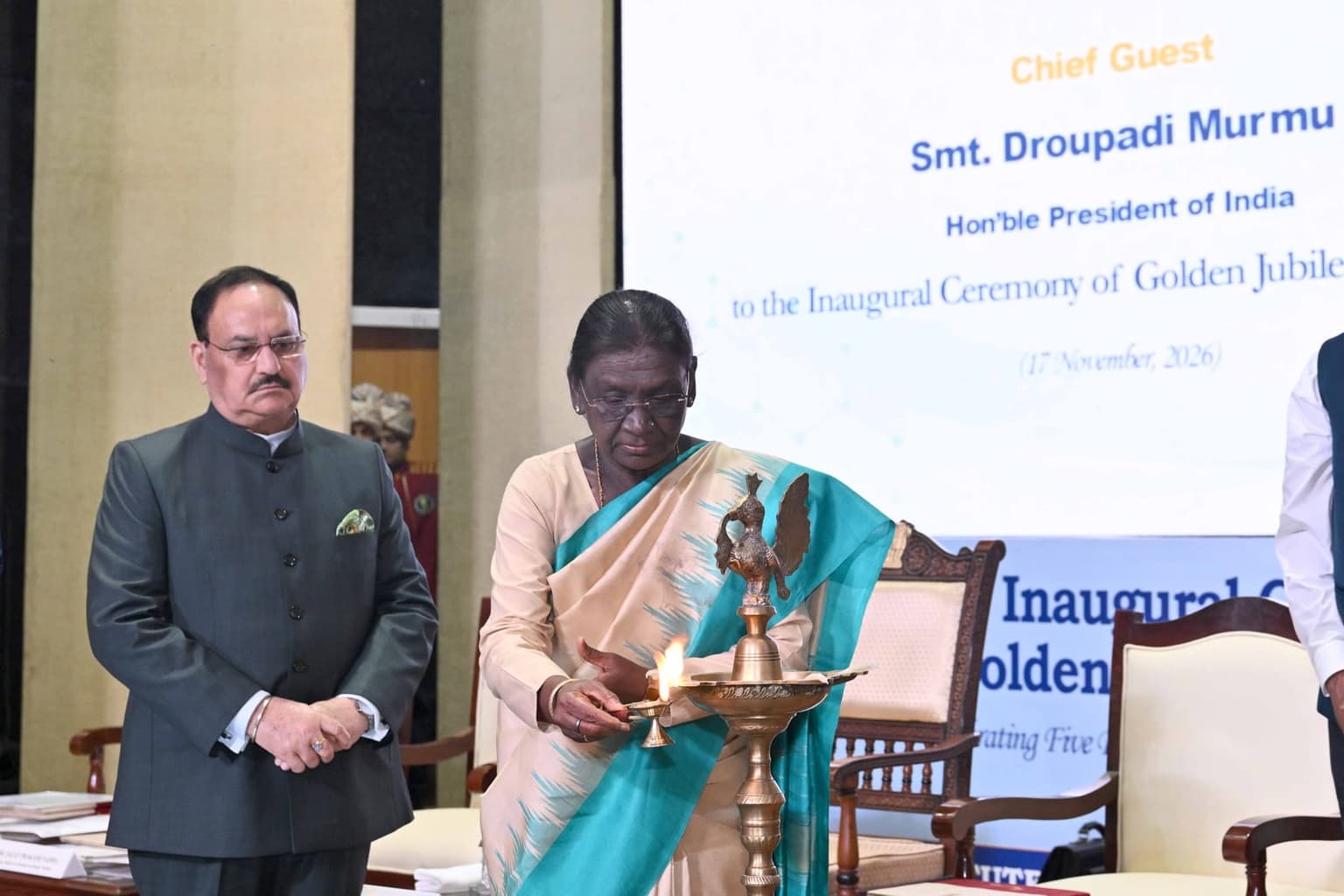
President Droupadi Murmu inaugurated the year-long golden jubilee celebrations of the ICMR-National Institute of Malaria Research in New Delhi on 17 November 2026.
Why in News
On 17 November 2026 President Droupadi Murmu inaugurated the year-long golden jubilee celebrations of the ICMR-National Institute of Malaria Research in New Delhi, and recalled that India exited the World Health Organization’s ‘High Burden to High Impact’ category in 2024.
President Droupadi Murmu opened the year-long golden jubilee celebrations of the Indian Council of Medical Research-National Institute of Malaria Research in New Delhi on 17 November 2026. The institute has completed five decades of work on the disease.
India’s record against malaria
The President recalled that malaria was among the gravest public health problems India faced at the time of independence, and remains a serious challenge in many countries. She said India has made striking progress in controlling it over the past few years, helped by better healthcare services, modern diagnostic methods, effective medicines, mosquito-control drives and the participation of local communities. That progress has been recognised abroad: in 2024 India moved out of the World Health Organization’s ‘High Burden to High Impact’ category, an outcome she credited to public health programmes, scientists, health workers and citizens acting together.
The National Institute of Malaria Research, she said, has been central to that long fight. Its researchers have broken new ground on malaria parasites, mosquitoes, vector control, insecticide resistance and community-based surveillance.
New obstacles ahead
- Climate change and shifting monsoon patterns.
- Unplanned urbanisation.
- Growing insecticide resistance among mosquitoes.
The President cautioned that health workers alone cannot stop the disease spreading in such conditions. Preventing water from collecting, removing mosquito breeding sites and managing the surrounding environment matter just as much. She also noted that dengue has become a major challenge of its own, one likely to grow harder as the planet warms and rainfall patterns change, and expressed confidence that the ICMR is working effectively on its diagnosis.
The ICMR’s wider record
Research by the ICMR has shaped India’s response to tuberculosis, leprosy and kala-azar, and has guided national health programmes. During the COVID-19 pandemic the council set up a countrywide testing network in record time and was a partner in developing India’s first indigenous COVID-19 vaccine. The President said a golden jubilee is an occasion not only to take pride in the past but to set firm goals for what comes next. With the country working towards Viksit Bharat by 2047, she argued, strong collaboration among research institutions, centres of technical and higher education and industry is essential, and premier bodies such as the ICMR are placed to lead it through research, collaboration and innovation.
Important Facts
| Occasion | Golden jubilee (year-long) of ICMR-National Institute of Malaria Research |
|---|---|
| Inaugurated by | President Droupadi Murmu |
| Venue | New Delhi |
| Parent body | Indian Council of Medical Research (ICMR) |
| WHO milestone | India left the ‘High Burden to High Impact’ category in 2024 |
| New obstacles cited | Climate change, unplanned urbanisation, insecticide resistance |
| Other diseases named | Dengue, tuberculosis, leprosy, kala-azar |
| National goal | Viksit Bharat by 2047 |
Exam Point of View
Remember the institute’s full name and its parent body (ICMR), the city (New Delhi), that the celebrations run for a full year, and who inaugurated them. The most likely one-liner is India’s exit from the WHO ‘High Burden to High Impact’ category in 2024. Also keep the three new obstacles — climate change, unplanned urbanisation and insecticide resistance — and the ICMR’s COVID-19 work in mind, along with the Viksit Bharat 2047 target.
Practice Questions
Whose year-long golden jubilee celebrations did President Droupadi Murmu inaugurate in New Delhi?
- A.National Institute of Virology
- B.ICMR-National Institute of Malaria Research
- C.All India Institute of Medical Sciences
- D.National Centre for Disease Control
Show answer
The President inaugurated its year-long golden jubilee celebrations, marking five decades of research on malaria parasites, mosquitoes, vector control, insecticide resistance and community-based surveillance.
Read the full explanation →In which year did India move out of the World Health Organization’s ‘High Burden to High Impact’ category for malaria?
- A.2020
- B.2022
- C.2024
- D.2026
Show answer
The President cited this as the moment India’s progress towards malaria elimination won global recognition, and credited it to the combined effort of public health programmes, scientists, healthcare workers and ordinary citizens.
Read the full explanation →Which of the following was NOT named by the President as a new obstacle to the eradication of malaria?
- A.Climate change
- B.Unplanned urbanisation
- C.Resistance of mosquitoes to insecticides
- D.Shortage of diagnostic laboratories
Show answer
Three fresh obstacles were listed: climate change, unplanned urbanisation and the growing resistance of mosquitoes to insecticides. A shortage of laboratories was not among them; on the contrary, the ICMR was praised for setting up a countrywide testing network in record time during the pandemic, which points the other way.
Read the full explanation →Frequently Asked Questions
Who inaugurated the golden jubilee celebrations of the National Institute of Malaria Research?
President Droupadi Murmu, in New Delhi on 17 November 2026. The celebrations will run for a full year and mark five decades of the institute’s work.
When did India move out of the WHO’s ‘High Burden to High Impact’ category?
In 2024. The President described this as global recognition of India’s progress towards malaria elimination, achieved through public health programmes, scientists, health workers and citizens.
What new challenges to malaria eradication did the President identify?
Climate change, unplanned urbanisation and the growing resistance of mosquitoes to insecticides. She stressed preventing water stagnation, removing breeding sources and managing the environment.
Sources
- https://www.pib.gov.in/PressReleasePage.aspx?PRID=2337385 (opens in a new tab) — Press Information Bureau
Current Affairs 17 November 2026
- India's Solar Capacity Touches 175 GW, 62-Fold Rise Since 2014Environment
- Horticulture Output Set at 3869.15 Lakh Tonnes for 2025-26Economy
- Buddha Relics Draw 12,000 to Golden Pagoda at NamsaiNational
- India Pitches Big Cat Conservation as Climate Action at COP31Summits & Conferences
- 9th National Naturopathy Day at Nagamangala on 18 NovemberImportant Days
- 23rd ASEAN-India Summit Theme: Navigating Our Future, TogetherSummits & Conferences
- India-Egypt Trade Target of USD 12 Billion Set at 7th JTCEconomy
- 4th India-Japan 2+2 Ministerial Dialogue to Be Held in TokyoDefence
Related Current Affairs
- Science & Technology
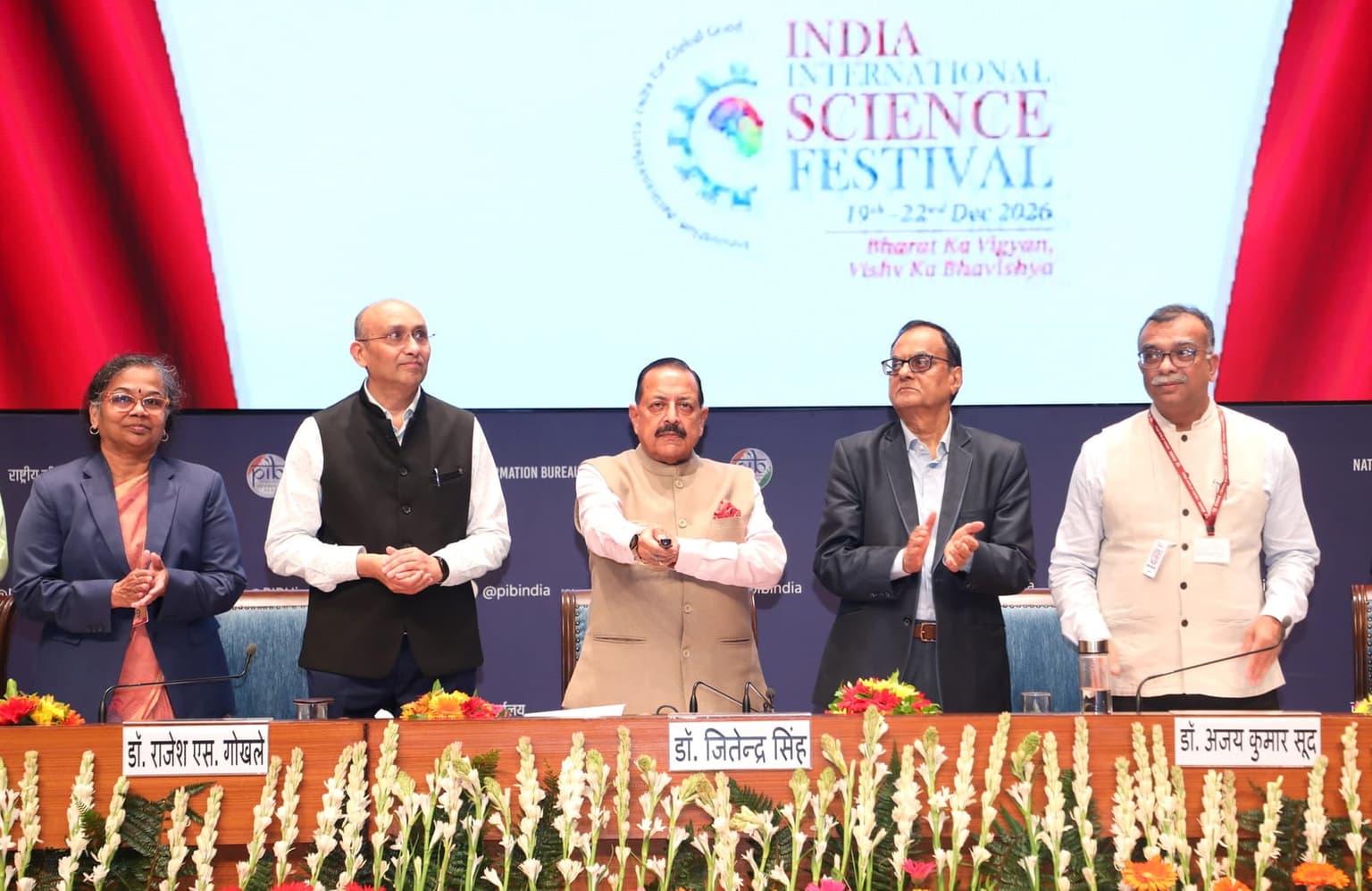
IISF 2026 Curtain Raiser Launched; Pune to Host 12th Edition
18 November 2026 · 2 min read
- Science & Technology
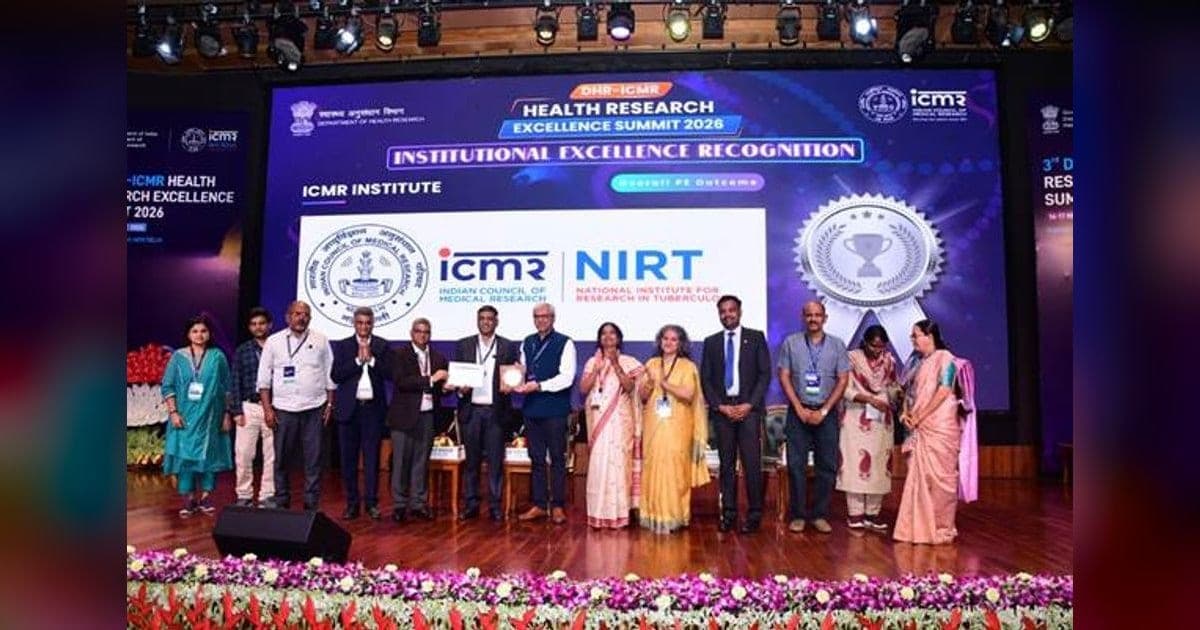
ICMR Crosses 100 Technology Transfer Deals at DHR Summit
18 November 2026 · 2 min read
- Science & Technology
ICAR-NIHSAD Develops India's First Indigenous H5N1 Vaccine
18 November 2026 · 2 min read
- Science & Technology
DST Releases Tribal Technology Compendium on Gaurav Divas
17 November 2026 · 2 min read
- Science & Technology
NIELIT Launches CyberVitals and Net Anveshak at NCCDFI 2026
16 November 2026 · 2 min read
- Science & Technology
TDB Backs NeoSeeker Metals Critical Minerals Recycling Project
16 November 2026 · 2 min read
Related GK
- Famous Personalities of Rajasthan: Exam Notes
28 October 2026 · Rajasthan
- Districts and Divisions of Rajasthan: Exam Notes
28 October 2026 · Rajasthan
- Tourism and World Heritage Sites of Rajasthan Notes
27 October 2026 · Rajasthan
Take the Quiz
- Current Affairs Quiz
Teaching Current Affairs Quiz: 17 November 2026
22 questions22 minutesStart Quiz