
NBA Crosses ₹200 Crore in Access and Benefit-Sharing Payouts
The National Biodiversity Authority crossed ₹200 crore in cumulative ABS disbursement and sanctioned ₹8.23 crore to 27 State boards and 5 UT councils.

Why in News
On 5 September 2026 the Environment Ministry said the National Biodiversity Authority has crossed ₹200 crore in cumulative ABS disbursement and has sanctioned ₹8.23 crore more to 27 State Biodiversity Boards and 5 Union Territory Biodiversity Councils.
The National Biodiversity Authority (NBA) has crossed a landmark in India's Access and Benefit-Sharing (ABS) framework. Its cumulative ABS disbursement has gone past ₹200 crore. The Ministry of Environment, Forest and Climate Change announced this on 5 September 2026.
What was sanctioned this time
The NBA sanctioned ₹8.23 crore in fresh ABS proceeds. The money goes to 27 State Biodiversity Boards and 5 Union Territory Biodiversity Councils. It arises from the use of biological resources tied to four vegetable crops. These are bitter gourd (Momordica charantia), okra (Abelmoschus esculentus), chilli (Capsicum annuum) and onion (Allium cepa). The proceeds came from three seed companies that accessed these resources for research and commercial use.
Why States are paid instead of farmers
The resources were bought in the open market or through traders. No single farmer, community or place of origin could be traced. So the beneficiary share is spread among the boards and councils of the States and Union Territories where these crops are grown. The split follows the area under cultivation, as published by the Ministry of Agriculture and Farmers Welfare. The method was recommended by an Expert Committee and approved by the Authority.
Who gets the most
| Rank among recipients | State or UT |
| First | Madhya Pradesh |
| Second | Maharashtra |
| Third | Andhra Pradesh |
| Fourth | Karnataka |
| Fifth | Gujarat |
| Next in the list | Odisha, Bihar, Chhattisgarh, West Bengal and Uttar Pradesh |
Madhya Pradesh and Maharashtra are the largest cumulative recipients across the four crops. Madhya Pradesh is carried there by bitter gourd, chilli and onion. Maharashtra is carried there mainly by onion, since it holds more than 49 per cent of India's onion area.
How the money must be spent
The boards and councils must use the funds for activities listed under Section 32(2) of the Biological Diversity Act, 2002. These include preparing and updating People's Biodiversity Registers, conservation of biological resources both in and outside their natural habitat, restoration of degraded ecosystems, strengthening Biodiversity Heritage Sites, building the capacity of Biodiversity Management Committees and improving community livelihoods.
The global link
The exercise feeds India's commitments under the Convention on Biological Diversity and the Nagoya Protocol on access and benefit-sharing. It also serves the Kunming-Montreal Global Biodiversity Framework, and in particular Target 13, which asks countries to ensure fair and equitable sharing of the benefits from the use of genetic resources.
Important Facts
| Body | National Biodiversity Authority (NBA) |
|---|---|
| Ministry | Ministry of Environment, Forest and Climate Change |
| Milestone | Cumulative ABS disbursement above ₹200 crore |
| Fresh sanction | ₹8.23 crore |
| Recipients | 27 State Biodiversity Boards and 5 Union Territory Biodiversity Councils |
| Crops involved | Bitter gourd, okra, chilli and onion |
| Largest recipients | Madhya Pradesh, followed by Maharashtra |
| Maharashtra's onion share | More than 49 per cent of India's onion cultivation area |
| Basis of distribution | Area under cultivation, as published by the Ministry of Agriculture and Farmers Welfare |
| Legal provision | Section 32(2) of the Biological Diversity Act, 2002 |
| International link | Convention on Biological Diversity, Nagoya Protocol and Target 13 of the Kunming-Montreal Global Biodiversity Framework |
Exam Point of View
Remember the milestone of ₹200 crore and the fresh sanction of ₹8.23 crore, the count of 27 State boards and 5 UT councils, the four crops, the top two recipients Madhya Pradesh and Maharashtra, Section 32(2) of the Biological Diversity Act, 2002, and Target 13 of the Kunming-Montreal framework.
Practice Questions
How much fresh Access and Benefit-Sharing money did the National Biodiversity Authority sanction to State boards and UT councils?
- A.₹8.23 crore
- B.₹82.3 crore
- C.₹200 crore
- D.₹23.8 crore
Show answer
Correct answer: A. ₹8.23 crore
Explanation
The correct answer is ₹8.23 crore. The release records that the Authority sanctioned that amount in ABS proceeds to 27 State Biodiversity Boards and 5 Union Territory Biodiversity Councils, arising from access to biological resources of four vegetable crops. Option C is the classic trap in this item, because ₹200 crore is also in the release, but it is the cumulative figure: the Authority's total ABS disbursement since the framework began has now crossed ₹200 crore, and the ₹8.23 crore is only the latest instalment inside that total. Options B and D simply move the decimal point or reverse the digits, a favourite trick of paper setters with money figures. Keep the pair together while revising: ₹200 crore cumulative, ₹8.23 crore in this round. Remember also that the money came from three seed companies which had accessed bitter gourd, okra, chilli and onion resources for research and commercial use.
Which State is the largest cumulative recipient of the latest ABS proceeds across the four crops?
- A.Maharashtra
- B.Madhya Pradesh
- C.Andhra Pradesh
- D.Karnataka
Show answer
Correct answer: B. Madhya Pradesh
Explanation
The correct answer is Madhya Pradesh. The table in the release ranks the recipients, and Madhya Pradesh stands at the top, ahead of Maharashtra, Andhra Pradesh, Karnataka and Gujarat. The text explains why: the State comes first because it grows three of the four crops involved, namely bitter gourd, chilli and onion. Option A is the strongest distractor, since Maharashtra is named in the same sentence as a leading recipient and holds more than 49 per cent of India's onion cultivation area, but on the combined figures for all four crops it stands second. Option C and option D name the next two States in the list, Andhra Pradesh and Karnataka, both of which receive substantial amounts but less than the top two. The reason behind the ranking is worth learning as well: the distribution follows the area under cultivation published by the Ministry of Agriculture and Farmers Welfare, because the resources were bought in the open market and could not be traced to a single farmer or community.
Under which provision must the State Biodiversity Boards use the ABS funds they receive?
- A.Section 21 of the Environment Protection Act
- B.Section 32(2) of the Biological Diversity Act, 2002
- C.Section 6 of the Wildlife Protection Act
- D.Section 15 of the Forest Conservation Act
Show answer
Correct answer: B. Section 32(2) of the Biological Diversity Act, 2002
Explanation
The correct answer is Section 32(2) of the Biological Diversity Act, 2002. The release states that the boards and councils are required to spend the funds on the activities listed in that provision, and it lists them: documentation and updating of People's Biodiversity Registers, conservation of biological resources both in their natural habitat and outside it, restoration of degraded ecosystems, strengthening of Biodiversity Heritage Sites, capacity building of Biodiversity Management Committees, and improvement of community livelihoods. Options A, C and D name well-known environmental laws of India, and each is the kind of answer a candidate reaches for when the exact statute has slipped from memory, but the ABS framework sits entirely within the Biological Diversity Act. Link the whole chain in your notes: the Act of 2002 creates the National Biodiversity Authority, the State Biodiversity Boards and the Biodiversity Management Committees, and the same Act carries the access and benefit-sharing provisions that this disbursement follows.
Frequently Asked Questions
What milestone has the National Biodiversity Authority crossed?
Its cumulative Access and Benefit-Sharing disbursement has crossed ₹200 crore. Alongside, it has sanctioned a fresh ₹8.23 crore to 27 State Biodiversity Boards and 5 Union Territory Biodiversity Councils.
Which four crops produced these ABS proceeds?
Bitter gourd, okra, chilli and onion. Three seed companies paid the proceeds for accessing these biological resources for research and commercial utilisation.
Why is the money given to State boards and not to farmers?
The resources were accessed through the open market or traders, so no individual farmer, community or single geographic source could be identified. The share is therefore distributed by area under cultivation among the States and Union Territories where the crops are grown.
How can the boards spend the money?
Only on activities listed in Section 32(2) of the Biological Diversity Act, 2002, such as People's Biodiversity Registers, conservation of biological resources, restoration of degraded ecosystems, Biodiversity Heritage Sites and community livelihoods.
Sources
- National Biodiversity Authority Crosses ₹200-Crore Milestone in ABS Disbursement (opens in a new tab) — Press Information Bureau
Current Affairs 5 September 2026
- National Teachers Awards 2026: President Honours 82 TeachersAwards & Honours
- Indore Metro Priority Corridor-2 Opens with 11 StationsState News
- ECLGS 5.0 Explained: ₹2.55 Lakh Crore Credit Guarantee PushBanking & Finance
- Coal Gasification Scheme: ₹37,500 Crore Outlay, NTPC AppliesGovernment Schemes
- Vice President Launches India Valve Registry in ChennaiScience & Technology
- Commemorative Stamp Marks 75 Years of Dinamalar NewspaperNational
Related Current Affairs
- Environment
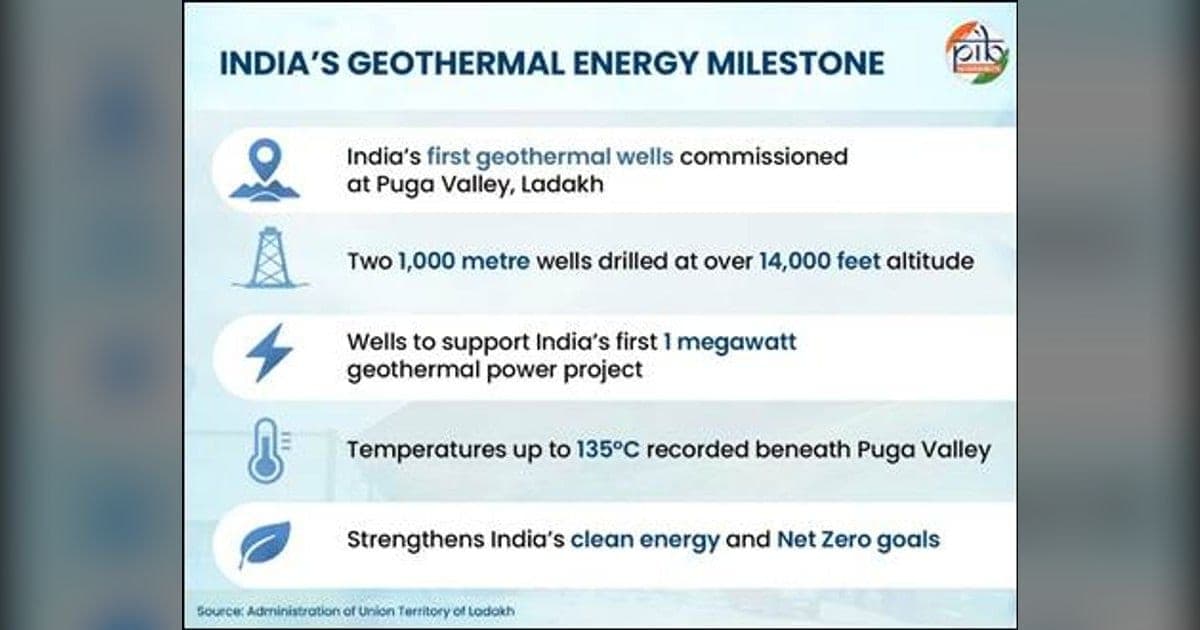
Geothermal Energy: India's First Two Wells at Puga Valley, Ladakh
23 September 2026 · 2 min read
- Environment
Gujarat Action Plan for Great Indian Bustard Released at Bhuj
23 September 2026 · 2 min read
- Environment
India to Host World Circular Economy Forum 2026 at Gandhinagar
23 September 2026 · 2 min read
- Environment
Jal Sanchay Jan Bhagidari Crosses 1.58 Crore Recharge Structures
23 September 2026 · 2 min read



Related GK
- Fundamental Rights (Articles 12–35): Notes, Writs and PYQs
23 September 2026 · Indian Polity
- Preamble of the Indian Constitution: Notes, Keywords and PYQs
22 September 2026 · Indian Polity
- Making of the Indian Constitution: Notes, Key Dates and PYQs
21 September 2026 · Indian Polity
Take the Quiz
- Current Affairs Quiz
State Exams Current Affairs Quiz: 5 September 2026
21 questions21 minutesStart Quiz