
Mines Ministry Launches Concept Paper on Critical Mineral Recycling
At a national seminar with MRAI, Mines Minister G. Kishan Reddy launched a Concept Paper on the Critical Mineral Recycling Ecosystem and urged Jan Bhagidari.
Why in News
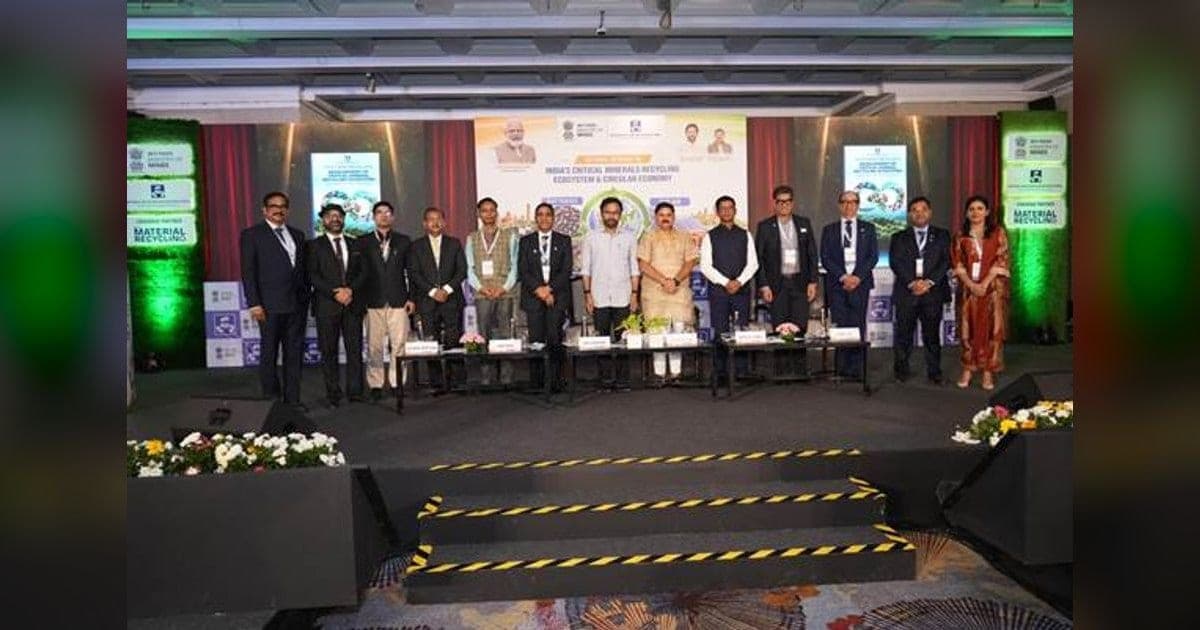
On 21 September 2026 the Ministry of Mines held a national seminar on critical minerals recycling with MRAI, where a Concept Paper on the Critical Mineral Recycling Ecosystem was launched.
Union Minister for Coal and Mines G. Kishan Reddy on 21 September 2026 inaugurated a National Seminar on "India's Critical Minerals Recycling Ecosystem and Circular Economy" in New Delhi. It was organised by the Ministry of Mines with the Materials Recycling Association of India (MRAI). At the seminar the Ministers launched a Concept Paper on the Critical Mineral Recycling Ecosystem.
Why critical minerals matter
Critical minerals are minerals that a country needs for its economy and security but whose supply could be at risk. Lithium, cobalt, nickel, graphite and the rare earth elements are common examples. They go into electric-vehicle batteries, solar panels, wind turbines, electronics and defence equipment. Mines Secretary Keshav Chandra said a strong domestic chain is needed across exploration, processing, recovery and recycling, so that India depends less on primary sources.
Why recycling
- E-waste and End-of-Life (EOL) products, such as old phones, laptops and batteries, can be secondary sources of critical minerals.
- Recycling improves resource efficiency, reduces import dependence and supports a circular economy, in which materials are reused instead of thrown away.
- The Concept Paper sets out a strategic framework focused on resource efficiency, recovery from secondary sources and a circular, self-reliant ecosystem.
What the Ministers said
- G. Kishan Reddy linked recycling with the clean energy transition, defence preparedness, the digital economy and advanced manufacturing, and asked citizens, in the spirit of Jan Bhagidari, to see e-waste as a valuable resource.
- Minister of State Satish Chandra Dubey called for village-to-village awareness so that recyclable waste reaches the formal recycling system.
Topics at the seminar
Technical sessions covered e-waste collection, metal recovery from lithium-ion batteries and the export of black mass, non-ferrous metals recycling, and the wider recycling landscape. Black mass is the powder left after spent lithium-ion batteries are dismantled and shredded; it holds valuable metals such as lithium, cobalt and nickel. The Ministry is also promoting responsible e-waste disposal under Special Campaign 6.0 and Swachhata Hi Seva.
Important Facts
| Event | National Seminar on India's Critical Minerals Recycling Ecosystem and Circular Economy |
|---|---|
| Date | 21 September 2026 |
| Organised by | Ministry of Mines with Materials Recycling Association of India (MRAI) |
| Venue | New Delhi |
| Inaugurated by | G. Kishan Reddy, Union Minister for Coal and Mines |
| Minister of State | Satish Chandra Dubey |
| Mines Secretary | Keshav Chandra |
| Document launched | Concept Paper on Critical Mineral Recycling Ecosystem |
| Campaigns linked | Special Campaign 6.0 and Swachhata Hi Seva |
Exam Point of View
Know the basics: what critical minerals are (lithium, cobalt, nickel, graphite, rare earths), the Mines Minister (G. Kishan Reddy), the partner (MRAI), the document launched (Concept Paper on Critical Mineral Recycling Ecosystem), and terms like circular economy, End-of-Life products and black mass.
Practice Questions
What did the Ministry of Mines launch at the National Seminar on India's Critical Minerals Recycling Ecosystem and Circular Economy on 21 September 2026?
- A.A critical minerals trading exchange
- B.Concept Paper on Critical Mineral Recycling Ecosystem
- C.New E-Waste (Management) Rules
- D.A list of new critical mineral blocks for auction
Show answer
Correct answer: B. Concept Paper on Critical Mineral Recycling Ecosystem
Explanation
The correct answer is Concept Paper on Critical Mineral Recycling Ecosystem. At the seminar in New Delhi, the Union Ministers launched this paper, which outlines a strategic framework for strengthening critical mineral recycling in India. It focuses on resource efficiency, recovery of minerals from secondary sources such as e-waste and End-of-Life products, and building a circular and self-reliant ecosystem.
The other options sound plausible but did not happen at this event. No trading exchange was launched. E-waste management rules are framed by the Ministry of Environment, Forest and Climate Change, not by the Mines Ministry. Auctions of critical mineral blocks are a separate process run by the Ministry of Mines and were not part of this seminar. The seminar was inaugurated by G. Kishan Reddy and organised with the Materials Recycling Association of India.
The Ministry of Mines organised the national seminar on critical minerals recycling in collaboration with which body?
- A.Federation of Indian Chambers of Commerce and Industry
- B.Materials Recycling Association of India
- C.Confederation of Indian Industry
- D.Indian Bureau of Mines
Show answer
Correct answer: B. Materials Recycling Association of India
Explanation
The correct answer is Materials Recycling Association of India. The day-long National Seminar on "India's Critical Minerals Recycling Ecosystem and Circular Economy" was organised by the Ministry of Mines in collaboration with MRAI, an industry body of recyclers. It brought together policymakers, industry leaders, recyclers, researchers and academia.
FICCI and CII are broad industry chambers that often partner with ministries on events, which is why they are tempting, but neither organised this seminar. The Indian Bureau of Mines is a subordinate office of the Ministry of Mines that deals with mineral conservation and regulation of mining, so it is also a strong distractor. Remember the pair for this story: Ministry of Mines plus MRAI, with Union Minister G. Kishan Reddy, Minister of State Satish Chandra Dubey and Secretary Keshav Chandra speaking at the event.
The term 'black mass', discussed at the critical minerals recycling seminar, refers to what?
- A.Coal dust left after washing coal
- B.Residue from crude oil refining
- C.Silt removed from river beds
- D.Material recovered from spent lithium-ion batteries
Show answer
Correct answer: D. Material recovered from spent lithium-ion batteries
Explanation
The correct answer is Material recovered from spent lithium-ion batteries. When used lithium-ion batteries are collected, dismantled and shredded, the result is a dark powder called black mass. It contains valuable metals such as lithium, cobalt, nickel and manganese, along with graphite, which can be extracted by further processing. One of the technical sessions at the seminar dealt with lithium-ion battery metal recovery and the export of black mass.
The other options are distractors taken from other industries. Coal dust and refinery residue have nothing to do with critical minerals recycling, and river silt is unrelated. The issue of black mass matters because if it is simply exported, the valuable metals are recovered abroad; processing it within the country keeps those critical minerals in the domestic supply chain, which is the goal of the circular economy approach.
Frequently Asked Questions
What was launched at the critical minerals recycling seminar?
A Concept Paper on the Critical Mineral Recycling Ecosystem, which outlines a strategic framework for strengthening critical mineral recycling in India, focused on resource efficiency and recovery from secondary sources.
What is black mass?
Black mass is the powdery material obtained after spent lithium-ion batteries are dismantled and shredded. It contains valuable metals such as lithium, cobalt and nickel, which can be recovered by recycling.
Sources
Current Affairs 21 September 2026
- India–New Zealand FTA to Enter into Force on 20 October 2026International
- Asian Games 2026: India Win Three Medals in Men's 10m Air RifleSports
- Swachh Sagar Surakshit Sagar 5.0: 15 Lakh Take Ocean PledgeEnvironment
- PM Mementos e-Auction 2026: Gujarat's Heritage Goes Under the HammerNational
- Government Urges PSB and RRB Staff to Call Off Bank StrikesBanking & Finance
- Jal Jeevan Mission 2.0: Nal Jal Mitra and Sujalam Shakti PushGovernment Schemes
- Office of PSA Holds First State Nodal Officers Meeting on I-STEMScience & Technology
Related Current Affairs
Related GK
- Preamble of the Indian Constitution: Notes, Keywords and PYQs
22 September 2026 · Indian Polity
- Making of the Indian Constitution: Notes, Key Dates and PYQs
21 September 2026 · Indian Polity