
India Presents Justice Reforms at 15th UN Congress, Abu Dhabi
Law Minister Arjun Ram Meghwal set out the new criminal laws and cybercrime response of India at the 15th UN Congress on Crime Prevention and Criminal Justice, Abu Dhabi.
Why in News
India presented its criminal law reforms, cybercrime response and arbitration partnership with the United Arab Emirates at the 15th United Nations Congress on Crime Prevention and Criminal Justice in Abu Dhabi, as announced on 30 September 2026.
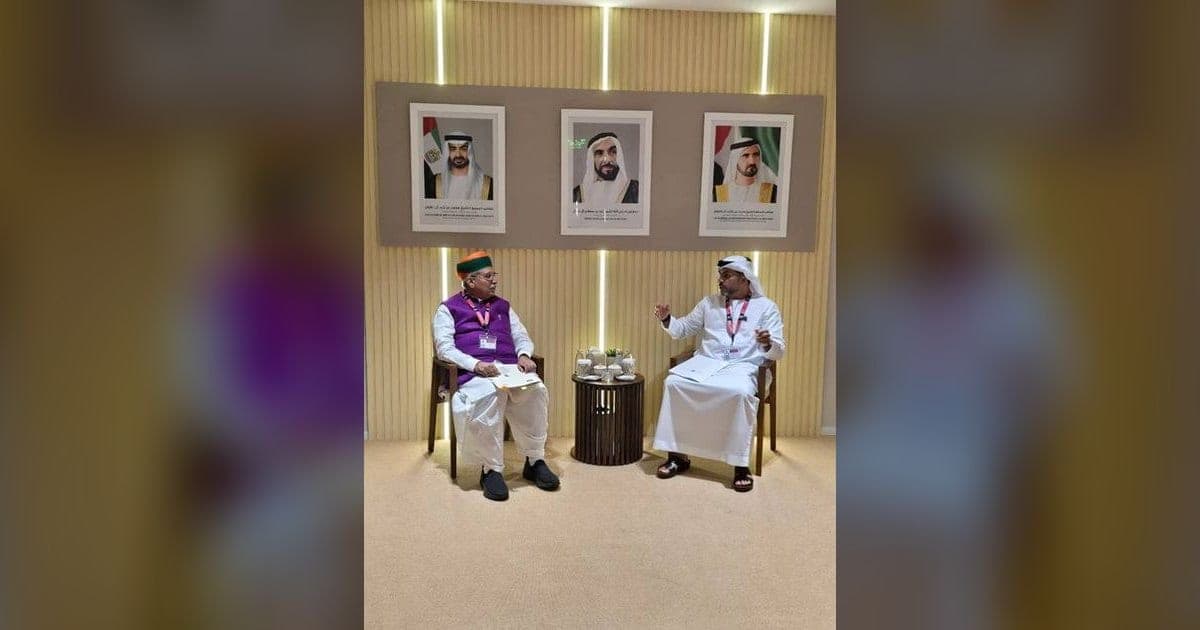
India set out its justice reforms at the 15th United Nations Congress on Crime Prevention and Criminal Justice, being held in Abu Dhabi. The Union Minister of State with independent charge for Law and Justice, Arjun Ram Meghwal, addressed the Congress and also met the Justice Minister of the United Arab Emirates, Abdullah Sultan bin Awad Al Nuaimi, on the sidelines.
The theme of the Congress
The theme of the Congress opens with Accelerating crime prevention, criminal justice and the rule of law, and the rest of it runs Protecting people and planet and achieving the 2030 Agenda for Sustainable Development in the digital age. That wording ties criminal justice to the sustainable development goals and to the digital shift, which is the frame India used for its own presentation.
What India presented
The minister described the three new criminal laws that have replaced the colonial-era codes, namely the Bharatiya Nyaya Sanhita, the Bharatiya Nagarik Suraksha Sanhita and the Bharatiya Sakshya Adhiniyam. He placed their emphasis on the use of technology, quicker disposal, forensic investigation and procedures that are digital by default. On cybercrime he named the Indian Cyber Crime Coordination Centre, written as I4C, and the National Cyber Crime Reporting Portal, which together allow faster complaints, prevention of fraud and the freezing of mule accounts. He repeated the position of zero tolerance towards terrorism and asked for global cooperation against terrorism, drug trafficking, wildlife crime across borders, illegal logging and the dumping of toxic waste.
The arbitration link with the UAE
The other theme was the legal partnership with the United Arab Emirates in international arbitration and other ways of settling disputes outside court. The tie-up between the India International Arbitration Centre, or IIAC, and the Dubai International Arbitration Centre, or DIAC, covers exchange of knowledge, professional training, joint programmes, research and digital dispute resolution. DIAC handles close to 5,000 cases valued at over AED 80 billion, which is about USD 21.8 billion.
The UNODC meeting
During the visit the minister also met Monika Juma, Executive Director of the United Nations Office on Drugs and Crime, on cooperation against narcotics and organised crime and on stronger legal and judicial ties. The ministry reads all of this as part of the India and UAE Comprehensive Strategic Partnership, which now runs across trade, investment, energy, technology, defence and education besides law and governance.
Important Facts
| Event | 15th United Nations Congress on Crime Prevention and Criminal Justice |
|---|---|
| Venue | Abu Dhabi, United Arab Emirates |
| India represented by | Arjun Ram Meghwal, Minister of State with independent charge for Law and Justice |
| Theme | Accelerating crime prevention, criminal justice and the rule of law, with the 2030 Agenda in the digital age |
| New criminal laws presented | Bharatiya Nyaya Sanhita, Bharatiya Nagarik Suraksha Sanhita, Bharatiya Sakshya Adhiniyam |
| Cybercrime bodies named | Indian Cyber Crime Coordination Centre (I4C) and National Cyber Crime Reporting Portal |
| Arbitration partnership | India International Arbitration Centre with Dubai International Arbitration Centre |
| UNODC Executive Director met | Monika Juma |
Exam Point of View
Fix the edition and name of the event (15th UN Congress on Crime Prevention and Criminal Justice), the venue (Abu Dhabi), the theme, the minister (Arjun Ram Meghwal), the three new criminal laws, the full form of I4C, the IIAC and DIAC tie-up and the UNODC Executive Director.
Practice Questions
In which city is the 15th United Nations Congress on Crime Prevention and Criminal Justice being held, where India presented its justice reforms?
- A.Doha
- B.Abu Dhabi
- C.Vienna
- D.Kyoto
Show answer
The correct answer is Abu Dhabi, the capital of the United Arab Emirates, where the Congress is being held and where the Indian minister also met the UAE Justice Minister on the sidelines.
Read the full explanation →Which set of laws did India highlight at the 15th UN Congress as its new criminal codes?
- A.Indian Penal Code, Code of Criminal Procedure and Indian Evidence Act
- B.Bharatiya Nyaya Sanhita, Bharatiya Nagarik Suraksha Sanhita and Bharatiya Sakshya Adhiniyam
- C.Bharatiya Danda Sanhita, Bharatiya Suraksha Sanhita and Bharatiya Praman Adhiniyam
- D.Bharatiya Nyaya Adhiniyam, Bharatiya Nagarik Sanhita and Bharatiya Sakshya Sanhita
Show answer
The correct answer is the Bharatiya Nyaya Sanhita, the Bharatiya Nagarik Suraksha Sanhita and the Bharatiya Sakshya Adhiniyam, the three laws the minister described as built around technology, faster justice, forensic investigation and digital-first procedures.
Read the full explanation →Who is the Executive Director of the United Nations Office on Drugs and Crime, whom the Indian minister met during the Congress?
- A.Monika Juma
- B.Ghada Waly
- C.Amina Mohammed
- D.Rebeca Grynspan
Show answer
The correct answer is Monika Juma, named as the Executive Director of the United Nations Office on Drugs and Crime, met by the minister to discuss cooperation against narcotics and organised crime and stronger legal and judicial partnerships.
Read the full explanation →Frequently Asked Questions
Where is the 15th UN Congress on Crime Prevention and Criminal Justice being held?
In Abu Dhabi, United Arab Emirates. India was represented by Arjun Ram Meghwal, Minister of State with independent charge for Law and Justice.
Which three new criminal laws did India highlight?
The Bharatiya Nyaya Sanhita, the Bharatiya Nagarik Suraksha Sanhita and the Bharatiya Sakshya Adhiniyam, with their focus on technology, faster justice, forensic investigation and digital-first procedures.
What is the arbitration tie-up mentioned?
The India International Arbitration Centre works with the Dubai International Arbitration Centre on knowledge exchange, training, joint programmes, research and digital dispute resolution. DIAC handles nearly 5,000 cases.
Sources
Current Affairs 30 September 2026
- CAFE Norms 2027-32 Notified, Fuel Use to Fall 16.7 Per CentEnvironment
- UPSC Completes 100 Years of Merit-Based RecruitmentNational
- Second Naval Commanders Conference 2026 Opens in New DelhiDefence
- MHI Industry Accelerator Impact Report Released at NavigyaanScience & Technology
- SBM 2.0: Rs 11,785 Crore Approved for Sewage Treatment PlantsEnvironment
- TRAI Releases Mobile Network Drive Test Findings for SonitpurScience & Technology
- Special Campaign 6 to Run from 2 to 31 October 2026National
- PSS Buying of Rs 5,547.99 Crore Cleared for Kharif 2026-27Government Schemes
Related Current Affairs
- Environment
India Seeks Fair, Ambitious Outcome at UNFCCC COP31 in Antalya
10 November 2026 · 2 min read
- Summits & Conferences
MoSPI and UN Women Hold National Conference on Gender Statistics
2 November 2026 · 3 min read
Related GK
- Forts and Palaces of Rajasthan: Builders and Key Facts
21 October 2026 · Rajasthan
- Devotional Music of India: Bhajan, Kirtan and Qawwali
17 October 2026 · Art & Culture
- Chandigarh GK: Capitol Complex, Sectors and Static Facts
12 October 2026 · Indian States & UTs
Take the Quiz
- Current Affairs Quiz
UPSC CAPF Weekly Current Affairs Quiz: 28 September – 4 October 2026
30 questions30 minutesStart Quiz