
11th National Traders Welfare Board Meeting Held in New Delhi
The 11th meeting of the National Traders' Welfare Board was held at Vanijya Bhawan in New Delhi and reviewed GST, credit, digital and export issues of traders.
Why in News
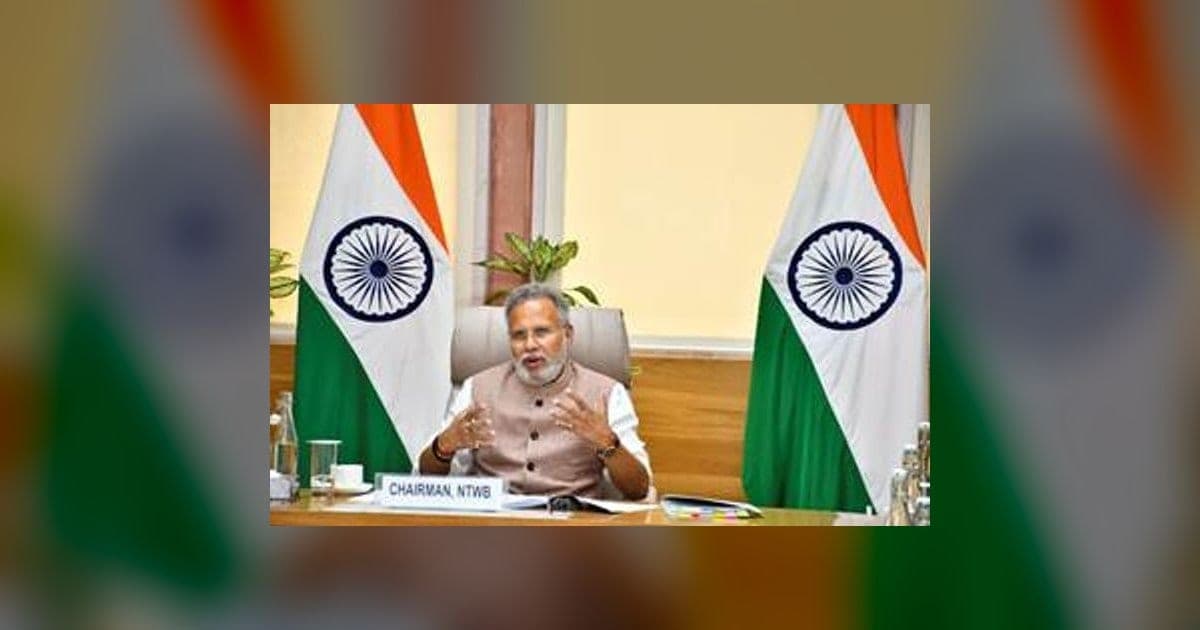
On 25 September 2026 the Ministry of Commerce and Industry reported that the 11th meeting of the National Traders' Welfare Board was held at Vanijya Bhawan in New Delhi to review trader welfare, ease of doing business, digital empowerment and export promotion.
The National Traders' Welfare Board (NTWB), which advises the government on the concerns of the trading community, held its eleventh meeting at Vanijya Bhawan in New Delhi in hybrid mode. The board works under the Department for Promotion of Industry and Internal Trade in the Ministry of Commerce and Industry, and its members include representatives of trade associations as well as officials of ministries who sit on it by virtue of their office.
What the board took up
Members went through the tax questions that traders raise most often: making rules simpler, delays in refunds, audits that drag on, amnesty schemes, mismatches in input tax credit and appeals that remain undecided. On credit, they sought a place for traders on the facilitation committees meant for small units, a single national loan portal that would decide an application within 30 days, changes in the way credit scores are worked out, and helplines where a trader can take a complaint.
Digital push
On the digital side the board discussed taking the Open Network for Digital Commerce and DigiDukaan down to the district level, opening facilitation desks for women entrepreneurs under NITI Aayog, setting up committees to hear complaints of harassment at the workplace and strengthening the machinery that handles cyber fraud. DigiDukaan, an initiative of the open network for business-to-business buying and for taking neighbourhood grocery shops online, already has over 19,000 retailers on board in Hyderabad and Jaipur.
What the chairman reported
Chairman Sunil J. Singhi, who presided, listed the steps taken for traders, among them the Jan Vishwas Act, which has eased 40,000 compliances, and the setting up of state traders' welfare boards in Madhya Pradesh, Punjab, Uttar Pradesh and Tamil Nadu, with Goa and Telangana confirming in writing. He also pointed to 100 virtual conferences held one after another to keep the centre and the states talking, to Bhamashah Jayanti being observed as Rashtriya Vyaapari Diwas on 29 June, and to trader outreach in Dehradun, Indore and Chandigarh.
Reforms on the way
Members were briefed on the next generation of goods and services tax reforms, on the tie-up with the open network, and on the Consumer Protection (Amendment) Bill 2026, which is proposed to come into force from 1 January 2027. The board also discussed the trade agreement being negotiated with the United Kingdom, with an eye on exports, and closed by restating its aim of helping build Viksit Bharat 2047. The meeting was opened by DPIIT Director Yuvraj Ravindra Patil.
Important Facts
| Meeting | 11th meeting of the National Traders' Welfare Board (NTWB) |
|---|---|
| Venue | Vanijya Bhawan, New Delhi, in hybrid mode |
| Chairman | Sunil J. Singhi |
| Ministry | Ministry of Commerce and Industry, through DPIIT |
| DPIIT Director | Yuvraj Ravindra Patil |
| Jan Vishwas Act | Eased 40,000 compliances |
| State boards | Madhya Pradesh, Punjab, Uttar Pradesh and Tamil Nadu |
| DigiDukaan | Over 19,000 retailers live in Hyderabad and Jaipur |
| Rashtriya Vyaapari Diwas | Bhamashah Jayanti observed on 29 June |
| Upcoming law | Consumer Protection (Amendment) Bill 2026, proposed from 1 January 2027 |
Exam Point of View
Remember the body (National Traders' Welfare Board under DPIIT), the edition (11th), the venue (Vanijya Bhawan, New Delhi), the chairman (Sunil J. Singhi), the four states with their own traders' welfare boards, the 40,000 compliances eased by the Jan Vishwas Act, the 19,000 retailers on DigiDukaan and the Consumer Protection (Amendment) Bill 2026 proposed from 1 January 2027.
Practice Questions
Where was the 11th meeting of the National Traders' Welfare Board held?
- A.Udyog Bhawan, New Delhi
- B.Vanijya Bhawan, New Delhi
- C.Vigyan Bhawan, New Delhi
- D.Krishi Bhawan, New Delhi
Show answer
Correct answer: B. Vanijya Bhawan, New Delhi
Explanation
The correct answer is Vanijya Bhawan, New Delhi, which houses the Ministry of Commerce and Industry and where the board met in hybrid mode, with some members present and others joining online. The board functions under the Department for Promotion of Industry and Internal Trade of that ministry, so its meeting place follows naturally. Udyog Bhawan houses other ministries and was not the venue, which makes option A wrong. Vigyan Bhawan is the government's large conference venue used for conferences and summits rather than for a board meeting of this kind, so option C is wrong. Krishi Bhawan is associated with agriculture and allied departments and has no connection with this board, so option D is wrong too. The meeting was chaired by Sunil J. Singhi and opened by the DPIIT Director, Yuvraj Ravindra Patil.
How many compliances has the Jan Vishwas Act rationalised, as stated at the meeting?
- A.4,000
- B.14,000
- C.40,000
- D.400,000
Show answer
Correct answer: C. 40,000
Explanation
The correct answer is 40,000. The chairman of the board cited the Jan Vishwas Act as a reform that has rationalised that many compliances, and placed it alongside the ease of doing business measures and the creation of state level traders' welfare boards as the main steps taken for the trading community. The other three options are figures of a similar shape, offered to test whether the number has been memorised exactly rather than approximately, and none of them was mentioned. A related figure worth holding on to from the same meeting is that DigiDukaan, an initiative of the open network for digital commerce, has more than nineteen thousand retailers live in Hyderabad and Jaipur, while the board also asked for a single loan portal that would decide applications within a month.
From which date is the Consumer Protection (Amendment) Bill 2026 proposed to come into effect?
- A.1 April 2027
- B.1 January 2027
- C.1 October 2026
- D.1 January 2028
Show answer
Correct answer: B. 1 January 2027
Explanation
The correct answer is 1 January 2027. Members of the board were told about forthcoming reforms, and among them was this bill, which is proposed to take effect from the first day of that year and is aimed at making life easier for consumers and for those who deal with them. Option A places the date at the start of a financial year, which is a natural guess but not the date mentioned here. Option C falls in the current year and option D pushes the date a full year further, so neither matches. In the same briefing the board was informed about the next generation of goods and services tax reforms and about integration with the open network for digital commerce, and it separately discussed the trade agreement being negotiated with the United Kingdom with a view to promoting exports.
Frequently Asked Questions
Under which ministry does the National Traders' Welfare Board function?
The Ministry of Commerce and Industry, through the Department for Promotion of Industry and Internal Trade. The 11th meeting was held at Vanijya Bhawan, New Delhi, and was chaired by Sunil J. Singhi.
What is DigiDukaan?
It is an initiative of the Open Network for Digital Commerce for business-to-business procurement and for taking kirana stores online through a single ordering interface. Over 19,000 retailers are live on it in Hyderabad and Jaipur.
Which states have set up their own traders' welfare boards?
Madhya Pradesh, Punjab, Uttar Pradesh and Tamil Nadu, while Goa and Telangana have confirmed in writing. Progress on district facilitation centres was also noted at the meeting.
Sources
- 11th Meeting of National Traders’ Welfare Board Convened in New Delhi (opens in a new tab) — Press Information Bureau
Current Affairs 25 September 2026
- Mixed 4x400m Relay Team Wins Asian Games Silver for IndiaSports
- DDU-GKY 2.0 to Train 70,000 Rural Youth from October 2026Government Schemes
- TRAI Launches Digital Connectivity Rating Platform for PropertiesScience & Technology
- Pharma PLI Draws Rs 46,744 Crore Investment, 57 Devices MadeGovernment Schemes
- Vice-President Opens 4th IN-STEP with 22 Nations Taking PartInternational
- RRI Study Shows Black Hole Jets Choke Star Birth in GalaxiesScience & Technology
- New Bhuj-Barauni Amrit Bharat Express to Cover 2,532 kmNational
Related Current Affairs
- Reports & Indices
NITI Aayog Releases Ninth Trade Watch Quarterly Edition
16 September 2026 · 2 min read
- Economy
NITI Aayog Launches PACT and ZET Marketplace for Electric Trucks
7 September 2026 · 2 min read
- Economy
Crude Sunflower Oil Import Duty Cut to Nil, Palm and Soybean to 5%
24 September 2026 · 2 min read
- Economy
Mines Ministry Launches Concept Paper on Critical Mineral Recycling
21 September 2026 · 2 min read

Take the Quiz
- Current Affairs Quiz
State Exams Current Affairs Quiz: 25 September 2026
24 questions24 minutesStart Quiz