
UPSC CAPF (AC) 2026–27: Exam Pattern, Syllabus, Physical Standards, Eligibility, Dates and Preparation
The Central Armed Police Forces (Assistant Commandants) Examination (UPSC CAPF) is held by the Union Public Service Commission to recruit Assistant Commandants, a Group A post, in the Border Security Force, the Central Reserve Police Force, the Central Industrial Security Force, the Indo-Tibetan Border Police and the Sashastra Seema Bal. Graduates aged 20 to 25, men and women, can apply. Selection runs through a written exam of two papers, physical and medical tests and an interview. Paper-I, General Ability and Intelligence, tests current events, polity, economy, history, geography and science, the ground GK24 covers. This page gives the pattern, syllabus, physical standards, eligibility, dates and forces as per the CAPF (ACs) 2026 notice and the UPSC calendar for 2027, with GK24's daily current affairs, GK notes, quizzes and previous-year questions for the exam.
Prepare for UPSC CAPF
Latest UPSC CAPF Current Affairs
View all- National
Cabinet Extends Fast Track Special Courts Scheme to 850 Courts
The Union Cabinet extended the Fast Track Special Courts scheme for five more years with an outlay of Rs 3,788.04 crore, taking it from 779 to 850 courts.
4 November 2026 · 2 min read
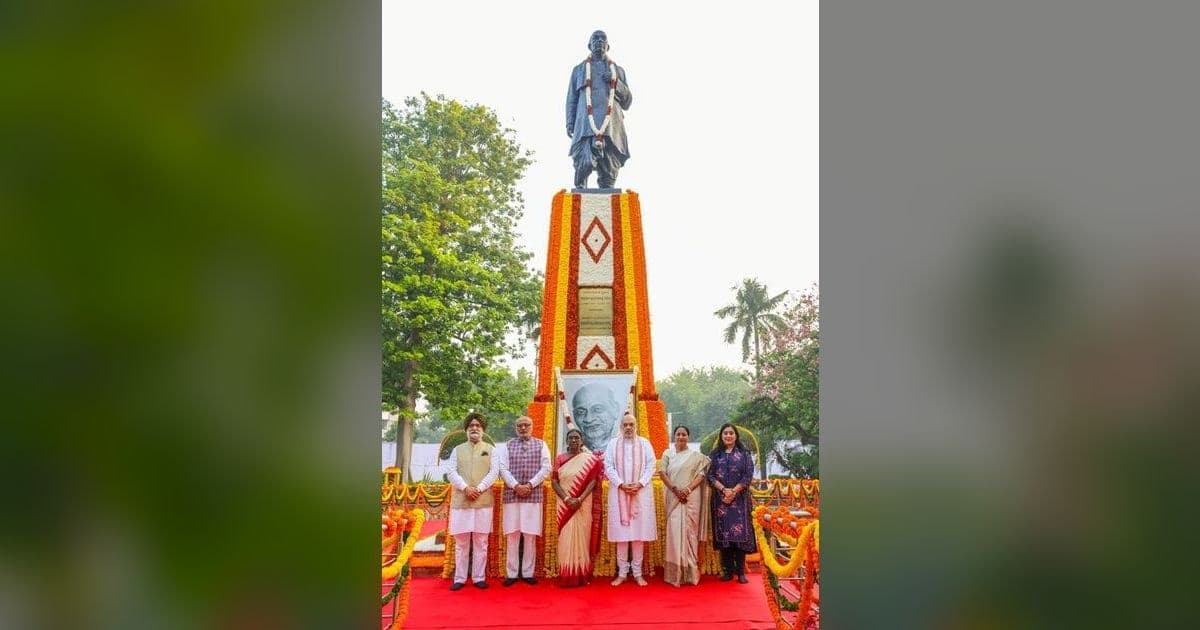
- Awards & Honours
President's Colour Conferred on Chandigarh Police on Diamond Jubilee
1 November 2026 · 3 min read
- Awards & Honours
Kendriya Grihmantri Dakshata Padak 2026 Goes to 490 Personnel
31 October 2026 · 2 min read
- International
19th India-BLEU Joint Economic Commission Meets in Luxembourg
30 October 2026 · 2 min read


UPSC CAPF Practice Quizzes
View all- Current Affairs Quiz
UPSC CAPF Weekly Current Affairs Quiz: 26 October – 1 November 2026
25 questions25 minutesStart Quiz - Current Affairs Quiz
UPSC CAPF Current Affairs Quiz: October 2026
50 questions50 minutesStart Quiz - Current Affairs Quiz
UPSC CAPF Weekly Current Affairs Quiz: 19–25 October 2026
28 questions28 minutesStart Quiz - GK Quiz
Indian Polity Quiz: Internal Security Laws: UAPA, AFSPA, NSA and the NIA
10 questions10 minutesStart Quiz - GK Quiz
Indian Polity Quiz: Delimitation, Seat Reservation and the Women's Reservation Act
11 questions11 minutesStart Quiz - Current Affairs Quiz
UPSC CAPF Weekly Current Affairs Quiz: 12–18 October 2026
26 questions26 minutesStart Quiz
UPSC CAPF at a glance
These facts are as per Examination Notice No. 08/2026-CAPF for the Central Armed Police Forces (Assistant Commandants) Examination, 2026, published by the Union Public Service Commission on 20 February 2026 under the Rules notified by the Ministry of Home Affairs the same day, and the Commission's later press notes and notices. The 2027 dates are from the UPSC Programme of Examinations 2027 issued on 20 May 2026.
| Item | Detail |
|---|---|
| Conducting body | Union Public Service Commission (UPSC), New Delhi |
| Post | Assistant Commandant (Group A) in the Central Armed Police Forces |
| Forces | Border Security Force (BSF), Central Reserve Police Force (CRPF), Central Industrial Security Force (CISF), Indo-Tibetan Border Police (ITBP) and Sashastra Seema Bal (SSB) |
| Tentative vacancies | 349 in the 2026 notice; 10% earmarked for Ex-servicemen |
| Stages | Written Examination, Physical Standards Tests and Physical Efficiency Tests, Interview/Personality Test, Medical Standards Tests |
| Written Examination | Paper-I: General Ability and Intelligence (objective, 250 marks, 2 hours) and Paper-II: General Studies, Essay and Comprehension (descriptive, 200 marks, 3 hours), both on one day |
| Negative marking | One-third of the marks of the question for each wrong answer in Paper-I; none for a blank |
| Interview/Personality Test | 150 marks |
| Eligibility | Bachelor's degree; 20 to 25 years as on 1 August 2026, with relaxations; men and women both eligible |
| Application fee | ₹200; women, SC and ST candidates are exempt |
| Next exam | CAPF (ACs) Examination, 2027 on 4 July 2027 as per the UPSC calendar |
| Official site | upsc.gov.in; applications on upsconline.nic.in |
Selection process
The notice lays down four stages after the application. Each stage is open only to those who clear the one before it, and admission at every stage stays provisional until eligibility is verified.
- Online application on upsconline.nic.in through the Universal Registration Number (URN), the Common Application Form and the exam-specific module, where the candidate also gives force preferences. For 2026 the window was 20 February to 12 March 2026 (6:00 PM). An application cannot be withdrawn or corrected after submission.
- Written Examination, both papers on one day: Paper-I from 10:00 AM to 12:00 noon and Paper-II from 2:00 PM to 5:00 PM. Each paper has its own minimum qualifying marks, fixed by the Commission. Paper-II is evaluated only for candidates who reach the minimum in Paper-I.
- Detailed application window of 15 days after the written result. Qualified candidates must log in, upload proof of passing the degree and other documents, update force preferences and submit the form. Anyone who does not is kept out of the later stages.
- Physical Standards Tests and Physical Efficiency Tests (PST/PET), run by a Nodal Authority appointed by the Ministry of Home Affairs at centres notified after the written result. Only candidates who meet the physical standards go on to the PET. The PST/PET decides only who reaches the interview; its result is not added to the merit list.
- Interview/Personality Test of 150 marks, held by the Commission for candidates who qualify in the PST/PET. NCC 'B' or 'C' certificates are a desirable qualification and are considered only at this stage.
- Medical Standards Tests for candidates who have appeared in the interview, under the Ministry of Home Affairs' Nodal Authority. A candidate declared unfit may appear before a Review Medical Board, preferably the next day. Appeals go to the Ministry's Appellate Authority within 24 hours of the result of the Detailed Medical Examination.
- Final merit and force allocation. The merit list is drawn on the marks of the Written Examination and the Interview/Personality Test. Forces are allotted on merit position and the preferences given. A candidate who does not meet the medical standards is not appointed.
Ties in the final marks are broken by the written total, then by the Paper-I marks, then by age, the older candidate ranking higher. Representations on questions and the answer key are taken only on the Commission's online portal, in a five-day window from the third day of the exam date to 6:00 PM of the seventh day.
Exam pattern
Written Examination
| Paper | Type | Questions | Marks | Time | Medium |
|---|---|---|---|---|---|
| Paper-I: General Ability and Intelligence | Objective, four options per question | 125 (2026 paper) | 250 | 2 hours (10:00 AM to 12:00 noon) | Printed in English and Hindi |
| Paper-II: General Studies, Essay and Comprehension | Descriptive (conventional) | 6, all compulsory (2026 paper) | 200 | 3 hours (2:00 PM to 5:00 PM) | Essay in English or Hindi; the rest in English only |
| Total | 450 |
All questions in Paper-I carry equal marks, so each of the 125 questions in the 2026 paper was worth 2 marks. One-third of the marks of a question is deducted for each wrong answer. Marking more than one answer counts as a wrong answer. A question left blank carries no penalty.
Paper-II in two parts
| Part | Content as per the notice | Marks | Medium |
|---|---|---|---|
| Part-A | Essay questions in long narrative form. Indicative topics: modern Indian history, especially the freedom struggle; geography; polity and economy; security and human rights issues; analytical ability | 80 | English or Hindi |
| Part-B | Comprehension passages, précis writing, developing counter-arguments, simple grammar and other aspects of language testing | 120 | English only |
In the 2026 paper, Question 1 asked for four essays of about 300 words each out of six topics (4 × 20 = 80 marks). The other questions were arguments for and against two statements (40 marks), two reports of about 200 words (20), a précis in one-third of the passage's length (15), a comprehension passage (20) and grammar and usage (25). The essay medium must match the one marked on the Attendance List and the answer book; an essay in another medium gets no credit.
Later stages
| Stage | Marks | In the merit list |
|---|---|---|
| Physical Standards Tests / Physical Efficiency Tests | None; qualifying | No |
| Interview/Personality Test | 150 | Yes |
| Medical Standards Tests | None; Fit or Unfit | No |
| Final total | 600 (450 written + 150 interview) |
General Ability syllabus
The notice says the objective questions of Paper-I will broadly cover six areas. Their scope, as the notice words it:
- General Mental Ability: logical reasoning, quantitative aptitude including numerical ability, and data interpretation.
- General Science: general awareness, scientific temper, and comprehension and appreciation of scientific phenomena of everyday observation, including new areas like Information Technology, Biotechnology and Environmental Science.
- Current Events of National and International Importance: culture, music, arts, literature, sports, governance, societal and developmental issues, industry, business, globalisation and interplay among nations.
- Indian Polity and Economy: the country's political system and the Constitution of India, social systems and public administration, economic development in India, regional and international security issues, and human rights including its indicators.
- History of India: its social, economic and political aspects, including the growth of nationalism and the freedom movement.
- Indian and World Geography: the physical, social and economic aspects of geography of India and the world.
Guidance (GK24, not the notice): five of the six areas are general knowledge, and GK24's sections map to them as below.
| Paper-I area | Where to study it on GK24 |
|---|---|
| General Science | GK notes on General Science, Environment and Ecology, and Computer |
| Current Events | Daily current affairs, plus GK notes on Sports, Awards and Honours, Books and Authors, and Art and Culture |
| Indian Polity and Economy | GK notes on Indian Polity and Indian Economy |
| History of India | GK notes on Indian History, from ancient times to the freedom movement |
| Indian and World Geography | GK notes on Geography |
| General Mental Ability | Not covered by GK24; practise reasoning, arithmetic and data interpretation separately |
Security and human rights are named in both the Paper-I syllabus and the Paper-II essay topics. Give them more time than you would for a general exam: internal security, border management, the CAPFs themselves and human rights institutions.
Physical standards and efficiency tests
The standards below are from Appendix-I and Appendix-V of the 2026 notice. Candidates first take the Physical Standards Tests; only those who meet them run the PET.
Physical standards (minimum)
| Measure | Men | Women |
|---|---|---|
| Height | 165 cm | 157 cm |
| Chest (unexpanded) | 81 cm, with 5 cm minimum expansion | Not applicable |
| Weight | 50 kg | 46 kg |
Height and chest are measured correct to one decimal of a centimetre, so 164.9 cm fails a 165 cm minimum. Weight must also fit the height-and-age chart in Appendix-V(B) of the notice.
Physical Efficiency Tests
| Event | Men | Women |
|---|---|---|
| 100 metre race | 16 seconds | 18 seconds |
| 800 metre race | 3 minutes 45 seconds | 4 minutes 45 seconds |
| Long jump (3 chances) | 3.5 metres | 3.0 metres |
| Shot put, 7.26 kg (3 chances) | 4.5 metres | Not prescribed |
In the long jump, touching the starting line or the finishing line with any part of the body means disqualification in the event. A woman candidate gives a self-declaration of pregnancy status at the PST/PET. If she is found pregnant, she is declared temporarily unfit, her vacancy is kept reserved and she is re-tested six weeks after confinement. She still takes the interview on schedule.
Medical standards (main points)
| Item | Standard |
|---|---|
| Distant vision (corrected) | Better eye 6/6 and worse eye 6/12, or 6/9 in each eye |
| Near vision (corrected) | N6 in the better eye, N9 in the worse eye |
| Refractive error allowed | Up to −4.00 D myopia and +4.00 D hypermetropia, including cylinder |
| Colour perception | CP-III by Ishihara plates |
| LASIK | Allowed within the notice's limits, including an age of 18–35 years and at least 6 months since the surgery |
| Carrying angle | Not more than 15° for men and 20° for women |
| Pulse | No tachycardia (above 100 per minute) or bradycardia (below 50 per minute) |
| Tattoos | Allowed if they show religious symbols, figures or names, sit on the inner left forearm or the back of the hands, and are smaller than one-quarter of that part |
The notice also rules out knock knees, flat foot, varicose veins, hernia, stammering, deafness, chronic skin disease, and chronic conditions such as TB, arthritis, high blood pressure, diabetes, bronchial asthma and heart disease. The medical result is either Fit or Unfit.
Eligibility and age limit
All conditions are as on 1 August 2026, the date the 2026 notice uses.
- Nationality: a citizen of India. The Rules do not bar a subject of Nepal or Bhutan.
- Sex: men and women are both eligible for the post of Assistant Commandant.
- Education: a Bachelor's degree of a university set up by a Central or State Act, an institution established by an Act of Parliament or a deemed university, or an equivalent qualification. Final-year students may apply, but must upload proof of passing in the 15-day window after the written result.
- Physical and medical standards: as in Appendix-V of the notice, set out above.
- Earlier selection: a candidate already finally selected as Assistant Commandant in a participating force through an earlier exam cannot appear again.
Age limit
A candidate must have turned 20 and must not have turned 25 on 1 August 2026. In other words, he or she must be born not earlier than 2 August 2001 and not later than 1 August 2006.
| Category | Upper age relaxation |
|---|---|
| SC and ST | Up to 5 years |
| OBC (eligible for reservation) | Up to 3 years |
| Civilian Central Government servants | Up to 5 years |
| Ex-servicemen | Up to 5 years (under the same clause; relaxation for Government service is capped at 5 years in all) |
SC, ST and OBC candidates who are also Central Government servants or Ex-servicemen get both relaxations together. The notice allows no other relaxation. The date of birth is taken from the Matriculation, Secondary School or Higher Secondary certificate, and once entered it is never changed.
Important dates
| Event | Date (CAPF 2026) |
|---|---|
| Notice published | 20 February 2026 |
| Online applications | 20 February to 12 March 2026 (6:00 PM) |
| Time table issued | 16 June 2026 |
| e-Admit Cards released | 10 July 2026 |
| Written Examination | 19 July 2026 (Sunday) |
| Question papers put up on the UPSC site | 20 July 2026 |
| Written result (qualified for PST/PET) | 25 August 2026 |
| Window to update details and upload documents | 7 to 21 September 2026 (6:00 PM) |
| PST/PET | To be intimated by the Sashastra Seema Bal, the Nodal Authority; no date on the UPSC pages as of 24 September 2026 |
| Interview/Personality Test | Not yet announced |
The written result of 25 August 2026 lists 1,614 roll numbers as qualified for the PST/PET. The Sashastra Seema Bal will give the date, time and venue on its recruitment website and by e-mail, and will issue the e-Admit Cards. Candidates must bring that e-Admit Card, a printed copy of the finally submitted detailed application form and photo identity proof.
CAPF (ACs) Examination, 2027
| Event | Date (UPSC calendar) |
|---|---|
| Notification | 17 February 2027 |
| Last date for applications | 9 March 2027 |
| Written Examination | 4 July 2027 (Sunday), one day |
The calendar says these dates may change if circumstances warrant. The 2027 notice will fix the age window and other conditions for that cycle.
How to prepare General Studies and current events for UPSC CAPF
Paper-I rewards breadth and Paper-II rewards writing, and the same reading feeds both. A plan in five steps:
- Build static GK first. Read the GK24 GK notes for UPSC CAPF topic by topic: Indian Polity, modern history and the freedom movement, Geography, Indian Economy and General Science. Revise each topic at least twice.
- Read current affairs daily. GK24 publishes daily current affairs in English and Hindi from official releases. Cover the 12 months before the written exam; for 4 July 2027, that means from about July 2026. Keep defence, internal security, border and human rights items in a separate note, because they serve both papers.
- Solve previous-year questions. The UPSC CAPF previous-year questions on GK24, and the papers the Commission puts up after each exam, show the level expected in each area.
- Take timed quizzes. Practise GK24 quizzes against the clock and skip what you do not know, because every wrong answer in Paper-I costs one-third of the question's marks.
- Write every week for Paper-II. Write one 300-word essay, one for-and-against answer and one précis each week, on issues from your current affairs notes. Part-B carries 120 marks in English, so start grammar and précis practice early.
Keep General Mental Ability practice going alongside. Start training for the PET events early too, because they come after the written result and must be cleared on the day.
Forces and pay
The CAPF (ACs) Examination recruits Assistant Commandants, a Group A post, in five forces. The 2026 notice gives these tentative vacancies.
| Force | Vacancies (2026) |
|---|---|
| Border Security Force (BSF) | 108 |
| Central Reserve Police Force (CRPF) | 106 |
| Indo-Tibetan Border Police (ITBP) | 12 |
| Sashastra Seema Bal (SSB) | 53 |
| Central Industrial Security Force (CISF) | 70 |
| Total | 349 |
The number of vacancies may change. Reservation follows Government policy, and 10% of the vacancies are earmarked for Ex-servicemen. A force is allotted on the candidate's position in the merit list and the force preferences given in the application, which can be updated in the window after the written result.
The 2026 notice does not state the pay scale or allowances of an Assistant Commandant, so GK24 does not quote a figure here. For pay, rely on the offer of appointment or the recruiting force's own notification.
Frequently Asked Questions
Is there negative marking in the UPSC CAPF exam?
Yes, in Paper-I (General Ability and Intelligence) only. As per the CAPF (ACs) 2026 notice, one-third of the marks of a question is deducted for each wrong answer. Marking more than one answer counts as wrong, and a question left blank carries no penalty. Paper-II is a descriptive paper and has no negative marking.
What is the age limit for UPSC CAPF (AC) 2026?
A candidate must be at least 20 and under 25 years on 1 August 2026, that is, born between 2 August 2001 and 1 August 2006. The upper limit is relaxed by up to 5 years for SC and ST, up to 3 years for OBC, and up to 5 years for civilian Central Government servants and Ex-servicemen. SC, ST and OBC candidates who also fall in the last group get both relaxations.
What is the UPSC CAPF exam pattern?
The written exam has two papers on one day: Paper-I, General Ability and Intelligence, objective, 250 marks, 2 hours (125 questions in 2026); and Paper-II, General Studies, Essay and Comprehension, descriptive, 200 marks, 3 hours. Qualified candidates then take the Physical Standards and Physical Efficiency Tests, an Interview/Personality Test of 150 marks and the Medical Standards Tests. The merit list uses the written and interview marks, 600 in all.
Can women apply for UPSC CAPF Assistant Commandant?
Yes. Both men and women are eligible, and women pay no fee. Women need a minimum height of 157 cm and weight of 46 kg; there is no chest standard. Their PET is 100 metres in 18 seconds, 800 metres in 4 minutes 45 seconds and a long jump of 3.0 metres in three chances; the shot put is for men only.
When is the next UPSC CAPF exam?
The CAPF (ACs) Examination, 2026 was held on 19 July 2026 and its written result came on 25 August 2026. As per the UPSC Programme of Examinations 2027, the CAPF (ACs) Examination, 2027 is on 4 July 2027. Its notice is due on 17 February 2027, with applications until 9 March 2027. The calendar says these dates may change.
Can Paper-II of UPSC CAPF be written in Hindi?
Only in part. The essay part (Part-A, 80 marks) can be written in English or Hindi. The comprehension, précis and language part (Part-B, 120 marks) must be answered in English only. The essay medium must match the one marked on the Attendance List and the answer book, or the essay gets no credit.
What is the application fee for UPSC CAPF?
The fee is ₹200, paid online through net banking, Visa, Master or RuPay credit or debit cards, or UPI. Women, SC and ST candidates are exempt. OBC and EWS candidates get no exemption and pay the full fee. Fee once paid is not refunded.