
Madhya Pradesh Exams 2026: MPPSC State Service and MPESB Group-2 Pattern, Syllabus, Eligibility, Dates and Preparation
Most Madhya Pradesh government jobs are filled through two exams. The Madhya Pradesh Public Service Commission (MPPSC) holds the State Service Examination (SSE) for posts such as Deputy Collector and Deputy Superintendent of Police. The Madhya Pradesh Employees Selection Board (MPESB) holds combined recruitment tests for Class III posts, and its Group-2 Sub Group-4 test of 2026 includes a special Patwari recruitment. The SSE tests General Studies with a strong Madhya Pradesh component, and the MPESB test includes General Knowledge and Aptitude. This page gives the pattern, the syllabus, eligibility, age limits, dates and posts as per the SSE 2026 advertisement and the MPESB rulebook of 2026, with GK24's current affairs, GK notes, quizzes and previous-year questions.
Prepare for Madhya Pradesh
Latest Madhya Pradesh Current Affairs
View all- Economy
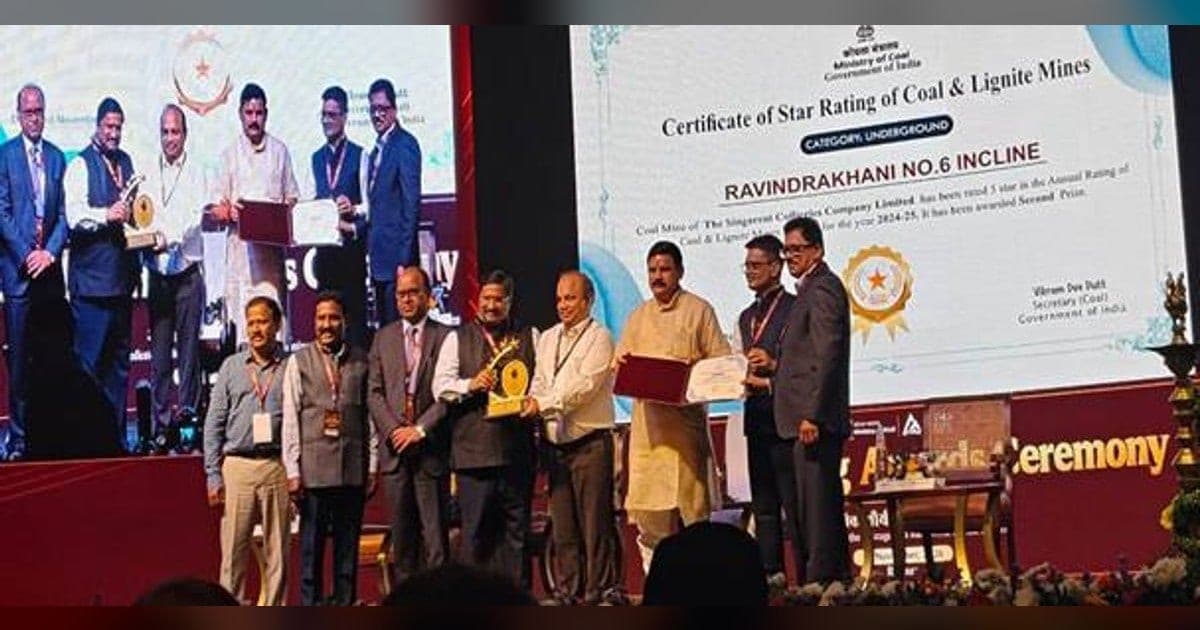
50 Coal Mines Win Five-Star Rating for FY 2024-25 at Raipur
The Ministry of Coal held the Annual Star Rating Awards for FY 2024-25 at Raipur, where 50 coal mines received Five-Star Ratings and NCL and NTPC topped opencast.
2 November 2026 · 2 min read
- Government Schemes
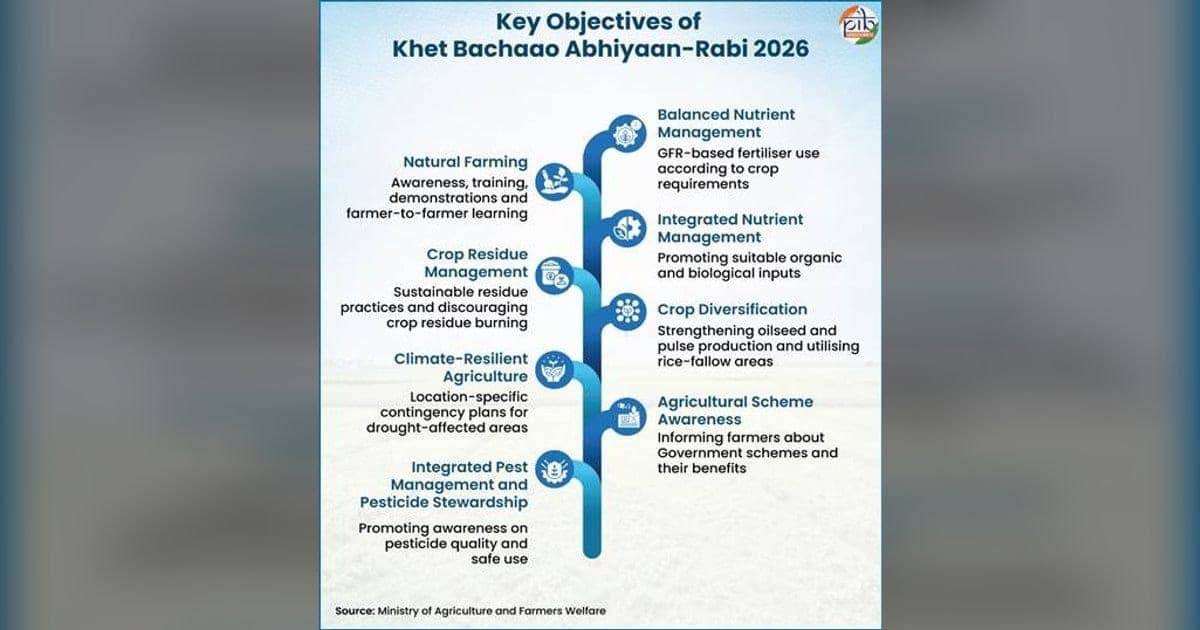
Khet Bachaao Abhiyaan-Rabi 2026 Covers 700 Districts, 50 Lakh Farmers
2 November 2026 · 2 min read
- Important Days
State Foundation Day Marked by Haryana, Chhattisgarh and MP
1 November 2026 · 2 min read
Madhya Pradesh Practice Quizzes
View all- Current Affairs Quiz
Madhya Pradesh Weekly Current Affairs Quiz: 26 October – 1 November 2026
29 questions29 minutesStart Quiz - Current Affairs Quiz
Madhya Pradesh Current Affairs Quiz: October 2026
50 questions50 minutesStart Quiz - GK Quiz
Madhya Pradesh Quiz: Districts, Divisions and Firsts of Madhya Pradesh
11 questions11 minutesStart Quiz - GK Quiz
Madhya Pradesh Quiz: Sports and State Awards of Madhya Pradesh
11 questions11 minutesStart Quiz - GK Quiz
Madhya Pradesh Quiz: Transport and Tourism of Madhya Pradesh
11 questions11 minutesStart Quiz - Current Affairs Quiz
Madhya Pradesh Weekly Current Affairs Quiz: 19–25 October 2026
21 questions21 minutesStart Quiz
Madhya Pradesh exams at a glance
Two bodies fill most state government posts in Madhya Pradesh. The Madhya Pradesh Public Service Commission (MPPSC), Indore, holds the State Service Examination (SSE) for Class II gazetted and Class III executive posts. The Madhya Pradesh Employees Selection Board (MPESB), Bhopal, holds combined recruitment tests for Class III posts in state departments, boards and corporations. The facts below are as per MPPSC Advertisement No. 29/2025 of 31 December 2025 for the State Service Examination 2026, its revised exam plan and syllabus of 21 January 2026, its corrigendum of 20 May 2026 and its Mains notice of 24 May 2026. MPESB facts are as per the rulebook of 4 August 2026 for the Group-2 Sub Group-4 Combined Recruitment Test 2026 and the Board's notice of 23 September 2026.
| Item | MPPSC State Service Exam 2026 | MPESB Group-2 Sub Group-4 Test 2026 |
|---|---|---|
| Conducting body | Madhya Pradesh Public Service Commission, Indore | Madhya Pradesh Employees Selection Board, Bhopal |
| Posts | 156 posts in 21 cadres, from Deputy Collector and DSP to Naib Tehsildar and Excise Sub-Inspector | Class III posts of many departments, including a special Patwari recruitment of 200 posts for persons with disabilities |
| Stages | Preliminary (objective, OMR), Main (descriptive), Interview | One online test |
| Written papers | Prelims: 2 papers of 300 marks each. Mains: 6 papers, 1,500 marks | 1 paper of 200 marks in two parts |
| Duration | Prelims: 2 hours per paper. Mains: 2 to 3 hours per paper | 3 hours |
| Negative marking | Prelims: 3 marks for a right answer, 1 mark deducted for a wrong one | 1 mark for a right answer, 0.25 mark deducted for a wrong one |
| Interview | 185 marks; grand total 1,685 marks | No interview |
| Qualification | Graduate degree | Degree as required by the recruiting department's rules |
| Age (as on 1 January 2026) | 21 to 40 years; 21 to 33 for uniformed posts | 18 to 40 years; up to 45 for listed categories |
| Fee | ₹500; ₹250 for MP-domicile SC, ST, OBC, EWS and PwD | ₹500; ₹250 for MP-domicile SC, ST, OBC, EWS and PwD |
| Dates | Prelims 26 April 2026 and Mains 7 to 12 September 2026 (both held); interview not announced | Online test from 23 September to 5 October 2026 |
| Official site | mppsc.mp.gov.in | esb.mp.gov.in |
Selection process
MPPSC State Service Examination
- Online application on mponline.gov.in or mppsc.mp.gov.in. For SSE 2026 the window was 10 January to 9 February 2026. Late forms were taken with a fee of ₹3,000 till 16 February and ₹25,000 till 3 April 2026.
- Preliminary Examination. Two objective papers on OMR sheets, held on one day at district headquarters. It is only an eligibility test for the Mains, and its marks do not count in the final merit.
- Shortlisting for the Mains. Up to 20 times the vacancies are shortlisted category-wise. An unreserved candidate needs at least 40% in each Prelims paper. SC, ST, OBC, EWS and PwD candidates need 30%. Paper II marks are not used for ranking.
- Main Examination. Six compulsory descriptive papers, answered in a structured question-cum-answer booklet. The minimum is 40% in each paper for unreserved candidates and 30% for SC, ST, OBC, EWS and PwD candidates.
- Interview. Three times the posts, category-wise, are called. The interview carries 185 marks.
- Final merit is the sum of Mains and interview marks. On a tie, higher written marks rank first, then the older candidate. Selected candidates are appointed on two years' probation.
Because cases on OBC reservation are pending, MPPSC declares SSE results in two parts: a main part of 87% of the posts and a provisional part of 13%. Candidates in the provisional part stay provisional until the courts decide.
MPESB Combined Recruitment Test
- Online application through MP Online, with Aadhaar registration and a live registration at an MP employment office. The candidate marks post preferences in the same form.
- Online test of one paper, in two shifts a day, with biometric verification at entry and during the test.
- Result and selection on the test score, post by post, in the order of the candidate's preferences. Unreserved candidates need 50% of the total. SC, ST, OBC and PwD candidates get 10% relaxation, so they need 40%; EWS candidates also get 10% relaxation. The recruiting department checks documents before appointment.
Exam pattern
SSE Preliminary Examination 2026
| Paper | Subject | Questions | Marks | Time |
|---|---|---|---|---|
| Paper I | General Studies | 100 | 300 | 2 hours (10:00 am to 12:00 noon) |
| Paper II | General Aptitude Test (qualifying) | 100 | 300 | 2 hours (2:15 pm to 4:15 pm) |
Each question has four options and carries 3 marks. Marks are worked out as 3R minus W, so each wrong answer costs 1 mark. Both papers are set in Hindi and English. The Hindi comprehension questions of Paper II come only in Hindi, at about Class 10 level. Where the Hindi and English versions of a question differ, the Hindi version is final.
SSE Main Examination 2026
| Paper | Parts | Marks | Time | Medium |
|---|---|---|---|---|
| General Studies Paper I | (A) History; (B) Geography | 150 + 150 | 3 hours | Hindi or English |
| General Studies Paper II | (A) Political Science; (B) Sociology | 150 + 150 | 3 hours | Hindi or English |
| General Studies Paper III | (A) Economics; (B) Science, Technology and Public Health | 150 + 150 | 3 hours | Hindi or English |
| General Studies Paper IV | (A) Philosophy, Psychology, Public Administration and Case Study; (B) Entrepreneurship, Management, Personality Development and Case Study | 150 + 150 | 3 hours | Hindi or English |
| Paper V | General Hindi and Grammar | 200 | 2 hours | Hindi only |
| Paper VI | Hindi Essay and Draft Writing | 100 | 2 hours 30 minutes | Hindi only |
| Total | Six compulsory papers | 1,500 | – | – |
Each part of General Studies Papers I to III has 30 questions: 15 very short answers of 2 marks (20 words), 10 short answers of 7 marks (60 words) and 5 long answers of 10 marks (200 words). Each part of Paper IV has 29 questions: 16 of 2 marks, 8 of 7 marks, 4 of 11 marks and one case study of 18 marks. Paper VI has two essays of 50 and 20 marks, a draft-writing question of 15 marks and a report of 15 marks. Candidates who choose English for General Studies must still answer Paper VI in Hindi. With the 185-mark interview, the SSE total is 1,685 marks.
MPESB Group-2 Sub Group-4 Test 2026
| Part | Subjects | Marks |
|---|---|---|
| Part A | General Science, General Hindi, General English, General Mathematics | 100 |
| Part B | General Knowledge and Aptitude, General Computer Knowledge, General Reasoning Ability, General Management | 100 |
| Total | One online paper of 3 hours | 200 |
Questions are objective, with four options, in Hindi and English. Each right answer earns 1 mark and each wrong answer costs 0.25 mark. The shifts run from 9:00 am to 12:00 noon and from 2:30 pm to 5:30 pm.
General Studies syllabus and Madhya Pradesh GK
MPPSC gives Madhya Pradesh units of its own. The General Studies paper of the SSE Prelims has ten units:
- History of India
- History, Culture and Literature of Madhya Pradesh
- Geography of India
- Geography of Madhya Pradesh
- Constitutional System of India and Madhya Pradesh
- Economy of India and Madhya Pradesh
- Science, Environment and Health
- International, National and Current Events of Madhya Pradesh
- Information and Communication Technology
- Tribes of Madhya Pradesh: Heritage, Folk Culture and Folk Literature
The Madhya Pradesh units list the state's dynasties and major events, its part in the freedom movement, tribes and their dialects, festivals, folk music and folk literature, writers and their works, tourist places and World Heritage sites. They also list rivers, forests, soils, minerals, crops, irrigation projects and industries of the state, its Governor, Cabinet, Legislative Assembly and High Court, Panchayati Raj, and schemes such as One District One Product. The General Aptitude Test covers comprehension, communication skills, logical reasoning, decision making, general mental ability, basic numeracy and data interpretation at Class 10 level, and Hindi comprehension.
The Mains has no separate paper on Madhya Pradesh; the state sits inside each General Studies paper. History asks about MP's dynasties, the princely states of Gondwana, Bundeli, Bagheli, Holkar, Scindia and Bhopal, and tribal heroes such as Tantya Bhil and Bhimaji Nayak. Geography has a unit on the physical divisions, rivers, soils, forests, crops and industries of MP. Political Science covers the formation of MP in 1956, its partition in 2000, the state legislature, the High Court, district administration and Panchayati Raj. Sociology and Economics add the tribes and folk culture of MP and an overview of the state economy.
The MPESB rulebook names the subject only as General Knowledge and Aptitude. It prints no detailed topic list and no separate Madhya Pradesh GK section.
GK24 covers national GK and current affairs. It does not have a separate Madhya Pradesh GK section. As guidance, GK24's notes on Indian History, Geography, Polity, Economy and Science match the national units above, while the Madhya Pradesh units need state sources.
Eligibility and age limit
MPPSC SSE 2026
- Qualification: a graduate degree from a university set up by a central or state Act or deemed under the UGC Act, or an equivalent qualification. Final-year students may take the Prelims but must pass graduation by the last date of the Mains application.
- Age: 21 to 40 years for non-uniformed posts and 21 to 33 years for uniformed posts, as on 1 January 2026.
- Relaxation: 5 years for SC, ST, OBC, employees of the government, corporations, boards and autonomous bodies, Nagar Sainik, PwD and women; for uniformed posts the notice lists the same groups except PwD. With all relaxations the age may not exceed 45 years, or 38 years for uniformed posts. Ex-servicemen may deduct their defence service if the result is not more than 3 years above the limit.
- Domicile: reservation and age relaxation are given only to natives of Madhya Pradesh. Candidates of these categories from other states are treated as unreserved.
- Physical standards for uniformed posts: height 168 cm and chest 84 cm (89 cm expanded) for men; height 155 cm for women.
MPESB Group-2 Sub Group-4 2026
- Qualification: a graduate degree in the subject the recruiting department's rules require, held on the date of application. Each post in the rulebook states its own qualification.
- Age: 18 to 40 years as on 1 January 2026. The limit is 45 years for MP-domicile SC, ST and OBC candidates, government and corporation employees, Nagar Sainik, PwD and women. EWS candidates get no age relaxation.
- Registration: a live registration with an MP employment office is compulsory for every post.
- Patwari special recruitment: MP residents with a disability certificate, a graduate degree and a CPCT score card with Hindi typing. A selected candidate without CPCT must pass it within the three-year probation. Age 18 to 45 years.
Important dates
MPPSC SSE 2026
| Event | Date |
|---|---|
| Advertisement No. 29/2025 | 31 December 2025 |
| Online application | 10 January to 9 February 2026 |
| With late fee | ₹3,000 till 16 February; ₹25,000 till 3 April 2026 |
| Preliminary Examination | 26 April 2026 (held) |
| Prelims result | 22 May 2026 |
| Mains application | 25 May to 15 June 2026 |
| Main Examination | 7 to 12 September 2026 (held) |
| Interview | Not announced |
The Mains was held at 12 centres: Indore, Bhopal, Gwalior, Jabalpur, Chhindwara, Ratlam, Satna, Sagar, Shahdol, Barwani, Ujjain and Balaghat. MPPSC has not yet announced the next SSE cycle.
MPESB Group-2 Sub Group-4 2026
| Event | Date |
|---|---|
| Online application | 4 to 21 August 2026 (extended from 18 August) |
| Correction window | 4 to 23 August 2026 |
| Online test | 23 September to 5 October 2026 |
The rulebook had fixed the start of the test for 22 September 2026. The Board's notice of 23 September 2026 says the test is being held from 23 September to 5 October 2026. Candidates whose test fell on 26, 27 or 28 September and who also had the ASI/Head Constable (Computer) practical test on 27 September have been given new dates and revised admit cards.
How to prepare General Studies and current affairs for MP exams
This plan is guidance from GK24, not part of any notice.
- Build national GK first. Read GK24's topic-wise GK notes on History, Geography, Polity, Economy and Science. They cover units 1, 3, 5, 6, 7 and 9 of the Prelims General Studies paper and much of Part B of the MPESB test.
- Add Madhya Pradesh from state sources. GK24 has no separate MP GK section. Use the MPPSC syllabus as your checklist and state government publications, such as the MP Economic Survey and the Public Relations Department's releases, for MP facts.
- Read current affairs daily. GK24 publishes daily current affairs in English and Hindi from official releases. Cover the last 12 months, and add MP events from state sources, since unit 8 asks about international, national and state events.
- Practise with quizzes. Take GK24's timed quizzes. In the SSE Prelims a wrong answer costs a third of a right one; in the MPESB test it costs a quarter. Skip what you do not know.
- Solve previous-year questions. GK24's previous-year questions show how facts are framed. MPPSC and MPESB also publish old question papers on their own websites.
- Write for the Mains. Practise 20-, 60- and 200-word answers, and Hindi essays and drafts for Paper VI.
Posts and pay
MPPSC SSE 2026: 156 posts
Corrigendum 04/29/2025 of 20 May 2026 fixed the SSE 2026 posts at 156: 140 in the main part and 16 in the provisional part. The larger posts and their pay scales, as printed in the advertisement:
| Post | Posts | Pay scale as printed |
|---|---|---|
| Deputy Collector (State Administrative Service) | 17 | ₹15,600–39,100 + ₹5,400 grade pay |
| Deputy Superintendent of Police | 18 | ₹15,600–39,100 + ₹5,400 grade pay |
| Additional Assistant Development Commissioner (CEO, Janpad Panchayat) | 16 | ₹9,300–34,800 + ₹4,200 grade pay |
| Block Women Empowerment Officer | 39 | ₹9,300–34,800 + ₹3,600 grade pay |
| Cooperative Inspector / Cooperative Extension Officer | 16 | ₹36,200–1,14,800 (7th pay) |
| Excise Sub-Inspector | 10 | ₹9,300–34,800 + ₹3,600 grade pay |
| Chief Municipal Officer, Class B / Class C | 4 / 5 | ₹15,600–39,100 + ₹5,400 / ₹9,300–34,800 + ₹3,600 grade pay |
| Block Development Officer | 5 | ₹9,300–34,800 + ₹3,600 grade pay |
| Naib Tehsildar | 4 | ₹9,300–34,800 + ₹3,600 grade pay |
The other posts include Commercial Tax Officer, Assistant Director (Public Relations), Child Development Project Officer, Sub Registrar and Assistant Labour Officer. Dearness and other allowances are paid on these scales as the state sanctions.
MPESB Group-2 Sub Group-4 2026
The rulebook lists the posts department by department. Some of the larger ones:
| Post | Department | Posts | Pay as printed |
|---|---|---|---|
| Patwari (special recruitment, PwD) | Land Resource Management, Gwalior (Revenue) | 200 | ₹5,200–20,200 + ₹2,100 grade pay |
| Assistant Sub-Inspector | MP State Agricultural Marketing Board | 530 | ₹25,300–80,500 (Level 6) |
| Sub Auditor | Commissioner, Cooperation and Registrar of Cooperative Societies | 105 | ₹25,300–80,500 |
| Statistical Investigator | Women and Child Development | 88 | ₹28,700–91,300 |
| Mandal Sanyojak | Tribal Affairs | 72 | ₹28,700–91,300 |
The Board later deleted five posts of the Panchayat Raj Directorate (post codes 97 to 101) from this test and is refunding the fee of those applicants.
Frequently Asked Questions
Is there negative marking in the MPPSC State Service Prelims?
Yes. As per the SSE 2026 exam plan, each question carries 3 marks and marks are worked out as 3R minus W, so each wrong answer costs 1 mark. This applies to both Paper I (General Studies) and Paper II (General Aptitude Test). An unanswered question costs nothing.
What is the age limit for MPPSC SSE 2026?
As on 1 January 2026, the age must be 21 to 40 years for non-uniformed posts and 21 to 33 years for uniformed posts. MP-domicile SC, ST, OBC, women, PwD, government employees and some other groups get 5 years of relaxation, but the age may not exceed 45 years (38 for uniformed posts) with all relaxations.
Is there a separate paper on Madhya Pradesh in the MPPSC Mains?
No. The SSE Mains has four General Studies papers, General Hindi and Grammar, and Hindi Essay and Draft Writing. Madhya Pradesh is covered inside the General Studies papers: its history, princely states and tribal heroes in Paper I, its geography in Paper I, its polity and administration in Paper II, and its economy in Paper III. In the Prelims, three of the ten General Studies units are only on Madhya Pradesh.
Do the General Aptitude Test marks count in the SSE Prelims result?
No. Paper II is qualifying. A candidate must score at least 40% in it (30% for SC, ST, OBC, EWS and PwD), but only Paper I marks decide the merit for the Mains. Prelims marks do not count in the final merit, which uses Mains and interview marks.
When is the MPESB Group-2 Sub Group-4 test 2026?
The Board's notice of 23 September 2026 says the online test is being held from 23 September to 5 October 2026, in two shifts a day. The online application window was 4 to 21 August 2026. Admit cards are on the MPESB website.
What is the MPESB Group-2 Sub Group-4 exam pattern?
One online objective paper of 200 marks and 3 hours. Part A (General Science, General Hindi, General English and General Mathematics) carries 100 marks, and Part B (General Knowledge and Aptitude, General Computer Knowledge, General Reasoning Ability and General Management) carries 100 marks. A right answer earns 1 mark and a wrong one costs 0.25 mark.
Does GK24 cover Madhya Pradesh GK?
Not as a separate section. GK24 covers national GK, daily current affairs, quizzes and previous-year questions in English and Hindi, which match the national units of the MPPSC and MPESB syllabi. For the Madhya Pradesh units, use the MPPSC syllabus as a checklist and state government sources.