
Watershed Guidelines: 3rd National Consultation in Nagpur
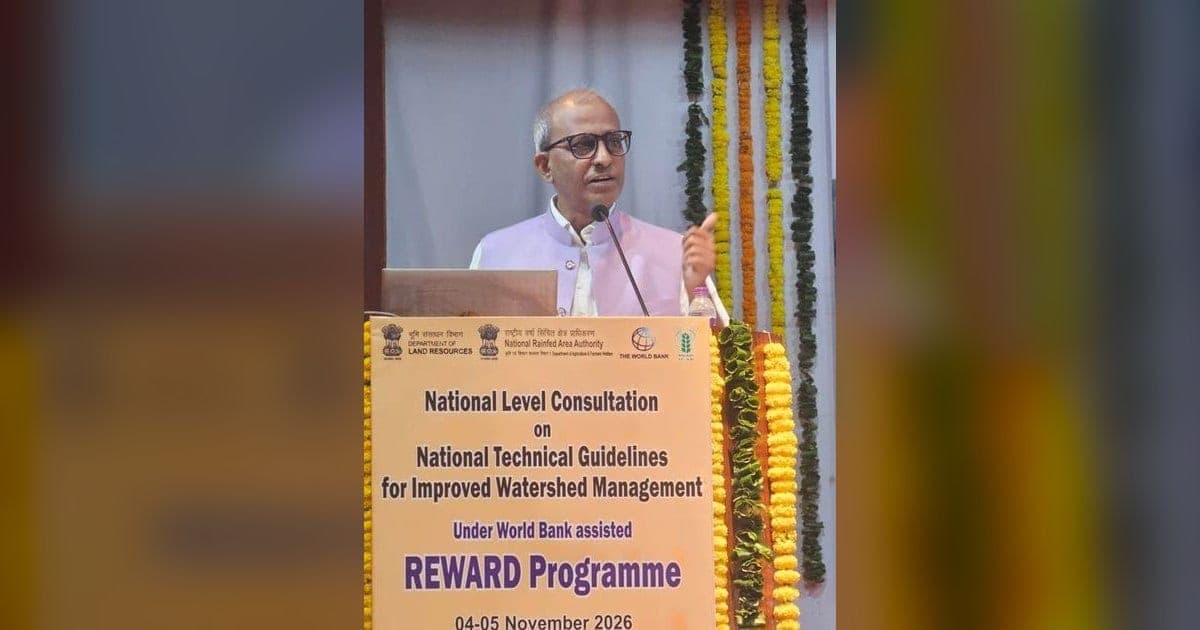
The third national consultation on the draft National Technical Guidelines for watershed management was held on 4-5 November 2026 at ICAR-NBSS-LUP, Nagpur.
Why in News
On 5 November 2026 the Department of Land Resources, the National Rainfed Area Authority and the ICAR soil survey bureau at Nagpur concluded the two-day third national consultation on the draft National Technical Guidelines for improved watershed management under the World Bank-assisted REWARD programme.
The Department of Land Resources (DoLR) under the Ministry of Rural Development, with the National Rainfed Area Authority (NRAA) of the Ministry of Agriculture and Farmers Welfare, held a two-day national consultation on watershed management at Nagpur. The meeting was hosted together with the ICAR-National Bureau of Soil Survey and Land Use Planning, Nagpur, and ran on 4 and 5 November 2026.
What the meeting was about
This was the third national-level consultation on the draft National Technical Guidelines (NTG) for improved watershed management. The exercise sits under the World Bank-assisted REWARD programme, whose full name is Rejuvenating Watersheds for Agricultural Resilience through Innovative Development. Policymakers, technical experts, researchers, development partners and representatives of several States came together to shape a scientific, technology-driven, cost-effective and participatory framework for watershed work.
Who said what
Secretary, DoLR, Shri Dilip Kumar asked for a balance between scientific rigour and workable field practice, cautioning that guidelines which are too rigid trip up implementation on the ground. He wanted States given flexibility in keeping with their institutional capacity, technical strength and administrative arrangements, and said that a flexible, realistic framework which delivers 80 to 90 per cent of the intended aims is worth more than overly rigid standards. He also pressed for robust baseline data and a full impact assessment of WDC-PMKSY 2.0, so that the gaps found feed into the design of WDC-PMKSY 3.0, and asked that well-performing States and field officers be recognised.
Dr Chandra Sekhar Kumar, Chief Executive Officer of the NRAA, sought a harmonised national Decision Support System built from the best features of the systems already running in Odisha and Karnataka, and wider use of legacy datasets. Joint Secretary Shri Nitin Khade said the guidelines must be finalised in a time-bound manner and tied the work to the goal of a drought-resilient, developed India by 2047.
Technology and community
- Land Resource Inventory (LRI), digital soil libraries and Decision Support Systems were held up as tools that can reshape village-level planning of soil and water conservation, cropping patterns and nutrient management.
- Project timelines have been cut from seven years under WDC-PMKSY 1.0 to five years under WDC-PMKSY 2.0.
- GIS, remote sensing, high-resolution satellite imagery and drones are to be used as local needs demand.
- Farmer Producer Organisations, User Groups and Self-Help Groups are to be strengthened so that water harvesting structures are maintained after a project closes.
Delegates came from the DoLR, the NRAA, the World Bank, the REWARD project States of Odisha and Karnataka, NABARD, ICRISAT, WASSAN, NRSC, MANAGE, voluntary organisations and ICAR institutes. Ms Priti Kumar, Senior Agriculture Specialist and Task Team Leader at the World Bank, and Dr N.G. Patil, Director of the host institute, attended the inaugural session.
Important Facts
| Event | 3rd National Level Consultation on the Draft National Technical Guidelines for Improved Watershed Management |
|---|---|
| Dates | 4 and 5 November 2026 (two-day) |
| Venue | ICAR-National Bureau of Soil Survey and Land Use Planning, Nagpur |
| Organisers | Department of Land Resources (Ministry of Rural Development), National Rainfed Area Authority (Ministry of Agriculture and Farmers Welfare), ICAR soil survey bureau |
| Programme | World Bank-assisted REWARD programme |
| REWARD full form | Rejuvenating Watersheds for Agricultural Resilience through Innovative Development |
| Secretary, DoLR | Shri Dilip Kumar |
| CEO, NRAA | Dr Chandra Sekhar Kumar |
| World Bank Task Team Leader | Ms Priti Kumar |
| REWARD project States | Odisha and Karnataka |
Exam Point of View
Remember the edition (third), the dates (4-5 November 2026), the venue (ICAR-NBSS-LUP, Nagpur), the three organising bodies and their ministries, the funder (World Bank), the REWARD full form, the two project States (Odisha and Karnataka), and the cut in project duration from seven years under WDC-PMKSY 1.0 to five years under WDC-PMKSY 2.0.
Practice Questions
The draft National Technical Guidelines for improved watershed management are being prepared under which World Bank-assisted programme?
- A.REWARD
- B.PRANAM
- C.AMRUT
- D.RAFTAAR
Show answer
The third national-level consultation on the draft National Technical Guidelines was held under the World Bank-assisted REWARD programme, whose expanded name is Rejuvenating Watersheds for Agricultural Resilience through Innovative Development.
Read the full explanation →At which institute was the third national consultation on watershed management guidelines hosted on 4 and 5 November 2026?
- A.ICAR-Indian Agricultural Research Institute, New Delhi
- B.ICAR-National Bureau of Soil Survey and Land Use Planning, Nagpur
- C.ICAR-Indian Institute of Soil and Water Conservation, Dehradun
- D.National Remote Sensing Centre, Hyderabad
Show answer
The two-day consultation was organised in collaboration with this bureau and held on its campus, and its Director, Dr N.G.
Read the full explanation →Under WDC-PMKSY 2.0, how long is a watershed project allowed to run?
- A.Three years
- B.Five years
- C.Seven years
- D.Ten years
Show answer
Joint Secretary in the Department of Land Resources, Shri Nitin Khade, noted at the consultation that the project timeline had been brought down progressively, from seven years in the first phase of the watershed development component to five years in the second phase, and he asked for faster implementation within…
Read the full explanation →The harmonised national Decision Support System proposed by the NRAA Chief Executive Officer would draw on the systems already developed by which two States?
- A.Odisha and Karnataka
- B.Gujarat and Maharashtra
- C.Rajasthan and Madhya Pradesh
- D.Telangana and Andhra Pradesh
Show answer
Dr Chandra Sekhar Kumar, the Chief Executive Officer of the National Rainfed Area Authority, called for a harmonised Decision Support System at the national level that takes in the best features of the systems built by Odisha and Karnataka, so that watershed planning across States becomes integrated.
Read the full explanation →Frequently Asked Questions
Under which World Bank-assisted programme are the National Technical Guidelines for watershed management being framed?
Under the REWARD programme, short for Rejuvenating Watersheds for Agricultural Resilience through Innovative Development. Odisha and Karnataka are its project States, and the draft guidelines will also serve as technical input for WDC-PMKSY 3.0.
Where and when was the third national consultation on the draft watershed guidelines held?
At the ICAR-National Bureau of Soil Survey and Land Use Planning in Nagpur on 4 and 5 November 2026. The Department of Land Resources and the National Rainfed Area Authority organised it with the host institute.
How long does a watershed project run under WDC-PMKSY 2.0?
Five years. The timeline was brought down from seven years under WDC-PMKSY 1.0, and Joint Secretary Nitin Khade asked for faster implementation of projects under the second phase.
Sources
- https://www.pib.gov.in/PressReleasePage.aspx?PRID=2332894 (opens in a new tab) — Press Information Bureau
Current Affairs 5 November 2026
- VB-G RAM G: Centre Marks 22 Fodder and Livestock WorksGovernment Schemes
- 4th Conference of Mining Ministers Begins in GoaSummits & Conferences
- NHRC Push Sets Up Gender-Neutral Cell in Hyderabad JailNational
- CAPEX Scheme Backs Lithium, Nickel Units with Rs 2,814 CroreGovernment Schemes
- BIS Hallmarking: 65 Crore Gold Articles Carry HUID CodeNational
- Railways Wins PM Surya Ghar Excellence Award from VPAwards & Honours
- AIIMS Awantipora OPD to Open Before December 2026National
- SRI Fund Has Backed 824 MSMEs with Rs 21,330 CroreEconomy
Related Current Affairs
- International
Sitharaman Attends 114th World Bank Development Committee Meet
15 October 2026 · 2 min read
- Reports & Indices
World Development Report 2026 on AI Launched in New Delhi
8 October 2026 · 3 min read
- Government Schemes
CAPEX Scheme Backs Lithium, Nickel Units with Rs 2,814 Crore
5 November 2026 · 2 min read
- Government Schemes
VB-G RAM G: Centre Marks 22 Fodder and Livestock Works
5 November 2026 · 2 min read
- Government Schemes
Vayo Samman Rashtriya Abhiyan Launched for Senior Citizens
4 November 2026 · 3 min read

Related GK
- BIS, ADB, AIIB and NDB: Institutions for Bank Exams
6 October 2026 · Banking & Financial Awareness
- G20, BRICS and Economic Groupings: Exam Notes
4 October 2026 · Indian Economy
- IMF, World Bank and WTO: Functions and Facts
3 October 2026 · Indian Economy
Take the Quiz
- Current Affairs Quiz
Banking Current Affairs Quiz: 5 November 2026
25 questions25 minutesStart Quiz