
Tribal Affairs Ministry and IGNCA Sign MoU on Tribal Heritage
The Ministry of Tribal Affairs and the Indira Gandhi National Centre for the Arts signed an MoU to document, digitise and promote India's tribal cultural heritage.
Why in News
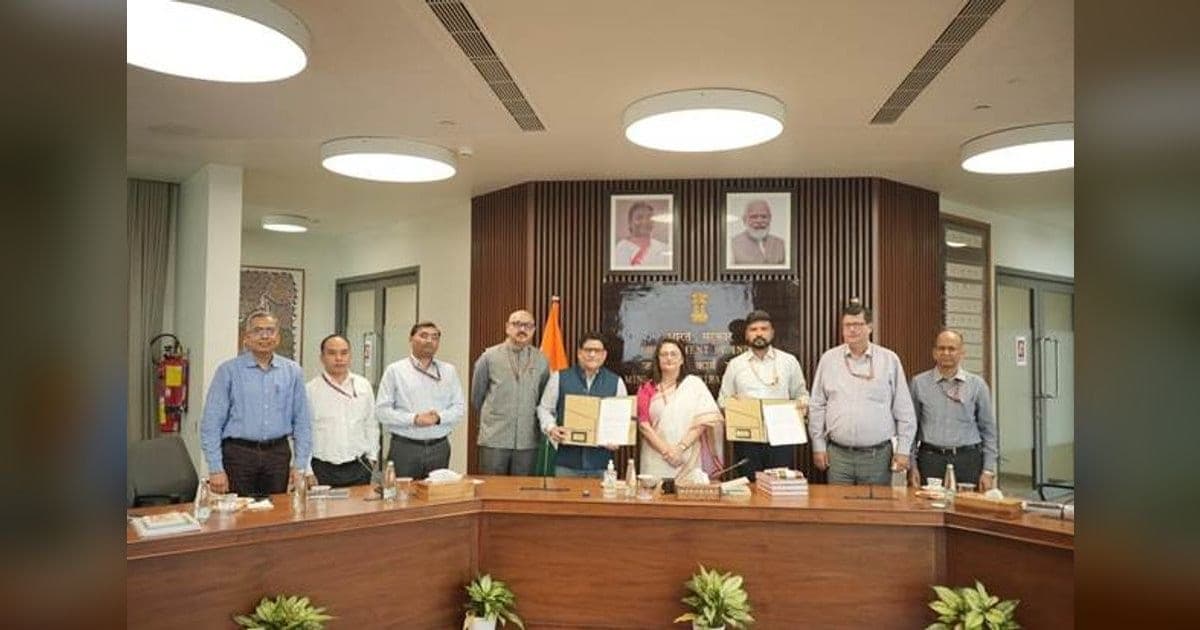
The Ministry of Tribal Affairs and the Indira Gandhi National Centre for the Arts signed a Memorandum of Understanding on 28 September 2026 in New Delhi for the preservation, documentation, digitisation and promotion of India's tangible and intangible tribal cultural heritage.
The Ministry of Tribal Affairs and the Indira Gandhi National Centre for the Arts (IGNCA) signed a Memorandum of Understanding on 28 September 2026 in New Delhi for the preservation, documentation, digitisation, research and promotion of India's tribal cultural heritage. IGNCA is an autonomous trust under the Ministry of Culture, so the agreement joins two ministries' resources on one subject.
Who signed and who was present
The MoU was signed in the presence of Ranjana Chopra, Secretary, Ministry of Tribal Affairs, and Dr K. Anil Kumar, Head of Department, IGNCA, along with senior officials of both institutions. Ganesh Nagarajan, Deputy Secretary in the ministry, said the agreement provides an institutional framework that brings the strengths of the two bodies together. The Secretary said the partnership would add to tribal empowerment and to wider recognition of India's tribal traditions.
What the two sides bring
The ministry contributes its tribal research ecosystem and its network of Tribal Research Institutes (TRIs), which work in the states. IGNCA contributes academic, archival, research and curatorial capacity. Together they are to build an institutional framework for the systematic identification, documentation, digitisation, publication and spread of tribal arts, music, musical instruments, crafts, cuisines, languages, oral traditions, folklore, customary practices and traditional ecological knowledge, covering both tangible and intangible heritage.
The work planned
| Area | What is planned |
| Languages | Identification, protection and promotion of endangered tribal languages and oral traditions |
| Archives | Digital archives of tribal arts, artefacts and traditional knowledge |
| Museums | Dedicated galleries and digital museums, including tribal contributions to the freedom struggle |
| Youth | Camps in schools and colleges on tribal cultural values and conservation practices |
| Outreach | Exhibitions, publications, digital platforms and cultural festivals |
Why it matters
Much of India's tribal heritage is living and community-based, carried by practice rather than by written record, which is why documentation is treated as urgent: vanishing arts, instruments and cuisines leave no trace once the last practitioner stops. The collaboration also aims to give tribal scholars, artists, artisans, performers and traditional knowledge holders visibility on national and international platforms, and to design interactive museum galleries with dedicated showcases on the part tribal communities played in India's freedom struggle.
Important Facts
| Agreement | Memorandum of Understanding on tribal cultural heritage |
|---|---|
| Signed between | Ministry of Tribal Affairs and Indira Gandhi National Centre for the Arts (IGNCA) |
| Date and place | 28 September 2026, New Delhi |
| IGNCA status | Autonomous trust under the Ministry of Culture |
| Secretary, Tribal Affairs | Ranjana Chopra |
| IGNCA official | Dr K. Anil Kumar, Head of Department |
| Ministry network used | Tribal Research Institutes (TRIs) |
| Scope | Preservation, documentation, digitisation, research and promotion of tangible and intangible tribal heritage |
| Museum plan | Galleries and digital museums, including tribal contributions to the freedom struggle |
Exam Point of View
Remember the two signatories (Ministry of Tribal Affairs and IGNCA), that IGNCA is an autonomous trust under the Ministry of Culture, the date of signing (28 September 2026), the Secretary of Tribal Affairs (Ranjana Chopra), the role of the Tribal Research Institutes, and the planned digital archives, museum galleries on the freedom struggle and protection of endangered tribal languages.
Practice Questions
The Ministry of Tribal Affairs signed an MoU on tribal cultural heritage with which institution?
- A.Indira Gandhi National Centre for the Arts
- B.Anthropological Survey of India
- C.National School of Drama
- D.Indian Council of Historical Research
Show answer
Correct answer: A. Indira Gandhi National Centre for the Arts
Explanation
The correct answer is the Indira Gandhi National Centre for the Arts, or IGNCA, which is an autonomous trust functioning under the Ministry of Culture. The MoU was signed in New Delhi on 28 September 2026 for the preservation, documentation, digitisation, research and promotion of India's tangible and intangible tribal cultural heritage, and it brings the ministry's network of Tribal Research Institutes together with IGNCA's academic, archival and curatorial strengths. Option B is wrong because the Anthropological Survey of India, though it studies communities, was not a party to this agreement. Option C is wrong because the National School of Drama trains theatre practitioners and had no role here. Option D is wrong because the Indian Council of Historical Research funds historical research and was not named. The signing took place in the presence of the Secretary of the Ministry of Tribal Affairs, Ranjana Chopra.
IGNCA, which signed the tribal heritage MoU, functions as an autonomous trust under which ministry?
- A.Ministry of Education
- B.Ministry of Tribal Affairs
- C.Ministry of Culture
- D.Ministry of Tourism
Show answer
Correct answer: C. Ministry of Culture
Explanation
The correct answer is the Ministry of Culture. The Indira Gandhi National Centre for the Arts is an autonomous trust under that ministry, which is what makes this agreement a joining of two ministries' resources on one subject: tribal heritage. Option A is wrong because the Ministry of Education runs schooling and higher education and does not administer IGNCA. Option B is wrong because the Ministry of Tribal Affairs is the other party to the MoU, contributing its tribal research ecosystem and its network of Tribal Research Institutes rather than housing IGNCA. Option D is wrong because tourism promotion is a separate function and has no administrative link with the centre. Under the agreement IGNCA brings academic, archival, research and curatorial expertise to the documentation and digitisation of tribal arts, languages, oral traditions and crafts.
Which of the following is a stated area of work under the Tribal Affairs and IGNCA MoU?
- A.Setting minimum support prices for forest produce
- B.Digital museums including tribal contributions to the freedom struggle
- C.Recruitment of teachers in Eklavya Model Residential Schools
- D.Granting forest rights titles under the Forest Rights Act
Show answer
Correct answer: B. Digital museums including tribal contributions to the freedom struggle
Explanation
The correct answer is digital museums including tribal contributions to the freedom struggle. The agreement names the development of dedicated galleries and digital museums showcasing tribal arts, artefacts and the historical contributions of tribal communities to India's freedom struggle as a key area of cooperation, alongside digital archives and interactive museum galleries. Option A is wrong because pricing of forest produce is a separate procurement matter and is not part of this cultural agreement. Option C is wrong because school recruitment is an administrative function of the education and tribal welfare machinery and finds no place in the MoU. Option D is wrong because granting titles under forest rights law is a statutory process carried out by state authorities. The other stated areas are documentation of vanishing arts, music and cuisines, protection of endangered tribal languages and oral traditions, and youth camps in educational institutions.
Frequently Asked Questions
Which two bodies signed the MoU on tribal cultural heritage?
The Ministry of Tribal Affairs and the Indira Gandhi National Centre for the Arts, an autonomous trust under the Ministry of Culture. The MoU was signed on 28 September 2026 in New Delhi for the preservation, documentation, digitisation, research and promotion of tribal cultural heritage.
What will the partnership actually do?
It will document, digitise and publish tribal arts, music, musical instruments, crafts, cuisines, languages, oral traditions and folklore, protect endangered tribal languages, build digital archives and museum galleries including showcases on tribal contributions to the freedom struggle, and run youth camps in educational institutions.
What are Tribal Research Institutes?
They are the ministry's network of research institutes in the states, forming its tribal research ecosystem. Under the MoU their work is joined with IGNCA's academic, archival, research and curatorial expertise to document and promote tribal heritage.
Sources
Current Affairs 29 September 2026
- Literacy Rate Reaches 81.1% as Ten States Declare Full LiteracyReports & Indices
- India's First PRAMAAN Forest Certificates Handed Over in DelhiEnvironment
- NIFT Wins Two Silver Medals at WorldSkills Shanghai 2026Awards & Honours
- Special Campaign 6.0 to Run from 2 to 31 October 2026National
- PM-RKVY: Rs 1200 Crore Sanctioned to 10 States at Rabi MeetGovernment Schemes
- VB-G RAM G Act Guarantees 125 Days of Rural Wage WorkGovernment Schemes
- Two Officials Held for Bribery over FCRA RegistrationNational
- Indian Railways Clears Two New MEMU Services for Meerut CityNational
Related Current Affairs
- National
PM Mementos e-Auction 2026: 31 Tamil Nadu Items in 8th Edition
28 September 2026 · 2 min read
Related GK
- Famous Personalities and Their Nicknames: Exam List
29 September 2026 · Static GK
- Missile Systems of India: Agni, BrahMos and IGMDP
29 September 2026 · Science & Technology
- Maharashtra GK: Districts, Rivers, Forts and Exam Facts
29 September 2026 · Indian States & UTs
Take the Quiz
- Current Affairs Quiz
SSC CHSL Current Affairs Quiz: 29 September 2026
14 questions14 minutesStart Quiz