
TDB Backs Indigenous Multi-Gas Sensor With Rs 37.51 Crore
The Technology Development Board signed an agreement with Multi Nano Sense Technologies for Rs 37.51 crore of RDI Fund support to build an indigenous multi-gas sensor.
Why in News
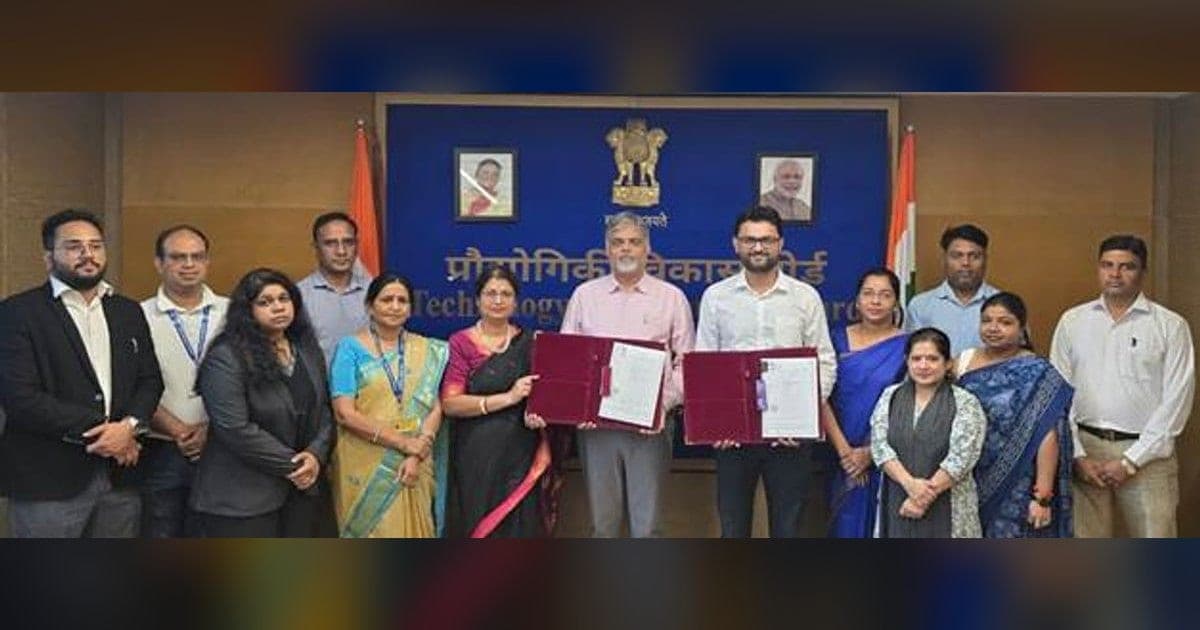
On 29 September 2026 the Technology Development Board signed an agreement with Multi Nano Sense Technologies Private Limited, Nagpur, for Rs 37.51 crore of support under the RDI Fund to develop an indigenous MEMS-based multi-gas sensing platform.
The Technology Development Board (TDB) of the Department of Science and Technology has signed an agreement with Multi Nano Sense Technologies Private Limited of Nagpur, Maharashtra, extending Rs 37.51 crore of financial support under the Research Development and Innovation (RDI) Fund. The project's total approved cost is Rs 75.02 crore, and the assistance will flow through Optionally Convertible Debt.
What is being built
The company is developing a Platform MEMS and AFE SoC Multi-Gas Sensor, in which a sensing element built on micro-electro-mechanical systems is paired with an application-specific analogue front-end system-on-chip that acquires and processes the signal. The aim of the project is to carry the technology from TRL-4 to TRL-9, that is, from a validated laboratory design to a proven, deployable product. The firm is working on an indigenous MEMS TCDIR gas sensor along with a CMOS AFE SoC platform so that several gases can be sensed reliably in a compact package.
Design targets
- High sensitivity with low power consumption in a miniaturised package
- Operation across a wide temperature range and in demanding industrial settings
- Auto-calibration, compensation for environmental parameters and software-driven gas-library processing
- A response time of less than 200 milliseconds for rapid detection
- A sensor package smaller than 25 mm by 25 mm by 15 mm, which allows battery-operated and embedded use
Where it will be used
Gas detection matters across industrial safety, hydrogen infrastructure, energy systems and process monitoring. The platform is designed for leak detection, process control and health and safety monitoring, with likely users in refineries, petrochemicals, power generation, piped natural gas networks, industrial safety, batteries and the hydrogen economy. The project sits in the Deep Technology sector, with Quantum Technology identified as its sub-sector.
Why the support matters
TDB Secretary Shri Rajesh Kumar Pathak said sensors are the foundation of many modern technology systems and that home-grown strength in sensing and semiconductor technologies serves both industrial competitiveness and strategic self-reliance. He noted that the RDI Fund is designed for technologies needing sustained development before they can be sold at scale. The company said the support would let it move its MEMS gas-sensing work into the next phase of integration, validation and scale-up. Because the platform brings MEMS fabrication, semiconductor electronics and intelligent sensing together, its value extends beyond gas detection to India's wider capability in advanced sensors and chips.
Important Facts
| Funding body | Technology Development Board (TDB), Department of Science and Technology |
|---|---|
| Company | Multi Nano Sense Technologies Private Limited, Nagpur, Maharashtra |
| TDB support | Rs 37.51 crore under the RDI Fund |
| Total project cost | Rs 75.02 crore |
| Mode of support | Optionally Convertible Debt (OCD) |
| Technology | Platform MEMS and AFE SoC Multi-Gas Sensor |
| Readiness level | From TRL-4 to TRL-9 |
| Target response time | Less than 200 milliseconds |
| Sector | Deep Technology, sub-sector Quantum Technology |
| TDB Secretary | Shri Rajesh Kumar Pathak |
Exam Point of View
Note the funding body (TDB under DST), the company and its city (Multi Nano Sense Technologies, Nagpur), the support amount (Rs 37.51 crore), the total project cost (Rs 75.02 crore), the funding route (Optionally Convertible Debt), the TRL jump (TRL-4 to TRL-9) and the sector and sub-sector (Deep Technology, Quantum Technology).
Practice Questions
How much financial support has the Technology Development Board extended to Multi Nano Sense Technologies for the multi-gas sensing platform?
- A.Rs 18.75 crore
- B.Rs 37.51 crore
- C.Rs 75.02 crore
- D.Rs 150 crore
Show answer
Correct answer: B. Rs 37.51 crore
Explanation
The correct answer is Rs 37.51 crore. The Technology Development Board, which works under the Department of Science and Technology, signed the agreement extending that amount as financial support under the Research Development and Innovation Fund, and the money will be routed through Optionally Convertible Debt. Option C names the total approved cost of the project, which is roughly double the support figure, so it is the most tempting distractor and candidates must keep the two apart: the board is meeting about half the outlay while the company brings in the rest. Options A and D name amounts that do not appear in connection with this agreement at all. Remember the pair of figures together, since a question may ask for either the sanctioned support or the project cost.
The TDB-supported project aims to take the multi-gas sensor technology between which technology readiness levels?
- A.TRL-1 to TRL-5
- B.TRL-2 to TRL-7
- C.TRL-4 to TRL-9
- D.TRL-6 to TRL-9
Show answer
Correct answer: C. TRL-4 to TRL-9
Explanation
The correct answer is TRL-4 to TRL-9. The stated objective of the project is to advance the Platform MEMS and AFE SoC Multi-Gas Sensor from TRL-4, where the design has been validated in a laboratory environment, all the way to TRL-9, where the technology is proven in its actual operating environment and ready for deployment. The programme funds further development, integration, testing, validation and scale-up to reach that end point. Option A stops well short of a deployable product. Option B begins too early and also stops short. Option D names the right end point but the wrong starting level, which makes it a close distractor. Since both the starting and the ending level must match, only option C is correct.
Multi Nano Sense Technologies Private Limited, which signed the agreement with TDB, is based in which city?
- A.Pune
- B.Nagpur
- C.Hyderabad
- D.Bengaluru
Show answer
Correct answer: B. Nagpur
Explanation
The correct answer is Nagpur. The agreement was signed with Multi Nano Sense Technologies Private Limited of Nagpur, Maharashtra, which is developing an indigenous MEMS TCDIR gas sensor along with a CMOS analogue front-end system-on-chip platform for compact multi-gas sensing. Option A, Pune, is also in Maharashtra and hosts a large electronics and engineering industry, which makes it a plausible guess, but it is not the company's base. Options C and D, Hyderabad and Bengaluru, are major deep-technology and semiconductor design hubs, so they too look convincing, yet neither is the location named in the agreement. Candidates should remember the state along with the city, because questions on such agreements often ask which state the beneficiary firm belongs to.
What is the targeted response time of the multi-gas sensor platform being developed with TDB support?
- A.Less than 20 milliseconds
- B.Less than 200 milliseconds
- C.Less than 2 seconds
- D.Less than 20 seconds
Show answer
Correct answer: B. Less than 200 milliseconds
Explanation
The correct answer is less than 200 milliseconds. The platform is being designed around high sensitivity, low power consumption, a miniaturised form and intelligent signal processing, and among its stated design targets is a response time below 200 milliseconds so that it suits applications requiring rapid detection and monitoring, such as leak detection in refineries and piped natural gas networks. Option A is ten times faster than the stated target and is not the figure given. Options C and D describe far slower responses, which would be of little use where a gas leak has to be flagged instantly. The sensor package is separately designed to be smaller than 25 mm by 25 mm by 15 mm, which allows battery-operated and embedded deployment, so do not confuse the size figures with the timing figure.
Frequently Asked Questions
How much support has TDB given for the indigenous multi-gas sensor project?
Rs 37.51 crore under the Research Development and Innovation Fund, through Optionally Convertible Debt. The total approved cost of the project is Rs 75.02 crore.
Which company is developing the platform and where is it based?
Multi Nano Sense Technologies Private Limited, based in Nagpur, Maharashtra. It is building an indigenous MEMS TCDIR gas sensor together with a CMOS analogue front-end system-on-chip platform.
What technology readiness levels does the project cover?
The project aims to move the technology from TRL-4 to TRL-9, taking it from a validated laboratory stage to a proven, market-ready product through integration, testing, validation and scale-up.
Sources
Current Affairs 29 September 2026
- Literacy Rate Reaches 81.1% as Ten States Declare Full LiteracyReports & Indices
- India's First PRAMAAN Forest Certificates Handed Over in DelhiEnvironment
- NIFT Wins Two Silver Medals at WorldSkills Shanghai 2026Awards & Honours
- Special Campaign 6.0 to Run from 2 to 31 October 2026National
- PM-RKVY: Rs 1200 Crore Sanctioned to 10 States at Rabi MeetGovernment Schemes
- VB-G RAM G Act Guarantees 125 Days of Rural Wage WorkGovernment Schemes
- Two Officials Held for Bribery over FCRA RegistrationNational
- Indian Railways Clears Two New MEMU Services for Meerut CityNational
Related Current Affairs
- Science & Technology
Ashwagandha Extract Safe Over 24 Weeks in 1,200-Adult Trial
28 September 2026 · 2 min read
- Science & Technology
India-France Space Ties Widen to Gaganyaan, TRISHNA and Start-ups
28 September 2026 · 2 min read
- Science & Technology
PM E-DRIVE: GARC Gets Rs 221.13 Crore for EV Testing
28 September 2026 · 2 min read
- Science & Technology
World Congress on Nanomedicine 2026 Opens in New Delhi
27 September 2026 · 2 min read
- Science & Technology
CSIR-NIScPR Launches Science Magazines in Five Languages
26 September 2026 · 2 min read
- Science & Technology
RRI Study Shows Black Hole Jets Choke Star Birth in Galaxies
25 September 2026 · 2 min read

Related GK
- Famous Personalities and Their Nicknames: Exam List
29 September 2026 · Static GK
- Missile Systems of India: Agni, BrahMos and IGMDP
29 September 2026 · Science & Technology
- Maharashtra GK: Districts, Rivers, Forts and Exam Facts
29 September 2026 · Indian States & UTs
Take the Quiz
- Current Affairs Quiz
State Exams Current Affairs Quiz: 29 September 2026
25 questions25 minutesStart Quiz