
National SC-ST Hub Procurement Rises Nearly 39-Fold in a Decade
Procurement from SC/ST-owned MSEs rose nearly 39-fold to Rs 4,013.42 crore in 2025-26 under the National SC-ST Hub, which has aided 1,90,414 beneficiaries.
Why in News
A government backgrounder issued on 8 October 2026 set out the record of the National SC-ST Hub, under which procurement from SC/ST-owned micro and small enterprises has risen nearly 39-fold to Rs 4,013.42 crore in 2025-26.
The National SC-ST Hub (NSSH), the Ministry of Micro, Small and Medium Enterprises scheme built to widen enterprise ownership among Scheduled Caste and Scheduled Tribe entrepreneurs, has recorded a steep rise in public procurement from the businesses it supports.
The scheme in brief
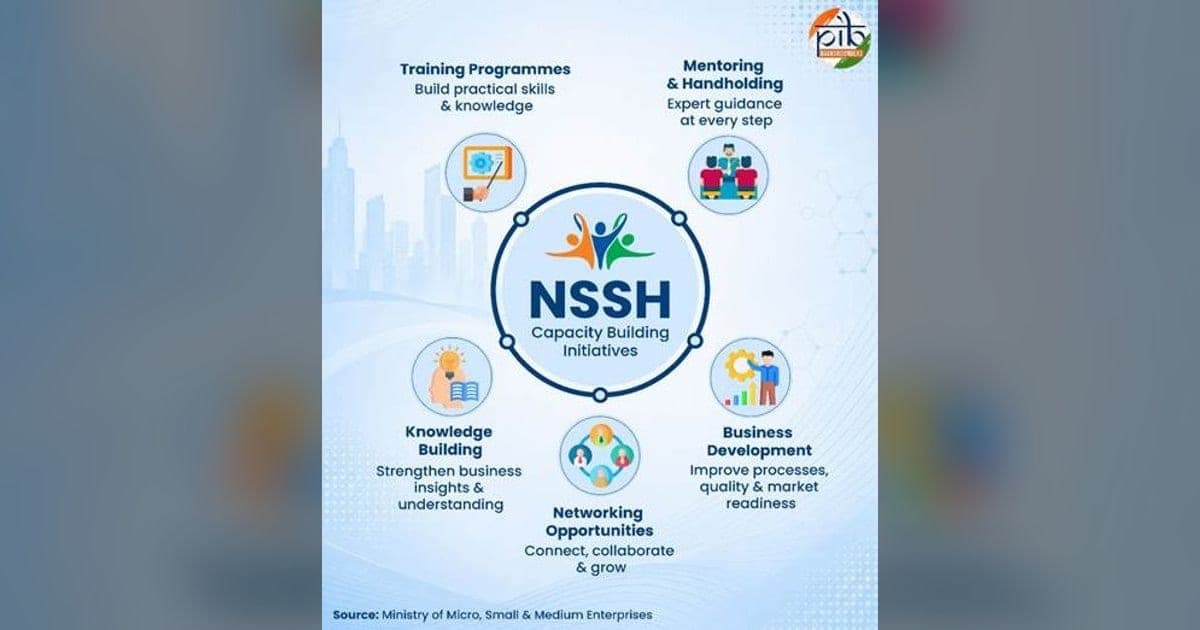
NSSH was launched on 18 October 2016 and is implemented through the National Small Industries Corporation (NSIC). It works on the barriers SC/ST-owned enterprises face across the life of a business, offering finance support, technology, training, mentoring and market linkages, with public procurement as its central lever.
Reach and procurement
Since inception the scheme has assisted 1,90,414 beneficiaries and trained 54,499 candidates, counted up to 31 July 2026. Procurement from SC/ST-owned micro and small enterprises has multiplied nearly 39 times, from Rs 99.37 crore in 2015-16 to Rs 4,013.42 crore in 2025-26. Uttar Pradesh, Maharashtra, Karnataka, Tamil Nadu and Assam are the five leading States under the Hub. In 2025-26 alone the procurement of Rs 4,013.42 crore came from 12,524 enterprises, while 10,717 candidates were trained through 47 institutions spread over 27 States, including 24 Aspirational Districts. Women made up 55 per cent of those trained. Courses were tied to procurement and GeM opportunities, and covered cafeteria management and food production, welding, CAD and CAM, laundry services, fashion designing and tailoring, and bamboo-based work.
The support components
- SCLCSS: a 25 per cent capital subsidy capped at Rs 25 lakh for plant, machinery and equipment bought on institutional credit. Since 2016 and up to March 2026 it has backed 3,160 enterprises with Rs 356.10 crore across 233 districts in 27 States and Union Territories.
- SPRS: registration with NSIC that brings free tender sets and exemption from Earnest Money Deposit.
- SMAS: support for up to four domestic and two international events a year, with international exhibition aid of up to Rs 3 lakh for micro, Rs 2.5 lakh for small and Rs 1.5 lakh for medium units. In 2025-26, 141 enterprises joined 4 domestic exhibitions, 247 Special Vendor Development Programmes were held with CPSEs, along with 197 e-tendering workshops and 230 awareness workshops.
- Reimbursements of 80 per cent, capped at Rs 1 lakh each, for bank loan processing fees, performance bank guarantee charges and product testing fees, and 80 per cent capped at Rs 20,000 for Export Promotion Council membership.
- Management training at the top 50 NIRF institutes, for 1 to 30 days, reimbursed at 90 per cent or Rs 1 lakh, and e-commerce portal membership on GeM, e-Khadi, TRIFED, Tribes India and MSME Mart reimbursed at 80 per cent or Rs 25,000.
The procurement mandate behind it
Under the Public Procurement Policy, Central Ministries, Departments and Central Public Sector Enterprises must buy 25 per cent of their annual purchases from micro and small enterprises, with 4 per cent of total procurement earmarked for SC/ST-owned units. The Business Accelerator Programme adds mentoring on strategy, pricing, operational efficiency and market positioning; firms it guided went on to win tenders worth Rs 8.48 lakh from Power Grid and a Rs 5.10 lakh SAIL order for hydraulic cylinders.
Important Facts
| Scheme | National SC-ST Hub (NSSH) |
|---|---|
| Launched on | 18 October 2016 |
| Ministry | Ministry of Micro, Small and Medium Enterprises |
| Implementing agency | National Small Industries Corporation (NSIC) |
| Beneficiaries assisted | 1,90,414 up to 31 July 2026 |
| Candidates trained | 54,499 up to 31 July 2026 |
| Procurement in 2025-26 | Rs 4,013.42 crore from 12,524 MSEs |
| Procurement in 2015-16 | Rs 99.37 crore, a nearly 39-fold rise since |
| Leading States | Uttar Pradesh, Maharashtra, Karnataka, Tamil Nadu, Assam |
| SCLCSS subsidy | 25 per cent of cost, capped at Rs 25 lakh |
| SCLCSS coverage | 3,160 MSEs, Rs 356.10 crore, 233 districts in 27 States and UTs |
| Procurement policy quota | 25 per cent of purchases from MSEs; 4 per cent for SC/ST-owned MSEs |
Exam Point of View
Remember the launch date (18 October 2016), the implementing agency (NSIC) and parent ministry (MSME), the procurement jump from Rs 99.37 crore in 2015-16 to Rs 4,013.42 crore in 2025-26, the 1,90,414 beneficiaries and 54,499 trained candidates, the five leading States, the SCLCSS subsidy of 25 per cent capped at Rs 25 lakh, and the Public Procurement Policy quotas of 25 per cent for MSEs and 4 per cent for SC/ST-owned MSEs.
Practice Questions
Through which agency is the National SC-ST Hub scheme implemented?
- A.Small Industries Development Bank of India
- B.National Small Industries Corporation
- C.Khadi and Village Industries Commission
- D.National Scheduled Castes Finance and Development Corporation
Show answer
Explanation
The correct answer is the National Small Industries Corporation. The National SC-ST Hub was launched on 18 October 2016 and is implemented through NSIC, which also runs the Single Point Registration Scheme that gives registered micro and small enterprises free tender sets and exemption from Earnest Money Deposit. Option A, the Small Industries Development Bank of India, is the development finance institution for the small enterprise sector and lends to it, but it is not the implementing agency named for this scheme. Option C, the Khadi and Village Industries Commission, promotes khadi and village industries and runs separate employment programmes. Option D, the National Scheduled Castes Finance and Development Corporation, works on credit for Scheduled Caste beneficiaries under a different ministry. For the examination, pair the scheme with the MSME Ministry as its parent and NSIC as its implementing arm.
What was the procurement from SC/ST-owned micro and small enterprises in 2025-26 under the National SC-ST Hub?
- A.Rs 99.37 crore
- B.Rs 356.10 crore
- C.Rs 1,013.42 crore
- D.Rs 4,013.42 crore
Show answer
Explanation
The correct answer is Rs 4,013.42 crore, procured in 2025-26 from 12,524 micro and small enterprises. The figure matters because it marks a rise of nearly 39 times over the Rs 99.37 crore recorded in 2015-16, which is option A and therefore the starting point rather than the latest number. Option B, Rs 356.10 crore, is the amount disbursed under the Special Credit Linked Capital Subsidy Scheme since 2016 and up to March 2026, which supported 3,160 enterprises in 233 districts across 27 States and Union Territories, so it belongs to a single component and not to procurement. Option C is a near miss designed to catch a half-remembered figure. Candidates should also recall the policy behind the growth: 25 per cent of annual purchases of Central Ministries, Departments and CPSEs must come from MSEs, with 4 per cent earmarked for SC/ST-owned units.
Under the Public Procurement Policy, what share of total procurement is earmarked for SC/ST-owned micro and small enterprises?
- A.2 per cent
- B.4 per cent
- C.10 per cent
- D.25 per cent
Show answer
Explanation
The correct answer is 4 per cent. Central Ministries, Departments and Central Public Sector Enterprises are required to procure 25 per cent of their annual purchases from micro and small enterprises, and within that requirement 4 per cent of total procurement is earmarked for enterprises owned by Scheduled Caste and Scheduled Tribe entrepreneurs. Option D, 25 per cent, is the wider MSE obligation and is the commonest trap in this question, so the two numbers must be kept apart. Options A and C, 2 per cent and 10 per cent, do not appear in the policy as described. This mandate is the reason the Single Point Registration Scheme matters, since registration with NSIC brings free tender sets and exemption from Earnest Money Deposit, and it explains the sharp rise in procurement from SC/ST-owned units to Rs 4,013.42 crore in 2025-26.
Which capital subsidy does the National SC-ST Hub offer SC/ST-owned MSEs on plant and machinery financed by institutional credit?
- A.15 per cent, capped at Rs 15 lakh
- B.25 per cent, capped at Rs 25 lakh
- C.35 per cent, capped at Rs 50 lakh
- D.50 per cent, capped at Rs 1 crore
Show answer
Explanation
The correct answer is 25 per cent, capped at Rs 25 lakh, offered under the Special Credit Linked Capital Subsidy Scheme. The subsidy applies to new and existing SC/ST-owned micro and small enterprises investing in plant, machinery and equipment through institutional credit, and it covers both manufacturing and service units without restriction by product or sector. The remaining options invent rates and ceilings that the scheme does not carry. Aspirants should also remember the scheme's record, namely support to 3,160 enterprises amounting to Rs 356.10 crore since 2016 and up to March 2026, with coverage extended to 233 districts across 27 States and Union Territories. Other components work as reimbursements instead, at 80 per cent capped at Rs 1 lakh for loan processing fees, bank guarantee charges and testing fees, and at 90 per cent or Rs 1 lakh for management training at the top 50 NIRF institutes.
Frequently Asked Questions
When was the National SC-ST Hub launched and who implements it?
It was launched on 18 October 2016 under the Ministry of Micro, Small and Medium Enterprises, and is implemented through the National Small Industries Corporation (NSIC).
How much has procurement from SC/ST-owned MSEs grown?
Nearly 39-fold, from Rs 99.37 crore in 2015-16 to Rs 4,013.42 crore in 2025-26. The 2025-26 procurement came from 12,524 micro and small enterprises.
What does the Special Credit Linked Capital Subsidy Scheme offer?
A 25 per cent capital subsidy capped at Rs 25 lakh on plant, machinery and equipment financed through institutional credit. Since 2016 and up to March 2026 it has supported 3,160 MSEs with Rs 356.10 crore across 233 districts in 27 States and Union Territories.
What procurement share is reserved for SC/ST-owned enterprises?
Central Ministries, Departments and CPSEs must procure 25 per cent of their annual purchases from micro and small enterprises, and 4 per cent of total procurement is earmarked for SC/ST-owned MSEs.
Sources
- https://www.pib.gov.in/PressReleasePage.aspx?PRID=2320514 (opens in a new tab) — Press Information Bureau
Current Affairs 8 October 2026
- GMPCS Licensing: Government Calls Satcom Rules Non-DiscriminatoryScience & Technology
- Women Form 43% of Ayush Services Workforce: RIS ReportReports & Indices
- India Seeks Balanced COP31 Outcome at Pre-COP in Nadi, FijiEnvironment
- Veteran Hindi and Marathi Actor Nana Patekar Passes AwayObituaries
- PM Modi Opens 10th India Mobile Congress at YashobhoomiScience & Technology
- Nadda Launches JOSH Teams for Youth-Led TB EliminationGovernment Schemes
- C.R. Paatil Chairs 20th Ganga Empowered Task Force MeetingEnvironment
- PRASHAST Inclusion Module Screened in 60,000 SchoolsGovernment Schemes
Related Current Affairs
- Government Schemes
Jal Jeevan Mission 2.0 Review at IIM Bangalore Sets Reforms
7 October 2026 · 2 min read
- Government Schemes
PMGSY Chintan Shivir: PMGSY-IV Targets 62,500 km of Roads
7 October 2026 · 2 min read
- Government Schemes
Textiles Ministry Wraps Up Swachhata Hi Seva 2026 Drive
7 October 2026 · 2 min read
Related GK
- The UN and Its Specialised Agencies: Organs, Headquarters and PYQs
8 October 2026 · Static GK
- Indian Scientists and Their Contributions: Discoveries and Prizes
8 October 2026 · Science & Technology
- Nagaland, Tripura and Sikkim GK: Statehood, Articles and Landmarks
8 October 2026 · Indian States & UTs
Take the Quiz
- Current Affairs Quiz
SSC CHSL Current Affairs Quiz: 8 October 2026
11 questions11 minutesStart Quiz