
First MEA-CSIR Tech Familiarization Programme Held in Delhi
CSIR and the MEA held the first MEA-CSIR Tech Familiarization Programme on 14 October 2026, drawing 33 envoys and embassy officials from 29 nations.
Why in News
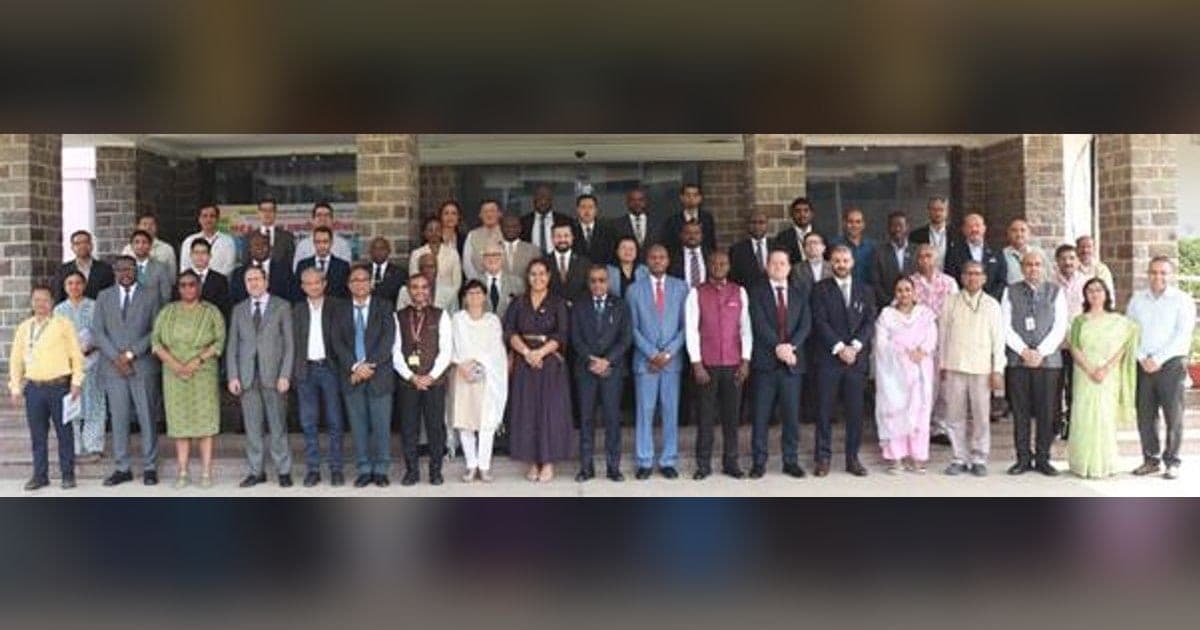
On 14 October 2026 the Council of Scientific and Industrial Research and the Ministry of External Affairs launched the inaugural MEA-CSIR Tech Familiarization Programme in New Delhi, taking 33 Ambassadors and embassy officials from 29 countries into CSIR laboratories to build science and technology partnerships with the Global South.
India opened a new channel for science diplomacy with the Global South on 14 October 2026, when the Council of Scientific and Industrial Research (CSIR) and the Ministry of External Affairs (MEA) ran the first edition of the MEA-CSIR Tech Familiarization Programme. The MEA side was represented by its New, Emerging and Strategic Technologies (NEST) Division, which framed the exercise jointly with CSIR.
Who took part
The gathering drew 33 Ambassadors and senior embassy officials who between them represented 29 countries. They were shown, at close quarters, what CSIR can do scientifically, the technologies it has built at home and the research facilities it runs. Two of the council's leading laboratories in New Delhi were opened for the visit: the CSIR-Central Road Research Institute (CSIR-CRRI) and the CSIR-Institute of Genomics and Integrative Biology (CSIR-IGIB).
What the diplomats saw at CSIR-CRRI
At the road research institute the delegation was taken through a driving simulator, a cyclic load test facility and a steel slag laboratory, along with a three-dimensional model of bio-binder technology and models of drones. The centrepiece was a live run of Ecofix, an instant pothole repair mix built around steel slag and meant for quick road upkeep. The demonstration was used to make a wider point: that waste thrown out by industry can be turned into a useful material, and that such home-grown answers are cheap, workable and kind to the environment.
Genomics at CSIR-IGIB
The second halt took the visitors into genome sequencing, biosafety, zebrafish research, biobanking and Good Manufacturing Practice facilities. The stop was meant to show how far India has come in genomics, biomedical research, precision healthcare and biotechnology, and where partner countries might train their own people or work jointly on health problems.
Who spoke
Dr Rama Swami Bansal, Head of the International S and T Affairs Directorate at CSIR, set out the council's capabilities, its existing foreign tie-ups and the ways it could work with Global South nations. Dr Sadre Alam, Joint Secretary in the MEA, explained how the programme came about and what it is meant to achieve. The two laboratory directors, Dr Chalumuri Ravi Sekhar of CSIR-CRRI and Dr Souvik Maiti of CSIR-IGIB, introduced their institutes' strengths in sustainable infrastructure and healthcare respectively.
The closing session
An interactive sitting ended the day, with the visiting envoys stating their own priorities and what they expect from CSIR in future. Talk turned to joint research, technology partnerships, exchange of knowledge, training and the reworking of Indian technologies to suit the particular needs of each partner country. By placing foreign diplomats inside working laboratories, the organisers hope to convert India's scientific strength into durable international partnerships rather than leave it at the level of statements.
Important Facts
| Programme | MEA-CSIR Tech Familiarization Programme, inaugural edition |
|---|---|
| Date | 14 October 2026 |
| Organisers | CSIR with the NEST Division of the Ministry of External Affairs |
| Participation | 33 Ambassadors and senior embassy officials from 29 countries |
| Focus grouping | Countries of the Global South |
| Laboratories visited | CSIR-CRRI and CSIR-IGIB, both in New Delhi |
| Technology demonstrated | Ecofix, a steel slag-based instant pothole repair mix |
| CSIR speaker | Dr Rama Swami Bansal, Head, International S and T Affairs Directorate |
| MEA speaker | Dr Sadre Alam, Joint Secretary |
| Laboratory directors | Dr Chalumuri Ravi Sekhar (CSIR-CRRI) and Dr Souvik Maiti (CSIR-IGIB) |
Exam Point of View
Remember that this was the inaugural edition, the date (14 October 2026), the two partners (CSIR and the MEA's NEST Division), the participation figures (33 Ambassadors and embassy officials from 29 countries), the two laboratories visited (CSIR-CRRI and CSIR-IGIB), the technology demonstrated (Ecofix, a steel slag-based pothole repair mix) and the target grouping (Global South).
Practice Questions
Which two bodies jointly launched the inaugural Tech Familiarization Programme for Global South diplomats?
- A.ICAR and the Ministry of Agriculture
- B.CSIR and the Ministry of External Affairs
- C.DRDO and the Ministry of Defence
- D.ISRO and the Department of Space
Show answer
The Council of Scientific and Industrial Research worked with the New, Emerging and Strategic Technologies Division of the MEA to run the first edition of the programme, which was held on 14 October 2026 and designed to deepen India's scientific links with countries of the Global South.
Read the full explanation →How many Ambassadors and embassy officials, and from how many countries, attended the inaugural programme?
- A.29 officials from 33 countries
- B.33 officials from 29 countries
- C.43 officials from 39 countries
- D.23 officials from 19 countries
Show answer
The first edition brought together thirty-three Ambassadors and senior embassy officials who between them represented twenty-nine nations, most of them in the Global South.
Read the full explanation →Ecofix, demonstrated live during the programme, is a technology for which purpose?
- A.Instant pothole repair using steel slag
- B.Rapid genome sequencing of crops
- C.Treatment of industrial waste water
- D.Fireproof coating for highway bridges
Show answer
Ecofix is a steel slag-based mix developed for quick repair of road surfaces and was shown working at the CSIR-Central Road Research Institute, where the delegation also saw a driving simulator, a cyclic load test facility, a steel slag laboratory, a three-dimensional model of bio-binder technology and drone models.
Read the full explanation →Which two CSIR laboratories did the visiting delegation tour during the inaugural edition?
- A.CSIR-NPL and CSIR-NEERI
- B.CSIR-CRRI and CSIR-IGIB
- C.CSIR-NCL and CSIR-CDRI
- D.CSIR-CFTRI and CSIR-IICT
Show answer
The pairing was deliberate: one laboratory showcased sustainable infrastructure and the other healthcare and genomics, the two themes the programme wished to place before Global South partners.
Read the full explanation →Frequently Asked Questions
What is the MEA-CSIR Tech Familiarization Programme?
It is a joint initiative of CSIR and the New, Emerging and Strategic Technologies Division of the Ministry of External Affairs that takes foreign Ambassadors and embassy officials into CSIR laboratories. The inaugural edition was held on 14 October 2026 and is aimed at building scientific partnerships with Global South countries.
How many countries and diplomats took part in the first edition?
A total of 33 Ambassadors and senior embassy officials representing 29 countries joined the inaugural edition. They were given first-hand exposure to CSIR's scientific capabilities, indigenous technologies and research infrastructure in New Delhi.
What is Ecofix, demonstrated during the programme?
Ecofix is an instant pothole repair mix made using steel slag, developed for rapid road maintenance. It was demonstrated live at CSIR-CRRI to show how industrial waste can be converted into a useful resource while offering a cost-effective and sustainable option for infrastructure upkeep.
Sources
Current Affairs 14 October 2026
- Coir Exports Up 305% in Ten Years to ₹6,614.40 CroreEconomy
- WPI Inflation Rises to 11.39 Per Cent in September 2026Economy
- First ASEAN-India Defence Think Tank Forum Opens in DelhiDefence
- BHAVYA Scheme: Rs 33,660 Crore for 100 Industrial ParksGovernment Schemes
- Indian Navy Hands Over Command of Combined Task Force 154Defence
- TDB Signs Rs 151 Crore RDI Deal With ideaForge for YETI UAVScience & Technology
- North East Bankers' Conclave 3.0 Held at Mizoram UniversityBanking & Finance
- Cabinet Clears Rs 53,428 Crore for Renamed NSAP Pension SchemeGovernment Schemes
Related Current Affairs
- Science & Technology
CEA Conference on Making Indian Power Sector AI Enabled
14 October 2026 · 2 min read
- Science & Technology
AI for Good Build-a-thon 5.0 Held at India Mobile Congress
14 October 2026 · 2 min read
- Science & Technology
NIPER Raebareli, AstraZeneca Tie Up for 25 Trial Sites
14 October 2026 · 2 min read
- Science & Technology
TDB Signs Rs 151 Crore RDI Deal With ideaForge for YETI UAV
14 October 2026 · 2 min read
Related GK
- Haryana National Parks and Wildlife Sanctuaries Notes
14 October 2026 · Haryana
- Haryana Climate, Soils and Forests: Complete GK Notes
14 October 2026 · Haryana
- UP Agriculture, Crops and Livestock: Notes with PYQs
14 October 2026 · Uttar Pradesh
Take the Quiz
- Current Affairs Quiz
Railway Current Affairs Quiz: 14 October 2026
25 questions25 minutesStart Quiz