
NITI Aayog Holds National Workshop on Viksit Panchayat
NITI Aayog held a national workshop on Viksit Panchayat with the Assam government, under its State Support Mission, to strengthen village panchayats as planning bodies.
Why in News
NITI Aayog announced on 29 September 2026 that it had held a national workshop on Viksit Panchayat with the Government of Assam, under its State Support Mission, to strengthen panchayats as planning and service delivery institutions.
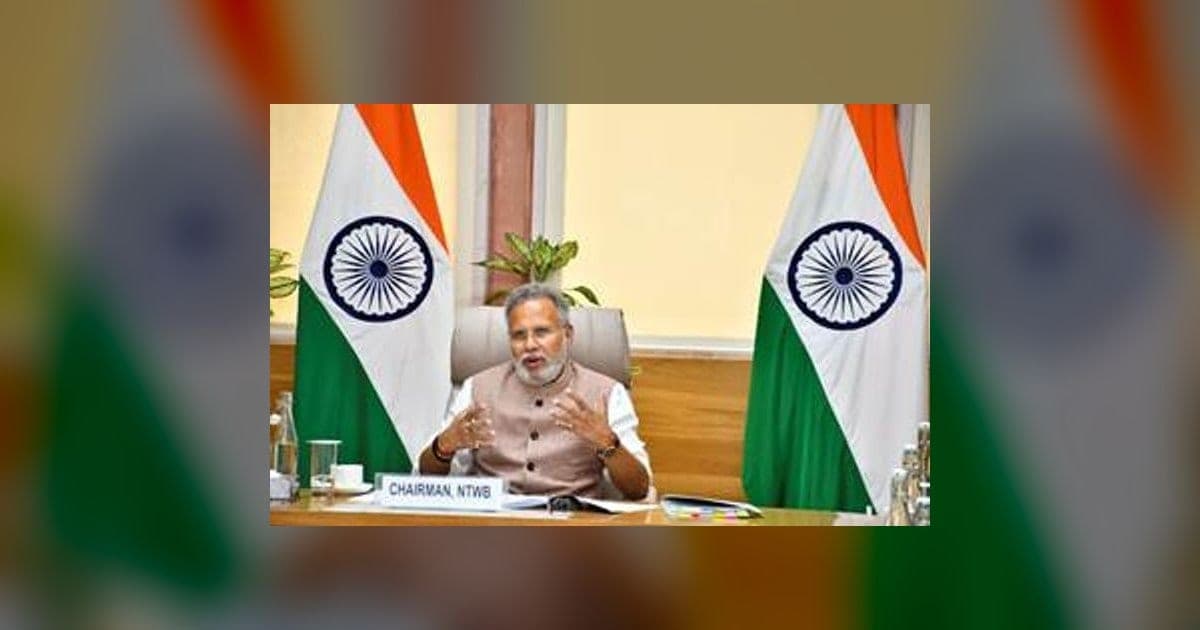
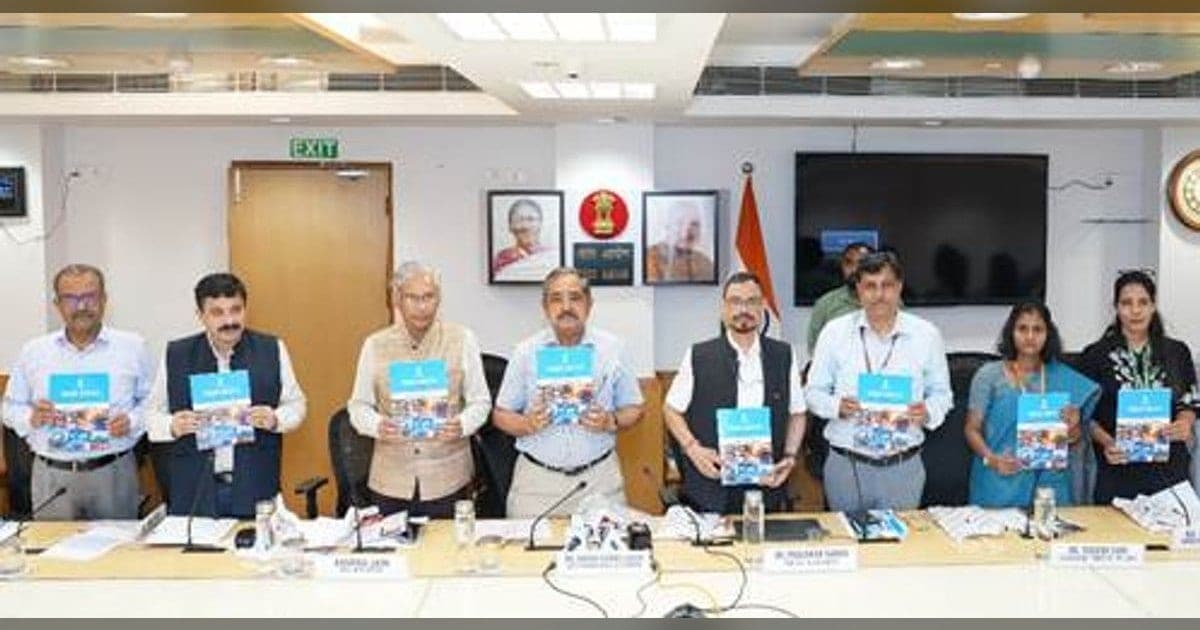
NITI Aayog organised a national workshop titled Viksit Panchayat: Connecting People, Places, Resources and Opportunities on 28 September 2026. It was held with the Golap Borbora State Institute of Panchayat and Rural Development (GBSIPRD) of the Government of Assam, and forms part of NITI Aayog's State Support Mission (SSM).
What the workshop set out to do
The one-day event looked at how panchayats can be made capable of driving inclusive growth, delivering public services well and sustaining development at the village level, in keeping with the goal of Viksit Bharat@2047. Four areas framed the discussion: decentralised and spatial planning, capacity development at the grassroots, spatial planning for priority sectors, and the folding of spatial planning into the Gram Panchayat Development Plan process.
Who took part
| Chief Guest | Atul Bora, Minister for Panchayat and Rural Development, Government of Assam |
| Guest of Honour | Dr R. Balasubramaniam, Member, NITI Aayog |
| Also present | Dr Ravi Kota, Chief Secretary, Government of Assam |
| Also present | Rohit Kansal, Secretary, Department of Rural Development |
What was discussed
Participants went back to the constitutional base of panchayati raj in the 73rd Constitutional Amendment and Part IX of the Constitution, and took up clearer activity mapping, adequate funds, proper staffing, wider decision-making powers, Gram Sabha participation and institutional accountability. The workshop argued for a shift from a sector-by-sector approach to a spatial and integrated one. Geographic information systems, geospatial data, village master plans and digital platforms were discussed as ways of identifying local resources, gaps in infrastructure, land-use patterns and openings for development. Tying spatial information to the Gram Panchayat Development Plan, to eGramSwaraj and to the Panchayat Advancement Index was held up as a way of making planning evidence-based. Dr Balasubramaniam called for more emphasis on human and social capital and on building local economic clusters.
The priorities identified
- Clearer functional devolution and activity mapping for panchayats
- Better fiscal resources and stronger own-source revenue
- Stronger capacity and technical support at the last mile
- District Planning Committees made operational
- Greater convergence across departments and schemes, and rural-urban planning at the district level
Important Facts
| Workshop | Viksit Panchayat: Connecting People, Places, Resources and Opportunities |
|---|---|
| Organiser | NITI Aayog, under its State Support Mission (SSM) |
| Partner | Golap Borbora State Institute of Panchayat and Rural Development, Government of Assam |
| Date | 28 September 2026 |
| Chief Guest | Atul Bora, Minister for Panchayat and Rural Development, Assam |
| Guest of Honour | Dr R. Balasubramaniam, Member, NITI Aayog |
| Constitutional basis | 73rd Constitutional Amendment and Part IX of the Constitution |
| Platforms discussed | Gram Panchayat Development Plan, eGramSwaraj, Panchayat Advancement Index |
| Vision | Viksit Bharat@2047 |
Exam Point of View
Remember the organiser (NITI Aayog), the mission (State Support Mission), the partner institute (GBSIPRD, Assam), the date of the workshop (28 September 2026), the chief guest (Atul Bora) and the guest of honour (Dr R. Balasubramaniam, Member NITI Aayog). Panchayati raj rests on the 73rd Constitutional Amendment and Part IX of the Constitution.
Practice Questions
The national workshop on Viksit Panchayat was organised by NITI Aayog under which of its missions?
- A.Aspirational Districts Programme
- B.State Support Mission
- C.Atal Innovation Mission
- D.National Mission on Natural Farming
Show answer
Correct answer: B. State Support Mission
Explanation
The correct answer is the State Support Mission, abbreviated as SSM. The workshop on connecting people, places, resources and opportunities through stronger panchayats was an initiative under this mission, and it was conducted in collaboration with the state institute of panchayat and rural development of the Government of Assam. Option A names the programme that works on improving outcomes in districts lagging on development indicators, which is a separate initiative of the same institution. Option C names the mission that promotes innovation and entrepreneurship, including tinkering laboratories in schools, and it has no connection with panchayat planning. Option D names a farming programme run under the agriculture ministry rather than a NITI Aayog mission. Candidates should associate the State Support Mission with NITI Aayog's work alongside state governments.
Which constitutional amendment, discussed at the workshop, provides the foundation of panchayati raj in India?
- A.The 42nd Amendment
- B.The 73rd Amendment
- C.The 74th Amendment
- D.The 86th Amendment
Show answer
Correct answer: B. The 73rd Amendment
Explanation
The correct answer is the 73rd Amendment. Participants at the workshop discussed the constitutional foundation of panchayati raj under this amendment and under Part IX of the Constitution, which together give village level bodies their status, and the deliberations moved on from there to activity mapping, financial resources, staffing, decision-making powers, Gram Sabha participation and institutional accountability. Option A names the amendment that made sweeping changes to the Constitution during the emergency period, which is unrelated to rural local bodies. Option C names the amendment dealing with urban local bodies, that is municipalities, and it is the companion to the correct answer but applies to towns and cities rather than villages. Option D names the amendment on the right to education. Remember the pairing: rural bodies with the earlier number, urban bodies with the later one.
Who attended the Viksit Panchayat workshop as the Guest of Honour?
- A.Atul Bora, Minister, Government of Assam
- B.Dr Ravi Kota, Chief Secretary, Assam
- C.Dr R. Balasubramaniam, Member, NITI Aayog
- D.Rohit Kansal, Secretary, Department of Rural Development
Show answer
Correct answer: C. Dr R. Balasubramaniam, Member, NITI Aayog
Explanation
The correct answer is Dr R. Balasubramaniam, Member of NITI Aayog. He attended the inaugural session as the Guest of Honour and used his remarks to call for a move away from sector-wise planning towards a spatial approach, with greater weight given to human and social capital and to the building of local economic clusters. Option A names the state minister for panchayat and rural development, who inaugurated the workshop as the Chief Guest, a distinct designation from the one being asked about. Option B names the Chief Secretary of the state, who was present at the inaugural session but not in either of those two roles. Option D names the Secretary of the rural development department, who likewise attended without holding that designation. Questions of this type turn on the exact title, so each name should be memorised with its role.
Which of the following was proposed for integration with spatial information to strengthen village-level planning?
- A.Panchayat Advancement Index
- B.Multidimensional Poverty Index
- C.Composite Water Management Index
- D.Ease of Doing Business Index
Show answer
Correct answer: A. Panchayat Advancement Index
Explanation
The correct answer is the Panchayat Advancement Index. The workshop highlighted the integration of spatial information with the Gram Panchayat Development Plan process, with the eGramSwaraj platform and with this index as a means of making planning evidence-based and oriented towards convergence between departments and schemes. Option B names a measure of deprivation across several dimensions, which is used to track poverty rather than to plan at the panchayat level. Option C names an index on water resource management by states, a different subject from village planning. Option D names a measure of the regulatory environment for business, again unrelated to the planning tools discussed here. The three names to remember together are the development plan process, the digital platform for panchayat accounts and governance, and the advancement index.
Frequently Asked Questions
Under which NITI Aayog mission was the Viksit Panchayat workshop organised?
Under the State Support Mission, known as SSM. The workshop was held jointly with the Golap Borbora State Institute of Panchayat and Rural Development of the Government of Assam.
Which constitutional provisions form the basis of panchayati raj, as discussed at the workshop?
The 73rd Constitutional Amendment and Part IX of the Constitution. Participants also took up activity mapping, financial resources, staffing, decision-making powers and Gram Sabha participation.
Which indices and platforms were proposed for integration with spatial planning?
The Gram Panchayat Development Plan process, the eGramSwaraj platform and the Panchayat Advancement Index, so that planning at the village level becomes evidence-based and convergence-oriented.
Sources
Current Affairs 29 September 2026
- Literacy Rate Reaches 81.1% as Ten States Declare Full LiteracyReports & Indices
- India's First PRAMAAN Forest Certificates Handed Over in DelhiEnvironment
- NIFT Wins Two Silver Medals at WorldSkills Shanghai 2026Awards & Honours
- Special Campaign 6.0 to Run from 2 to 31 October 2026National
- PM-RKVY: Rs 1200 Crore Sanctioned to 10 States at Rabi MeetGovernment Schemes
- VB-G RAM G Act Guarantees 125 Days of Rural Wage WorkGovernment Schemes
- Two Officials Held for Bribery over FCRA RegistrationNational
- Indian Railways Clears Two New MEMU Services for Meerut CityNational
Related Current Affairs
- National
Special Campaign 6.0 to Run in Government Offices From 2 October
28 September 2026 · 3 min read
- Reports & Indices
NITI Aayog Releases Ninth Trade Watch Quarterly Edition
16 September 2026 · 2 min read
- Economy
NITI Aayog Launches PACT and ZET Marketplace for Electric Trucks
7 September 2026 · 2 min read

Related GK
- Planning in India and NITI Aayog: Plans, Models and Bodies
25 September 2026 · Indian Economy
Take the Quiz
- Current Affairs Quiz
Teaching Current Affairs Quiz: 29 September 2026
15 questions15 minutesStart Quiz