
NHRC Ends Fifth ITEC Human Rights Course for Global South
A six-day NHRC programme for human rights institutions of the Global South closed in New Delhi, drawing 38 officials from fourteen countries across four continents.
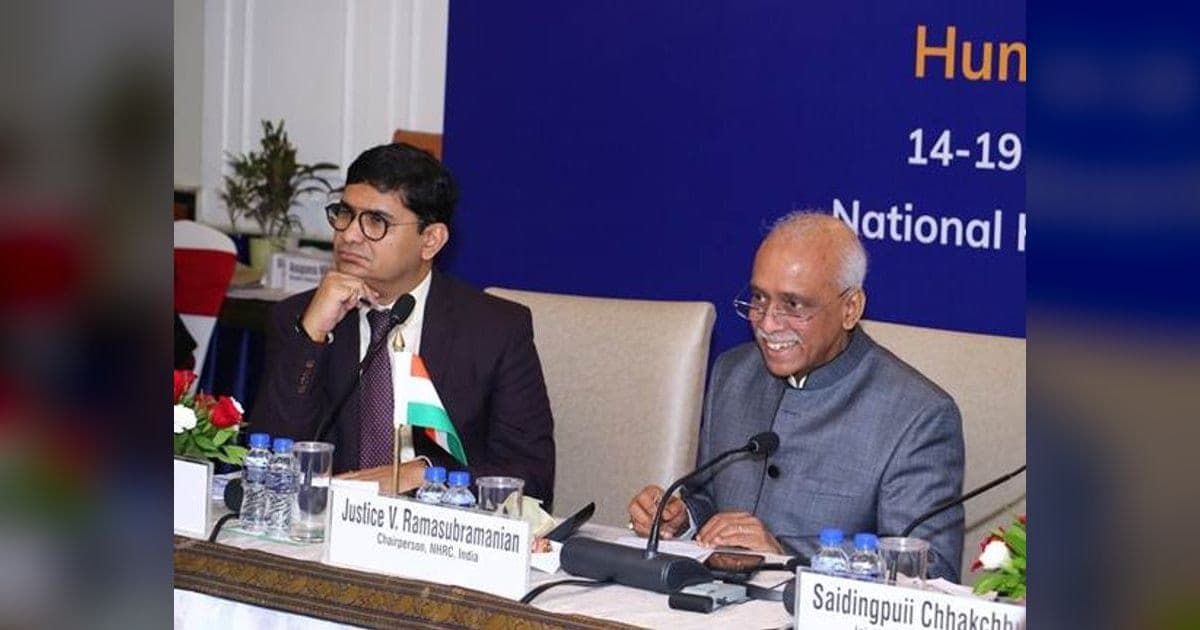
Why in News
The National Human Rights Commission concluded the fifth edition of its ITEC capacity-building programme on human rights for institutions of the Global South.
What concluded
A training course run for the human rights watchdogs of other developing countries has finished in New Delhi. This was the fifth edition, held under the Indian Technical and Economic Cooperation banner, and it ran six days from 14 September 2026.
Two arms of government shared the work. The National Human Rights Commission of India put the programme together, and the Ministry of External Affairs partnered on it, which is the usual shape for an ITEC offering aimed at foreign officials.
Who came
Thirty-eight senior functionaries attended, drawn from fourteen national human rights institutions. The list reaches across four continents: Algeria, Chile, Ecuador, Ethiopia, Indonesia, Kazakhstan, Kenya, Kyrgyzstan, Malaysia, Oman, Samoa, South Africa, Tajikistan and Zimbabwe.
That spread is the point of the exercise. These are institutions doing broadly the same job in very different legal systems, and the programme is built on the premise that they have more to learn from one another than from any single model.
The closing address
Justice V. Ramasubramanian, who chairs the Commission, delivered the valedictory address. His argument was for closer cooperation between such bodies across the Global South. Institutions improve, he said, by putting their experience on the table, naming the difficulties they face and being willing to learn from errors rather than conceal them.
Joint Secretaries Shri Samir Kumar and Smt. Saidingpuii Chhakchhuak were present at the session, along with other senior officers.
What was covered
Sessions were interactive rather than lecture-led, and brought in eminent persons and domain experts. The ground covered both halves of the rights framework: civil and political rights on one side, and socio-economic and cultural rights on the other. Aspects of governance were addressed alongside them.
Why this appears in exams
Two threads make this testable. One is the institution itself, the NHRC and who chairs it. The other is ITEC, India's long-running technical cooperation programme, which turns up regularly in questions on foreign policy and soft power. An item that joins the two is worth noting.
Important Facts
| Programme | Fifth ITEC Executive Capacity Building Programme on human rights |
|---|---|
| Organised by | National Human Rights Commission (NHRC), India |
| In partnership with | Ministry of External Affairs |
| Venue | New Delhi |
| Duration | Six days, beginning 14 September 2026 |
| Participants | 38 senior functionaries from 14 NHRIs |
| Valedictory address | Justice V. Ramasubramanian, Chairperson, NHRC India |
Exam Point of View
Three details carry the question. The NHRC Chairperson is Justice V. Ramasubramanian. The partner ministry is External Affairs. And the numbers are thirty-eight officials from fourteen institutions, over six days from 14 September 2026.
Practice Questions
Who delivered the valedictory address at the fifth ITEC capacity-building programme on human rights?
- A.The Union Home Minister
- B.Justice V. Ramasubramanian, Chairperson, NHRC India
- C.The Chief Justice of India
- D.The Union Minister of External Affairs
Show answer
Correct answer: B. Justice V. Ramasubramanian, Chairperson, NHRC India
Explanation
The answer is Justice V. Ramasubramanian, who chairs the National Human Rights Commission of India and closed the programme. His theme was cooperation between human rights institutions across the Global South, and his argument was that these bodies improve by sharing experience openly, naming the problems they run into and treating their own mistakes as something to learn from.
The other options are drawn from offices that sound plausible for a human rights event but had no role here. The Ministry of External Affairs did partner on the programme, which makes option D the strongest distractor, but the valedictory address came from the Commission's own Chairperson. Present at the session were Joint Secretaries Shri Samir Kumar and Smt. Saidingpuii Chhakchhuak. Remember the Chairperson's name; it is the single most reusable fact here.
How many national human rights institutions sent participants to the programme?
- A.Eight
- B.Eleven
- C.Fourteen
- D.Twenty
Show answer
Correct answer: C. Fourteen
Explanation
The answer is fourteen. Two numbers travel together in this item and are easy to swap: thirty-eight senior functionaries attended, and they came from fourteen national human rights institutions. The institutions are the smaller figure, the people the larger one.
The countries represented were Algeria, Chile, Ecuador, Ethiopia, Indonesia, Kazakhstan, Kenya, Kyrgyzstan, Malaysia, Oman, Samoa, South Africa, Tajikistan and Zimbabwe, which spans Africa, Latin America, Asia and the Pacific. That spread matters for the framing of the programme, which is built on the idea that institutions doing similar work in different legal systems have a good deal to teach each other. Hold the pair as thirty-eight from fourteen and neither figure will slip.
Note the shape of the programme alongside the figures. It was the fifth edition, it ran six days from 14 September 2026 in New Delhi, and the sessions were interactive rather than lecture-led, covering civil and political rights as well as socio-economic and cultural ones.
The ITEC programme on human rights was organised by the NHRC in partnership with which ministry?
- A.Ministry of Home Affairs
- B.Ministry of External Affairs
- C.Ministry of Law and Justice
- D.Ministry of Social Justice and Empowerment
Show answer
Correct answer: B. Ministry of External Affairs
Explanation
The answer is the Ministry of External Affairs. That pairing is not incidental: the Indian Technical and Economic Cooperation programme is a foreign policy instrument, used to offer training and expertise to officials of other developing countries, so a course aimed at human rights institutions abroad naturally runs through External Affairs.
The other ministries listed all have some connection to human rights work within India, which is what makes them usable as distractors, but none of them is named as the partner here. For the examination, treat ITEC and the Ministry of External Affairs as a fixed pair, and note that this was the fifth edition of the programme, held over six days in New Delhi from 14 September 2026.
Frequently Asked Questions
Who chairs the NHRC of India?
Justice V. Ramasubramanian, who delivered the valedictory address at the programme.
Which ministry partnered on the programme?
The Ministry of External Affairs, Government of India.
How many countries took part?
Fourteen national human rights institutions sent 38 senior functionaries in all.
Sources
Current Affairs 18 September 2026
- CORE Programme 2026: Tri-Service Review Ends in New DelhiDefence
- Kathakali Festival Opens in Chennai: Three Schools, Three NightsNational
- HAL Delivers Tejas Trainers and Dhruv NG HelicoptersDefence
Related Current Affairs
- Summits & Conferences
Vice-President Opens 9th India International Water Week 2026
22 September 2026 · 2 min read

Related GK
- Preamble of the Indian Constitution: Notes, Keywords and PYQs
22 September 2026 · Indian Polity
- Making of the Indian Constitution: Notes, Key Dates and PYQs
21 September 2026 · Indian Polity