
IndiaAI Mission Releases EKA-1 and Dhir Foundation Models
The IndiaAI Mission released the indigenous foundation models EKA-1 by Soket Labs and Dhir 2B and Dhir 5B by ZenteiQ at a press event held in New Delhi.
Why in News
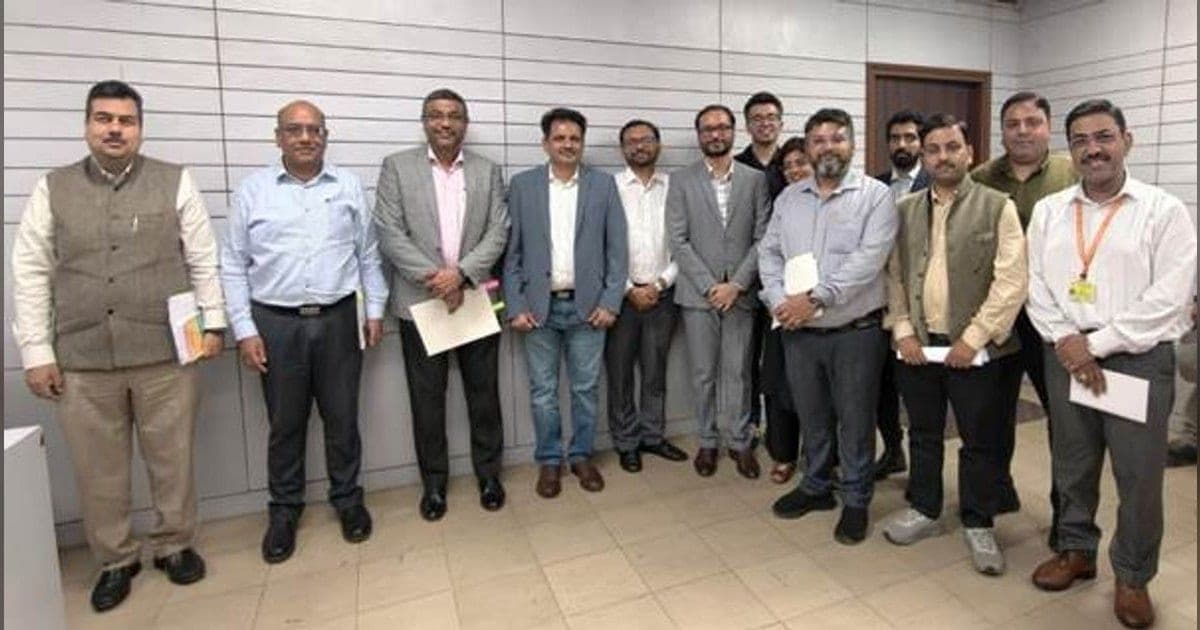
On 3 November 2026 the IndiaAI Mission released the indigenous foundation models EKA-1, developed by Soket Labs, and Dhir 2B and Dhir 5B, developed by ZenteiQ AiTech Innovations, at an event in New Delhi where MeitY Secretary S. Krishnan was present.
The IndiaAI Mission of the Ministry of Electronics and Information Technology (MeitY) placed three home-grown foundation models in the public domain at a press event in New Delhi. The models are EKA-1, built by Soket Labs Technology and Research Private Limited, and the pair Dhir 2B and Dhir 5B, built by ZenteiQ AiTech Innovations. MeitY Secretary S. Krishnan unveiled them in the company of senior officers of the ministry and of IndiaAI, together with the leadership teams of the two firms.
What EKA-1 brings
- EKA-1 carries 26.3 billion parameters and was trained on roughly 7.5 trillion tokens.
- It spans all 22 scheduled Indian languages besides English.
- It is an open, sparse hybrid language model shaped for mathematics, code, reasoning and agentic tasks.
- Soket chief executive Abhishek Upperwal said the model was tuned to the banking, financial services and cybersecurity landscape of the country.
What Dhir brings
The Dhir 2B and Dhir 5B models from ZenteiQ are open-source assistants meant to sit inside an organisation on its own servers. They work in English and 10 Indian languages, keep working without a network link, and handle document-grounded automation, knowledge retrieval and citizen or enterprise services for defence, government, industrial and education users. That makes them useful where connectivity is thin or the data is sensitive. ZenteiQ chief Prof. Sashikumar said the light architecture lets the models run on GPUs and TPUs and even on mobile handsets, so the data need never leave the device.
How the mission backed them
Both developers were chosen under the IndiaAI Innovation Centre (Foundation Models) pillar of the mission and were given subsidised national AI compute along with help for allied research costs. Mr Krishnan said such models add to the technological and strategic autonomy of the country and can be shared through the AIKosh platform with students, researchers and innovators. IndiaAI Chief Operating Officer Sudeep Shrivastava said the two releases show progress at both ends of the scale, from light models for everyday devices to heavier ones for complex enterprise work. The Union Cabinet cleared the IndiaAI Mission on 7 March 2024 under the motto of making AI in India and making AI work for India, and it runs through seven pillars: compute capacity, the Innovation Centre, the AIKosh datasets platform, application development, FutureSkills, startup financing, and Safe and Trusted AI.
Important Facts
| Mission | IndiaAI Mission |
|---|---|
| Ministry | Ministry of Electronics and Information Technology (MeitY) |
| Models released | EKA-1, Dhir 2B and Dhir 5B |
| EKA-1 developer | Soket Labs Technology and Research Private Limited |
| Dhir developer | ZenteiQ AiTech Innovations |
| EKA-1 size | 26.3 billion parameters |
| EKA-1 training data | About 7.5 trillion tokens |
| EKA-1 languages | All 22 scheduled Indian languages and English |
| Dhir languages | English and 10 Indian languages |
| Unveiled by | S. Krishnan, Secretary, MeitY |
| Pillar | IndiaAI Innovation Centre (Foundation Models) |
| Mission approved | 7 March 2024 by the Union Cabinet |
Exam Point of View
Fix the model names against their builders: EKA-1 by Soket Labs, Dhir 2B and Dhir 5B by ZenteiQ AiTech Innovations. Remember EKA-1 has 26.3 billion parameters, about 7.5 trillion training tokens and all 22 scheduled Indian languages; Dhir works in English and 10 Indian languages offline. Also note the ministry (MeitY), the pillar (IndiaAI Innovation Centre for Foundation Models), the Cabinet approval of 7 March 2024 and the seven pillars including the AIKosh datasets platform.
Practice Questions
How many parameters does the indigenous foundation model EKA-1 carry?
- A.12.8 billion
- B.26.3 billion
- C.45.6 billion
- D.70.2 billion
Show answer
EKA-1, built by Soket Labs Technology and Research Private Limited, is a foundation model of 26.3 billion parameters trained on roughly 7.5 trillion tokens.
Read the full explanation →Which organisation developed the open-source Dhir 2B and Dhir 5B models?
- A.Soket Labs Technology and Research
- B.Centre for Development of Advanced Computing
- C.ZenteiQ AiTech Innovations
- D.Bharat Electronics Limited
Show answer
ZenteiQ introduced the open-source Dhir 2B and Dhir 5B models, which can be deployed as secure, on-premise multilingual assistants supporting English and 10 Indian languages.
Read the full explanation →Under which pillar of the IndiaAI Mission were the developers of EKA-1 and Dhir selected?
- A.IndiaAI Compute Capacity
- B.IndiaAI Innovation Centre (Foundation Models)
- C.IndiaAI FutureSkills
- D.Safe and Trusted AI
Show answer
Soket Labs and ZenteiQ are among the teams picked under this pillar to build indigenous foundation capabilities and large language models, and the mission supported them with subsidised national AI compute together with help for allied research costs.
Read the full explanation →When did the Union Cabinet approve the IndiaAI Mission?
- A.7 March 2024
- B.1 February 2023
- C.15 August 2025
- D.7 March 2022
Show answer
The IndiaAI Mission was cleared by the Union Cabinet on that date, guided by the vision of making AI in India and making AI work for India, and it aims to address problems specific to the country, create economic and employment opportunities, and place India among the leaders in artificial…
Read the full explanation →Frequently Asked Questions
Which foundation models did the IndiaAI Mission release?
EKA-1, developed by Soket Labs Technology and Research Private Limited, and Dhir 2B and Dhir 5B, developed by ZenteiQ AiTech Innovations. They were released in New Delhi under the IndiaAI Innovation Centre (Foundation Models) pillar.
How large is EKA-1?
EKA-1 has 26.3 billion parameters and was trained on roughly 7.5 trillion tokens covering all 22 scheduled Indian languages and English. It is an open, sparse hybrid model built for mathematics, code, reasoning and agentic use.
What makes the Dhir models different?
Dhir 2B and Dhir 5B are open-source and can be deployed on an organisation's own premises in English and 10 Indian languages. They work offline, which suits defence, government, industrial and education users in low-connectivity or sensitive settings.
When was the IndiaAI Mission approved?
The Union Cabinet approved the IndiaAI Mission on 7 March 2024. It operates through seven pillars, including compute capacity, the Innovation Centre, the AIKosh datasets platform, FutureSkills, startup financing and Safe and Trusted AI.
Sources
- https://www.pib.gov.in/PressReleasePage.aspx?PRID=2332315 (opens in a new tab) — Press Information Bureau
Current Affairs 3 November 2026
- Indian Navy Frees Hijacked Fishing Vessel Azini Off SomaliaDefence
- Health Ministry Proposes New Import Gateways for DrugsNational
- PM Modi Opens Pune Metro Hinjawadi-Shivajinagar LineNational
- TRAI Issues Telecom Interconnection Third Amendment Rules 2026National
- Exercise Tiger Triumph 2026 Opens at VisakhapatnamDefence
- Rajnath Singh Chairs Defence Modernisation Meet in JaisalmerDefence
- India Sets USD 1 Trillion Export Target for Current YearEconomy
- Aditya-L1 VELC Finds Solar Eruption Expands AsymmetricallyScience & Technology
Related Current Affairs
- Science & Technology
Aditya-L1 VELC Finds Solar Eruption Expands Asymmetrically
3 November 2026 · 2 min read
- Science & Technology
Geothermal Energy: India's First Wells Open in Puga Valley
2 November 2026 · 3 min read
- Science & Technology
IIA Team Traces Black Hole Behind Bright X-ray Source ULX-8
2 November 2026 · 2 min read
- Science & Technology
Kishtwar Seismological Observatory Opens; J&K Now Has Four
2 November 2026 · 2 min read
- Science & Technology
Digi Yatra Begins International Trials at Seven Airports
1 November 2026 · 2 min read

Related GK
- Famous Personalities of Rajasthan: Exam Notes
28 October 2026 · Rajasthan
- Districts and Divisions of Rajasthan: Exam Notes
28 October 2026 · Rajasthan
- Tourism and World Heritage Sites of Rajasthan Notes
27 October 2026 · Rajasthan
Take the Quiz
- Current Affairs Quiz
State Exams Current Affairs Quiz: 3 November 2026
25 questions25 minutesStart Quiz