
India Backs Science-Led Whale Conservation at IWC-70 in Hobart
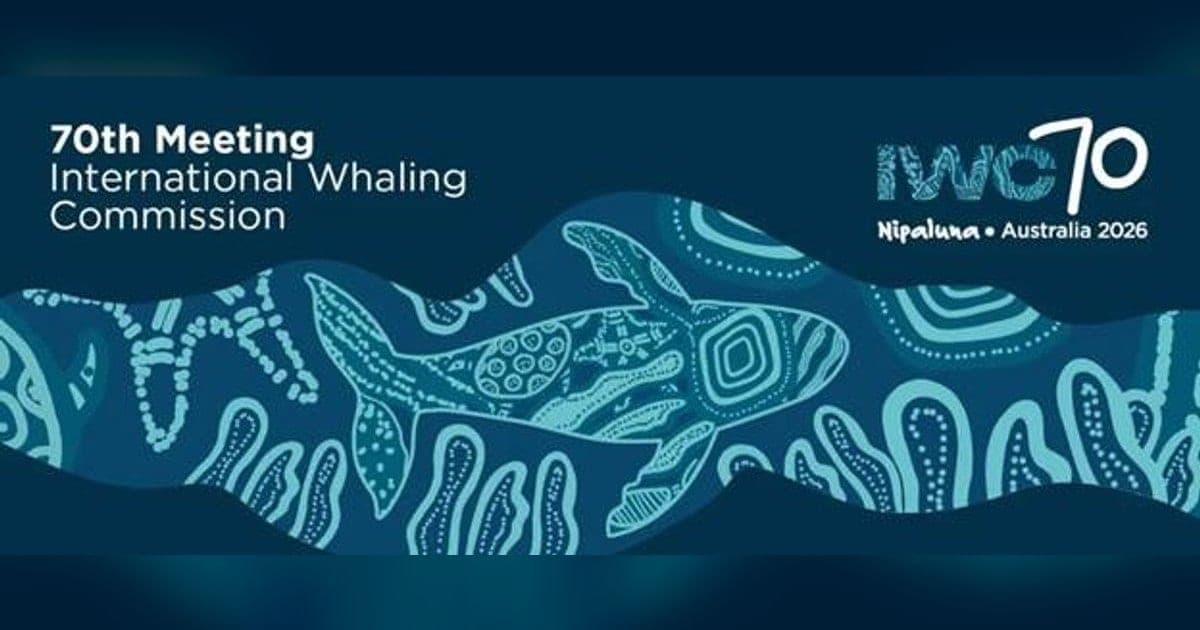
India called for science-based cetacean conservation at the 70th International Whaling Commission meeting in Hobart, Australia, held from 28 September to 02 October.
Why in News
At IWC-70 in Hobart, Australia, India delivered its Opening Statement calling for science-based conservation of whales and other cetaceans, international cooperation and practical, locally suited measures to meet the threats they face.
India has pressed for stronger, evidence-led protection of whales, dolphins and porpoises at the 70th meeting of the International Whaling Commission (IWC-70), which opened in Hobart, Australia. The session runs from 28 September to 02 October 2026, and India set out its position in an Opening Statement on the first day.
What India argued
India told the meeting that range countries, scientific institutions and international organisations have to keep working together if cetaceans are to be protected properly. Better information on how many animals there are, where they travel, how they breed and what endangers them is, in India's view, the basis on which any conservation measure should rest. The delegation asked that decisions of the Commission stay anchored in sound science rather than in assumption, and pushed for closer cooperation between governments, researchers and coastal communities so that the remedies designed are practical and suited to the places where they will be applied.
An eighty-year-old convention
The meeting carries an extra weight this year: it coincides with the eightieth anniversary of the signing of the International Convention for the Regulation of Whaling. That treaty, signed at Washington DC on 02.12.1946, created the International Whaling Commission as the world body responsible for regulating whaling and conserving whales. Its membership today stands at 89 governments. India joined the Commission in 1981 and has since taken an active part in its work.
How India protects cetaceans at home
Whale and dolphin species found in Indian waters enjoy the highest grade of legal protection available under the Wild Life (Protection) Act, 1972. A number of Marine Protected Areas have been notified as well, covering not only whales and dolphins but dugongs, sharks, rays, turtles and corals. Beyond the statute, the government runs Project Dolphin, which treats dolphins, whales, porpoises and the water systems they live in as one conservation problem rather than several. India also gives special attention to the Arabian Sea humpback whale, counted among the 25 species picked out for focused conservation effort.
The ask at Hobart
Winding up, India repeated that the Commission's future agenda should be driven by science-based priorities, by cooperation across borders and by measures that can actually be carried out against the many threats cetaceans face.
Important Facts
| Event | 70th meeting of the International Whaling Commission (IWC-70) |
|---|---|
| Venue | Hobart, Australia |
| Dates | 28 September to 02 October 2026 |
| Parent treaty | International Convention for the Regulation of Whaling |
| Treaty signed at | Washington DC, on 02.12.1946 |
| IWC membership | 89 governments |
| India a member since | 1981 |
| Indian law protecting cetaceans | Wild Life (Protection) Act, 1972 |
| Indian programme | Project Dolphin |
| Focus species | Arabian Sea humpback whale, among 25 species for focused conservation |
| Indian ministry | Ministry of Environment, Forest and Climate Change |
Exam Point of View
Remember the edition (70th), the venue (Hobart, Australia), the dates (28 September to 02 October 2026), the parent treaty (International Convention for the Regulation of Whaling, signed at Washington DC on 02.12.1946, now 80 years old), the Commission's 89 member governments, India's membership since 1981, the Wild Life (Protection) Act, 1972, Project Dolphin and the Arabian Sea humpback whale among 25 focus species.
Practice Questions
The 70th meeting of the International Whaling Commission (IWC-70) is being held in which city?
- A.Wellington, New Zealand
- B.Hobart, Australia
- C.Reykjavik, Iceland
- D.Bergen, Norway
Show answer
Correct answer: B. Hobart, Australia
Explanation
The correct answer is Hobart, Australia, the Tasmanian city hosting the seventieth meeting of the International Whaling Commission, which runs from the twenty-eighth of September to the second of October. India used its Opening Statement there to argue for conservation grounded in science. Option A is wrong because the meeting is not in New Zealand; the host named for this edition is Australia. Option C is wrong because Iceland, although closely associated with whaling debates, is not hosting this session of the Commission. Option D is wrong for the same reason: Norway figures in the history of whaling but is not the venue of the seventieth meeting. Aspirants should link the edition number, the city and the country together, since questions on multilateral meetings usually test exactly that trio, along with the theme or the main position a country took at the meeting.
India has been a member of the International Whaling Commission since which year?
- A.1946
- B.1972
- C.1981
- D.1995
Show answer
Correct answer: C. 1981
Explanation
The correct answer is 1981. India joined the International Whaling Commission in that year and has played a prominent part in whale conservation within the body ever since. Option A is wrong because that is the year the International Convention for the Regulation of Whaling was signed at Washington DC, which created the Commission itself; the founding of the body and India's accession to it are separate events, and IWC-70 marks the eightieth anniversary of that signing. Option B is wrong because it is the year of the Indian statute, the Wild Life (Protection) Act, under which whales and dolphins in Indian waters receive the highest grade of legal protection; it is a domestic law, not a date of accession. Option D is wrong because no event in this account falls in that year. The Commission today has eighty-nine member governments.
Which whale species does India identify among the 25 species picked for focused conservation efforts?
- A.Blue whale
- B.Arabian Sea humpback whale
- C.Sperm whale
- D.Bryde's whale
Show answer
Correct answer: B. Arabian Sea humpback whale
Explanation
The correct answer is the Arabian Sea humpback whale. India attaches particular importance to this population and has placed it among the species chosen for focused conservation effort, a list of twenty-five in all. The wider framework for this work is Project Dolphin, which takes dolphins, whales, porpoises and the aquatic ecosystems that sustain them as a single conservation task. Option A is wrong because the blue whale, though the largest animal alive, is not the species singled out in this statement. Option C is wrong because the sperm whale does not appear among the species named for focused effort here. Option D is wrong for the same reason: Bryde's whale is found in warm waters but is not the one India highlighted at the Commission. Marine Protected Areas notified in the country also cover dugongs, sharks, rays, turtles and corals.
Frequently Asked Questions
Where is the 70th meeting of the International Whaling Commission being held?
At Hobart in Australia, from 28 September to 02 October 2026. India presented an Opening Statement there calling for science-based conservation of whales and other cetaceans.
When was the International Convention for the Regulation of Whaling signed?
It was signed at Washington DC on 02.12.1946, and IWC-70 coincides with its 80th anniversary. The Convention set up the International Whaling Commission, which now has 89 member governments.
Which Indian law protects whales and dolphins?
The Wild Life (Protection) Act, 1972 gives cetaceans in Indian waters the highest level of legal protection. India also runs Project Dolphin and has notified several Marine Protected Areas.
Sources
Current Affairs 28 September 2026
- PM-AJAY: 18,093 Villages Declared Adarsh Gram by September 2026Government Schemes
- KAZIND-2026: Indian Contingent Departs for Kazakhstan ExerciseDefence
- PM-MKSSY Bears 40% of Aquaculture Insurance Premium CostGovernment Schemes
- Sadhana Shrinkhla 2026: Four Workshops on Training InstitutesSummits & Conferences
- PM E-DRIVE: GARC Gets Rs 221.13 Crore for EV TestingScience & Technology
- Swachhata Hi Seva 2026: 10th Edition Ends on 2 OctoberNational
- 46th FIDE Chess Olympiad: PM Hails Indian PlayersSports
- India-France Space Ties Widen to Gaganyaan, TRISHNA and Start-upsScience & Technology
Related Current Affairs
- Environment
Delhi Winter Air Plan: 37 Hotspots and No PUCC, No Fuel Drive
28 September 2026 · 2 min read
- Environment
India's First Port-Based e-Methanol Plant Comes Up at Kandla
26 September 2026 · 2 min read
- Environment
NRAA Holds REWARD Meeting on Watershed Guidelines for PMKSY
23 September 2026 · 2 min read



Related GK
- International Organisations and Headquarters: Full List
28 September 2026 · Static GK
- Space Agencies and Missions of the World: Exam Notes
28 September 2026 · Science & Technology
- Haryana GK: Formation, Geography, History and Facts
28 September 2026 · Indian States & UTs
Take the Quiz
- Current Affairs Quiz
State Exams Current Affairs Quiz: 28 September 2026
25 questions25 minutesStart Quiz