
Great Indian Bustard Rewilding Begins at Desert National Park
Environment Minister Bhupender Yadav and Rajasthan Chief Minister Bhajan Lal Sharma began the release of two captive-bred Great Indian Bustards in Jaisalmer.
Why in News
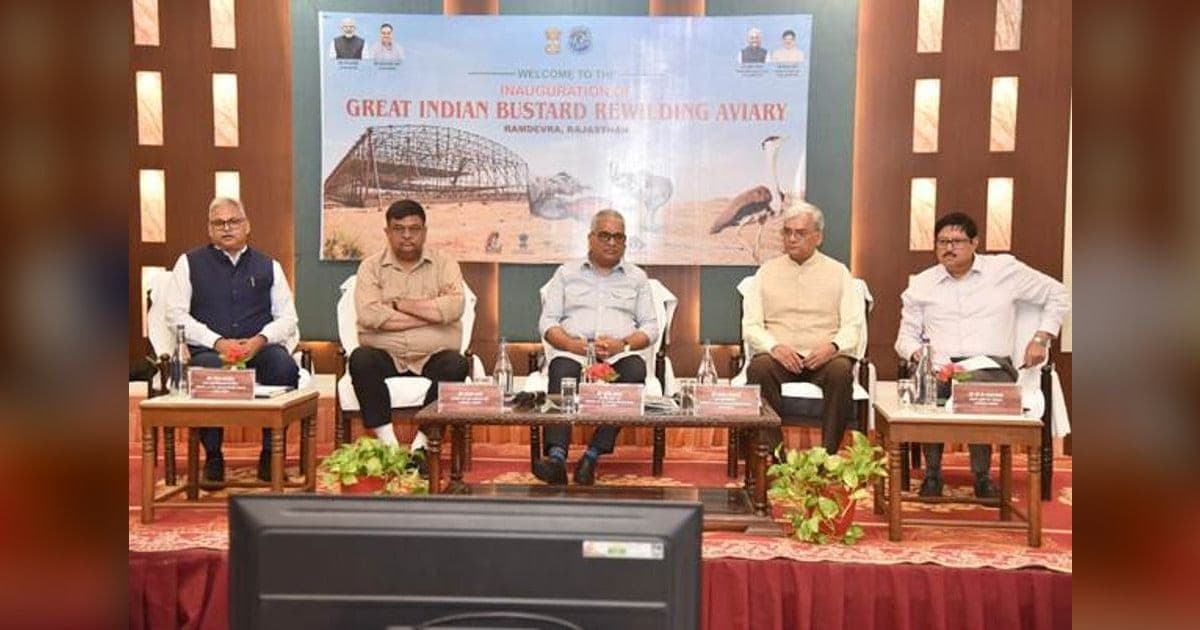
On 3 October 2026 Union Environment Minister Bhupender Yadav and Rajasthan Chief Minister Bhajan Lal Sharma initiated the release of two captive-bred Great Indian Bustards from the soft-release facility at Desert National Park, Jaisalmer, and inaugurated the new Rewilding Aviary at Ramdevra.
Ten years of breeding the Great Indian Bustard behind wire turned a corner in the Thar. At Desert National Park, Jaisalmer, the process of returning two captive-bred birds to the wild was set in motion during Wildlife Week 2026. Union Minister for Environment, Forest and Climate Change Bhupender Yadav took part at the site, while Rajasthan Chief Minister Bhajan Lal Sharma joined through video conference. The birds move out of a soft-release enclosure, and the release into open desert follows the next day. Rajasthan's Forest and Environment Minister Sanjay Sharma and senior officers of the Union and State governments attended.
What was opened and reviewed
The ministers looked over the conservation breeding centres at Ramdevra and Sam, opened a newly built Rewilding Aviary and released a brochure on the bird's journey through the landscape over the decade. The aviary at Ramdevra measures 160 m by 64 m by 14 m and was raised by the Rajasthan Forest Department through the Rajasthan State Road Development and Construction Corporation Ltd (RSRDC) on a sanctioned budget of ₹9.25 crore from the State government. Because it carries no pillars, a bird raised in captivity gets unbroken flying space to build muscle and behave as it would outside before it is let go.
Where the breeding programme stands
| Birds at Sam and Ramdevra | 97 |
| Hatched from wild-laid eggs | 40 |
| Bred in captivity | 57 |
| Held for captive reproduction | 86 |
| Earmarked for release | 11 |
| Chicks born in captivity | 24 in 2025 and 29 in 2026 |
| Fenced grassland enclosures | About 200 sq km inside the park |
A method the programme calls jumpstart slips captive-laid eggs into wild nests; incubating females accepted them and six chicks hatched this way in Rajasthan and two in Gujarat. Telemetry work has shown the fenced grassland inside the park to be the prime breeding ground, which is why the Rajasthan Forest Department keeps adding to it.
Who runs the recovery programme
The Bustard Recovery Programme brings together the Ministry of Environment, Forest and Climate Change, the Rajasthan Forest Department and the Wildlife Institute of India, with technical collaboration from the International Fund for Houbara Conservation and money from National CAMPA. Its national action plan covers conservation breeding, habitat management guided by science, threat reduction, habitat restoration and work with villages. A judgement of the Supreme Court, resting on an expert committee's advice, steers what is done for the species.
Why this bird is watched
The Great Indian Bustard is the State bird of Rajasthan and is counted among critically endangered species. Mr Yadav described it as the umbrella species of the Thar and tied its survival to grassland conservation, to land degradation neutrality and to the stopovers migratory birds need along the central Asian flyways, besides the earnings eco-tourism can bring villages nearby. The Chief Minister called the day one of pride for the State and set out the money his government has put behind the programme. A similar effort has begun in Gujarat, where the Union Minister recently inspected the soft-release and conservation facility at Naliya in Kutch.
Important Facts
| Species | Great Indian Bustard, critically endangered, State bird of Rajasthan |
|---|---|
| Site of release | Desert National Park, Jaisalmer, Rajasthan |
| Occasion | Wildlife Week 2026 |
| Breeding centres | Sam and Ramdevra, holding 97 birds in all |
| Birds earmarked for release | 11 of the 97 |
| Rewilding Aviary | At Ramdevra, 160 m by 64 m by 14 m, sanctioned at ₹9.25 crore |
| Built by | Rajasthan Forest Department through RSRDC |
| Programme partners | MoEFCC, Rajasthan Forest Department and Wildlife Institute of India |
| Technical collaboration | International Fund for Houbara Conservation |
| Funding | National CAMPA |
Exam Point of View
Remember the species and its status (Great Indian Bustard, critically endangered, State bird of Rajasthan), the site (Desert National Park, Jaisalmer), the breeding centres (Sam and Ramdevra), the partners (Environment Ministry, Rajasthan Forest Department, Wildlife Institute of India, International Fund for Houbara Conservation), the funding through National CAMPA and the aviary built for ₹9.25 crore.
Practice Questions
At which protected area did India set in motion the release of captive-bred Great Indian Bustards into the wild?
- A.Ranthambore Tiger Reserve
- B.Desert National Park, Jaisalmer
- C.Sariska Tiger Reserve
- D.Keoladeo National Park
Show answer
Correct answer: B. Desert National Park, Jaisalmer
Explanation
The correct answer is Desert National Park, Jaisalmer. The two captive-bred birds were moved from a soft-release facility at this park in the Thar desert, with the Union Environment Minister present at the site and the Chief Minister of Rajasthan joining by video conference during Wildlife Week 2026. The park also holds the fenced grassland enclosures, of about 200 sq km, that telemetry studies identify as the prime breeding habitat of the species. Ranthambore in option A and Sariska in option C are tiger reserves in eastern Rajasthan and have no role in the bustard recovery work described; they lie outside the desert grassland the bird needs. Keoladeo National Park in option D is the wetland at Bharatpur known for migratory waterbirds, not for bustards. The conservation breeding centres connected with the release are at Sam and Ramdevra, both in the Jaisalmer landscape, and the new Rewilding Aviary was opened at Ramdevra.
The Great Indian Bustard is the State bird of which State?
- A.Gujarat
- B.Madhya Pradesh
- C.Rajasthan
- D.Haryana
Show answer
Correct answer: C. Rajasthan
Explanation
The correct answer is Rajasthan. The bird is the State bird of Rajasthan, and the Chief Minister called the day of its rewilding a day of pride for the whole State, noting that the species is part of the cultural heritage of the Thar and has been brought back from the brink of extinction. The breeding centres at Sam and Ramdevra, the new Rewilding Aviary and the release site at Desert National Park are all in Rajasthan, and the State government sanctioned the aviary's budget and funds the conservation programme. Gujarat in option A is wrong as a State-bird answer, although the species does occur there and a jumpstart effort has begun at the Naliya facility in Kutch, where two chicks were hatched in wild nests. Madhya Pradesh in option B and Haryana in option D have no part in the programme described in the release.
Which scientific institution works with the Environment Ministry and the Rajasthan Forest Department on the Bustard Recovery Programme?
- A.Wildlife Institute of India
- B.Zoological Survey of India
- C.Botanical Survey of India
- D.Indian Council of Forestry Research and Education
Show answer
Correct answer: A. Wildlife Institute of India
Explanation
The correct answer is the Wildlife Institute of India. The recovery programme is a joint effort of the Ministry of Environment, Forest and Climate Change, the Rajasthan Forest Department and the Wildlife Institute of India, with technical collaboration from the International Fund for Houbara Conservation and funding support from National CAMPA. Scientists of the institute advised on the design of the Rewilding Aviary at Ramdevra and their long-term telemetry studies established which grasslands inside Desert National Park serve as prime breeding habitat. The Zoological Survey of India in option B and the Botanical Survey of India in option C are survey organisations for animal and plant taxonomy and are not named as partners here. The Indian Council of Forestry Research and Education in option D works on forestry research and likewise has no stated role in this programme.
Frequently Asked Questions
Where has India begun releasing captive-bred Great Indian Bustards?
At Desert National Park in Jaisalmer, Rajasthan. Two birds were moved out of the soft-release facility during Wildlife Week 2026, the first such step after a decade of conservation breeding.
How many Great Indian Bustards are held in the breeding centres?
The centres at Sam and Ramdevra hold 97 birds. Of these, 40 came from wild-laid eggs and 57 were bred in captivity; 86 are kept for captive reproduction and 11 are earmarked for release.
Which bodies run the Bustard Recovery Programme?
The Ministry of Environment, Forest and Climate Change, the Rajasthan Forest Department and the Wildlife Institute of India, with technical collaboration from the International Fund for Houbara Conservation and funding from National CAMPA.
Sources
- https://www.pib.gov.in/PressReleasePage.aspx?PRID=2318629 (opens in a new tab) — Press Information Bureau
Current Affairs 3 October 2026
- Navpreet Singh Deported from Türkiye in Narco Trafficking CaseNational
- Vice-President Opens 5th Kautilya Economic Conclave in DelhiSummits & Conferences
- NABKISAN Raises ₹180 Crore Through India's First WASH BondBanking & Finance
- Harivansh to Lead India at 153rd IPU Assembly in TanzaniaInternational
- Swachh Bharat Diwas 2026 Marked by Special Gram SabhasGovernment Schemes
- PM-SETU Completes One Year: 850 ITIs Identified for UpgradeGovernment Schemes
- DARE and ICAR Begin Special Campaign 6.0 at Farm InstitutesNational
- Kumkum Anil Mohod Wins Recurve Individual Gold at Asian GamesSports
Related Current Affairs
- Environment
Delhi Logs Best September Air Quality in Five Years at AQI 102
30 September 2026 · 2 min read
- Environment
National Coastal Mission 2.0 Guidelines Out, Rs 767 Crore Outlay
30 September 2026 · 2 min read
- Environment
Cabinet Clears Green Energy Corridor Phase-III With 50 GWh Storage
30 September 2026 · 2 min read

Related GK
- Odisha GK: Formation, Geography, History and Culture
3 October 2026 · Indian States & UTs
- Deposit Insurance and DICGC: Cover, Premium and Rules
3 October 2026 · Banking & Financial Awareness
- Airports, Ports and Metro Cities of India: Static GK
3 October 2026 · Static GK
Take the Quiz
- Current Affairs Quiz
State Exams Current Affairs Quiz: 3 October 2026
25 questions25 minutesStart Quiz