
Ghaziabad to Be Second Indian City Earning Carbon Credits
A PIB backgrounder says Ghaziabad will be the first urban body in Uttar Pradesh, and the second in India after Indore, to turn waste into carbon credits.
Why in News
A PIB backgrounder published on 2 October 2026 describes how Ghaziabad, Saligao in Goa, Gandhinagar and Kakinada are turning municipal waste into energy, compost, carbon credits and better services.
A background paper on urban transformation issued on 2 October 2026 gathers four city examples of how municipal waste is being turned into energy, compost, data and even carbon revenue under the Swachh Bharat Mission.
Ghaziabad and carbon credits
The Ghaziabad Municipal Corporation in Uttar Pradesh has registered for an international carbon credit project verified by the United Nations. It has been accredited under the Verified Carbon Standard (VCS), supported by the United Nations Framework Convention on Climate Change. Old street lights have been replaced with energy efficient LED lamps and wet waste is being composted. Following Indore in Madhya Pradesh, Ghaziabad is set to become the first urban local body in Uttar Pradesh and the second in the country to convert waste into a new source of value. The measures together are expected to cut carbon dioxide emissions by about 2.7 lakh tonnes, which translates into the same number of carbon credits, since one tonne of carbon dioxide equals one credit, and certified credits can be sold on the international carbon market.
Goa turns waste into power
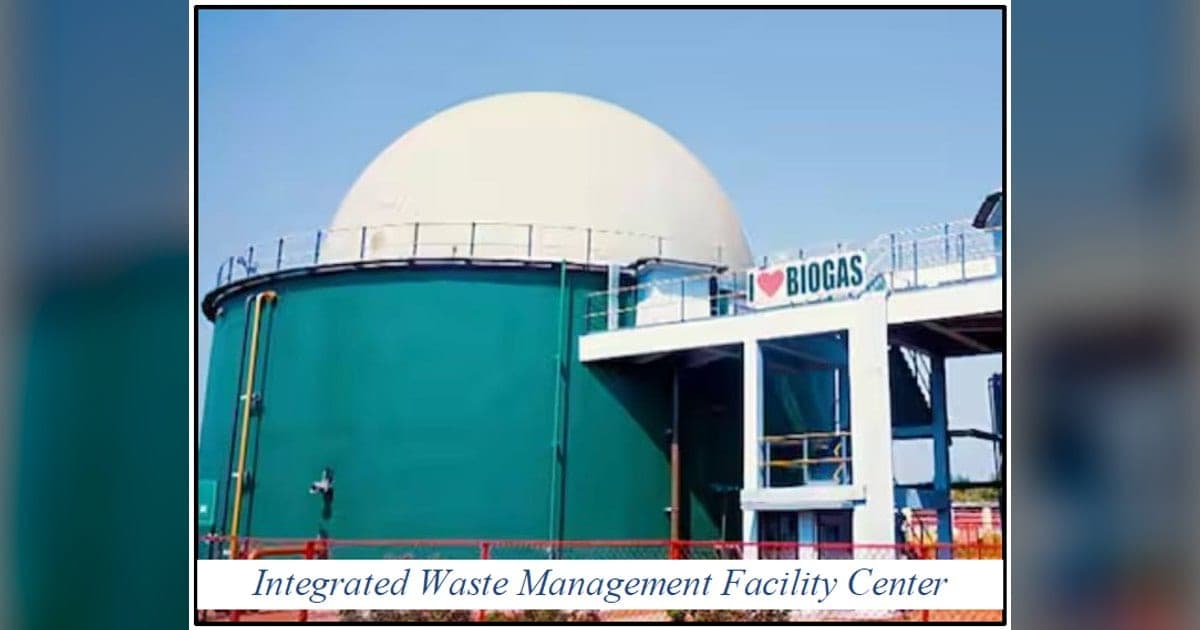
At Saligao in Goa, a former garbage dump now houses an Integrated Waste Management Facility run by the Goa Waste Management Corporation. Spread over 113,000 square metres, it handles 250 metric tons of wet and dry waste a day, recovers recyclables from 100 metric tons of dry waste, sends the rest to cement plants and makes 7 to 8 tons of compost daily for panchayats. Organic matter becomes biogas and electricity, and the plant treats roughly a third of the waste of the whole state.
Gandhinagar and Kakinada
Gandhinagar in Gujarat held zero waste activities at 25 locations with more than 600 citizens taking part and over 40,000 reached through social media, including My Theli stalls where donated clothes were stitched into carry bags by self-help group women. Kakinada in the East Godavari district of Andhra Pradesh generates about 144 tons of waste a day across 50 wards divided into 382 micro pockets, with 973 sanitation workers serving 112,993 households and 40,661 collection points. RFID tags, facial recognition attendance, GPS on 108 hopper vehicles and an online waste management system have taken door to door collection to full coverage.
Important Facts
| Carbon credit city | Ghaziabad, Uttar Pradesh, second in the country after Indore |
|---|---|
| Accreditation | Verified Carbon Standard, supported by the UNFCCC |
| Expected reduction | About 2.7 lakh tonnes of carbon dioxide, equal to the same number of carbon credits |
| Goa facility | Integrated Waste Management Facility, Saligao, run by the Goa Waste Management Corporation |
| Goa capacity | 113,000 square metres, 250 metric tons of waste a day, 7 to 8 tons of compost |
| Kakinada | East Godavari district, Andhra Pradesh, 144 tons of waste a day across 50 wards |
| Kakinada technology | RFID tags, GPS on 108 hopper vehicles, facial recognition attendance and an online waste management system |
| Gandhinagar | Zero waste activities at 25 locations, over 600 citizens engaged, My Theli stalls |
Exam Point of View
Remember that Indore was the first and Ghaziabad is set to be the second urban local body in India to turn waste into carbon credits, that Ghaziabad is accredited under the Verified Carbon Standard supported by the UNFCCC, the location and daily capacity of the Saligao facility in Goa, and the technology used in Kakinada in Andhra Pradesh.
Practice Questions
Which city is set to become the second urban local body in India to turn waste into carbon credits?
- A.Kanpur
- B.Ghaziabad
- C.Varanasi
- D.Lucknow
Show answer
Correct answer: B. Ghaziabad
Explanation
The correct answer is Ghaziabad. The municipal corporation of this city in Uttar Pradesh has registered for an international carbon credit project verified by the United Nations and has been accredited under the Verified Carbon Standard, which is supported by the United Nations Framework Convention on Climate Change. Following Indore in Madhya Pradesh, it is set to become the first urban local body in its own state and the second in the country to convert waste into a new source of value. Options A, C and D name other large cities of the same state, but none of them is the body described as taking this step. Candidates should hold two names together for this fact, Indore as the first and Ghaziabad as the second, along with the standard under which the accreditation was granted.
The Integrated Waste Management Facility at Saligao, built on a former garbage dump, is located in which state?
- A.Kerala
- B.Maharashtra
- C.Goa
- D.Karnataka
Show answer
Correct answer: C. Goa
Explanation
The correct answer is Goa. The facility at Saligao is operated by the Goa Waste Management Corporation and stands on land that was once used as a garbage dump. It is spread over an area of 113,000 square metres and manages 250 metric tons of wet and dry waste each day, recovering recyclables from 100 metric tons of dry waste and sending the remainder to cement factories for co-processing. Organic matter is separated and converted into biogas, which in turn generates electricity for the neighbourhood, and the plant produces 7 to 8 tons of compost a day for use by local panchayats in gardening and reforestation. Options A, B and D name other states along or near the western coast, but the facility described here belongs to Goa and treats close to a third of the waste generated in that state.
Kakinada, which uses RFID tags and facial recognition attendance in waste management, is a city of which state?
- A.Telangana
- B.Odisha
- C.Tamil Nadu
- D.Andhra Pradesh
Show answer
Correct answer: D. Andhra Pradesh
Explanation
The correct answer is Andhra Pradesh. Kakinada lies in the East Godavari district of that state and has become a leading example of technology enabled sanitation. The city generates about 144 tons of waste daily, which the municipal corporation handles across 50 wards further divided into 382 micro pockets, each covering between 250 and 350 households. More than 973 sanitation workers serve about 112,993 households through 40,661 designated collection points. Radio frequency identification tags fitted at the gates of waste generators are scanned at the time of pick up and the data flows into an online waste management system, while 108 hopper vehicles carry GPS devices and workers mark attendance through facial recognition. Options A, B and C name neighbouring states, but the city in question is in Andhra Pradesh.
Frequently Asked Questions
Which city was the first in India to turn waste into carbon credits?
Indore in Madhya Pradesh. Ghaziabad in Uttar Pradesh is set to become the second in the country and the first urban local body in its own state to do so.
Where is the Integrated Waste Management Facility described in the backgrounder?
At Saligao in Goa, on the site of a former garbage dump. It is operated by the Goa Waste Management Corporation and treats about a third of the waste of the state.
What technology does Kakinada use for waste collection?
RFID tags at the gates of waste generators, an online waste management system, GPS on hopper vehicles and facial recognition for recording the attendance of SafaiMitras.
Sources
- https://www.pib.gov.in/PressReleasePage.aspx?PRID=2318081 (opens in a new tab) — Press Information Bureau
Current Affairs 2 October 2026
- Survey of India Marks 28 Standard Place Names in LadakhNational
- Special Campaign 6 Starts With E-Waste Disposal in FocusGovernment Schemes
- Meghwal Leads Ek Ped Maa Ke Naam Drive at IIAC in DelhiEnvironment
- RoDTEP Export Scheme Extended Up to 31 December 2026Economy
- RELIEF Timelines Extended for West Asia Route ExportersEconomy
- Goyal at G20 Trade Ministers Meeting in Milwaukee, USSummits & Conferences
- APEDA Sends Bihar Makhana From Purnea to GreeceEconomy
- NITI Aayog Holds SDG Budgeting Workshop in KolkataNational
Related Current Affairs
- Environment
Delhi Logs Best September Air Quality in Five Years at AQI 102
30 September 2026 · 2 min read
- Environment
National Coastal Mission 2.0 Guidelines Out, Rs 767 Crore Outlay
30 September 2026 · 2 min read
- Environment
Cabinet Clears Green Energy Corridor Phase-III With 50 GWh Storage
30 September 2026 · 2 min read
- Environment
SBM 2.0: Rs 11,785 Crore Approved for Sewage Treatment Plants
30 September 2026 · 2 min read
Related GK
- Artificial Intelligence and the IndiaAI Mission: Exam Notes
2 October 2026 · Science & Technology
- Chhattisgarh GK: Formation, Minerals and Culture
2 October 2026 · Indian States & UTs
- Famous Cities and Their Nicknames: Full List
2 October 2026 · Static GK
Take the Quiz
- Current Affairs Quiz
Banking Current Affairs Quiz: 2 October 2026
25 questions25 minutesStart Quiz