
Gamma-Ray Detectors at Polar Stations Catch Solar Event GLE 77
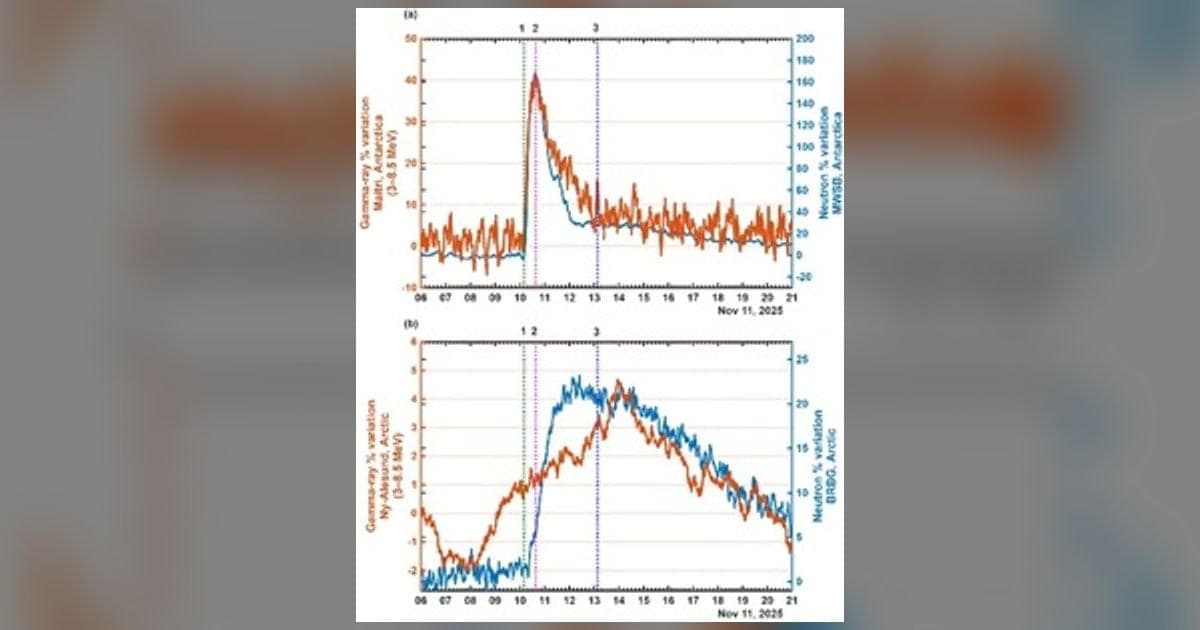
Scientists of the Indian Institute of Geomagnetism detected the rare solar event GLE 77 using gamma-ray detectors at Maitri in Antarctica and Ny-Alesund in the Arctic.
Why in News
On 26 November 2026 the Ministry of Earth Sciences announced that gamma-ray detectors at India's Arctic and Antarctic stations had, for the first time, detected the signature of the rare solar event GLE 77.
Gamma-ray detectors at India's polar research stations have been used, for the first time, to pick up the signature of a rare class of solar event known as a Ground-Level Enhancement. The work was done by scientists of the Indian Institute of Geomagnetism, Mumbai, an autonomous institute under the Department of Science and Technology.
What a Ground-Level Enhancement is
These events follow powerful eruptions on the Sun. Highly energetic particles, mostly protons, race through interplanetary space, reach the Earth's atmosphere and create secondary particles of the hadronic, mesonic and electromagnetic kinds. They sit at the extreme end of solar energetic particle events and usually come with intense solar flares and fast coronal mass ejections.
The event that was detected
The team examined records of the solar event of 11 November 2025, designated GLE 77. That event was tied to an intense X-class solar flare, a fast coronal mass ejection and a strong solar energetic particle episode. The detectors used were sodium iodide scintillation instruments installed by the institute at Maitri in Antarctica and at Ny-Alesund in the Arctic.
The two stations recorded different time behaviour. Maitri in the south showed a prompt response, while the Arctic station responded more gradually. In both cases the gamma-ray record agreed with readings from neutron monitors, the instruments traditionally relied on for spotting such events.
Ruling out the look-alikes
Before claiming the detection, the team separated the rise in counts from other possible causes. These included background radioactivity of the ground, terrestrial gamma-ray flashes, thunderstorm ground enhancements linked to lightning, and sources beyond the Earth such as gamma-ray bursts and solar flares. Particle data from the GOES satellites and the neutron monitor network were used for comparison.
Who did the work and why it matters
Prof. G. Vichare, Ms. P. Thakur and Mr. C. Selvaraj of the institute worked with Prof. N. Gopalswamy of NASA, and the findings appeared in the journal Astrophysical Journal Letters. Gamma-ray detectors are smaller and cheaper than neutron monitor installations, so a wider network of them could extend the geographic reach of ground-based watching of space weather and sharpen understanding of the Sun-Earth link.
Important Facts
| Phenomenon | Ground-Level Enhancement (GLE), an extreme solar energetic particle event |
|---|---|
| Event studied | GLE 77, the solar event of 11 November 2025 |
| Institute | Indian Institute of Geomagnetism, Mumbai, under the Department of Science and Technology |
| Stations | Maitri in Antarctica and Ny-Alesund in the Arctic |
| Instrument | Sodium iodide scintillation gamma-ray detectors |
| Response pattern | Prompt at Maitri, gradual at the Arctic station |
| Journal | Astrophysical Journal Letters |
| Collaborator | Prof. N. Gopalswamy of NASA, with Prof. G. Vichare, Ms. P. Thakur and Mr. C. Selvaraj |
Exam Point of View
Remember the institute (Indian Institute of Geomagnetism, Mumbai), the phenomenon (Ground-Level Enhancement), the event studied and its date (GLE 77, of 11 November 2025), the two stations (Maitri in Antarctica and Ny-Alesund in the Arctic), the detector type (sodium iodide scintillation), the journal and the NASA collaborator.
Practice Questions
Which institute detected the Ground-Level Enhancement signature using gamma-ray detectors at India's polar stations?
- A.Indian Institute of Geomagnetism, Mumbai
- B.Indian Institute of Tropical Meteorology, Pune
- C.National Centre for Polar and Ocean Research, Goa
- D.Physical Research Laboratory, Ahmedabad
Show answer
Its scientists installed the sodium iodide scintillation gamma-ray detectors at Maitri in Antarctica and at Ny-Alesund in the Arctic as part of a programme on cosmic rays and space weather, and they used those records to detect the signature of the solar event designated GLE 77.
Read the full explanation →At which Indian Antarctic station was the gamma-ray detector used for this study installed?
- A.Bharati
- B.Maitri
- C.Dakshin Gangotri
- D.Himadri
Show answer
The study used a pair of sodium iodide scintillation gamma-ray detectors, one at Maitri in Antarctica and the other at Ny-Alesund in the Arctic, and the Antarctic instrument is the one that showed a prompt response to the event.
Read the full explanation →The solar event designated GLE 77, studied by the Indian team, occurred on which date?
- A.11 November 2025
- B.11 November 2026
- C.1 November 2025
- D.21 October 2025
Show answer
The event of that date carries the designation GLE 77 and was associated with an intense X-class solar flare, a fast coronal mass ejection and a strong solar energetic particle episode.
Read the full explanation →Frequently Asked Questions
What is a Ground-Level Enhancement?
It is an extreme form of solar energetic particle event. A powerful solar eruption sends highly energetic particles, mainly protons, through space into the Earth's atmosphere, where they generate secondary hadronic, mesonic and electromagnetic particles. Such events usually accompany intense solar flares and fast coronal mass ejections.
Which stations recorded GLE 77?
Sodium iodide scintillation gamma-ray detectors installed by the Indian Institute of Geomagnetism at Maitri in Antarctica and at Ny-Alesund in the Arctic. Maitri showed a prompt response and the Arctic station a more gradual one, and both matched neutron monitor data.
Why does the new approach matter?
Gamma-ray detectors are compact and cost less than conventional neutron monitor installations. A wider network of them could expand the geographic coverage of ground-based observation, complement existing systems and improve understanding of high-energy solar particles and extreme space weather.
Sources
- https://www.pib.gov.in/PressReleasePage.aspx?PRID=2341985 (opens in a new tab) — Press Information Bureau
Current Affairs 26 November 2026
- Nine Cheetah Cubs Born at Kuno, India's Tally Reaches 62Environment
- Chariot-1 Foundation Models Launched Under IndiaAI MissionScience & Technology
- MoSPI Launches State Dashboard on eSankhyiki PortalReports & Indices
- NLMC Board Takes Up ₹1,300 Crore Monetisation ProposalsEconomy
- Constitution Day Observed on 26 November With Preamble ReadingImportant Days
- 57th IFFI Campus at Panaji Showcases Creative InstitutionsNational
- PM-ABHIM Has Approved 19,983 Health Infrastructure UnitsGovernment Schemes
- CSIR-IIIM Jammu Wins Pioneering Institution Award at DIDAC 2026Awards & Honours
Related Current Affairs
- Science & Technology
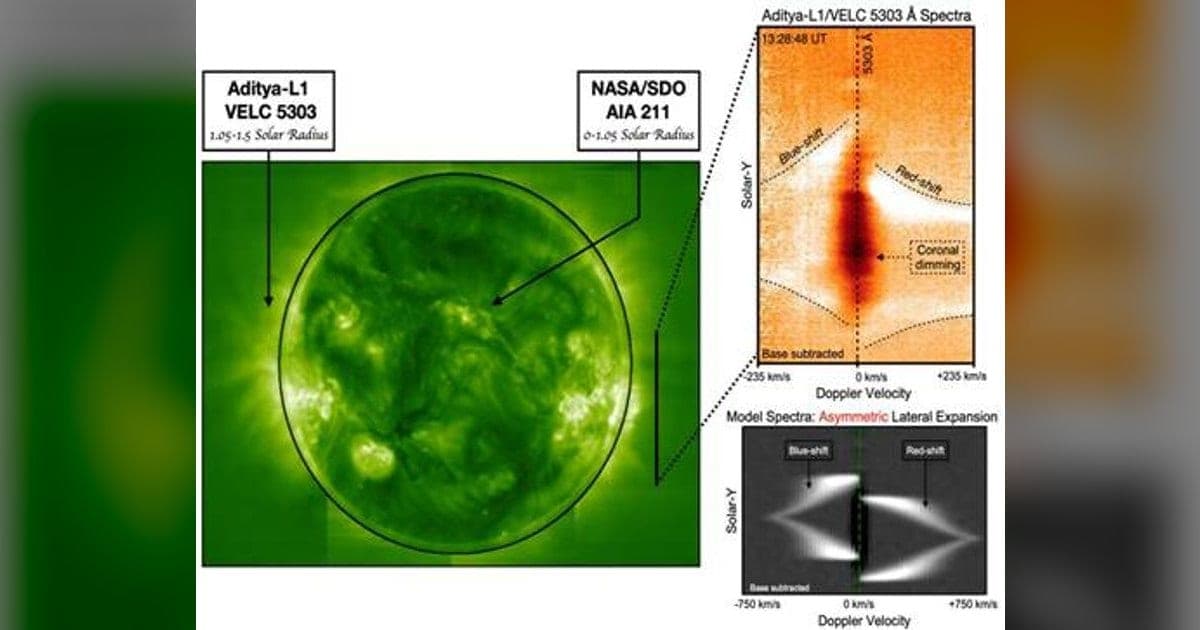
Aditya-L1 VELC Finds Solar Eruption Expands Asymmetrically
3 November 2026 · 2 min read
- Science & Technology
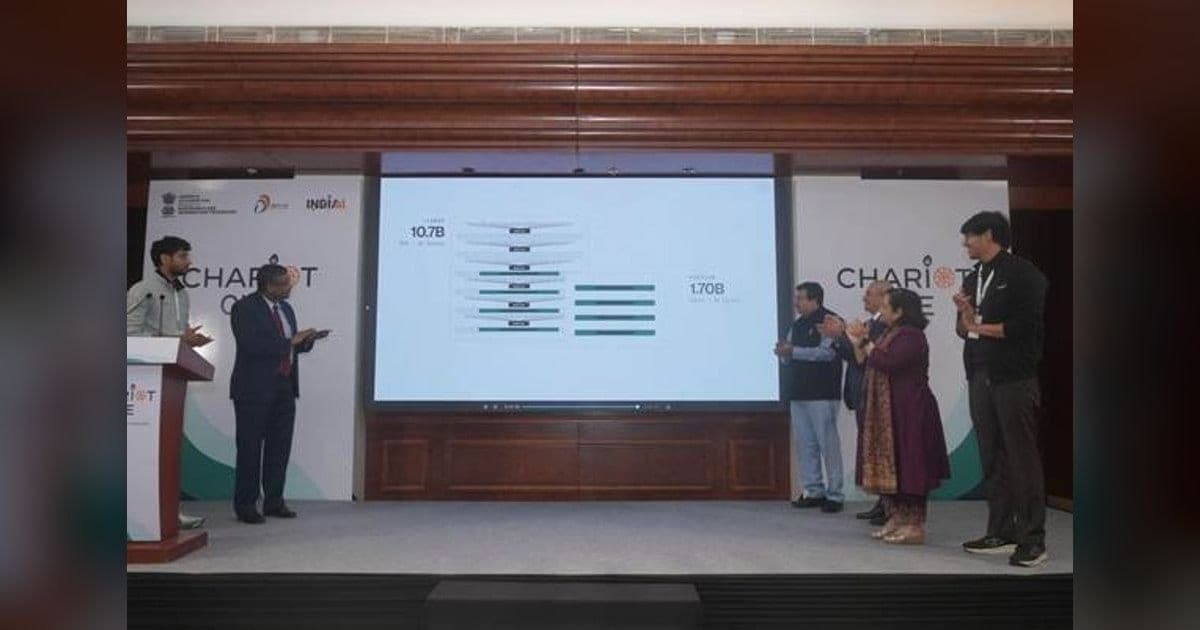
Chariot-1 Foundation Models Launched Under IndiaAI Mission
26 November 2026 · 2 min read
- Science & Technology
India's Bio-Economy to Hit 300 Billion Dollars by 2030
25 November 2026 · 2 min read
- Science & Technology
IASST Develops First North-East Specific Pit Viper Antivenom
25 November 2026 · 2 min read
- Science & Technology
Telecom Startups and MSME Conclave 2026 Held at Bharat Mandapam
24 November 2026 · 2 min read
- Science & Technology
India's Space Economy Set to Grow to USD 40-45 Billion
24 November 2026 · 2 min read



Related GK
- Space Agencies and Missions of the World: Exam Notes
28 September 2026 · Science & Technology
- Gaganyaan and Human Spaceflight: Mission, Vehicle, Astronauts
27 September 2026 · Science & Technology
Take the Quiz
- Current Affairs Quiz
State Exams Current Affairs Quiz: 26 November 2026
25 questions25 minutesStart Quiz