
National Tribal Literary Festival Ends With 27 Languages
The Ministry of Tribal Affairs closed its two-day National Tribal Literary Festival in New Delhi on 13 November 2026, with writing in 27 languages read out.
Why in News
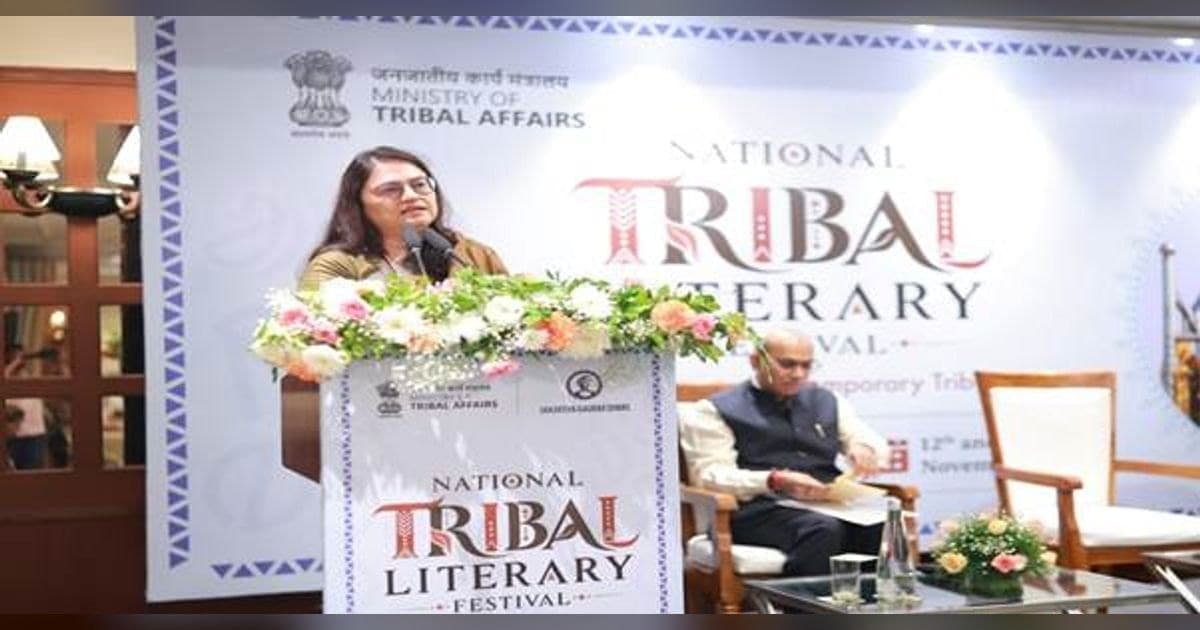
The Ministry of Tribal Affairs closed its two-day National Tribal Literary Festival on 13 November 2026 at the India Habitat Centre, New Delhi, on the theme From Oral Tradition to Contemporary Tribal Literature, with 27 languages represented.
The Ministry of Tribal Affairs brought its two-day National Tribal Literary Festival to a close at the India Habitat Centre in New Delhi on 13 November 2026. Tribal writers, poets, linguists, researchers and scholars from across the country spent the two days on a single question: how the spoken word of forest and hill villages can move into print without losing what makes it distinct. The festival was held as part of the Janjatiya Gaurav Diwas celebrations and carried the theme From Oral Tradition to Contemporary Tribal Literature.
Oral epics on the closing day
The first session of the final day, moderated by Shri Prakash Jha, turned to oral epics and heroic traditions. Speakers took up the literary inheritance of the Bhil and Gond communities, among them the Gond Ramayana and the Bhil Mahabharata, and from Manipur the Wari Leeba storytelling form and the Khamba-Thoibi epic. The panel asked that such forms be held in place through audio-visual recording and research, and that village storytellers be treated as custodians of a literary heritage rather than as mere sources of information.
Indigenous languages in the classroom
A second session, moderated by Dr. K. Srinivasa Rao, a former Secretary of the Sahitya Akademi, examined what community knowledge can do for multilingual schooling. Speakers argued for songs, stories and oral narratives to enter early childhood education, so that a child's mother tongue and cultural identity are strengthened rather than set aside. Documentation, translation and technology were named as the supports that tribal languages most need.
New writers and new platforms
Two further sessions gave space to story and poetry readings by emerging tribal writers, chaired by Shri Mahadev Toppo and moderated by Smt. Jogamaya Chakma. At the valedictory session Smt. Ranjana Chopra, Secretary in the Ministry of Tribal Affairs, described Living Roots Originals, built with the Indian Performing Right Society (IPRS) to protect the creative rights of tribal musicians and performers. She also announced a dedicated tribal literature section at the National Book Trust's coming book fair at Pragati Maidan. Summing up, Dr. Rao counted 27 languages at the festival, of which 23 were tribal languages, and pressed for tribal writing to enter university syllabuses, translation programmes and mainstream publishing. Shri Ganesh Nagarajan, Deputy Secretary in the Ministry, closed the proceedings, which the Ministry placed in the spirit of Ek Bharat Shreshtha Bharat, Vikas bhi, Virasat bhi and Viksit Bharat@2047.
Important Facts
| Event | National Tribal Literary Festival (two days) |
|---|---|
| Organiser | Ministry of Tribal Affairs |
| Venue | India Habitat Centre, New Delhi |
| Concluded on | 13 November 2026 |
| Theme | From Oral Tradition to Contemporary Tribal Literature |
| Languages represented | 27, of which 23 were tribal languages |
| Held as part of | Janjatiya Gaurav Diwas celebrations |
| Initiative highlighted | Living Roots Originals, with the Indian Performing Right Society (IPRS) |
| Secretary, Ministry of Tribal Affairs | Smt. Ranjana Chopra |
Exam Point of View
Remember the organiser (Ministry of Tribal Affairs), the venue (India Habitat Centre, New Delhi), the theme, the link with Janjatiya Gaurav Diwas, the count of languages (27 in all, of which 23 tribal), the Living Roots Originals initiative built with IPRS, and the oral epics named in the sessions: Gond Ramayana, Bhil Mahabharata and Khamba-Thoibi.
Practice Questions
What was the theme of the National Tribal Literary Festival that concluded in New Delhi?
- A.Tribal Art and Craft of Bharat
- B.From Oral Tradition to Contemporary Tribal Literature
- C.Languages of the Forest
- D.Tribal Pride and National Development
Show answer
The Ministry of Tribal Affairs organised the two-day National Tribal Literary Festival at the India Habitat Centre in New Delhi, and it closed on 13 November 2026 under exactly that theme, which framed every session of the programme.
Read the full explanation →How many languages were represented at the National Tribal Literary Festival, and how many of them were tribal languages?
- A.19 languages, of which 15 were tribal languages
- B.23 languages, of which 27 were tribal languages
- C.27 languages, of which 23 were tribal languages
- D.31 languages, of which 22 were tribal languages
Show answer
Summing up the two-day festival at the valedictory session, Dr. K. Srinivasa Rao, a former Secretary of the Sahitya Akademi, counted that many languages in the readings and discussions and noted how many of them were tribal tongues.
Read the full explanation →The Living Roots Originals initiative, highlighted at the festival, has been developed with which organisation?
- A.Sahitya Akademi
- B.National Book Trust
- C.Indian Performing Right Society (IPRS)
- D.Sangeet Natak Akademi
Show answer
At the valedictory session, Smt. Ranjana Chopra, Secretary in the Ministry of Tribal Affairs, described Living Roots Originals as an initiative developed in collaboration with IPRS to recognise and protect the creative rights of tribal musicians and performers.
Read the full explanation →Frequently Asked Questions
What was the theme of the National Tribal Literary Festival?
From Oral Tradition to Contemporary Tribal Literature. The two-day festival of the Ministry of Tribal Affairs ended on 13 November 2026 at the India Habitat Centre, New Delhi, as part of the Janjatiya Gaurav Diwas celebrations.
How many languages were represented at the festival?
Writing in 27 languages was represented, of which 23 were tribal languages, as summed up by Dr. K. Srinivasa Rao, a former Secretary of the Sahitya Akademi.
What is Living Roots Originals?
An initiative developed by the Ministry of Tribal Affairs with the Indian Performing Right Society (IPRS) to recognise and protect the creative rights of tribal musicians and performers.
Sources
- https://www.pib.gov.in/PressReleasePage.aspx?PRID=2336125 (opens in a new tab) — Press Information Bureau
Current Affairs 14 November 2026
- Pradhan Mantri Janjatiya Vikas Mission Backs 4,172 Van Dhan KendrasGovernment Schemes
- India-Egypt: Piyush Goyal to Co-Chair 7th Joint Trade CommitteeInternational
- DRI Seizes 10.8 kg Amphetamine Hidden In Postal ParcelNational
Related Current Affairs
- Summits & Conferences
Vice-President Addresses 31st CII Partnership Summit Close
13 November 2026 · 2 min read
- Summits & Conferences
31st CII Partnership Summit 2026 Opens in Visakhapatnam
12 November 2026 · 2 min read
- Summits & Conferences
INSA Endorses S20 Joint Statement Ahead of G20 Summit in Miami
12 November 2026 · 2 min read
- Summits & Conferences
Bharat Mobility Global Expo 2027 Set for 4-9 February
10 November 2026 · 2 min read
- Summits & Conferences
4th Conference of Mining Ministers Ends in Goa; Focus on Exploration
6 November 2026 · 2 min read
- Summits & Conferences
Indo-Pacific Regional Dialogue 2026 Concludes in New Delhi
5 November 2026 · 2 min read
Related GK
- Famous Personalities of Rajasthan: Exam Notes
28 October 2026 · Rajasthan
- Districts and Divisions of Rajasthan: Exam Notes
28 October 2026 · Rajasthan
- Tourism and World Heritage Sites of Rajasthan Notes
27 October 2026 · Rajasthan
Take the Quiz
- Current Affairs Quiz
State Exams Current Affairs Quiz: 14 November 2026
12 questions12 minutesStart Quiz