
CBN Destroys Over 10.84 Tonnes of Seized Drugs in MP
The Central Bureau of Narcotics destroyed 10,842.150 kg of seized drugs in Madhya Pradesh and deposited 154.375 kg of opium at GOAW in Neemuch.
Why in News
The Central Bureau of Narcotics destroyed 10,842.150 kg of seized narcotic drugs in Madhya Pradesh, deposited 154.375 kg of opium at the Government Opium and Alkaloid Works in Neemuch and reported two fresh seizures.
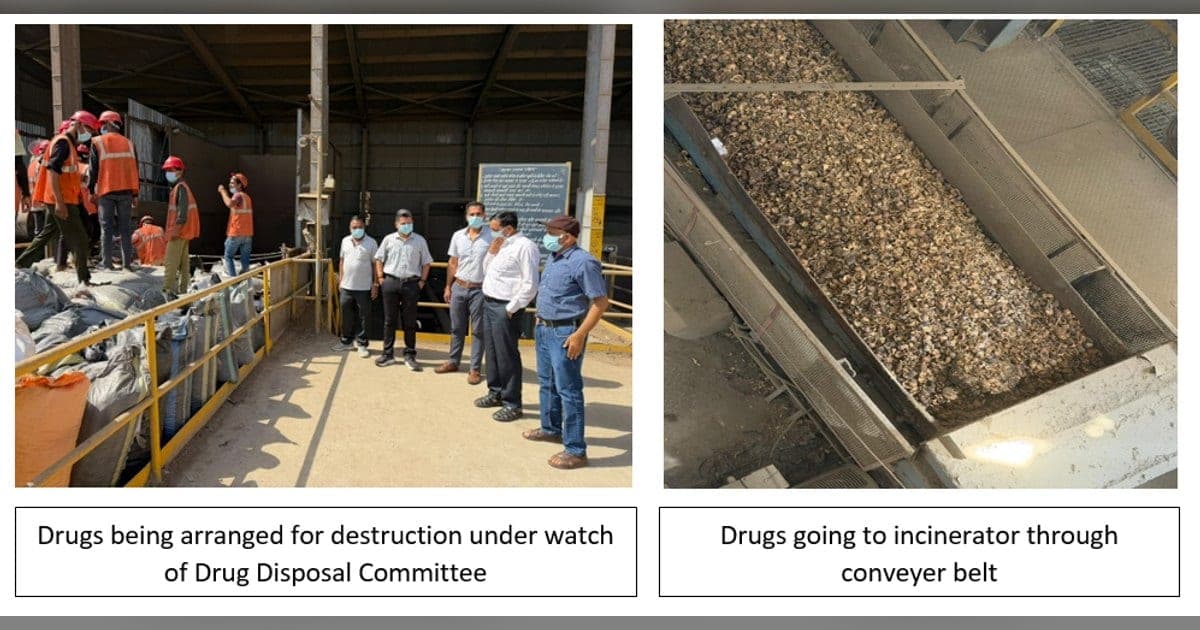
The Madhya Pradesh unit of the Central Bureau of Narcotics (CBN), which works under the Ministry of Finance, carried out a large disposal of seized narcotic drugs at Vikram Cement, Khor, in Madhya Pradesh. In all, 10,842.150 kg of contraband was destroyed under the Narcotic Drugs and Psychotropic Substances Act of 1985.
What was destroyed
The burning was carried out through the authorised disposal process, watched over by the Drug Disposal Committee and in the presence of a representative of the Madhya Pradesh Pollution Control Board, so that the contraband could neither return to the illicit trade nor harm the environment.
| Narcotic drug | Quantity |
| Poppy straw | 10,823.990 kg |
| Heroin | 7.535 kg |
| Charas | 7.400 kg |
| Mephedrone | 3.175 kg |
| Brown sugar | 0.050 kg |
Opium sent to Neemuch
Alongside the destruction, the bureau deposited 154.375 kg of seized opium at the Government Opium and Alkaloid Works (GOAW) at Neemuch in Madhya Pradesh, which is where seized opium is lawfully kept and processed.
Two seizures the same day
The bureau also reported two enforcement actions. On a tip-off, the preventive and intelligence cell of CBN Mandsaur stopped a motorcycle on the Kanjarda to Manasa road on 30 September 2026 and recovered 4.240 kg of opium in two packets. One person was arrested and the motorcycle was seized as well. In the second case, officers of CBN Jaipur examined a suspect international parcel that had arrived from Thailand at the Foreign Post Office in Jaipur. Hydroponic weed weighing 1.080 kg was found hidden inside 29 pouches of cake, mixed in with ordinary packets to escape notice. The bureau said its approach combines intelligence-based enforcement, seizure, investigation and prosecution with the timely disposal of what has been seized, in line with the goal of a drug free India. It added that consignments arriving from abroad are kept under watch on the strength of specific intelligence, and that the enquiry in both the fresh cases is still going on to trace the source of the contraband and anyone else linked to the trafficking network.
Important Facts
| Agency | Central Bureau of Narcotics, under the Ministry of Finance |
|---|---|
| Quantity destroyed | 10,842.150 kg of seized narcotic drugs |
| Destruction site | Vikram Cement, Khor, Madhya Pradesh |
| Law applied | Narcotic Drugs and Psychotropic Substances Act, 1985 |
| Largest item | Poppy straw, 10,823.990 kg |
| Opium deposited | 154.375 kg at the Government Opium and Alkaloid Works, Neemuch |
| Opium seizure | 4.240 kg on the Kanjarda to Manasa road, one person arrested |
| Parcel seizure | 1.080 kg of hydroponic weed in 29 cake pouches in a parcel from Thailand, at the Foreign Post Office, Jaipur |
Exam Point of View
Note that the Central Bureau of Narcotics works under the Ministry of Finance, the governing law is the NDPS Act of 1985, the Government Opium and Alkaloid Works at Neemuch is where seized opium is deposited, the destruction site was Vikram Cement at Khor in Madhya Pradesh, and a parcel from Thailand carried hydroponic weed hidden in cake pouches.
Practice Questions
Under which law were the seized narcotic drugs destroyed by the Central Bureau of Narcotics?
- A.The Customs Act, 1962
- B.The NDPS Act, 1985
- C.The Prevention of Money Laundering Act, 2002
- D.The Opium Act, 1878
Show answer
Correct answer: B. The NDPS Act, 1985
Explanation
The correct answer is the NDPS Act, 1985, that is, the Narcotic Drugs and Psychotropic Substances Act. The destruction of the seized stock followed the procedure laid down in that law, and the authorised disposal was carried out under the watch of the Drug Disposal Committee with a representative of the state pollution control board present, so that the material was incinerated safely and could not slip back into the illicit trade. Option A is wrong because the customs law deals with import and export duties and smuggling of goods generally, not with the disposal of narcotic substances. Option C is wrong because the money laundering law deals with the proceeds of crime rather than the contraband itself. Option D is wrong because the older opium law has been replaced by the present statute for these purposes. The same law was cited for both the fresh seizures reported by the bureau.
The seized opium was deposited at the Government Opium and Alkaloid Works located at which place?
- A.Mandsaur
- B.Khor
- C.Neemuch
- D.Jaipur
Show answer
Correct answer: C. Neemuch
Explanation
The correct answer is Neemuch. Along with the destruction of the bulk of the seized contraband, the bureau deposited 154.375 kg of seized opium at the Government Opium and Alkaloid Works at Neemuch in Madhya Pradesh as part of the prescribed disposal process. Option A is wrong because Mandsaur is the station of the preventive and intelligence cell whose officers made the separate opium seizure on the road towards Manasa. Option B is wrong because Khor is the place where the cement plant stands at which the destruction was carried out, which is a different step in the same process. Option D is wrong because Jaipur is where the parcel from abroad was examined at the Foreign Post Office. Candidates should remember Neemuch as the centre linked with the lawful handling and processing of opium.
Hydroponic weed seized at the Foreign Post Office in Jaipur had arrived in a parcel from which country?
- A.Myanmar
- B.Thailand
- C.Nepal
- D.Afghanistan
Show answer
Correct answer: B. Thailand
Explanation
The correct answer is Thailand. Acting on specific intelligence about a suspect consignment, officers of the bureau at Jaipur examined an international parcel received from that country at the Foreign Post Office and found hydroponic weed weighing 1.080 kg concealed inside 29 pouches of cake, which had been mixed with other cake packets and articles so that the contraband would escape attention. Options A, C and D name other countries often discussed in connection with narcotics routes into the region, but the parcel in this case came from Thailand. The case is a reminder that postal and courier consignments are a channel that enforcement agencies watch closely, and that the bureau says it keeps international consignments under watch on the basis of specific intelligence inputs.
Which narcotic drug made up by far the largest share of the stock destroyed in Madhya Pradesh?
- A.Heroin
- B.Charas
- C.Mephedrone
- D.Poppy straw
Show answer
Correct answer: D. Poppy straw
Explanation
The correct answer is poppy straw. Of the total stock destroyed in the disposal operation, poppy straw accounted for 10,823.990 kg, which is almost the whole of the consignment. The remaining items were far smaller in quantity: heroin at 7.535 kg, charas at 7.400 kg, mephedrone at 3.175 kg and brown sugar at 0.050 kg, adding up with the poppy straw to the overall figure for the operation. Options A, B and C therefore name drugs that were indeed part of the destroyed stock but in very small amounts compared with poppy straw. The distinction matters because poppy straw is bulky plant material, while heroin, charas and mephedrone are concentrated substances that are trafficked in much smaller weights, and examination questions often test this sense of proportion.
Frequently Asked Questions
Under which law were the seized narcotic drugs destroyed?
The Narcotic Drugs and Psychotropic Substances Act of 1985. The disposal followed the prescribed procedure and was overseen by the Drug Disposal Committee.
Where was the seized opium deposited?
At the Government Opium and Alkaloid Works, Neemuch, in Madhya Pradesh. A quantity of 154.375 kg of seized opium was deposited there as part of the disposal process.
How was the hydroponic weed concealed in the Jaipur case?
It was hidden inside 29 pouches of cake placed in an international parcel received from Thailand, mixed with other cake packets and articles so that it would pass unnoticed.
Sources
- https://www.pib.gov.in/PressReleasePage.aspx?PRID=2318182 (opens in a new tab) — Press Information Bureau
- https://www.pib.gov.in/PressReleasePage.aspx?PRID=2318176 (opens in a new tab) — Press Information Bureau
- https://www.pib.gov.in/PressReleasePage.aspx?PRID=2318179 (opens in a new tab) — Press Information Bureau
Current Affairs 2 October 2026
- Survey of India Marks 28 Standard Place Names in LadakhNational
- Special Campaign 6 Starts With E-Waste Disposal in FocusGovernment Schemes
- Meghwal Leads Ek Ped Maa Ke Naam Drive at IIAC in DelhiEnvironment
- RoDTEP Export Scheme Extended Up to 31 December 2026Economy
- RELIEF Timelines Extended for West Asia Route ExportersEconomy
- Goyal at G20 Trade Ministers Meeting in Milwaukee, USSummits & Conferences
- APEDA Sends Bihar Makhana From Purnea to GreeceEconomy
- NITI Aayog Holds SDG Budgeting Workshop in KolkataNational
Related Current Affairs






Related GK
- Artificial Intelligence and the IndiaAI Mission: Exam Notes
2 October 2026 · Science & Technology
- Chhattisgarh GK: Formation, Minerals and Culture
2 October 2026 · Indian States & UTs
- Famous Cities and Their Nicknames: Full List
2 October 2026 · Static GK
Take the Quiz
- Current Affairs Quiz
Banking Current Affairs Quiz: 2 October 2026
25 questions25 minutesStart Quiz