
India's First Indigenous H5N1 Bird Flu Vaccine Released at Bhopal
Agriculture Minister Shivraj Singh Chouhan dedicated India's first indigenous H5N1 bird flu vaccine to the nation at Bhopal, priced at only Rs 1-2 a dose.
Why in News
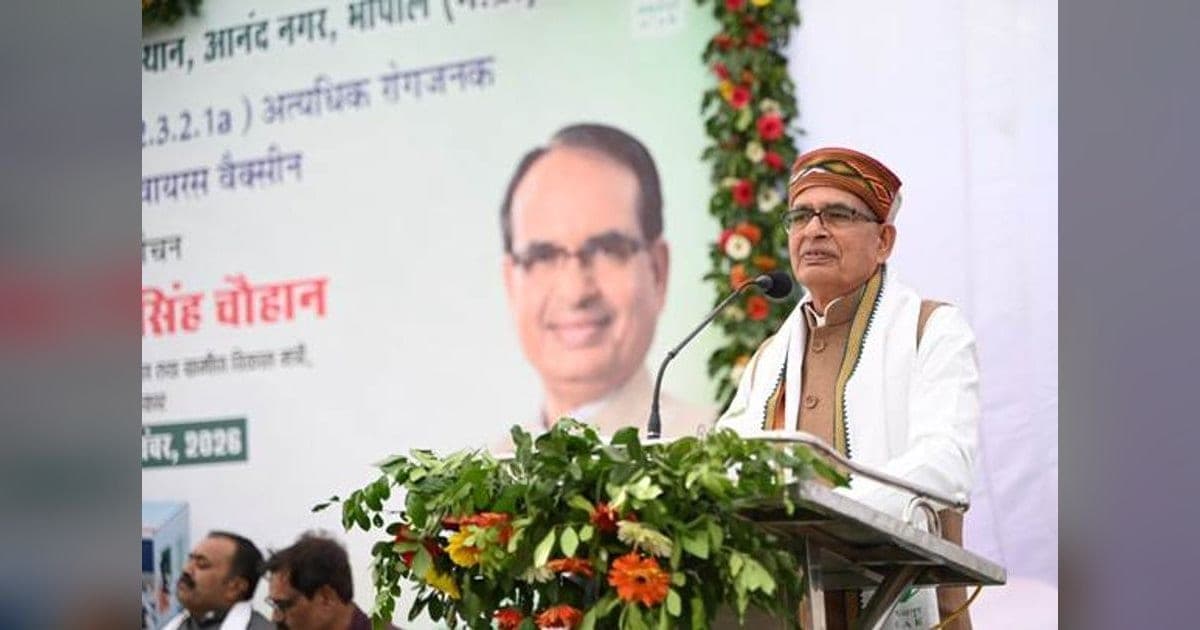
On 20 November 2026 at Bhopal, Union Agriculture Minister Shivraj Singh Chouhan dedicated to the nation India's first indigenous H5N1 bird flu vaccine for chickens, developed at ICAR-NIHSAD, and announced a Rs 300 crore animal disease laboratory for the city.
Union Minister for Agriculture and Farmers' Welfare and Rural Development Shivraj Singh Chouhan handed the country its first home-grown chicken vaccine against Avian Influenza (H5N1), better known as bird flu, at a function held in Bhopal. The minister said the shot is the first anywhere in the world against this particular variant of the virus, and that it will shield poultry flocks and the earnings of millions of small poultry keepers.
What the vaccine costs and who built it
A single dose has been kept at Rs 1 to Rs 2, low enough for the smallest backyard poultry keeper to afford. The research was carried out at the ICAR-National Institute of High Security Animal Diseases (NIHSAD) in Bhopal. Chouhan said he deliberately moved the launch out of Delhi so that the vaccine could be offered to the nation in the city where it was created, before the very team that made it. The eight-member team was led by Dr S. Nagarajan and included Dr Manoj Kumar, Dr C. Tosh, Dr H. V. Murugkar, Dr Aniket Sanyal, Dr Senthil Kumar D., Dr Naveen Kumar and Dr Yogisharadhya R. They gave up weekends for months and kept to severe biosafety rules, which included sanitisation each time they entered or left the laboratory, bathing with 120 litres of water every day and keeping no pets at home.
A Rs 300 crore laboratory for Bhopal
The minister also announced a new state-of-the-art animal disease laboratory for Bhopal at an estimated Rs 300 crore, calling the city's institute a landmark of Indian scientific strength.
Why bird flu matters
India's first bird flu outbreak struck Navapur in Maharashtra in 2006, killing 10 lakh chickens, and lakhs more had to be culled and buried to stop the spread. About 9 lakh birds died in 2021 and another 2 lakh this year. The country has seen more than 500 outbreaks since 2006, and the virus can also pass to mammals and to people.
The cost of animal disease
Calling livestock the farmer's 'moving ATM', Chouhan said animal husbandry contributes 14 per cent of India's GDP and poultry another 1 per cent. Foot and Mouth Disease costs about Rs 22,000 crore a year, Lumpy Skin Disease Rs 20,000 crore, Brucellosis Rs 9,212 crore and Peste des Petits Ruminants Rs 4,683 crore - together nearly Rs 56,000 crore. Under the National Animal Disease Control Programme, begun by Prime Minister Narendra Modi from Mathura, 147 crore 16 lakh free doses have been given against Foot and Mouth Disease.
Important Facts
| Vaccine | India's first indigenous chicken vaccine against Avian Influenza (H5N1) |
|---|---|
| Dedicated by | Union Agriculture and Farmers’ Welfare Minister Shivraj Singh Chouhan |
| Place and date | Bhopal, Madhya Pradesh, on 20 November 2026 |
| Developed at | ICAR-National Institute of High Security Animal Diseases (NIHSAD), Bhopal |
| Price per dose | Rs 1 to Rs 2 |
| New laboratory announced | State-of-the-art animal disease laboratory at Bhopal, about Rs 300 crore |
| First outbreak in India | Navapur, Maharashtra, 2006; 10 lakh chickens died |
| Outbreaks since 2006 | More than 500 |
| Annual loss from animal diseases | About Rs 56,000 crore |
| Research team head | Dr S. Nagarajan, with seven other scientists |
Exam Point of View
Remember the vaccine (first indigenous H5N1 chicken vaccine, world's first against this variant), the institute (ICAR-NIHSAD, Bhopal), the price (Rs 1-2 per dose), the minister (Shivraj Singh Chouhan), the new laboratory (Rs 300 crore), the first Indian outbreak (Navapur, Maharashtra, 2006) and the annual loss from animal diseases (about Rs 56,000 crore).
Practice Questions
At which institute was India’s first indigenous H5N1 bird flu vaccine for chickens developed?
- A.ICAR-NIHSAD, Bhopal
- B.ICAR-IVRI, Izatnagar
- C.National Dairy Research Institute, Karnal
- D.National Institute of Virology, Pune
Show answer
The vaccine was built by scientists of the ICAR-National Institute of High Security Animal Diseases at Bhopal, and the Union Agriculture Minister chose Bhopal rather than Delhi for the launch precisely so that this team could be present.
Read the full explanation →What is the price of one dose of the new indigenous bird flu vaccine?
- A.Rs 10 to Rs 12
- B.Rs 1 to Rs 2
- C.Rs 45 to Rs 50
- D.Rs 95 to Rs 100
Show answer
The minister said the dose had been deliberately kept in this range so that even the poorest poultry keeper could bear the cost and vaccinate the flock, making preventive vaccination genuinely reachable.
Read the full explanation →Where and in which year did India report its first bird flu outbreak?
- A.Barwala, Haryana, in 2011
- B.Navapur, Maharashtra, in 2006
- C.Alappuzha, Kerala, in 2014
- D.Navapur, Maharashtra, in 2021
Show answer
The first bird flu outbreak in India was reported from Navapur in Maharashtra in 2006, and 10 lakh chickens died in it, while lakhs of other birds had to be culled and buried to contain the infection.
Read the full explanation →Frequently Asked Questions
Where was India’s first indigenous H5N1 bird flu vaccine developed?
At the ICAR-National Institute of High Security Animal Diseases (NIHSAD) in Bhopal. Union Agriculture Minister Shivraj Singh Chouhan dedicated it to the nation in Bhopal itself on 20 November 2026, instead of Delhi, so that the scientists who built it could be present.
How much does one dose of the new bird flu vaccine cost?
Between Rs 1 and Rs 2 a dose. The price was kept this low so that even the smallest poultry keeper can vaccinate birds and protect a livelihood. It is described as the world’s first vaccine against this variant of H5N1.
How much do animal diseases cost India every year?
About Rs 56,000 crore. Foot and Mouth Disease accounts for roughly Rs 22,000 crore, Lumpy Skin Disease Rs 20,000 crore, Brucellosis Rs 9,212 crore and Peste des Petits Ruminants Rs 4,683 crore each year.
Sources
Current Affairs 20 November 2026
- Swachh Shauchalay Garimamay Bhavishya Campaign Launched by DDWSGovernment Schemes
- CGST Faridabad Seizes Four Pan Masala Machines in RewariEconomy
- Cheetah KOMG 3 Has Four Cubs, India's Cheetah Count Hits 62Environment
- Basmati Rice Exports Rise 25.4% to US$ 1.60 Billion in Half-YearEconomy
- Aadi Mahotsav 2026 at Dilli Haat With 115 Tribal StallsNational
- World Television Day: India's Analogue to Digital TV JourneyImportant Days
- NFDC Ties Up With Svayam for Accessible 57th IFFI in GoaNational
- MeitY Holds Talks With UN Rapporteur Heba Hagrass on AccessInternational
Related Current Affairs
- Science & Technology
BRIC Targets $300 Billion Bioeconomy by 2030, $1 Trillion 2047
21 November 2026 · 2 min read
- Science & Technology
BHASHINI Shows Multilingual AI for Health at GDHS 2026
21 November 2026 · 2 min read
- Science & Technology
RRI Study Tunes Kinetic Magnetism Using Lattice Geometry
20 November 2026 · 2 min read
- Science & Technology
BSIP Study Finds Climate Clues in Himalayan Marmot Droppings
19 November 2026 · 2 min read
- Science & Technology
BHASHINI Shows Voice-First Language AI at Dakshin Day 2026
19 November 2026 · 2 min read
- Science & Technology
CSIR Transfers Bio-Bitumen and UHPC Road Technologies to Industry
19 November 2026 · 2 min read
Related GK
- Famous Personalities of Rajasthan: Exam Notes
28 October 2026 · Rajasthan
- Districts and Divisions of Rajasthan: Exam Notes
28 October 2026 · Rajasthan
- Tourism and World Heritage Sites of Rajasthan Notes
27 October 2026 · Rajasthan
Take the Quiz
- Current Affairs Quiz
Madhya Pradesh Current Affairs Quiz: 20 November 2026
12 questions12 minutesStart Quiz