
8th India-UK Science and Innovation Council Meets in Delhi
The 8th India-UK Science and Innovation Council met in New Delhi, where Jitendra Singh and Jonathan Reynolds opened the BRIC-CDFD-ONT India Genomics Centre.
Why in News
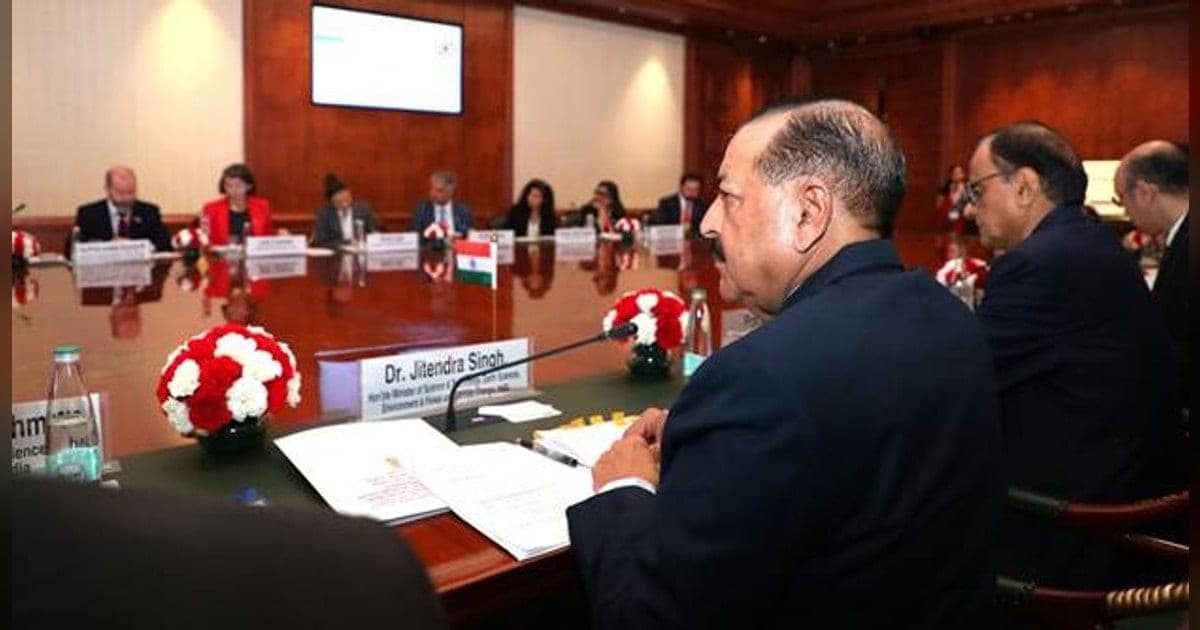
On 12 October 2026 the eighth meeting of the India-UK Science and Innovation Council took place in New Delhi, and Dr Jitendra Singh and Jonathan Reynolds opened the BRIC-CDFD-ONT India Genomics Centre of Excellence.
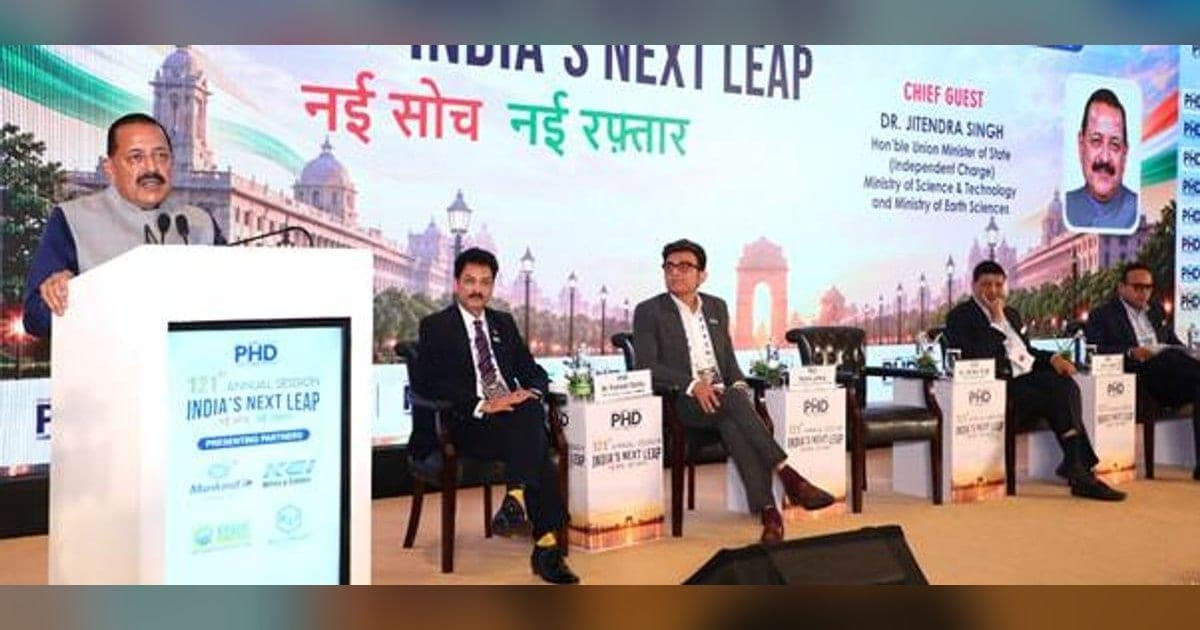
The eighth meeting of the India-UK Science and Innovation Council, shortened to SIC, was held in New Delhi. Dr Jitendra Singh, Union Minister of State with Independent Charge for Science and Technology and Earth Sciences, led the Indian side. The United Kingdom was represented by Jonathan Reynolds, Secretary of State for Business, Innovation and Trade. The Council took stock of how bilateral work in science and innovation has moved, and looked at ways to deepen research partnerships, widen cooperation in new technologies and turn laboratory findings into usable products.
A genomics centre opened
On the sidelines the two ministers jointly opened the BRIC-CDFD-ONT India Genomics Centre of Excellence in New Delhi. The centre brings together the Biotechnology Research and Innovation Council, its Centre for DNA Fingerprinting and Diagnostics, and the British firm Oxford Nanopore Technologies. Dr Rajesh S. Gokhale, Secretary of the Department of Biotechnology and Director General of BRIC, and Prof Ullas Kolthur-Seetharam, Director of BRIC-CDFD, were present at the opening.
Who attended
The Indian delegation included Prof Ajay Sood, Principal Scientific Adviser to the Government of India, Prof Umesh Waghmare, Secretary of the Department of Science and Technology, Dr Srinivasa Kumar Tummala, Secretary in the Ministry of Earth Sciences, Dr Shivkumar Kalyanaraman, Chief Executive Officer of the Anusandhan National Research Foundation, and Dr Rajesh Pathak, Secretary of the Technology Development Board. The British team included Lindy Cameron, the High Commissioner to India, and Harjinder Kang, His Majesty's Trade Commissioner.
The frameworks behind the Council
Work under the Council rests on three understandings: the India-UK Research and Innovation Memorandum of Understanding, the Technology Security Initiative and India-UK Vision 2035. Together they give research institutions, universities, companies and individual innovators a basis on which to collaborate. Under the Department of Science and Technology's tie-up with Innovate UK, eight joint industrial research projects have been cleared for support, in fields such as advanced manufacturing, power electronics and net-zero technologies, and these are at different stages of execution.
Fields of cooperation
- Artificial intelligence, quantum technologies and semiconductors
- Critical minerals, advanced materials and biotechnology
- Telecommunications and net-zero technologies
- Antimicrobial resistance, healthcare and agriculture
- Climate and weather science, including hazards linked to the South Asian monsoon, better modelling and risk-based forecasting, and research on geohazards
Why it matters for aspirants
Bilateral science councils are asked about by edition number, venue and the ministers who lead them. The names of the frameworks, the genomics centre and the British company behind it are the details most likely to be tested.
Important Facts
| Meeting | 8th India-UK Science and Innovation Council (SIC) Meeting |
|---|---|
| Venue | New Delhi |
| India led by | Dr Jitendra Singh, Minister of State (Independent Charge) for Science and Technology and Earth Sciences |
| UK led by | Jonathan Reynolds, Secretary of State for Business, Innovation and Trade |
| Centre inaugurated | BRIC-CDFD-ONT India Genomics Centre of Excellence, New Delhi |
| British partner firm | Oxford Nanopore Technologies |
| Frameworks | India-UK Research and Innovation MoU, Technology Security Initiative, India-UK Vision 2035 |
| With Innovate UK | Eight joint industrial research and development projects cleared |
| Principal Scientific Adviser | Prof Ajay Sood |
| British High Commissioner | Lindy Cameron |
Exam Point of View
Note the edition (eighth), the venue (New Delhi), the two ministers who led the meeting, the genomics centre they opened and its British partner, the three frameworks behind the Council including India-UK Vision 2035, the number of projects cleared with Innovate UK, and the Principal Scientific Adviser's name.
Practice Questions
Which edition of the India-UK Science and Innovation Council meeting was held in New Delhi in October 2026?
- A.Sixth
- B.Seventh
- C.Eighth
- D.Ninth
Show answer
Explanation
The correct answer is the eighth edition. The Council met in New Delhi with Dr Jitendra Singh, Union Minister of State with Independent Charge for Science and Technology and Earth Sciences, on the Indian side and Jonathan Reynolds, the British Secretary of State for Business, Innovation and Trade, on the other. The meeting reviewed progress in bilateral science and innovation work and discussed stronger research partnerships, cooperation in emerging technologies and the translation of research into practical applications. On the same occasion the two ministers opened a genomics centre of excellence in the capital. Options A, B and D give the sixth, seventh and ninth editions, none of which matches this meeting. Aspirants should record the edition number along with the venue and the two ministers, because questions on bilateral councils almost always hinge on the serial number of the sitting.
Which British company is a partner in the India Genomics Centre of Excellence inaugurated in New Delhi?
- A.Oxford Nanopore Technologies
- B.Illumina
- C.AstraZeneca
- D.GlaxoSmithKline
Show answer
Explanation
The correct answer is Oxford Nanopore Technologies. The centre is named BRIC-CDFD-ONT India Genomics Centre of Excellence, and the letters ONT stand for that company, whose Chief Financial Officer attended the opening. The Indian partners are the Biotechnology Research and Innovation Council and its Centre for DNA Fingerprinting and Diagnostics; the Secretary of the Department of Biotechnology, who is also Director General of BRIC, and the Director of BRIC-CDFD were present. Option B names a sequencing firm that has no part in this centre as described. Option C and option D name large pharmaceutical companies, which are likewise not partners here. Candidates should learn to read the expansion of such hyphenated names, since the abbreviation itself often supplies the answer in an examination question.
Under which partnership have eight joint industrial research and development projects been cleared for support?
- A.Department of Science and Technology with Innovate UK
- B.Anusandhan National Research Foundation with UK Research and Innovation
- C.Technology Development Board with the British Council
- D.Department of Biotechnology with the Royal Society
Show answer
Explanation
The correct answer is the Department of Science and Technology with Innovate UK. This collaboration supports joint industrial research and development aimed at creating new intellectual property, technologies, processes and prototypes, and eight projects have been agreed for support in areas including advanced manufacturing, power electronics and net-zero technologies. They are at various stages of implementation. Option B wrongly pairs the Anusandhan National Research Foundation, whose Chief Executive Officer was part of the Indian delegation, with a British research body. Option C names the Technology Development Board, whose Secretary also attended, with a cultural organisation, which is not the partnership described. Option D is similarly incorrect. Aspirants should remember the pairing of the department with Innovate UK and the three technology areas named with it.
Which of the following is NOT one of the frameworks named as the basis of India-UK science and innovation cooperation?
- A.India-UK Research and Innovation Memorandum of Understanding
- B.Technology Security Initiative
- C.India-UK Vision 2035
- D.India-UK Green Hydrogen Compact
Show answer
Explanation
The correct answer is the India-UK Green Hydrogen Compact, which is not among the frameworks named. Cooperation under the Council rests on three instruments: the India-UK Research and Innovation Memorandum of Understanding in option A, the Technology Security Initiative in option B, and India-UK Vision 2035 in option C. These provide the foundation on which research institutions, universities, industry and innovators work together, with attention to scientific advance and to turning research into technologies and applications. The agenda spans artificial intelligence, quantum technologies, semiconductors, critical minerals, advanced materials, biotechnology, telecommunications and net-zero technologies, and joint research also covers antimicrobial resistance, healthcare, agriculture, weather and climate science and geohazards. Candidates should memorise the three framework names together, as a question may ask for the odd one out.
Frequently Asked Questions
Which edition of the India-UK Science and Innovation Council met in New Delhi?
The eighth. Dr Jitendra Singh led the Indian side and Jonathan Reynolds, the UK Secretary of State for Business, Innovation and Trade, led the British side.
What is the BRIC-CDFD-ONT India Genomics Centre of Excellence?
A genomics centre opened in New Delhi by the two ministers. It joins the Biotechnology Research and Innovation Council and its Centre for DNA Fingerprinting and Diagnostics with the British firm Oxford Nanopore Technologies.
Which frameworks guide India-UK science cooperation?
The India-UK Research and Innovation Memorandum of Understanding, the Technology Security Initiative and India-UK Vision 2035. Eight industrial research projects have also been cleared with Innovate UK.
Sources
- https://www.pib.gov.in/PressReleasePage.aspx?PRID=2322306 (opens in a new tab) — Press Information Bureau
Current Affairs 12 October 2026
- Coal Stocks at Power Plants Stay Above 18 MT in October 2026Economy
- TDB Backs Peptris VIGOR Programme With Rs 86 Crore RDI SupportScience & Technology
- MY Bharat Holds Youth Parliaments at 1,469 Locations in 34 StatesGovernment Schemes
- IGNFA Begins IFS Mid-Career Training for 68 OfficersEnvironment
- Asian Games 2026: Services Athletes Win Record 27 MedalsSports
- Indian Army Launches Bharat Rice for Troops, Signs FCI MoUDefence
- PM GatiShakti at Five: 58 Ministries, 23,493 Data LayersGovernment Schemes
- PM-SETU: Rs 440 Crore Cleared for Nine Government ITIsGovernment Schemes
Related Current Affairs
- Science & Technology
TDB Backs Peptris VIGOR Programme With Rs 86 Crore RDI Support
12 October 2026 · 2 min read
- Science & Technology
IITM Pune Hosts APARC Early Career Workshop Ahead of ESTIC
11 October 2026 · 2 min read
- Science & Technology
ICMR to Get First High Altitude Medicine Centre at Keylong
11 October 2026 · 2 min read
- Science & Technology
Fourth All Science and Technology Clusters Meet in Chandigarh
10 October 2026 · 2 min read
- Science & Technology
National Quantum Mission Crosses 1,000 km Quantum-Secure Link
10 October 2026 · 2 min read
Related GK
- Uttar Pradesh Location and Physical Divisions for Exams
12 October 2026 · Uttar Pradesh
- Rajasthan Location and Physical Divisions: Extent, Aravalli, Thar
12 October 2026 · Rajasthan
- Madhya Pradesh Location and Physical Divisions for Exams
12 October 2026 · Madhya Pradesh
Take the Quiz
- Current Affairs Quiz
State Exams Current Affairs Quiz: 12 October 2026
25 questions25 minutesStart Quiz