
INST Mohali Develops Filter to Clean Dye Wastewater
Scientists at INST Mohali have built a machine learning aided nanofibre filter that removed 98.6 per cent of a textile dye from water within 120 minutes.
Why in News
On 13 October 2026 the government announced that scientists at INST Mohali have developed a machine learning aided filter of zinc oxide nanoparticles in polylactic acid nanofibres that gives an environment friendly way to treat dye contaminated wastewater.
Researchers at the Institute of Nano Science and Technology (INST), Mohali, an autonomous institute of the Department of Science and Technology, have developed a filter that cleans water carrying industrial dyes. The filter is built by holding zinc oxide nanoparticles, prepared from a natural source, inside porous nanofibres of polylactic acid, a plastic that breaks down in nature. Machine learning was used alongside the laboratory work. The study has been published in the journal Advanced Functional Materials.
The problem it addresses
Dyes released by industry, above all by textile units, are stable, poisonous and slow to break down on their own. Methods such as adsorption, settling and flocculation can pull a pollutant out of water but need not destroy it, and biological treatment is slow for dyes that resist change. Breaking down pollutants with light is attractive, yet such systems struggle to recover the catalyst particles, to separate them from treated water and to stop the charges they generate from recombining, besides depending on how much light is available.
How the new filter works
The team fixed the zinc oxide inside the nanofibres and then added mechanical shaking along with light. The vibrations set up a piezoelectric effect in the material, which held back the recombination of charges created by light and so produced more of the reactive species that attack a dye molecule. Because the catalyst sits in a membrane made by electrospinning rather than floating as loose powder, it offers a large surface, stays mechanically firm and does not have to be fished out of the treated water.
Turmeric in the laboratory
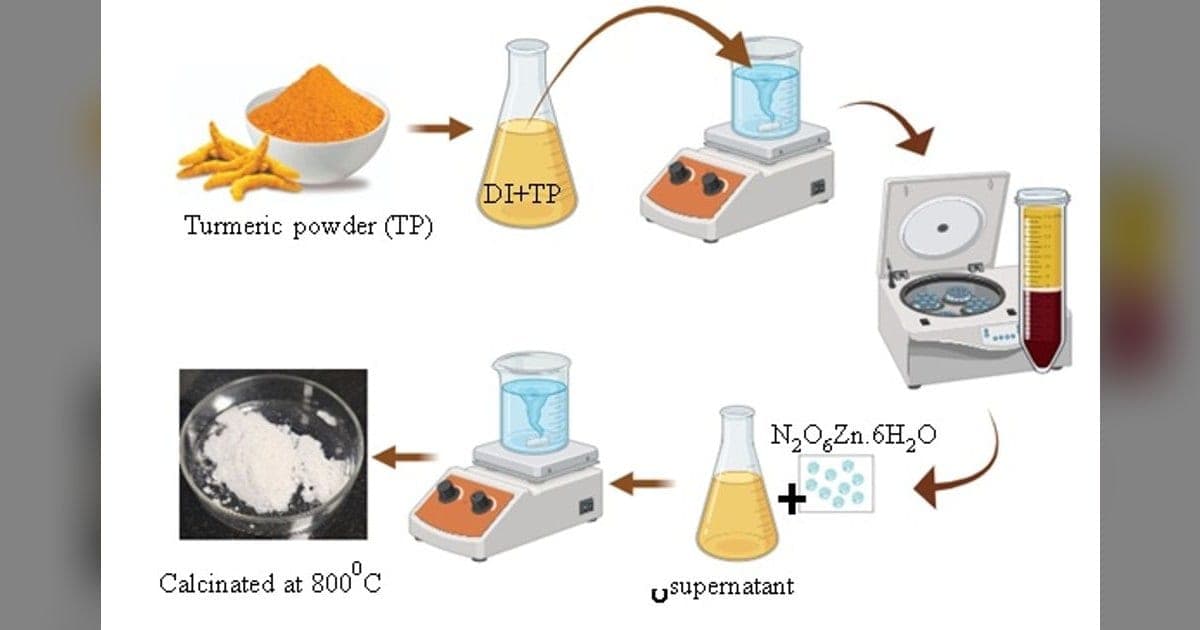
The nanoparticles were made in the laboratory of Aviru Kumar Basu using an extract of turmeric, where naturally occurring compounds such as curcumin, flavonoids and phenolic compounds acted as the reducing and stabilising agents. This green route avoids the harmful reagents used in conventional synthesis.
What the tests showed
- Under light and ultrasonic excitation together, the membrane removed the colour of 98.6 per cent of methylene blue and 96.7 per cent of congo red within 120 minutes.
- It also killed germs, inactivating about 75 per cent of E. coli and 71 per cent of S. aureus after 6 hours.
- Machine learning was used to predict how far a dye would lose colour from inputs such as wavelength, time, the amount of catalyst, the ultrasonic frequency, the intensity of light and the concentration of the dye.
Where it can be used
The membrane can treat effluent from textile and other industries that carries stubborn organic dyes along with microbial contamination, and it can serve as an antibacterial membrane in water treatment as well as in cleaning up the environment through light and vibration driven catalysis.
Important Facts
| Developed by | Institute of Nano Science and Technology (INST), Mohali |
|---|---|
| Parent body | Department of Science and Technology, an autonomous institute |
| Materials used | Green-synthesised zinc oxide nanoparticles and biodegradable polylactic acid nanofibres |
| Green synthesis route | Turmeric extract, with curcumin, flavonoids and phenolic compounds as reducing and stabilising agents |
| Process | Photocatalysis combined with piezocatalysis, using light and mechanical vibration |
| Dye removal | 98.6 per cent of methylene blue and 96.7 per cent of congo red in 120 minutes |
| Antibacterial action | About 75 per cent of E. coli and 71 per cent of S. aureus inactivated after 6 hours |
| Published in | Advanced Functional Materials |
Exam Point of View
Remember the institute (INST Mohali) and its parent department (Department of Science and Technology), the two materials (zinc oxide nanoparticles and polylactic acid nanofibres), the turmeric extract used for green synthesis, the combination of photocatalysis and piezocatalysis, the results of 98.6 per cent and 96.7 per cent decolorisation in 120 minutes, the antibacterial figures of 75 and 71 per cent, and the journal Advanced Functional Materials.
Practice Questions
Which institute developed the machine learning aided filter for treating dye contaminated wastewater?
- A.Institute of Nano Science and Technology, Mohali
- B.Indian Institute of Science, Bengaluru
- C.National Environmental Engineering Research Institute, Nagpur
- D.Indian Institute of Technology, Roorkee
Show answer
Explanation
The correct answer is the Institute of Nano Science and Technology, Mohali, which is an autonomous institute of the Department of Science and Technology. Its researchers held zinc oxide nanoparticles, prepared from a natural source, inside porous nanofibres of biodegradable polylactic acid and then applied light along with mechanical shaking to break down dyes in water. The work was published in the journal Advanced Functional Materials. The other three options are respected research institutions, but none of them was credited with this filter, which is why they are wrong. For the examination, link the institute with its parent department, with the two materials used in the membrane and with the laboratory of Aviru Kumar Basu, where the nanoparticles were synthesised from an extract of turmeric.
Which natural material was used to synthesise the zinc oxide nanoparticles in this work?
- A.Neem leaf extract
- B.Turmeric extract
- C.Tulsi extract
- D.Banana peel extract
Show answer
Explanation
The correct answer is turmeric extract. The nanoparticles were synthesised in the laboratory of Aviru Kumar Basu using an extract of turmeric, in which naturally occurring compounds such as curcumin, flavonoids and phenolic compounds worked as the reducing and stabilising agents. This green route matters because it avoids the harmful reagents that conventional synthesis of nanoparticles depends on, so the material itself is made in an environment friendly way before it is used to clean water. The other options name plant materials that are often used in green synthesis research in general but were not the source here, which makes them plausible yet incorrect. Candidates should remember the pairing of turmeric with zinc oxide and curcumin's role as a reducing agent in this experiment.
How much methylene blue did the new membrane decolorise under combined light and ultrasonic excitation?
- A.71 per cent in 120 minutes
- B.75 per cent in 60 minutes
- C.96.7 per cent in 120 minutes
- D.98.6 per cent in 120 minutes
Show answer
Explanation
The correct answer is 98.6 per cent in 120 minutes. Under light and ultrasonic excitation applied together, the membrane of polylactic acid and zinc oxide removed the colour of 98.6 per cent of methylene blue in that time. Option C gives the figure for the other dye tested, congo red, which lost 96.7 per cent of its colour in the same period, so it is a close but wrong choice. Options A and B are wrong because those percentages belong to the antibacterial results: the material inactivated about 75 per cent of E. coli and 71 per cent of S. aureus after 6 hours of contact. Keeping the dye results and the germ killing results apart is important, since a paper setter will often swap one figure for the other in the options.
Which two processes were combined in the new filter to break down dyes?
- A.Adsorption and flocculation
- B.Photocatalysis and piezocatalysis
- C.Sedimentation and biological treatment
- D.Reverse osmosis and chlorination
Show answer
Explanation
The correct answer is photocatalysis and piezocatalysis. The filter breaks down dyes using light and mechanical vibration at the same time. The vibrations create a piezoelectric polarisation in the material, which holds back the recombination of the electrons and holes generated by light and therefore raises the formation of reactive species that attack dye molecules. Options A and C are wrong because adsorption, flocculation, sedimentation and biological treatment are older approaches: the first group separates pollutants without necessarily destroying them, and biological treatment is slow for highly stable dyes. Option D names processes that were not part of this study. Remember also that putting the catalyst inside an electrospun membrane solves the practical problem of recovering nanoparticle catalysts from treated water.
Frequently Asked Questions
Which institute developed the new filter for dye contaminated wastewater?
The Institute of Nano Science and Technology, Mohali, which is an autonomous institute of the Department of Science and Technology. The filter holds zinc oxide nanoparticles inside porous polylactic acid nanofibres and the work appeared in Advanced Functional Materials.
How was the zinc oxide prepared?
By a green route using turmeric extract, in which naturally occurring compounds such as curcumin, flavonoids and phenolic compounds acted as reducing and stabilising agents. This avoids the harmful reagents used in conventional synthesis of nanoparticles.
How well did the membrane perform in tests?
Under light and ultrasonic excitation together it removed the colour of 98.6 per cent of methylene blue and 96.7 per cent of congo red within 120 minutes, and it inactivated about 75 per cent of E. coli and 71 per cent of S. aureus after 6 hours.
Sources
- https://www.pib.gov.in/PressReleasePage.aspx?PRID=2322743 (opens in a new tab) — Press Information Bureau
Current Affairs 13 October 2026
- Ashtalakshmi Darshan Programme Takes 590 Students to NortheastGovernment Schemes
- Khadi Sales Touch Record Rs 1.87 Lakh Crore in 2025-26Government Schemes
- Bloomberg New Economy Forum Held in India for the First TimeSummits & Conferences
- BHASHINI Runs Live Translation at NCGG Mussoorie ProgrammeScience & Technology
- DARPG Releases 53rd CPGRAMS Monthly Report for September 2026Reports & Indices
- Indian Railways Freight Loading Rises 6.14% in September 2026Economy
- NLMC's First End-to-End E-Auction Sells 150 RINL Land PlotsEconomy
- Delhi Gets 150 Electric Buses and 13 New CAAQMS StationsEnvironment
Related Current Affairs
- Science & Technology
BHASHINI Runs Live Translation at NCGG Mussoorie Programme
13 October 2026 · 2 min read
- Science & Technology
IMD Launches Cyclone Warning Decision Support System
12 October 2026 · 2 min read
- Science & Technology
8th India-UK Science and Innovation Council Meets in Delhi
12 October 2026 · 2 min read
- Science & Technology
TDB Backs Peptris VIGOR Programme With Rs 86 Crore RDI Support
12 October 2026 · 2 min read

Related GK
- Narmada and MP Rivers: Dams and Water Projects
13 October 2026 · Madhya Pradesh
- Malwa, Vindhya and Satpura: Plateaus of Madhya Pradesh
13 October 2026 · Madhya Pradesh
- Haryana Rivers and Lakes: Yamuna, Ghaggar and Wetlands
13 October 2026 · Haryana
Take the Quiz
- Current Affairs Quiz
State Exams Current Affairs Quiz: 13 October 2026
25 questions25 minutesStart Quiz