
I-OECM Guidelines 2026 Released at CBD COP-17 in Yerevan
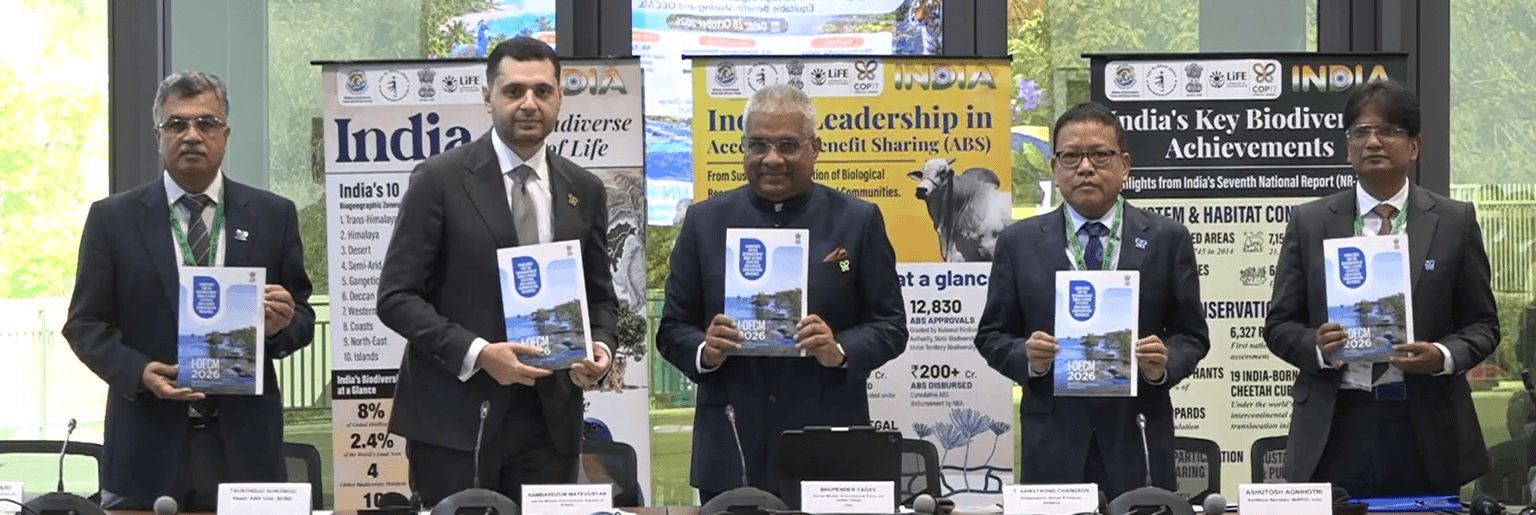
Environment Minister Bhupender Yadav released India's I-OECM Guidelines 2026 at CBD COP-17 in Yerevan, Armenia, supporting the 30x30 biodiversity target.
Why in News
On 4 November 2026 the Environment Ministry announced that Union Minister Bhupender Yadav had released the Guidelines for designation of India's Other Effective Area-Based Conservation Measures (I-OECMs) 2026 at a CBD COP-17 side event in Yerevan, Armenia, on 3 November 2026.
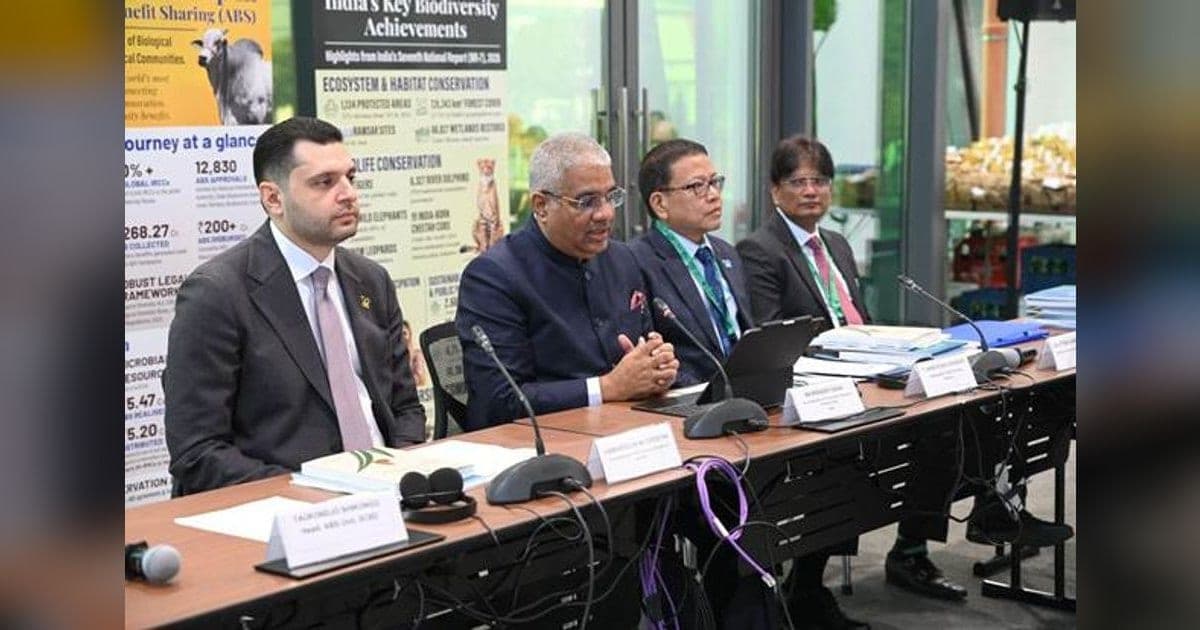
Union Minister for Environment, Forest and Climate Change Bhupender Yadav released the Guidelines for the designation of India's Other Effective Area-Based Conservation Measures (I-OECMs) 2026 on 3 November 2026 at a side event of the seventeenth Conference of the Parties to the Convention on Biological Diversity, or CBD COP-17, in Yerevan, Armenia. The Ministry announced the release on 4 November 2026.
The side event
The event carried the title From Policy to Practice: Advancing India's Biodiversity Commitments through Innovation, Finance, ABS and OECMs. Three bodies organised it: the Ministry of Environment, Forest and Climate Change (MoEFCC), the National Biodiversity Authority (NBA) and the United Nations Development Programme (UNDP). Armenia's Environment Minister and the Executive Secretary of the CBD joined the release.
What an OECM is
An OECM is land or water lying outside the legally protected network that still delivers lasting in-situ conservation of biodiversity, achieved mainly by managing the wider landscape well. The minister described the approach as a new era of conservation. The guidelines, drawn up by MoEFCC with the NBA, set out how such areas are to be recognised and reported. They cover terrestrial, inland water, and coastal and marine ecosystems, and offer examples such as biodiversity parks, sacred groves, community-managed irrigation tanks, seagrass and seaweed beds, and fisheries seasonal ban areas.
Four mandatory criteria
- The area must not already be a legally protected or conserved area
- It must be governed under Central or State government frameworks, or by government-recognised local institutions such as Panchayats and Biodiversity Management Committees
- It must have defined boundaries and must not overlap anything already reported to the World Database on Protected Areas
- Recognition must leave existing activities, governance and the regulatory regime of the area untouched
Biodiversity significance, ecosystem services and cultural values can qualify a site in addition. Applications reach the NBA from government departments, agencies, institutions, local self-governments and Biodiversity Management Committees. The NBA makes a preliminary examination and sends each application to the State Biodiversity Board or Union Territory Biodiversity Council within 30 days, and that body validates the information and returns its recommendation within another 30 days. An Inter-Departmental I-OECM Committee assists, the NBA takes the final call, and MoEFCC authorises recognition. Each recognised site needs a monitoring framework with measurable indicators, assessed at least once in five years, and recognised sites are published on the World Database on Protected and Conserved Areas through UNEP-WCMC. Recognition does not convert an area into a protected area and alters neither its ownership nor its legal status.
The GEF-8 project behind it
A GEF-8 project will apply the guidelines in six demonstration landscapes and seascapes. The Local Project Appraisal Committee cleared it on 29 December 2025, and it runs for 72 months, from 15 May 2026 to 15 May 2032, executed by the NBA and MoEFCC under the National Implementation Modality with UNDP support.
| Total financing | USD 60.79 million |
| GEF Trust Fund grant | USD 6.65 million |
| Confirmed co-financing | USD 54.14 million |
| Conservation estate to be added | 3 per cent of India's land and marine area, above the 27 per cent already protected |
| New terrestrial conservation areas | 50,000 hectares |
| Degraded land to be restored | At least 5,000 hectares |
| Direct beneficiaries | At least 50,000 people, half of them women |
The six demonstration sites are the Gori Valley in Uttarakhand, the Kumbhalgarh-Mount Abu-Jaisalmer landscape in Rajasthan, the Satkosia-Kalahandi landscape in Odisha, the Srisailam-Cumbum landscape spanning Andhra Pradesh and Telangana, the Sahyadri-Konkan landscape spanning Maharashtra and Goa, and the Lakshadweep Islands Marinescape. The effort serves Target 3, widely called the 30x30 goal, of the Kunming-Montreal Global Biodiversity Framework, and National Biodiversity Target 3 under the updated National Biodiversity Strategy and Action Plan for 2024-2030.
Important Facts
| Guidelines | Guidelines for designation of India's Other Effective Area-Based Conservation Measures (I-OECMs) 2026 |
|---|---|
| Released by | Union Environment Minister Bhupender Yadav |
| Occasion and venue | CBD COP-17 side event, Yerevan, Armenia |
| Date of release | 3 November 2026 |
| Prepared by | MoEFCC in partnership with the National Biodiversity Authority |
| Side event organisers | MoEFCC, NBA and UNDP |
| Global target served | Target 3, the 30x30 goal, of the Kunming-Montreal Global Biodiversity Framework |
| National target | National Biodiversity Target 3 under NBSAP 2024-2030 |
| GEF-8 project financing | USD 60.79 million, with a GEF Trust Fund grant of USD 6.65 million and co-financing of USD 54.14 million |
| Project duration | 72 months, 15 May 2026 to 15 May 2032 |
| Demonstration sites | Six landscapes and seascapes |
| Area goal | Add 3 per cent of land and marine area over the 27 per cent already protected |
Exam Point of View
Remember the expansion of I-OECM, the year of the guidelines, the venue CBD COP-17 at Yerevan in Armenia, the minister who released them, the three organisers MoEFCC, NBA and UNDP, the four mandatory criteria, the two 30-day timelines and the five-year monitoring cycle. From the GEF-8 project, fix the total of USD 60.79 million with its grant and co-financing split, the 72-month span, the six sites, 50,000 hectares of new conservation areas and the addition of 3 per cent over the existing 27 per cent.
Practice Questions
The Guidelines for designation of India's Other Effective Area-Based Conservation Measures (I-OECMs) 2026 were released at CBD COP-17 held in which city?
- A.Cali
- B.Yerevan
- C.Baku
- D.Montreal
Show answer
The correct answer is Yerevan, the capital of Armenia, where the seventeenth Conference of the Parties to the Convention on Biological Diversity was held and where Union Environment Minister Bhupender Yadav released the guidelines at a side event on 3 November 2026.
Read the full explanation →To which body must applications for I-OECM recognition be submitted in the first instance?
- A.National Biodiversity Authority
- B.Ministry of Environment, Forest and Climate Change
- C.UNEP-WCMC
- D.State Biodiversity Board
Show answer
Applications from Central and State government departments, agencies and institutions, local self-governments and Biodiversity Management Committees go to the NBA, which conducts a preliminary examination.
Read the full explanation →What is the total financing of the GEF-8 project commissioned to implement the I-OECM Guidelines?
- A.USD 6.65 million
- B.USD 54.14 million
- C.USD 60.79 million
- D.USD 27.30 million
Show answer
The correct answer is USD 60.79 million, the total financing of the project titled Enhancing the conservation and sustainable use of biodiversity to meet India's commitment to the Kunming-Montreal Global Biodiversity Framework targets by 2030.
Read the full explanation →By how much does the GEF-8 project aim to expand India's conservation estate, over and above the area already under protection?
- A.3 per cent over the existing 27 per cent
- B.5 per cent over the existing 25 per cent
- C.10 per cent over the existing 20 per cent
- D.7 per cent over the existing 23 per cent
Show answer
The project aims to add three per cent of India's land and marine area to the country's conservation estate, above the twenty-seven per cent already under protection, doing so through OECMs and other conservation initiatives that include community and private conservation areas.
Read the full explanation →Frequently Asked Questions
What does I-OECM stand for?
It stands for India's Other Effective Area-Based Conservation Measures. The guidelines for their designation, carrying the year 2026, were released at a CBD COP-17 side event in Yerevan, Armenia, on 3 November 2026.
Which global target do the I-OECM Guidelines support?
They support Target 3, commonly called the 30x30 goal, of the Kunming-Montreal Global Biodiversity Framework, along with National Biodiversity Target 3 under the updated National Biodiversity Strategy and Action Plan for 2024-2030.
How large is the GEF-8 project supporting these guidelines?
Its total financing is USD 60.79 million, made up of a GEF Trust Fund grant of USD 6.65 million and confirmed co-financing of USD 54.14 million. It runs for 72 months, from 15 May 2026 to 15 May 2032.
Does I-OECM recognition make a site a protected area?
No. Recognition does not turn the area into a protected area and it changes neither the ownership nor the legal status of the site, nor the activities, governance and regulatory regime already in place there.
Sources
- https://www.pib.gov.in/PressReleasePage.aspx?PRID=2332733 (opens in a new tab) — Press Information Bureau
Current Affairs 4 November 2026
- India-Poland Trade Push: Jitin Prasada Visits WarsawInternational
- NLMC Phase II RINL Land Auction Fetches Rs 218 CroreEconomy
- Railways Freight Loading Hits 145.07 MT in October 2026Economy
- CSIR and DAKSHIN-RIS Sign Pact for Global South ScienceScience & Technology
- Ayush Minister Ties Dhanteras to Preventive HealthcareImportant Days
- Schedule M Amendment Aligns Grade A Limits With WHO NormsNational
- Cabinet Clears Rs 2,814 Crore Critical Mineral Capex SchemeGovernment Schemes
- Cabinet Approves Rs 4,371.10 Crore VISTAR Statistics SchemeEconomy
Related Current Affairs
- Summits & Conferences
MoSPI and UN Women Hold National Conference on Gender Statistics
2 November 2026 · 3 min read
- Important Days
Biosphere Reserves Day: India Has 18 Reserves, 13 in UNESCO List
2 November 2026 · 2 min read
Related GK
- Forts and Palaces of Rajasthan: Builders and Key Facts
21 October 2026 · Rajasthan
- Devotional Music of India: Bhajan, Kirtan and Qawwali
17 October 2026 · Art & Culture
- Chandigarh GK: Capitol Complex, Sectors and Static Facts
12 October 2026 · Indian States & UTs
Take the Quiz
- Current Affairs Quiz
State Exams Current Affairs Quiz: 4 November 2026
25 questions25 minutesStart Quiz