
PM Modi Joins UPSC Centenary Celebrations at Bharat Mandapam
Prime Minister Narendra Modi marked 100 years of the Union Public Service Commission at Bharat Mandapam, Delhi, and gave the mantra Nagrik Devo Bhava.
Why in News
On 1 October 2026 the Union Public Service Commission completed 100 years, and Prime Minister Narendra Modi joined the centenary celebrations at Bharat Mandapam in New Delhi, where a stamp, a coin and a compilation of 100 case laws were released.
Prime Minister Narendra Modi took part on 1 October 2026 in the centenary celebrations of the Union Public Service Commission (UPSC) at Bharat Mandapam in New Delhi. Chairpersons of the Public Service Commissions of the states joined the gathering. The Prime Minister described the hundredth year as a festival of the hopes that lakhs of young Indians live with each year and of the trust the country places in the body that selects its civil servants.
What was released
Three commemorative items marked the occasion: a postage stamp, a special coin and a volume compiling 100 landmark case laws connected with the Commission. The Prime Minister said the body has held on to its credibility through changing generations, governments, technologies and syllabi.
From 1926 to a free nation's needs
The Commission traces its beginning to 1926, under colonial rule, and the Prime Minister said the system later turned its energy to the dreams of an independent country. He paid tribute to Sardar Vallabhbhai Patel for building the administrative steel frame that the rebuilding of the nation required, and for shaping the institution into a pillar of free India.
The two touchstones and a new mantra
Every selection process, the Prime Minister said, must be weighed against two tests, Nation First and Citizen First. He set aside the old mai-baap attitude of officialdom and offered instead the mantra Nagrik Devo Bhava, meaning the citizen is no less than a deity, and named the working creed of twenty-first century administration as Pro-People, Pro-Active, Good Governance.
What recruitment must now test
Examinations should look beyond what a candidate knows and ask why the candidate wants the service at all, so that those chosen are drawn by public service and not by public office. He asked recruiters to value foresight and complex problem-solving, because officers ahead will face information warfare, deepfakes, algorithmic bias and climate justice. He also pressed for Time Certainty, shorter examination cycles without any fall in standards, calling it an equity reform because long cycles load families with coaching fees, rent and travel costs. For capacity building he pointed to the i-GOT platform built under Mission Karmayogi.
How the pool has changed
| Event | UPSC Centenary Celebrations |
| Women candidates | 3 per cent in 1952 to over 30 per cent now |
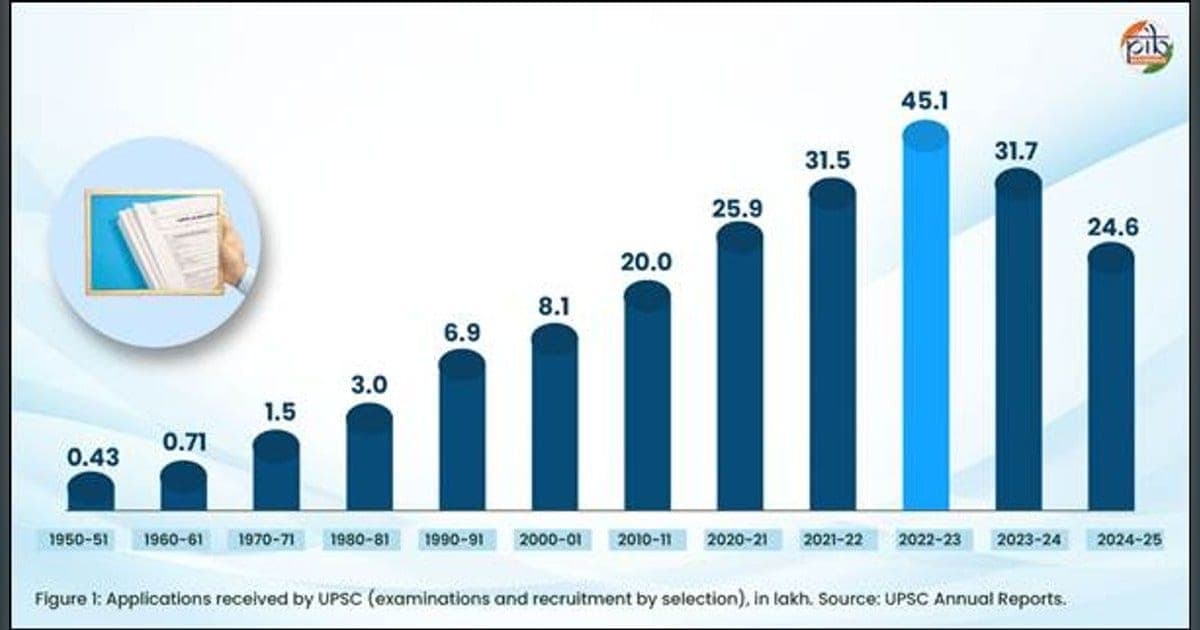
| Candidates sitting the exam | 45 times the number at the golden jubilee in 1976 |
| Women chairpersons after 2014 | Three of the four |
Opportunity, the Prime Minister said, has travelled from a few big-city families to talented youth in villages, and the figures are not mere statistics. Looking to 2047, he asked the Commission to upgrade for its second century while guarding its independence, impartiality, merit, confidentiality and fair process.
Important Facts
| Event | Centenary Celebrations of the Union Public Service Commission (UPSC) |
|---|---|
| Venue | Bharat Mandapam, New Delhi |
| Year of origin | 1926, under British rule |
| Released | Commemorative postage stamp, special coin and a compilation of 100 significant case laws |
| Mantra given | Nagrik Devo Bhava |
| Two touchstones | Nation First and Citizen First |
| Governance principles | Pro-People, Pro-Active, Good Governance |
| Platform named | i-GOT, created under Mission Karmayogi |
| Women candidates | Up from 3 per cent in 1952 to over 30 per cent |
Exam Point of View
Remember the institution (UPSC), the hundredth year and the date (1 October 2026), the venue (Bharat Mandapam, New Delhi), the year of origin (1926), the three items released, the mantra Nagrik Devo Bhava, the two touchstones Nation First and Citizen First, the three pillars Pro-People, Pro-Active, Good Governance, the i-GOT platform under Mission Karmayogi, and the figures on women candidates (3 per cent in 1952 to over 30 per cent).
Practice Questions
Where were the centenary celebrations of the Union Public Service Commission held?
- A.Vigyan Bhawan, New Delhi
- B.Bharat Mandapam, New Delhi
- C.Rashtrapati Bhavan, New Delhi
- D.Yashobhoomi, Dwarka
Show answer
Correct answer: B. Bharat Mandapam, New Delhi
Explanation
The correct answer is Bharat Mandapam, New Delhi. The hundredth-year celebrations of the Union Public Service Commission were held there, and the Prime Minister took part along with chairpersons of the Public Service Commissions of the states. Option A, Vigyan Bhawan, is a regular conference venue in the capital but was not the place chosen for this event. Option C, Rashtrapati Bhavan, is the official residence of the President and hosts investiture and oath ceremonies, not this celebration. Option D, Yashobhoomi in Dwarka, is another large convention centre in Delhi and was not the venue either. Bharat Mandapam is the correct choice to remember, since the same venue hosts many national events and often appears in questions on where a particular gathering took place. Along with the venue, note that a commemorative stamp, a special coin and a compilation of 100 significant case laws were released on the occasion.
In which year did the Union Public Service Commission have its beginning?
- A.1919
- B.1926
- C.1935
- D.1950
Show answer
Correct answer: B. 1926
Explanation
The correct answer is 1926. The Commission began in that year under colonial rule, and the Prime Minister contrasted those origins with the way the body later turned its work towards the aims of an independent country, which is why the celebration in 2026 marks a full hundred years. Option A, 1919, is wrong for this body even though that year is remembered for other constitutional changes of the colonial period. Option C, 1935, is wrong as well; it is a year associated with another colonial statute, not with the setting up of this Commission. Option D, 1950, is the year the Republic came into being and is a tempting but wrong choice, because the Commission already existed and was only reshaped for a free nation afterwards. The Prime Minister credited Sardar Vallabhbhai Patel with providing the steel frame of administration needed to rebuild the country.
Which mantra did the Prime Minister give at the UPSC centenary to describe the place of the citizen in governance?
- A.Sabka Saath, Sabka Vikas
- B.Nagrik Devo Bhava
- C.Shramev Jayate
- D.Atithi Devo Bhava
Show answer
Correct answer: B. Nagrik Devo Bhava
Explanation
The correct answer is Nagrik Devo Bhava, which the Prime Minister explained as meaning that the citizen of the country is no less than a deity and that service of the citizen comes above everything else. He offered it in place of the old mai-baap attitude of officialdom. Option A is a well-known governance slogan about inclusive development, but it is not the mantra used here. Option C refers to the dignity of labour and belongs to a different context altogether. Option D, Atithi Devo Bhava, is the familiar line about treating the guest as divine and is associated with tourism and hospitality; it is the closest distractor because of its similar form, so read the wording carefully. Remember also the two touchstones he named for every selection process, Nation First and Citizen First, and the three principles of the new work culture, Pro-People, Pro-Active and Good Governance.
Which platform did the Prime Minister suggest the UPSC and state commissions use for their own capacity building?
- A.i-GOT, created under Mission Karmayogi
- B.DIKSHA, created under Samagra Shiksha
- C.SWAYAM, created under the Ministry of Education
- D.e-Shram, created under the Labour Ministry
Show answer
Correct answer: A. i-GOT, created under Mission Karmayogi
Explanation
The correct answer is i-GOT, created under Mission Karmayogi. Urging the Commission and the state selection commissions to keep building their own capacity, the Prime Minister said the digital platform already created under the national mission for civil servants could be used for the purpose. Option B, DIKSHA, is a platform for school education and teachers and is not meant for selection commissions. Option C, SWAYAM, carries online courses for higher education learners and is again a different purpose. Option D, e-Shram, is a register of unorganised sector workers and has nothing to do with training civil servants. In the same address he asked examination agencies to adopt Time Certainty, shortening examination cycles without lowering standards, and called it an equity reform because long cycles burden families with coaching fees, rent and travel costs.
Frequently Asked Questions
When and where were the UPSC centenary celebrations held?
They were held on 1 October 2026 at Bharat Mandapam, New Delhi, with Prime Minister Narendra Modi taking part along with chairpersons of state Public Service Commissions.
What was released at the UPSC centenary?
A commemorative postage stamp, a special coin and a compilation of 100 significant case laws linked to the Commission were released.
What mantra did the Prime Minister give for civil servants?
Nagrik Devo Bhava, meaning the citizen is no less than a deity. He also named Nation First and Citizen First as the two touchstones and Pro-People, Pro-Active, Good Governance as the creed of modern administration.
In which year did the UPSC begin?
It began in 1926 under colonial rule and was reshaped after independence, a change for which the Prime Minister credited Sardar Vallabhbhai Patel.
Sources
- https://www.pib.gov.in/PressReleasePage.aspx?PRID=2317531 (opens in a new tab) — Press Information Bureau
Current Affairs 1 October 2026
- Swachhata Hi Seva 2026: Health Ministry Holds ShramdaanGovernment Schemes
- Narendra Bhooshan Assumes Charge as MoEFCC SecretaryAppointments
- Jal Jeevan Mission 2.0 Sets Aside Rs 5,000 Crore for Tribal VillagesGovernment Schemes
- Special Campaign 6.0 Begins 2 October With E-Waste FocusNational
- Surya Kiran Air Show Sought at Lonar, Ajanta and ElloraNational
- INS Trishul Joins 24th India-France Exercise Varuna at ToulonDefence
- 5th Kautilya Economic Conclave: Resilience in an Age of FluxSummits & Conferences
- Blood Donation Day 2026: One Drop of Humanity ThemeImportant Days
Related Current Affairs
Related GK
- Himachal Pradesh GK: Formation, Rivers and Exam Facts
1 October 2026 · Indian States & UTs
- Uttarakhand GK: Formation, Rivers, Parks and Exam Facts
1 October 2026 · Indian States & UTs
- Indian Railways Zones and Facts: Complete Exam Notes
1 October 2026 · Static GK
Take the Quiz
- Current Affairs Quiz
State Exams Current Affairs Quiz: 1 October 2026
25 questions25 minutesStart Quiz