
TRAI Mandates Voice-and-SMS-Only Recharge Packs of 30 Days or Less
TRAI's Thirteenth Amendment to the Telecom Consumer Protection Regulations makes operators offer voice-and-SMS-only recharge vouchers for validities of 30 days and less.
Why in News
On 22 September 2026 TRAI released the Telecom Consumer Protection (Thirteenth Amendment) Regulations, 2026, mandating short-validity voice-and-SMS-only recharge vouchers.
The Telecom Regulatory Authority of India (TRAI) on 22 September 2026 released the Telecom Consumer Protection (Thirteenth Amendment) Regulations, 2026. The rules make sure that mobile users who do not need data can buy cheaper voice-and-SMS-only recharge packs, including short-validity ones.
Why the change was needed
After the Twelfth Amendment of 2024, operators were required to offer voice-and-SMS-only Special Tariff Vouchers (STVs). TRAI found that only a few such packs were on offer, mostly with long validities, which left low-income users, many of whom use a basic phone or a second SIM, without affordable short-duration choices. A draft amendment was floated on 7 April 2026, drew 1,132 responses, and was discussed at an open house on 15 June 2026.
What operators must now offer
- Voice-and-SMS-only STVs, at a suitably lower price, for every validity of 30 days and less for which they offer voice-SMS-data STVs.
- A pack whose validity renews on the same date every month; if a month has no such date, it renews on the last day of that month.
- At least one longer-validity voice-and-SMS-only STV matching the longer bundled packs.
What a special tariff voucher is
A special tariff voucher is a recharge that changes the price of a service for a fixed validity, such as a pack of calls and messages for a fortnight, as against a plan voucher that sets a whole tariff plan. Because most operators bundle data into nearly every voucher, a user who only makes calls ends up paying for data they never use. The Twelfth Amendment introduced the idea of voice-and-SMS-only vouchers; the Thirteenth fixes the validities and prices so that the option is real, not nominal.
Why it matters
TRAI says the framework gives low-income consumers more options to recharge according to their needs and their means, and improves choice for anyone who prefers not to pay for data they do not use. The amendment is on TRAI's website, trai.gov.in.
Important Facts
| Regulator | Telecom Regulatory Authority of India (TRAI) |
|---|---|
| Regulation | Telecom Consumer Protection (Thirteenth Amendment) Regulations, 2026 |
| Released | 22 September 2026 |
| Mandate | Voice-and-SMS-only STVs for every validity of 30 days and less, plus a monthly-renewing pack and one longer pack |
| Draft issued | 7 April 2026 |
| Responses received | 1,132 |
| Open house discussion | 15 June 2026 |
| Earlier rule | Twelfth Amendment, 2024, first required voice-and-SMS-only STVs |
Exam Point of View
Exams may ask which regulator issued the rules (TRAI), the amendment number (Thirteenth), what it mandates (voice-and-SMS-only STVs for validities of 30 days and less) and who benefits (low-income users who do not need data).
Practice Questions
Which body released the Telecom Consumer Protection (Thirteenth Amendment) Regulations, 2026 on 22 September 2026?
- A.Department of Telecommunications
- B.Telecom Regulatory Authority of India
- C.Telecom Disputes Settlement and Appellate Tribunal
- D.Ministry of Electronics and IT
Show answer
Correct answer: B. Telecom Regulatory Authority of India
Explanation
The correct answer is Telecom Regulatory Authority of India. TRAI, the sector's regulator, released the Thirteenth Amendment on 22 September 2026 after a draft issued on 7 April 2026 drew 1,132 responses and an open house discussion on 15 June 2026. The amendment obliges operators to offer voice-and-SMS-only special tariff vouchers for validities of 30 days and less, so that users who do not need data are not forced to buy bundled packs.
The Department of Telecommunications is the government department that makes policy and issues licences, not tariff regulations. The Telecom Disputes Settlement and Appellate Tribunal (TDSAT) hears appeals against TRAI's decisions rather than issuing regulations. The Ministry of Electronics and IT deals with electronics, IT and semiconductors. For telecom tariffs, quality of service and consumer protection, the regulator is always TRAI.
TRAI's Thirteenth Amendment of 2026 mandates special tariff vouchers of what kind?
- A.Data-only vouchers with unlimited validity
- B.Voice-and-SMS-only vouchers for validities of 30 days and less
- C.Free roaming vouchers for all users
- D.International calling vouchers
Show answer
Correct answer: B. Voice-and-SMS-only vouchers for validities of 30 days and less
Explanation
The correct answer is Voice-and-SMS-only vouchers for validities of 30 days and less. Under the amendment, wherever an operator offers a voice-SMS-data special tariff voucher with a validity of 30 days or less, it must also offer a voice-and-SMS-only voucher of the same validity at an appropriately reduced price. Operators must also offer a pack that renews on the same date every month, falling back to the last day in shorter months, and at least one longer voice-and-SMS pack.
The other options invent products that the regulation does not cover. TRAI's concern, after the Twelfth Amendment of 2024, was that operators had listed only a handful of voice-SMS packs, concentrated on long validities, so low-income users who rely on a basic phone or a second SIM could not buy a cheap short pack. The new rule targets exactly that gap.
Frequently Asked Questions
What does TRAI's Thirteenth Amendment to the Telecom Consumer Protection Regulations require?
Telecom operators must offer voice-and-SMS-only special tariff vouchers, at a lower price, for every validity of 30 days and less that they offer for voice-SMS-data packs, plus a pack that renews on the same date each month and at least one longer-validity pack.
Who benefits from the new TRAI rule?
Low-income consumers and users of basic phones or second SIMs who do not need data, and who earlier found only a few long-validity voice-and-SMS packs on offer.
Sources
- TRAI releases Telecom Consumer Protection (Thirteenth Amendment) Regulations, 2026 (opens in a new tab) — Press Information Bureau
Current Affairs 22 September 2026
- 11th Ayurveda Day on 23 September: Theme, Facts and SchemesImportant Days
- Ayushman Bharat PM-JAY at 8: 48.51 Crore Cards, ₹2.03 Lakh Crore CareGovernment Schemes
- SEMICON India 2026: 'Silicon to Systems' Shows India's Chip EcosystemScience & Technology
- Asian Games: India's First Gold via Women's Cricket, First MMA MedalSports
- Vice-President Opens 9th India International Water Week 2026Summits & Conferences
- National Film Awards to Be Held at India's Best Tourist DestinationsAwards & Honours
- India Cine Hub: NFDC's Single-Window Portal for Film Shooting PermitsNational
- Veer Guardian 2026: IAF-Japan Air Exercise Ends at JodhpurDefence
Related Current Affairs
- National
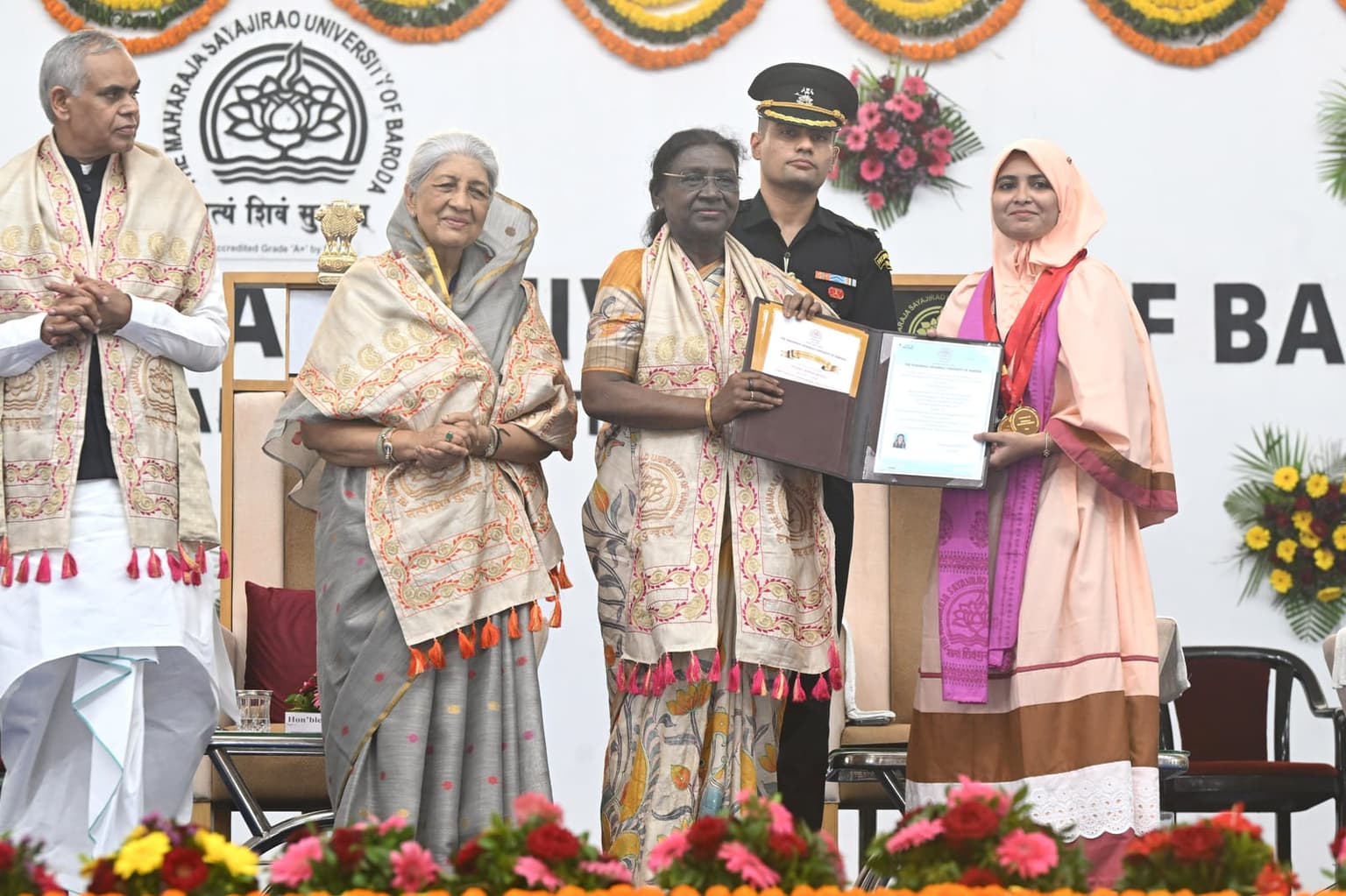
President Murmu Attends 75th MS University Convocation, Vadodara
23 September 2026 · 2 min read
- National
India Cine Hub: NFDC's Single-Window Portal for Film Shooting Permits
22 September 2026 · 2 min read
- National
PM Mementos e-Auction 2026: Gujarat's Heritage Goes Under the Hammer
22 September 2026 · 2 min read
Related GK
- Fundamental Rights (Articles 12–35): Notes, Writs and PYQs
23 September 2026 · Indian Polity
- Preamble of the Indian Constitution: Notes, Keywords and PYQs
22 September 2026 · Indian Polity
- Making of the Indian Constitution: Notes, Key Dates and PYQs
21 September 2026 · Indian Polity
Take the Quiz
- Current Affairs Quiz
State Exams Current Affairs Quiz: 22 September 2026
25 questions25 minutesStart Quiz