
TDB Supports Development of Indigenous 32-Slice CT Scanner
The Technology Development Board has signed an agreement with Panacea Medical Technologies of Karnataka to build an indigenous 32-slice CT scanner.
Why in News
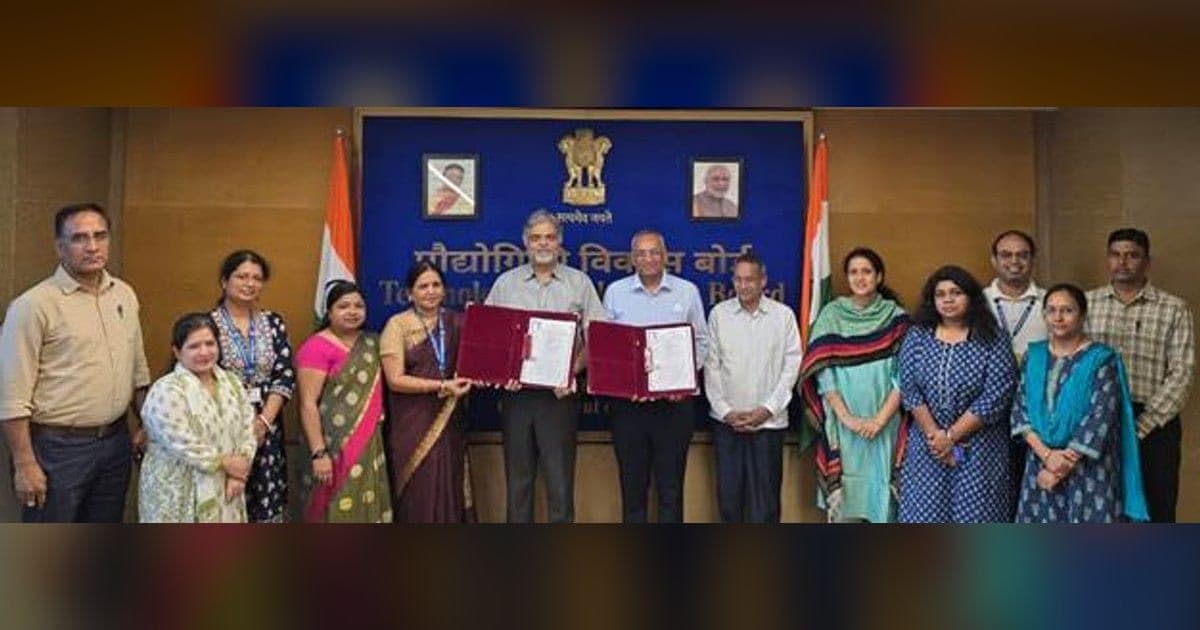
On 15 October 2026 the Ministry of Science and Technology announced that the Technology Development Board has signed an agreement with Panacea Medical Technologies to support an indigenous 32-slice CT scanner under Make in India.
The Technology Development Board (TDB), which works under the Department of Science and Technology, has signed an agreement with Panacea Medical Technologies Private Limited of Malur in Karnataka to fund the development and commercial rollout of an indigenous 32-slice computed tomography scanner. The Ministry of Science and Technology announced the agreement on 15 October 2026.
Why it matters
Medical devices have been marked out as a priority sector under the Make in India programme, and high end diagnostic equipment is still largely bought from abroad. By putting money behind a home grown scanner, the Board is trying to move Indian firms up the ladder from assembling imported parts to designing the machine itself. Demand at home is climbing as hospitals expand, as long term illnesses spread and as doctors need a quick and accurate picture of what is wrong.
About the company and the machine
Panacea Medical Technologies is an Indian manufacturer whose work has been in radiotherapy and radiology. It has built up strength in high precision imaging and in the modules, processes and products used for medical imaging and the treatment of cancer. The new project takes it into diagnostic imaging proper, with a scanner designed for use across many clinical departments.
A computed tomography machine rotates an X-ray source around the patient while digital detectors catch what passes through. Computer algorithms then reconstruct those readings into cross-sectional images, giving a detailed view of structures inside the body. Building one calls for exact engineering, careful integration of imaging components and strict calibration, so that the images can be trusted and the patient stays safe.
What the Board said
The Secretary of the Board, Shri Rajesh Kumar Pathak, said an indigenous scanner fits the goal of making high end medical devices in India, and that the support is meant to encourage medical technology companies to design their own answers to the country health needs while opening a path to markets abroad. The promoter of the company thanked the Board and said the tie up would speed up its work on diagnostic imaging technology and help make advanced scanning available more widely across India.
Important Facts
| Supporting body | Technology Development Board (TDB) |
|---|---|
| Parent department | Department of Science and Technology |
| Company | Panacea Medical Technologies Private Limited |
| Location | Malur, Karnataka |
| Device | Indigenous 32-slice computed tomography (CT) scanner |
| Secretary, TDB | Shri Rajesh Kumar Pathak |
| Programme | Make in India, under which medical devices are a priority sector |
| Company expertise | Radiotherapy and radiology, high precision imaging |
Exam Point of View
Remember that the Technology Development Board works under the Department of Science and Technology, that its Secretary is Shri Rajesh Kumar Pathak, that the partner is Panacea Medical Technologies of Malur in Karnataka, that the device is a 32-slice CT scanner, and that medical devices are a priority sector under Make in India.
Practice Questions
The Technology Development Board functions under which department?
- A.Department of Biotechnology
- B.Department of Science and Technology
- C.Department of Health Research
- D.Department of Pharmaceuticals
Show answer
The Board sits within that department and finances Indian enterprises that are developing and commercialising home grown technology, which is why it was the body to sign an agreement for an indigenous computed tomography scanner.
Read the full explanation →Which company has been supported for the development of an indigenous 32-slice CT scanner?
- A.Panacea Medical Technologies Private Limited
- B.Bharat Electronics Limited
- C.Hindustan Antibiotics Limited
- D.HLL Lifecare Limited
Show answer
Building on its strength in high precision imaging, the firm has taken up the design, development and deployment of a diagnostic scanner, and the agreement with the Board will fund that effort through to commercial sale.
Read the full explanation →Which of the following best describes how a computed tomography scanner produces its images?
- A.Strong magnetic fields align hydrogen nuclei in the body
- B.High frequency sound waves are reflected off tissue
- C.A rotating X-ray system with digital detectors, reconstructed by computer algorithms
- D.Radioactive tracers injected into the bloodstream are tracked
Show answer
In a computed tomography machine the X-ray source turns around the patient while detectors record the radiation that passes through, and software then assembles those readings into cross-sectional pictures of the structures inside the body.
Read the full explanation →Frequently Asked Questions
Which company will develop the indigenous CT scanner?
Panacea Medical Technologies Private Limited, based at Malur in Karnataka. The Technology Development Board of the Department of Science and Technology has signed an agreement with the firm to support the development and commercialisation of a 32-slice CT scanner.
What is the Technology Development Board?
It is a body under the Department of Science and Technology that funds Indian enterprises developing and commercialising indigenous technology. Its Secretary is Shri Rajesh Kumar Pathak, and medical devices are among the priority sectors it supports under Make in India.
How does a CT scanner work?
A rotating X-ray system and digital detectors capture cross-sectional readings of the body, which computer algorithms reconstruct into detailed images of internal structures. Precise engineering and rigorous calibration are needed for imaging accuracy and patient safety.
Sources
- https://www.pib.gov.in/PressReleasePage.aspx?PRID=2323953 (opens in a new tab) — Press Information Bureau
Current Affairs 15 October 2026
- DDU-GKY 2.0 Captive Employer CXO Meet Held in JaipurGovernment Schemes
- BHASHINI Division and Manipur Sign MoU on Multilingual AIScience & Technology
- Tribal Languages Working Group Meets for the First TimeNational
- Bhupender Yadav Chairs 27th G.B. Pant Society MeetingEnvironment
- Special Campaign 6 Review Covers 84 MinistriesNational
- Women's Labour Force Participation Rate Rises to 40 Per CentEconomy
- Rajnath Singh Flags 5D Security Threat at Defence ConclaveDefence
- Vice-President Inaugurates KAUMARACON-2026 at AIIA DelhiSummits & Conferences
Related Current Affairs
- Science & Technology
ARCI Workshop Marks National Hydrogen and Fuel Cell Day
15 October 2026 · 2 min read
- Science & Technology
ESTIC 2026 Curtain-Raiser Highlights Physical AI, Robotics
15 October 2026 · 2 min read
- Science & Technology
BHASHINI Division and Manipur Sign MoU on Multilingual AI
15 October 2026 · 2 min read
- Science & Technology
CEA Conference on Making Indian Power Sector AI Enabled
14 October 2026 · 2 min read
- Science & Technology
First MEA-CSIR Tech Familiarization Programme Held in Delhi
14 October 2026 · 2 min read
- Science & Technology
AI for Good Build-a-thon 5.0 Held at India Mobile Congress
14 October 2026 · 2 min read



Related GK
- UP Minerals, Industries and ODOP: Districts and Products
15 October 2026 · Uttar Pradesh
- Rajasthan Irrigation and Water Projects: Canals and Dams
15 October 2026 · Rajasthan
- MP Minerals and Energy: Panna Diamonds and Singrauli
15 October 2026 · Madhya Pradesh
Take the Quiz
- Current Affairs Quiz
State Exams Current Affairs Quiz: 15 October 2026
25 questions25 minutesStart Quiz