
Shivraj Chouhan Chairs Joint Poverty Eradication Workshop
A joint workshop of the agriculture and rural development ministries in New Delhi reviewed poverty eradication, where extreme poverty was put at 2.6 per cent.
Why in News
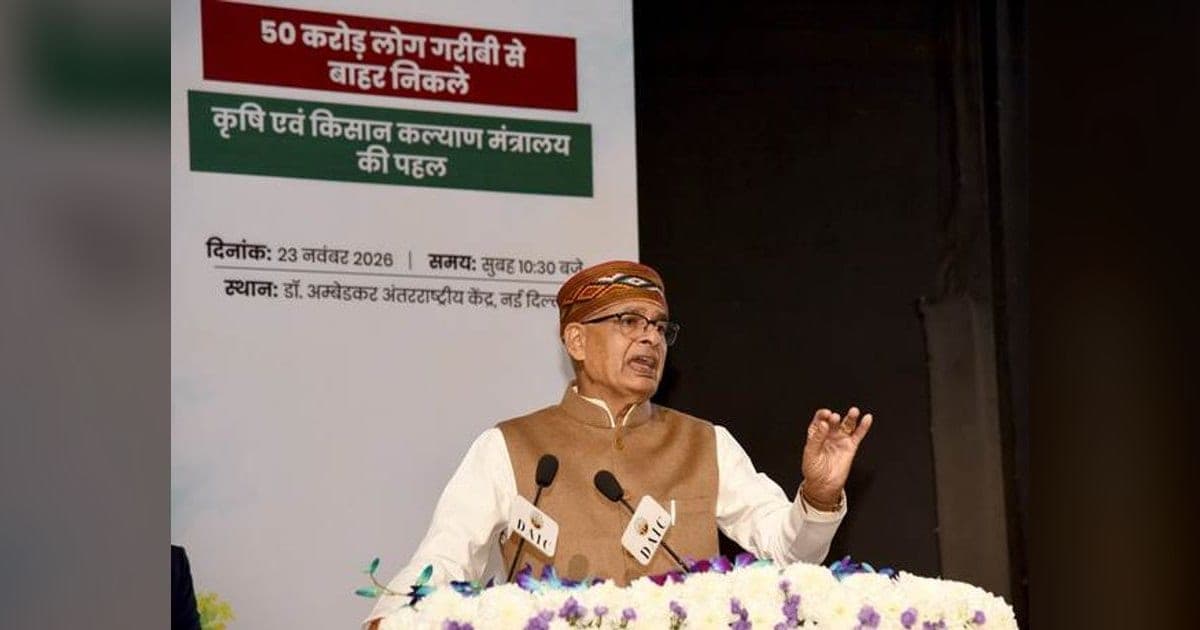
On 23 November 2026 Union Minister Shivraj Singh Chouhan chaired a joint workshop of the agriculture and rural development ministries in New Delhi that reviewed their role in poverty eradication and placed extreme poverty at 2.6 per cent, down from 27.1 per cent.
A one-day joint workshop of the Ministry of Agriculture and Farmers' Welfare and the Ministry of Rural Development was held at the Dr Ambedkar International Centre, New Delhi, on 23 November 2026. Union Minister for Agriculture and Farmers' Welfare and Rural Development Shivraj Singh Chouhan chaired it. Ministers of State Bhagirath Choudhary (Agriculture) and Kamlesh Paswan (Rural Development) took part. The purpose was to weigh what four departments had contributed to pulling people out of poverty, and to settle the strategy ahead.
The poverty numbers placed before the workshop
Citing a recent World Bank report, the minister said nearly 500 million people in India had crossed the poverty line, a figure larger than the population of the United States, and that the rate of extreme poverty had fallen from 27.1 per cent to 2.6 per cent. Two commitments were set out: those already lifted must not slip back, and the remaining 2.6 to 2.7 per cent must be raised quickly.
Farm sector figures
| Decadal agriculture growth rate | 4.45 per cent, against 3 to 3.5 per cent in the Green Revolution era |
| PM-KISAN Samman Nidhi | Direct assistance of more than Rs 4.66 lakh crore |
| Foodgrain production | 376.56 million tonnes |
| Horticulture production | 386.91 million tonnes |
| Farmer Producer Organisations | 10,000 established |
What research returned
A presentation by the Department of Agricultural Research and Education put the economic benefit of agricultural research and education at Rs 13.85 for every rupee invested, and the return on animal husbandry research at Rs 20.81. Since 2014 a total of 3,436 new crop varieties have been released, 93 per cent of them climate-resilient. Fish production stands at 19.78 million tonnes, more than 500 agricultural machines are available, and Krishi Vigyan Kendras reach five crore farmers digitally every year.
Rural schemes and land resources
- Over 10 crore women linked to self-help groups under DAY-NRLM, and 3.76 crore have become Lakhpati Didis
- 3.99 crore permanent houses built under PMAY-Gramin
- 7.99 lakh kilometres of all-weather rural roads laid under PMGSY
- 125 days of assured employment for rural households under Viksit Bharat - G RAM G
- Transparency of 99.9 per cent in Direct Benefit Transfer
Under the watershed development component of the Pradhan Mantri Krishi Sinchayee Yojana, 3.40 crore hectares have been treated, benefiting 61.15 lakh farmers directly, with average annual farm incomes rising by up to 70 per cent.
The road ahead
The minister asked officials to send suggestions on budgets and schemes, left the stage to sit among employees, and said targets for 2029, 2030-31 and Viksit Bharat @2047 must be met on time. Free trade agreements, he added, are the next route for Indian farm produce into world markets.
Important Facts
| Event | Joint workshop of the agriculture and rural development ministries on poverty eradication |
|---|---|
| Date and venue | 23 November 2026, Dr Ambedkar International Centre, New Delhi |
| Chaired by | Union Minister Shivraj Singh Chouhan |
| Ministers of State present | Bhagirath Choudhary (Agriculture) and Kamlesh Paswan (Rural Development) |
| Extreme poverty | Down from 27.1 per cent to 2.6 per cent, as per a World Bank report |
| People out of poverty | Nearly 500 million |
| Agriculture growth rate | 4.45 per cent (decadal), historic high |
| PM-KISAN assistance | More than Rs 4.66 lakh crore |
| Foodgrain and horticulture output | 376.56 million tonnes and 386.91 million tonnes |
| Research returns | Rs 13.85 per rupee in agri research, Rs 20.81 in animal husbandry research |
| Crop varieties since 2014 | 3,436, of which 93 per cent are climate-resilient |
| WDC-PMKSY coverage | 3.40 crore hectares treated, 61.15 lakh farmers benefited |
Exam Point of View
Hold on to the venue (Dr Ambedkar International Centre, New Delhi), the chair (Shivraj Singh Chouhan), the two Ministers of State, the four departments reviewed, the World Bank figure of nearly 500 million people out of poverty, extreme poverty falling from 27.1 to 2.6 per cent, agriculture growth of 4.45 per cent, the research returns of Rs 13.85 and Rs 20.81, and the scheme figures for PMAY-G, PMGSY, DAY-NRLM and WDC-PMKSY.
Practice Questions
According to the World Bank report cited at the joint workshop, India's extreme poverty rate has declined from 27.1 per cent to which level?
- A.2.6 per cent
- B.3.6 per cent
- C.5.2 per cent
- D.7.4 per cent
Show answer
The workshop was told that a recent World Bank report records the rate of extreme poverty in India falling from 27.1 per cent to just 2.6 per cent, with nearly 500 million people crossing the poverty line, a number larger than the population of the United States.
Read the full explanation →What is India's decadal agriculture growth rate, described at the workshop as a historic level surpassing the Green Revolution era?
- A.3.5 per cent
- B.4.45 per cent
- C.5.15 per cent
- D.6.20 per cent
Show answer
The minister told the gathering that the decadal agriculture growth rate had reached this historic level, and set it against the Green Revolution period, when growth in the sector generally stayed in the range of 3 to 3.5 per cent.
Read the full explanation →As per the presentation at the workshop, every rupee invested in agricultural research and education has yielded an economic benefit of how much?
- A.Rs 11.25
- B.Rs 13.85
- C.Rs 18.40
- D.Rs 20.81
Show answer
The Department of Agricultural Research and Education, which also heads the Indian Council of Agricultural Research, presented the finding that each rupee put into agricultural research and education returns an economic benefit of Rs 13.85.
Read the full explanation →Under Viksit Bharat - G RAM G, rural households are now assured of how many days of employment?
- A.100 days
- B.125 days
- C.150 days
- D.180 days
Show answer
The rural development presentation at the workshop stated that households in villages are now assured of 125 days of employment under Viksit Bharat - G RAM G. Option A is the obvious trap for anyone recalling the older hundred-day guarantee, while options C and D are simply larger round numbers…
Read the full explanation →Frequently Asked Questions
By how much has extreme poverty in India declined, as stated at the joint workshop?
From 27.1 per cent to 2.6 per cent, according to a recent World Bank report cited at the workshop. Nearly 500 million people are said to have moved above the poverty line, and the stated goal now is to lift the remaining 2.6 to 2.7 per cent.
What is India's decadal agriculture growth rate as told to the workshop?
A historic 4.45 per cent. The minister compared this with the Green Revolution period, when the agriculture growth rate generally stayed between 3 and 3.5 per cent.
What return does investment in agricultural research give?
The Department of Agricultural Research and Education presentation put the benefit at Rs 13.85 for every rupee invested in agricultural research and education, while research in animal husbandry returned Rs 20.81 per rupee.
Which rural development scheme figures were presented at the workshop?
More than 10 crore women linked to self-help groups and 3.76 crore Lakhpati Didis under DAY-NRLM, 3.99 crore houses under PMAY-Gramin, 7.99 lakh km of rural roads under PMGSY, 125 days of assured employment under Viksit Bharat - G RAM G, and 99.9 per cent transparency in Direct Benefit Transfer.
Sources
- गरीबी उन्मूलन में कृषि व ग्रामीण विकास की भूमिका पर दोनों मंत्रालयों की संयुक्त कार्यशाला केंद्रीय मंत्री श्री शिवराज सिंह चौहान की अध्यक्षता में दिल्ली में संपन्न (opens in a new tab) — Press Information Bureau
- गरीबी उन्मूलन में कृषि व ग्रामीण विकास की भूमिका पर दोनों मंत्रालयों की संयुक्त कार्यशाला केंद्रीय मंत्री श्री शिवराज सिंह चौहान की अध्यक्षता में दिल्ली में संपन्न (opens in a new tab) — Press Information Bureau
Current Affairs 23 November 2026
- Nayi Chetna 5.0 Gender Campaign to Begin on 25 NovemberGovernment Schemes
- Ayush Pavilion Draws Crowds at 45th IITF 2026 in New DelhiNational
- India-Nepal Talks: Saryu-Kamla Express and Vision DocumentInternational
- 92nd NBWL Standing Committee Meeting Themed on Marine LifeEnvironment
- National HPV Vaccination Campaign Crosses One Crore DosesNational
- 1st SCO Civilization Dialogue Forum Holds Gyan Bharatam SessionSummits & Conferences
- MY Bharat Yuva Samvad on Constitution Day in 600+ DistrictsGovernment Schemes
- Floriculture Exports Rise to USD 258.26 Million in FY 2025-26Economy
Related Current Affairs
- Reports & Indices
World Bank Report: 49.60 Crore Indians Exit Poverty Line
22 November 2026 · 2 min read
- Environment
India's Solar Capacity Touches 175 GW, 62-Fold Rise Since 2014
17 November 2026 · 3 min read
- Government Schemes
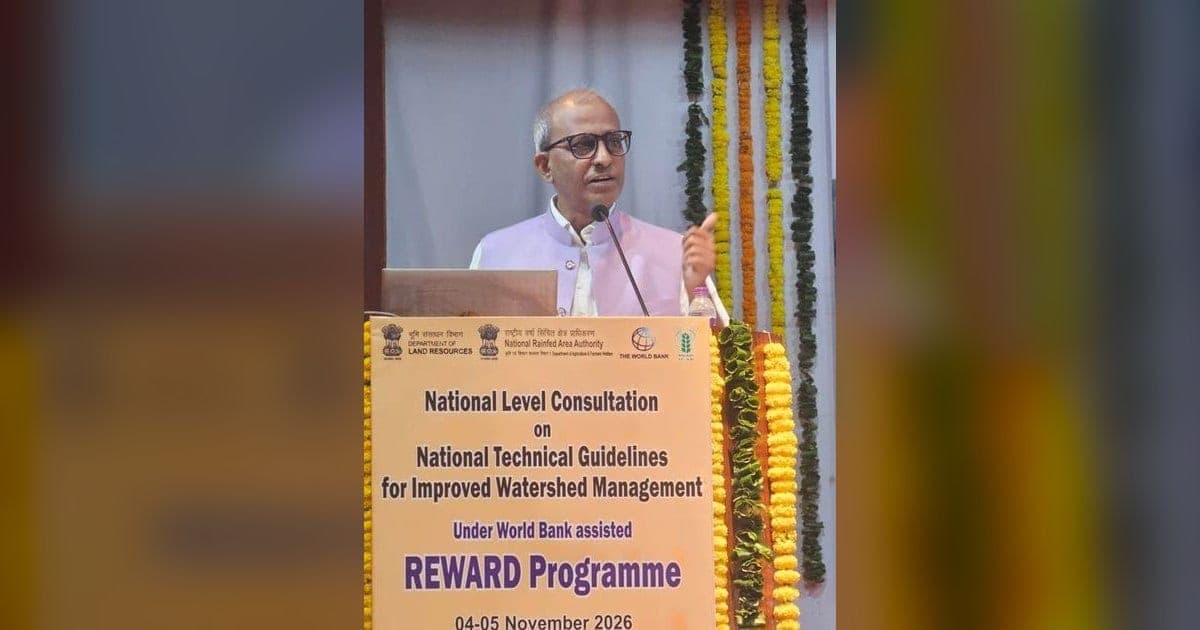
Watershed Guidelines: 3rd National Consultation in Nagpur
5 November 2026 · 2 min read


Related GK
- BIS, ADB, AIIB and NDB: Institutions for Bank Exams
6 October 2026 · Banking & Financial Awareness
- G20, BRICS and Economic Groupings: Exam Notes
4 October 2026 · Indian Economy
- IMF, World Bank and WTO: Functions and Facts
3 October 2026 · Indian Economy
Take the Quiz
- Current Affairs Quiz
State Exams Current Affairs Quiz: 23 November 2026
25 questions25 minutesStart Quiz