
DoLR Reviews WDC-PMKSY 2.0 Watershed Works in Pune
DoLR Secretary Dilip Kumar reviewed WDC-PMKSY 2.0 watershed works in Khed, Pune, and asked that 76 talukas of Maharashtra's drought belt be taken up on priority.
Why in News
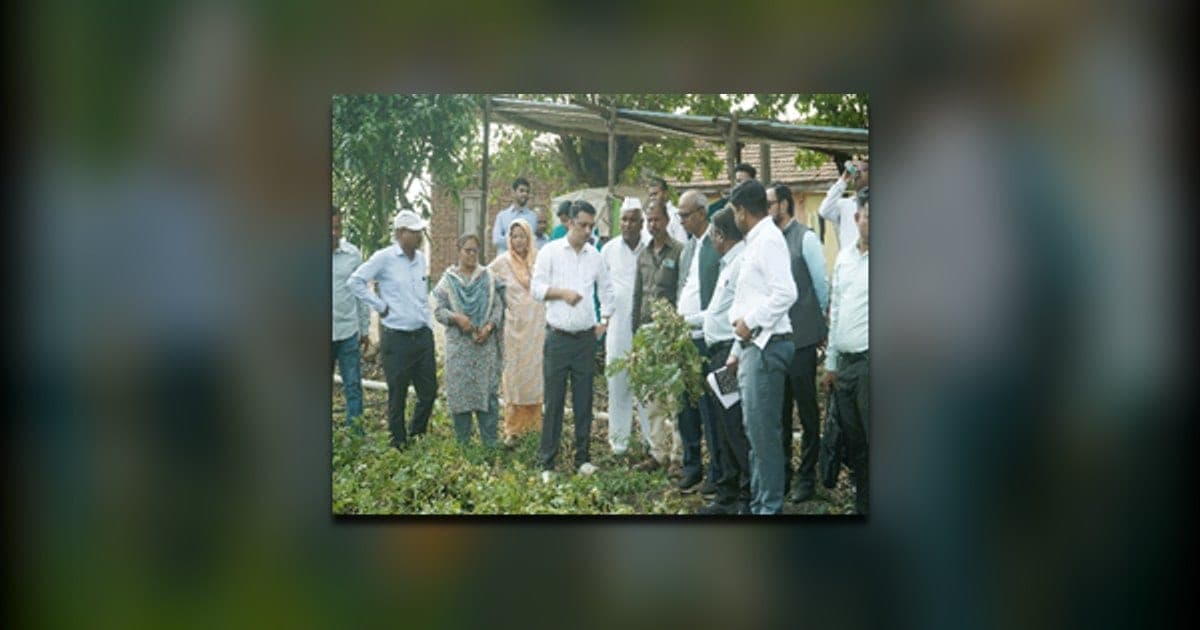
On 30 October 2026 the Secretary of the Department of Land Resources, Shri Dilip Kumar, reviewed watershed development works under WDC-PMKSY 2.0 in three villages of Pune district and called for faster completion of water conservation works in Maharashtra's drought-prone talukas.
Water conservation in the villages of western Maharashtra came under official scrutiny this week. Shri Dilip Kumar, Secretary of the Department of Land Resources (DoLR) in the Ministry of Rural Development, inspected watershed development works carried out under the Watershed Development Component of the Pradhan Mantri Krishi Sinchayee Yojana 2.0, known as WDC-PMKSY 2.0, in the villages of Varude, Gulani and Wafgaon in Pune district on 30 October 2026.
What the Secretary said
Speaking to villagers after the inspection, he said water is the foundation of the future and that every drop of rain has to be held back if villages are to become water-secure and self-reliant. He asked residents to take collective charge of repairing and maintaining the water harvesting structures built under the scheme so that the assets keep working for the next twenty years, and he held up Hiware Bazar, the well-known water-secure village of Maharashtra, as the standard the villages of the Khed Project should aim for.
The structures on the ground
The works follow the ridge-to-valley approach, which treats the catchment from the top of the slope downwards. Those seen on the visit include Continuous Contour Trenches, earthen nala bunds, cement nala bunds, Kolhapuri-type weirs and storage ponds. The Secretary looked at how far these have cut rainwater runoff, recharged groundwater and improved water available for farming, and also reviewed farm ponds, horticulture plantations, equipment given to beneficiaries and benefits extended to women's self-help groups.
What the villagers reported
- Watershed works across eleven villages of the Khed Project have raised groundwater levels
- Farmers are now able to take two to three crops in a year, lifting farm income and rural livelihoods
- Despite drought-like conditions this year, water held in farm ponds and in wells near cement nala bunds and trenches has kept standing crops irrigated
The review meeting
A day earlier, on 29 October 2026, the Secretary chaired a review meeting at Yashada in Pune with the Secretary of the Soil and Water Conservation Department of the Government of Maharashtra, going over the physical and financial progress of the scheme. With El Nino conditions in view, he pressed for faster work in the 76 talukas covered by the scheme out of the state's 304 drought-affected talukas. Percolation tanks, storage ponds, storage bunds and Kolhapuri-type weirs were listed as priority works, and officials were told to keep to timelines, maintain quality, strengthen Centre-State coordination and use the available funds well.
Who else took part
Shri Nitin Khade, Joint Secretary (Watershed Management) in DoLR, Dr Jitendra Papalkar, Secretary of the state's Soil and Water Conservation Department, and Smt Ashwini Jagtap, Deputy Chief Executive Officer of the Vasundhara Watershed Development Agency, joined the visit.
Important Facts
| Scheme | WDC-PMKSY 2.0, the Watershed Development Component of the Pradhan Mantri Krishi Sinchayee Yojana |
|---|---|
| Implementing department | Department of Land Resources, Ministry of Rural Development |
| Official who reviewed | Shri Dilip Kumar, Secretary, DoLR |
| Villages visited | Varude, Gulani and Wafgaon, Khed, Pune district, Maharashtra |
| Date of visit | 30 October 2026 |
| Review meeting | 29 October 2026 at Yashada, Pune |
| Coverage in Maharashtra | 76 talukas under the scheme out of 304 drought-affected talukas |
| Model village cited | Hiware Bazar |
| Approach and structures | Ridge-to-valley; Continuous Contour Trenches, nala bunds, Kolhapuri-type weirs, ponds |
Exam Point of View
Remember the full form of WDC-PMKSY (Watershed Development Component of the Pradhan Mantri Krishi Sinchayee Yojana) and that it is run by the Department of Land Resources under the Ministry of Rural Development, not the Jal Shakti Ministry. Also keep the figures: 76 talukas covered out of 304 drought-affected talukas in Maharashtra, eleven villages in the Khed Project, the twenty-year maintenance call, the ridge-to-valley approach and Hiware Bazar as the model village.
Practice Questions
WDC-PMKSY 2.0, under which watershed works were reviewed in Pune district, is implemented by which department?
- A.Department of Land Resources, Ministry of Rural Development
- B.Department of Water Resources, Ministry of Jal Shakti
- C.Department of Agriculture and Farmers Welfare
- D.Department of Drinking Water and Sanitation
Show answer
The Watershed Development Component of the Pradhan Mantri Krishi Sinchayee Yojana sits with that department, which is why its Secretary, Shri Dilip Kumar, inspected the works in the villages of Varude, Gulani and Wafgaon in Pune district and chaired the state review meeting.
Read the full explanation →Which village was held up as the model that the Khed Project villages should follow in becoming water-secure and self-reliant?
- A.Ralegan Siddhi
- B.Hiware Bazar
- C.Punsari
- D.Dharnai
Show answer
The Secretary of the Department of Land Resources asked that villages under the Khed Project in Pune district be transformed into water-secure and self-reliant communities along those lines.
Read the full explanation →How many talukas of Maharashtra are covered under WDC-PMKSY, out of the state's 304 drought-affected talukas?
- A.47 talukas
- B.76 talukas
- C.104 talukas
- D.150 talukas
Show answer
At the review meeting held at Yashada in Pune, the Secretary of the Department of Land Resources stressed the need to speed up works in the 76 talukas that the scheme covers among the state's 304 drought-affected talukas, with El Nino conditions in view.
Read the full explanation →What is the 'ridge-to-valley' approach followed in the watershed works reviewed in Pune district?
- A.Treating the catchment from the upper slopes downwards
- B.Lining canals from the dam to the field outlet
- C.Transferring water from surplus basins to deficit basins
- D.Building check dams only in the lowest part of a valley
Show answer
Watershed structures seen on the visit were developed on this approach, among them Continuous Contour Trenches, earthen nala bunds, cement nala bunds, Kolhapuri-type weirs and storage ponds, and the Secretary reviewed how far they had reduced rainwater runoff, recharged groundwater and improved water availability for agriculture.
Read the full explanation →Frequently Asked Questions
What does WDC-PMKSY stand for?
The Watershed Development Component of the Pradhan Mantri Krishi Sinchayee Yojana. Its second phase, WDC-PMKSY 2.0, is implemented by the Department of Land Resources under the Ministry of Rural Development.
How many talukas of Maharashtra are covered under the scheme?
The scheme covers 76 talukas out of the state's 304 drought-affected talukas, and these were marked for faster completion of works in view of El Nino conditions.
Which village was cited as a model for water-secure villages?
Hiware Bazar. The DoLR Secretary said villages under the Khed Project in Pune district should be transformed into water-secure and self-reliant communities on those lines.
What kinds of structures are built under watershed development?
Continuous Contour Trenches, earthen nala bunds, cement nala bunds, Kolhapuri-type weirs, percolation tanks, storage ponds and farm ponds, built on the ridge-to-valley approach.
Sources
- https://www.pib.gov.in/PressReleasePage.aspx?PRID=2330839 (opens in a new tab) — Press Information Bureau
Current Affairs 31 October 2026
- Kendriya Grihmantri Dakshata Padak 2026 Goes to 490 PersonnelAwards & Honours
- Social Security Cover at 68.4% as EPFO Ceiling Hits Rs 25,000Economy
- PMGSY-IV Clears 45 Mizoram Road Works Worth Rs 710.40 CroreGovernment Schemes
- GSLV-F18 Launches NVS-03 to Strengthen NavIC SystemScience & Technology
- Rashtriya Ekta Diwas Marks Patel's 151st Birth AnniversaryImportant Days
- Panchayat Workshop Pushes Atmanirbhar Panchayats, EV MoUGovernment Schemes
- Bharat Parv 2026 at Ekta Nagar: PM Visits CCIC PavilionNational
- CCI Clears Power Sector Buyouts by Adani and Aditya BirlaEconomy
Related Current Affairs
- Government Schemes
Panchayat Workshop Pushes Atmanirbhar Panchayats, EV MoU
31 October 2026 · 2 min read
- Government Schemes
PMGSY-IV Clears 45 Mizoram Road Works Worth Rs 710.40 Crore
31 October 2026 · 2 min read
- Government Schemes
BharatNet Pact Links 4,767 Tamil Nadu Villages on Demand
30 October 2026 · 2 min read
- Government Schemes
PM-KISAN 24th Instalment Pays Rs 18,690 Crore to Farmers
30 October 2026 · 2 min read
- Government Schemes
Digital Life Certificate Campaign 5 Begins in 2000 Districts
30 October 2026 · 2 min read



Related GK
- Famous Personalities of Rajasthan: Exam Notes
28 October 2026 · Rajasthan
- Districts and Divisions of Rajasthan: Exam Notes
28 October 2026 · Rajasthan
- Tourism and World Heritage Sites of Rajasthan Notes
27 October 2026 · Rajasthan
Take the Quiz
- Current Affairs Quiz
Banking Current Affairs Quiz: 31 October 2026
25 questions25 minutesStart Quiz