
PRASHAST Inclusion Module Screened in 60,000 Schools
The Education Ministry screened a 30-minute inclusive education module through the PRASHAST Portal in over 60,000 schools, with 72 lakh teachers sensitised.
Why in News
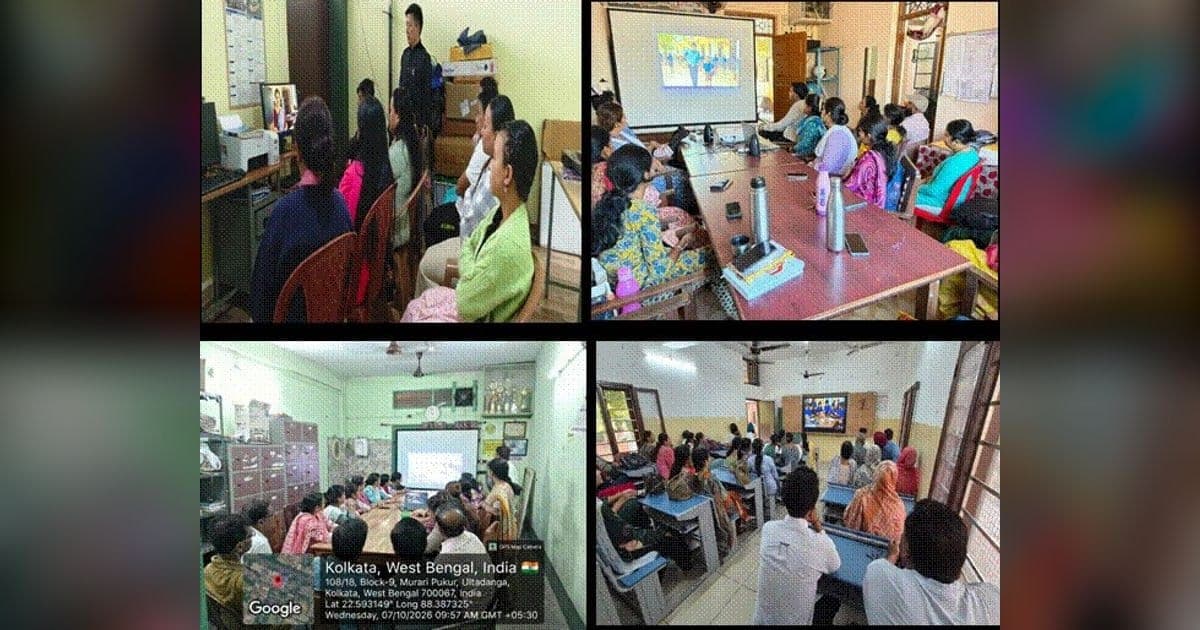
On 8 October 2026 the Department of School Education and Literacy screened a sensitisation module on inclusive education for Children with Special Needs through the PRASHAST Portal in over 60,000 schools.
The Department of School Education and Literacy (DoSEL) of the Ministry of Education held a nationwide screening of a thirty-minute sensitisation and orientation module on inclusive education for Children with Special Needs (CwSN), delivered through the PRASHAST Portal in schools across the country on 8 October 2026. More than 60,000 schools took part, and the department expects the count to rise through the month.
What the module does
The module is built on a whole-school approach, the idea being that inclusion is not the task of one teacher alone. It is meant for heads of schools, teachers, special educators and non-teaching staff, a list that deliberately extends to aayahs, drivers, clerical staff, receptionists, deans and wardens, because a child's sense of belonging is shaped in the classroom, the office, the school bus and every shared space. Practical examples and interactive activities are used so that staff pick up respectful and appropriate ways of dealing with children who need support. The module is available in 12 Indian languages.
The PRASHAST tool
PRASHAST is a school-based digital tool for spotting children with probable disability conditions covered by the Rights of Persons with Disabilities (RPwD) Act, 2016. It works through a two-part checklist: a teacher screens a student against observable indicators, and a special educator then validates the case and arranges a referral for medical assessment where that is needed. The portal thus links everyday classroom observation with formal assessment and support.
Reach so far
Sensitisation of general teachers on inclusive education through PRASHAST has been running continuously for the past three months, and more than 72 lakh teachers have already gone through the dedicated module. The department places the exercise within its wider push for equitable, accessible and inclusive schooling, in line with the National Education Policy (NEP), 2020 and the RPwD Act, 2016. The message carried by the screening is that inclusive education is a shared responsibility of everyone a child meets at school, and that identifying a need early is the first step towards the right support.
Important Facts
| Initiative | Nationwide screening of a sensitisation module on inclusive education |
|---|---|
| Conducted by | Department of School Education and Literacy, Ministry of Education |
| Platform | PRASHAST Portal |
| Module length | 30 minutes |
| Languages | 12 Indian languages |
| Schools covered | More than 60,000 |
| Teachers sensitised | More than 72 lakh |
| Legal basis | Rights of Persons with Disabilities (RPwD) Act, 2016 |
| Policy anchor | National Education Policy (NEP), 2020 |
Exam Point of View
Remember that PRASHAST is a school-based screening tool of the Department of School Education and Literacy for probable disability conditions under the RPwD Act, 2016, that its checklist has two parts, that the module runs 30 minutes and comes in 12 Indian languages, and the two reach figures: over 60,000 schools in the screening and more than 72 lakh teachers sensitised. The policy anchors are the NEP, 2020 and the RPwD Act, 2016.
Practice Questions
PRASHAST, in the news in October 2026, is a tool used for which purpose?
- A.Screening school children for probable disability conditions
- B.Recording midday meal attendance in schools
- C.Grading teachers on classroom performance
- D.Allotting scholarships to first-generation learners
Show answer
Explanation
The correct answer is screening school children for probable disability conditions. PRASHAST is a school-based digital tool under the Department of School Education and Literacy that helps identify children with conditions covered by the Rights of Persons with Disabilities Act, and it works through a checklist in two parts, with the teacher screening on observable indicators and a special educator validating the case and arranging a medical referral where required. Option B is wrong; midday meal records are maintained through a separate system under the school nutrition programme. Option C is wrong because the tool looks at children's needs rather than at teacher performance, although teachers are the ones who use it. Option D is wrong, as scholarship distribution runs through dedicated portals of other departments. The point to carry into an examination is the link between PRASHAST and the disability rights law.
How many schools took part in the nationwide screening of the inclusive education module?
- A.More than 20,000
- B.More than 40,000
- C.More than 60,000
- D.More than 90,000
Show answer
Explanation
The correct answer is more than 60,000 schools, with participation expected to grow further during the month. The other options are wrong because they alter the figure, and a candidate should keep this number apart from the second reach figure in the same news, namely the more than seventy-two lakh teachers already sensitised through the dedicated module over the preceding three months. The two numbers measure different things: one counts institutions that screened the film on a single day, the other counts individual teachers covered by a continuing exercise. It is also worth remembering that the module itself runs for thirty minutes, is offered in twelve Indian languages, and is aimed not only at teachers but at every adult a child encounters in school, from the head of the institution to drivers and clerical staff.
The PRASHAST tool screens children for conditions covered under which law?
- A.The Right to Education Act, 2009
- B.The Rights of Persons with Disabilities Act, 2016
- C.The Juvenile Justice Act, 2015
- D.The Mental Healthcare Act, 2017
Show answer
Explanation
The correct answer is the Rights of Persons with Disabilities Act, 2016. The conditions listed in that law define the scope of the PRASHAST checklist, which is how a classroom observation becomes a formal referral for assessment. Option A, the Right to Education Act, is wrong for this question even though it governs free and compulsory elementary schooling and is the usual first guess in a school-related question. Option C, the Juvenile Justice Act, is wrong because it deals with children in need of care and protection and children in conflict with law, not with disability screening in schools. Option D, the Mental Healthcare Act, is wrong as well; it concerns mental health care and rights of persons with mental illness rather than school-level identification. The department ties this work to the National Education Policy and to the disability law together.
Frequently Asked Questions
What is PRASHAST?
A school-based digital tool for identifying children with probable disability conditions covered under the Rights of Persons with Disabilities Act, 2016. Teachers screen students on observable indicators and special educators validate cases and arrange referrals.
How many schools and teachers has the inclusive education module reached?
More than 60,000 schools joined the nationwide screening, and over 72 lakh teachers have already been sensitised through the module over the past three months.
In how many languages is the module available?
12 Indian languages. The 30-minute module is meant for heads of schools, teachers, special educators and non-teaching staff, including aayahs, drivers, clerical staff, receptionists, deans and wardens.
Sources
- https://www.pib.gov.in/PressReleasePage.aspx?PRID=2320665 (opens in a new tab) — Press Information Bureau
Current Affairs 8 October 2026
- GMPCS Licensing: Government Calls Satcom Rules Non-DiscriminatoryScience & Technology
- Women Form 43% of Ayush Services Workforce: RIS ReportReports & Indices
- India Seeks Balanced COP31 Outcome at Pre-COP in Nadi, FijiEnvironment
- National SC-ST Hub Procurement Rises Nearly 39-Fold in a DecadeGovernment Schemes
- Veteran Hindi and Marathi Actor Nana Patekar Passes AwayObituaries
- PM Modi Opens 10th India Mobile Congress at YashobhoomiScience & Technology
- Nadda Launches JOSH Teams for Youth-Led TB EliminationGovernment Schemes
- C.R. Paatil Chairs 20th Ganga Empowered Task Force MeetingEnvironment
Related Current Affairs
- Government Schemes
National SC-ST Hub Procurement Rises Nearly 39-Fold in a Decade
8 October 2026 · 3 min read
- Government Schemes
Jal Jeevan Mission 2.0 Review at IIM Bangalore Sets Reforms
7 October 2026 · 2 min read
- Government Schemes
PMGSY Chintan Shivir: PMGSY-IV Targets 62,500 km of Roads
7 October 2026 · 2 min read
- Government Schemes
Textiles Ministry Wraps Up Swachhata Hi Seva 2026 Drive
7 October 2026 · 2 min read
Related GK
- The UN and Its Specialised Agencies: Organs, Headquarters and PYQs
8 October 2026 · Static GK
- Indian Scientists and Their Contributions: Discoveries and Prizes
8 October 2026 · Science & Technology
- Nagaland, Tripura and Sikkim GK: Statehood, Articles and Landmarks
8 October 2026 · Indian States & UTs
Take the Quiz
- Current Affairs Quiz
State Exams Current Affairs Quiz: 8 October 2026
25 questions25 minutesStart Quiz