
JanHIT: First National Orientation of Tribal Healers at Hyderabad
The Tribal Affairs Ministry and ICMR-NIHR held the first National Orientation Programme for Tribal Healers on 1 and 2 November 2026 at Kanha Shanti Vanam.
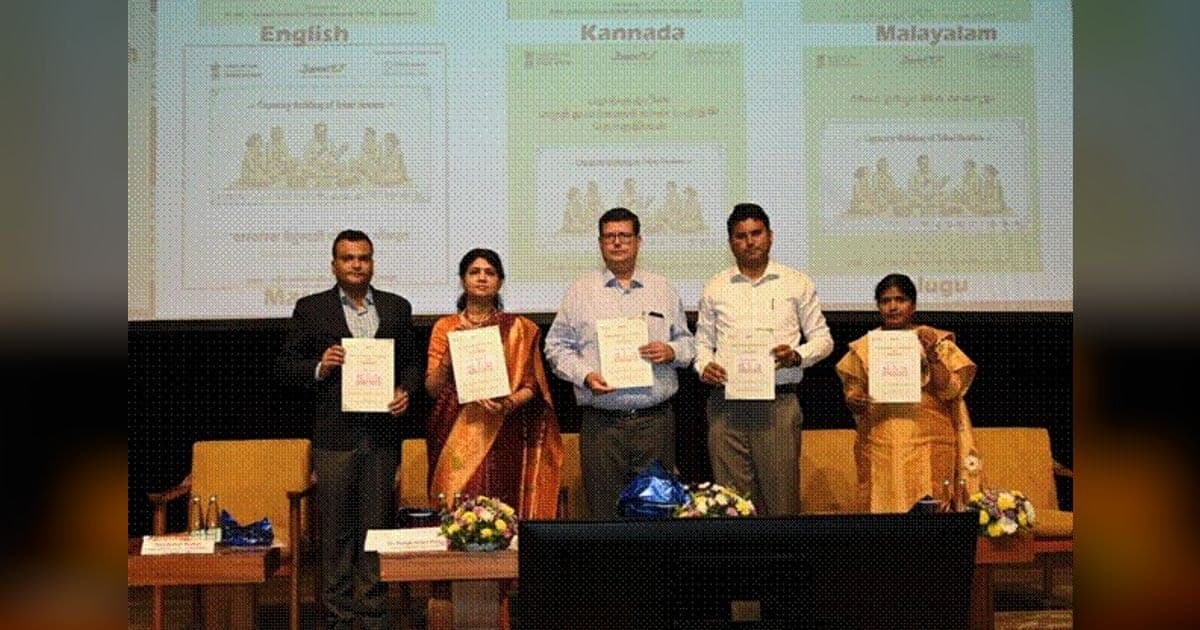
Why in News
On 2 November 2026 the Ministry of Tribal Affairs concluded the country's first National Orientation Programme for Tribal Healers on Public Health at Kanha Shanti Vanam, Hyderabad, held with ICMR-NIHR, Bhubaneswar under the JanHIT initiative.
The Ministry of Tribal Affairs, working with the ICMR-National Institute of Health Research (ICMR-NIHR), Bhubaneswar, has held the country's first National Orientation Programme for Tribal Healers on Public Health. The two-day programme took place on 1 and 2 November 2026 at Kanha Shanti Vanam, Hyderabad, and comes under the ministry's Janjatiya Health Institutional Transformation (JanHIT) initiative.
Who opened it
The programme was inaugurated in the auditorium at Kanha Shanti Vanam by Manish Thakur, Additional Secretary in the Ministry of Tribal Affairs, and Dr Sanghamitra Pati, Director of ICMR-NIHR, Bhubaneswar. Among those present were B. M. Santosh, Special Secretary and Director of Tribal Welfare in Telangana, and Dr V. Samujwala, Director of the Tribal Cultural Research and Training Institute, Telangana. The launch fell on the opening day of the Janjatiya Gaurav Diwas Pakhwada.
Who attended
| Detail | Figure |
| Tribal healers in the first phase | About 550 |
| States and Union Territories | Nine |
| Training modules | Three |
The healers were nominated by state tribal welfare departments. The nine States and Union Territories taking part are Andhra Pradesh, Goa, Karnataka, Kerala, Maharashtra, Odisha, Tamil Nadu, Telangana, and Dadra and Nagar Haveli. Sessions were run in regional languages so that healers from different states could follow the training in the language they speak.
What the training covered
- Communicable and vector-borne diseases, and skin diseases
- Non-communicable diseases, metabolic and blood disorders, and liver diseases
- Mental health conditions
- When to refer cases of snakebite, scorpion and other stings, animal bites and injuries
- Eye and ear disorders, oral health, and care of the newborn and infant
The aim was to help healers recognise danger signs early and send patients to a doctor in time, rather than to replace what they do. The schedule also included practice sessions, review, a test after the training and feedback from the participants, so that the organisers could judge how well the orientation worked.
Who taught and why it matters
Experts came from AIIMS, the Indian Council of Medical Research, the Quality Council of India, the M. S. Swaminathan Research Foundation, Amrita Institute in Kochi, IIHMR Bengaluru and Piramal Swasthya in Maharashtra, each teaching in the relevant language. Tribal healers are often the first person a patient in a remote hamlet turns to, so linking them to the formal health system is meant to shorten the delay before serious illness reaches a hospital. The training module itself was prepared by ICMR-NIHR, Bhubaneswar, with the ministry's support. The programme ended on 2 November 2026 with a closing ceremony at which certificates were handed to the participants.
Important Facts
| Programme | First National Orientation Programme for Tribal Healers on Public Health |
|---|---|
| Initiative | Janjatiya Health Institutional Transformation (JanHIT) |
| Organisers | Ministry of Tribal Affairs with ICMR-National Institute of Health Research, Bhubaneswar |
| Venue and dates | Kanha Shanti Vanam, Hyderabad, on 1 and 2 November 2026 |
| Inaugurated by | Manish Thakur, Additional Secretary, Ministry of Tribal Affairs, and Dr Sanghamitra Pati, Director, ICMR-NIHR |
| Participants | About 550 tribal healers from nine States and Union Territories |
| Occasion | First day of the Janjatiya Gaurav Diwas Pakhwada |
Exam Point of View
Remember the full form of JanHIT, the partner institute ICMR-NIHR Bhubaneswar, the venue Kanha Shanti Vanam in Hyderabad, the dates 1 and 2 November 2026, the first-of-its-kind tag, the two officials who inaugurated it, the figure of about 550 healers, the nine participating States and UTs, and the link with Janjatiya Gaurav Diwas Pakhwada.
Practice Questions
Where was the first National Orientation Programme for Tribal Healers on Public Health held?
- A.Bhubaneswar, Odisha
- B.Kanha Shanti Vanam, Hyderabad
- C.Ranchi, Jharkhand
- D.New Delhi
Show answer
The two-day orientation was held there, and it was inaugurated in the auditorium of the same venue.
Read the full explanation →Under which initiative of the Ministry of Tribal Affairs was the orientation programme for tribal healers organised?
- A.Janjatiya Health Institutional Transformation (JanHIT)
- B.Dharti Aaba Janjatiya Gram Utkarsh Abhiyan
- C.Eklavya Model Residential School scheme
- D.Ayushman Arogya Mandir mission
Show answer
The programme was organised under this initiative of the Ministry of Tribal Affairs, in collaboration with ICMR-NIHR, Bhubaneswar, and it was the first of its kind in the country.
Read the full explanation →How many tribal healers attended the first phase of the orientation programme?
- A.About 250
- B.About 350
- C.About 550
- D.About 750
Show answer
The first phase of the orientation drew roughly five hundred and fifty tribal healers, each nominated by the tribal welfare department of their state, and they came from nine States and Union Territories: Andhra Pradesh, Goa, Karnataka, Kerala, Maharashtra, Odisha, Tamil Nadu, Telangana, and Dadra and Nagar Haveli.
Read the full explanation →Frequently Asked Questions
What does JanHIT stand for?
Janjatiya Health Institutional Transformation, an initiative of the Ministry of Tribal Affairs under which the first National Orientation Programme for Tribal Healers on Public Health was organised.
Where and when was the first National Orientation Programme for Tribal Healers held?
At Kanha Shanti Vanam in Hyderabad on 1 and 2 November 2026, organised by the Ministry of Tribal Affairs with ICMR-NIHR, Bhubaneswar.
How many tribal healers took part in the first phase?
About 550 tribal healers, nominated by state tribal welfare departments from nine States and Union Territories, including Andhra Pradesh, Odisha, Telangana and Dadra and Nagar Haveli.
Sources
- https://www.pib.gov.in/PressReleasePage.aspx?PRID=2331397 (opens in a new tab) — Press Information Bureau
Current Affairs 2 November 2026
- India-EU Talks: Commerce Secretary Rajesh Agrawal Meets EC OfficialsInternational
- Sacred Piprahwa Buddha Relics Reach Tawang Monastery in ArunachalNational
- Sikkim Dairy Projects Worth Rs 251.56 Lakh Under White Revolution 2.0Government Schemes
- MoD Signs Rs 53,866.50 Crore Deal for 8 Next Generation CorvettesDefence
- Captive and Commercial Coal Mines Produce 22.03 MT in October 2026Economy
- VB-G RAM G Grievance Redressal Rules, 2026 Notified for Rural JobsGovernment Schemes
- Khet Bachaao Abhiyaan-Rabi 2026 Covers 700 Districts, 50 Lakh FarmersGovernment Schemes
- DPIIT Clears Over 99 Per Cent Grievances in Special Campaign 6National
Related Current Affairs
- National
Sacred Piprahwa Buddha Relics Reach Tawang Monastery in Arunachal
2 November 2026 · 2 min read
- National
National Organ Transplant Games 2026 Opened at Talkatora Stadium
1 November 2026 · 2 min read
Related GK
- Famous Personalities of Rajasthan: Exam Notes
28 October 2026 · Rajasthan
- Districts and Divisions of Rajasthan: Exam Notes
28 October 2026 · Rajasthan
- Tourism and World Heritage Sites of Rajasthan Notes
27 October 2026 · Rajasthan
Take the Quiz
- Current Affairs Quiz
Teaching Current Affairs Quiz: 2 November 2026
11 questions11 minutesStart Quiz