
CAQM Team Reviews Stubble Management in Firozpur, Faridkot
A CAQM team led by Dr T. S. Panwar reviewed paddy stubble management in Firozpur and Faridkot districts of Punjab and visited hotspot villages.
Why in News
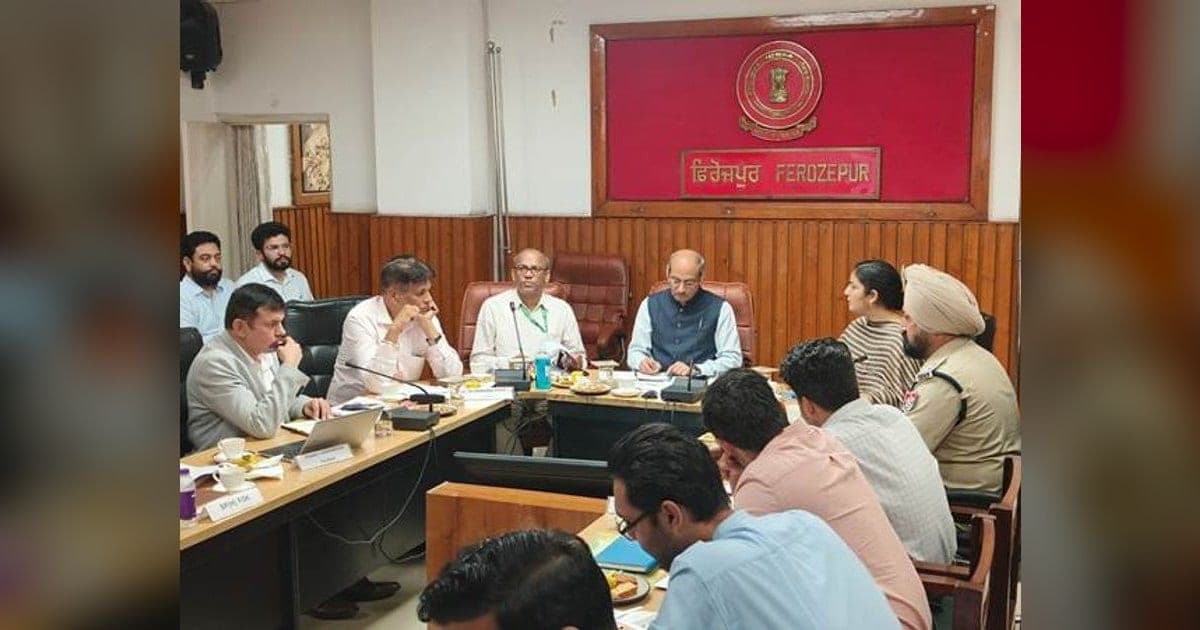
On 17 October 2026 the Commission for Air Quality Management said a high level team led by Dr T. S. Panwar had reviewed paddy stubble management in Firozpur and Faridkot districts of Punjab and visited hotspot villages there.
A high level team of the Commission for Air Quality Management in NCR and Adjoining Areas (CAQM) went to the Firozpur and Faridkot districts of Punjab to see for itself how measures against paddy stubble burning are working on the ground during the harvesting season. The team was led by Dr T. S. Panwar, Member (Technical) of the Commission, and the visit followed an earlier trip to Moga district.
The review meeting
A joint meeting was held at the office of the Deputy Commissioner in Firozpur with the Deputy Commissioners and the district officers of both districts. The team went through the readiness of the two district administrations and the way departments are coordinating for in situ and ex situ handling of paddy straw. Availability and deployment of Crop Residue Management (CRM) machinery, surveillance in the fields, watch over hotspot areas and enforcement action were all examined.
What the Commission asked for
- Strengthen both in situ and ex situ management of paddy straw.
- Make CRM machines reach farmers in time and see that they are used fully.
- Improve coordination among farmers, aggregators, industry and other stakeholders.
- Use drones and low cost sensors for technology based monitoring and trend analysis.
- Tell farmers plainly about the harm caused by stubble burning and by fine particulate matter.
Visit to hotspot villages
After the meeting the team travelled to selected hotspot villages in both districts to judge the situation on the ground and to check whether the announced steps are actually being carried out. Hotspot villages are those that have repeatedly reported a large number of farm fires, so they receive closer attention.
Why this matters
Burning of paddy straw after the harvest is one of the sources that push up pollution in the capital region every autumn. In situ management means mixing the straw back into the soil with machines, while ex situ management means lifting it away for use as fuel or raw material. The Commission is a statutory body for air quality in the National Capital Region and the areas around it, and its field visits to hotspot districts of Punjab are part of a continuing exercise to prevent farm fires rather than only to punish them.
Important Facts
| Body | Commission for Air Quality Management in NCR and Adjoining Areas (CAQM) |
|---|---|
| Team led by | Dr T. S. Panwar, Member (Technical), CAQM |
| Districts visited | Firozpur and Faridkot, Punjab |
| Earlier visit | Moga district, Punjab |
| Meeting venue | Office of the Deputy Commissioner, Firozpur |
| Machinery | Crop Residue Management (CRM) machinery |
| Technology for monitoring | Drones and low cost sensors |
| Pollutant highlighted | PM2.5 |
Exam Point of View
Remember the body (CAQM in NCR and Adjoining Areas), the official who led the team (Dr T. S. Panwar, Member Technical), the districts visited (Firozpur and Faridkot, after Moga), the machinery discussed (Crop Residue Management or CRM), the technology named (drones and low cost sensors), the pollutant named (PM2.5) and the difference between in situ and ex situ management of paddy straw.
Practice Questions
Which officer led the CAQM team that reviewed paddy stubble management in Firozpur and Faridkot?
- A.Dr T. S. Panwar, Member (Technical)
- B.The Chairperson of CAQM
- C.The Deputy Commissioner of Moga
- D.The Chief Secretary of Punjab
Show answer
He headed the high level team that went to the two districts of Punjab to examine how the measures against paddy stubble burning are being carried out during the harvesting season.
Read the full explanation →CRM machinery, discussed during the review, stands for which of the following?
- A.Crop Rotation Management machinery
- B.Crop Residue Management machinery
- C.Climate Risk Mitigation machinery
- D.Central Rural Mechanisation machinery
Show answer
These are the machines that handle paddy straw left in the field after the harvest, and the Commission reviewed both their availability and their actual deployment in the two districts.
Read the full explanation →Which two technologies did the CAQM review highlight for monitoring stubble burning?
- A.Satellites and ground radar
- B.Drones and low cost sensors
- C.Weather balloons and lidar
- D.Mobile laboratories and smog towers
Show answer
The review covered their deployment for technology based monitoring and for analysing trends in farm fires, in addition to field level surveillance by officials and a close watch over the hotspot areas.
Read the full explanation →Frequently Asked Questions
Who led the CAQM team that visited Firozpur and Faridkot?
Dr T. S. Panwar, Member (Technical) of the Commission for Air Quality Management in NCR and Adjoining Areas. The team had visited Moga district of Punjab before going to these two districts.
What is the difference between in situ and ex situ management of paddy straw?
In situ management handles the straw in the field itself, with Crop Residue Management machinery mixing it into the soil. Ex situ management takes the straw away for use elsewhere, which needs coordination with aggregators and industry.
Which technologies did the Commission want used for monitoring?
Drones and low cost sensors, for technology based monitoring and trend analysis of stubble burning, along with field level surveillance and watch over hotspot areas.
Sources
- https://www.pib.gov.in/PressReleasePage.aspx?PRID=2324755 (opens in a new tab) — Press Information Bureau
Current Affairs 17 October 2026
- IDBI Bank Stake: Ministry Cites 2003 Repeal Act and Court RulingBanking & Finance
- Kashmir Connectivity: USBRL, Chenab Bridge and Zojila TunnelNational
- FSSAI Draft Bars Added Sucrose, Fructose in Infant FoodsNational
- Bhupender Yadav Meets Start-ups on Delhi-NCR Air PollutionEnvironment
- India Eyes USD 40-45 Billion Space Economy in 7-8 YearsScience & Technology
- Project Seabird Phase IIA Facilities Opened at Karwar BaseDefence
- IITM Pune Hosts First CSSIF Climate Services ConsultationSummits & Conferences
- FSSAI Draft Fixes Pesticide Residue Limits for TeaNational
Related Current Affairs
- Environment
India's Ramsar Site Tally Reaches 103 with Sukhna, Sauj Jheel
15 October 2026 · 2 min read




Related GK
- Medieval MP: Paramaras, Chandelas and Gond Kingdoms
17 October 2026 · Madhya Pradesh
- Ancient Madhya Pradesh: Bhimbetka, Sanchi and Ujjain
17 October 2026 · Madhya Pradesh
- Ancient Haryana: Rakhigarhi, Kurukshetra and Vedic Age
17 October 2026 · Haryana
Take the Quiz
- Current Affairs Quiz
Delhi Current Affairs Quiz: 17 October 2026
13 questions13 minutesStart Quiz