
BRICS Backs Expert Working Group on Traditional Medicine
The New Delhi Declaration of the 18th BRICS Summit welcomed a BRICS Expert Working Group on Traditional, Complementary and Integrative Medicine under the Health Track.
Why in News
On 13 September 2026 the Ministry of Ayush said the New Delhi Declaration of the 18th BRICS Summit had welcomed the proposed BRICS Expert Working Group on Traditional, Complementary and Integrative Medicine.
The New Delhi Declaration adopted at the 18th BRICS Summit has pushed international cooperation in traditional medicine. The declaration welcomes the proposed BRICS Expert Working Group on Traditional, Complementary and Integrative Medicine. The short form used for this field is TCIM. The group will sit under the BRICS Health Track. It is meant to be a standing platform for dialogue and exchange among member states.
What the declaration asks for
The declaration links traditional medicine to stronger health systems and to Universal Health Coverage, or UHC. It seeks deeper research cooperation on medicinal plants and herbal preparations used to treat and to prevent illness. It records that the shared traditional pharmacopoeias of member countries can be a base for safe, effective and affordable therapeutic products. It also repeats that quality, safety and efficacy must be assured through evidence-informed methods and suitable regulation in each country.
The road to the working group
The step follows a BRICS meeting on TCIM held at Chandigarh on 21 July 2026. That meeting was held under India's BRICS Chairship. Senior officials, technical experts and delegates of member states took part. The meeting produced agreement on the Terms of Reference for the proposed Expert Working Group.
Who said what
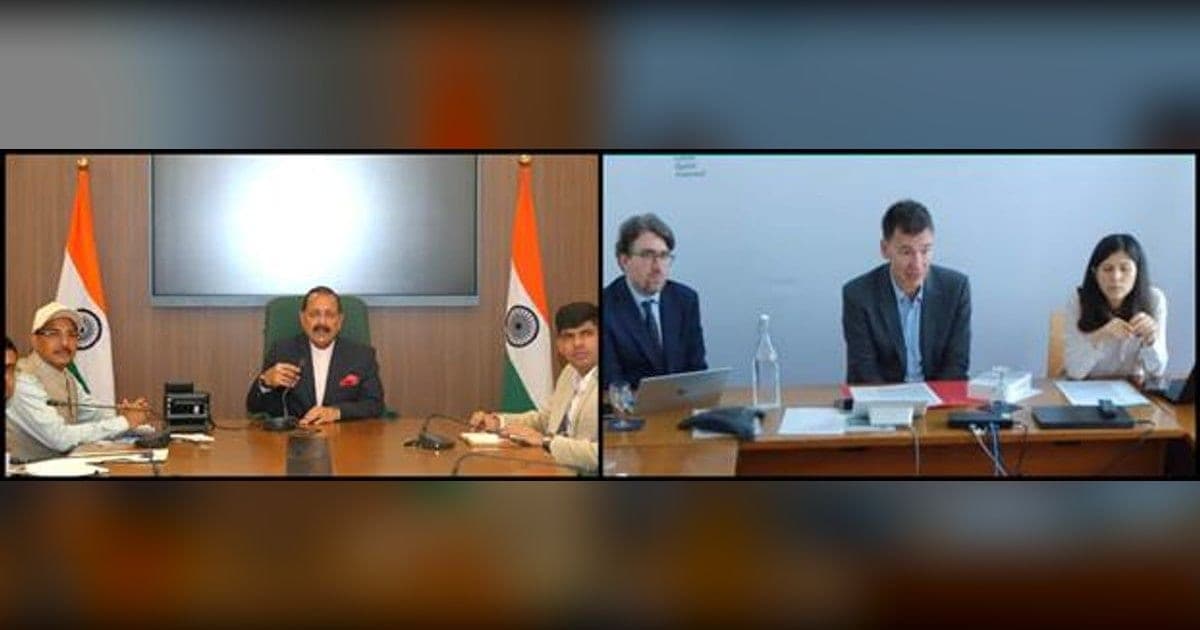
Shri Prataprao Jadhav welcomed the recognition given to traditional medicine. He is Union Minister of State with Independent Charge for Ayush and Minister of State for Health and Family Welfare. Vaidya Rajesh Kotecha, Secretary of the Ministry of Ayush, said the group can be a focused platform for sharing evidence and improving regulatory approaches.
| Outcome document | New Delhi Declaration, 18th BRICS Summit |
| Body proposed | BRICS Expert Working Group on TCIM |
| Placed under | BRICS Health Track |
| Earlier meeting | Chandigarh, 21 July 2026, under India's Chairship |
| Union Minister, Ayush | Shri Prataprao Jadhav, Minister of State (Independent Charge) |
| Secretary, Ayush | Vaidya Rajesh Kotecha |
| Related WHO document | WHO Global Traditional Medicine Strategy 2025-2034 |
The wider setting
The World Health Organization has its own Global Traditional Medicine Strategy for 2025 to 2034. That strategy stresses a stronger evidence base, safety and quality. The WHO has called the BRICS step a significant development for cooperation in traditional medicine. For India the outcome strengthens the global platform for Ayurveda and the wider Ayush system.
Important Facts
| Outcome document | New Delhi Declaration, 18th BRICS Summit |
|---|---|
| Body welcomed | BRICS Expert Working Group on TCIM |
| Full form of TCIM | Traditional, Complementary and Integrative Medicine |
| Placed under | BRICS Health Track |
| Terms of Reference agreed at | Chandigarh, 21 July 2026 |
| Union Minister of State (IC), Ayush | Shri Prataprao Jadhav |
| Secretary, Ministry of Ayush | Vaidya Rajesh Kotecha |
| WHO strategy | Global Traditional Medicine Strategy 2025-2034 |
| Health goal named | Universal Health Coverage (UHC) |
Exam Point of View
Remember the full form of TCIM, that the Expert Working Group sits under the BRICS Health Track, that its Terms of Reference were agreed at Chandigarh on 21 July 2026 under India's Chairship, and that the WHO strategy runs from 2025 to 2034.
Practice Questions
The proposed BRICS Expert Working Group on TCIM will function under which track?
- A.The BRICS Science and Technology Track
- B.The BRICS Health Track
- C.The BRICS Finance Track
- D.The BRICS Sherpa Track
Show answer
Correct answer: B. The BRICS Health Track
Explanation
The correct answer is the BRICS Health Track. A key outcome of the New Delhi Declaration adopted at the 18th BRICS Summit is the welcome given to the proposed establishment of an Expert Working Group on Traditional, Complementary and Integrative Medicine under this track. The group is planned as a structured mechanism for dialogue, collaboration and exchange among member states in the field of traditional medicine. Option A is wrong because the release places the group with health cooperation and not with science and technology cooperation, even though research is a part of its work. Option C is wrong because the finance track deals with economic and financial matters and not with medicine. Option D is wrong because the Sherpa track handles the overall preparation of summits rather than a specialised subject. Link the subject of a working group to the track that matches it.
Where was the BRICS meeting on Traditional, Complementary and Integrative Medicine held that agreed the Terms of Reference for the proposed Expert Working Group?
- A.New Delhi, on 13 September 2026
- B.Chandigarh, on 21 July 2026
- C.Goa, on 21 June 2026
- D.Bengaluru, on 12 August 2026
Show answer
Correct answer: B. Chandigarh, on 21 July 2026
Explanation
The correct answer is Chandigarh, on 21 July 2026. The release records that the development in the New Delhi Declaration follows the BRICS meeting on Traditional, Complementary and Integrative Medicine held in that city under India's BRICS Chairship. Senior government officials, technical experts and delegates from member states attended, and the meeting advanced cooperation on research, education, knowledge exchange and regulatory frameworks. It also produced consensus on the Terms of Reference for the proposed working group. Option A is wrong because New Delhi is where the Summit and the declaration came later, not where the Terms of Reference were settled. Options C and D name cities and dates that do not appear in the release at all. In examinations the city and the date of a preparatory meeting are asked as often as the summit itself, so remember both.
Which WHO document is cited as the wider backdrop to the BRICS decision on traditional medicine?
- A.The WHO Global Traditional Medicine Strategy 2025-2034
- B.The WHO Health Systems Charter 2030
- C.The WHO Herbal Pharmacopoeia Code 2024
- D.The WHO Universal Coverage Action Plan 2040
Show answer
Correct answer: A. The WHO Global Traditional Medicine Strategy 2025-2034
Explanation
The correct answer is the WHO Global Traditional Medicine Strategy 2025-2034. The release says that international attention to the role of traditional medicine in health systems is growing, and that this strategy places emphasis on strengthening the evidence base, on ensuring safety and quality, and on supporting the appropriate integration of traditional medicine into health systems. The World Health Organization has also described the BRICS initiative as a significant development in advancing international cooperation in this field. Options B, C and D name documents that do not appear in the release and that do not exist under those titles. Candidates should note the exact period covered by the strategy, because a question may replace the years with a close but wrong span. The declaration itself ties traditional medicine to Universal Health Coverage.
Frequently Asked Questions
What does TCIM stand for?
Traditional, Complementary and Integrative Medicine. The New Delhi Declaration of the 18th BRICS Summit welcomed a proposed BRICS Expert Working Group on TCIM under the BRICS Health Track.
Where were the Terms of Reference for the working group agreed?
At the BRICS meeting on TCIM held in Chandigarh on 21 July 2026 under India's BRICS Chairship, attended by senior officials, technical experts and delegates of member states.
Which WHO strategy is linked to this development?
The WHO Global Traditional Medicine Strategy 2025-2034, which stresses a stronger evidence base, safety and quality, and the appropriate integration of traditional medicine into health systems.
Sources
Current Affairs 13 September 2026
- Indian Junior Hockey Teams Win Both Asia Cup TitlesSports
- Dryland Congress 2026 Adopts Delhi Declaration on DrylandsSummits & Conferences
- Railway Freight Loading Grows 5.4 Per Cent in August 2026Economy
- India Is World's Largest Vaccine Producer by Volume: MinisterScience & Technology
- India to Host World Circular Economy Forum 2026 at GandhinagarEnvironment
- Gujarat Action Plan for Great Indian Bustard Released at BhujEnvironment
- INS Sudarshini Sails from Livorno in Italy under Lokayan 2026Defence
Related Current Affairs
- International
India-France Space Talks Ahead of Paris International Space Summit
23 September 2026 · 2 min read
- International
India-Belgium Joint Statement: Defence LoI and Investment Track
23 September 2026 · 2 min read
- International
India–New Zealand FTA to Enter into Force on 20 October 2026
22 September 2026 · 2 min read
Related GK
- Fundamental Rights (Articles 12–35): Notes, Writs and PYQs
23 September 2026 · Indian Polity
- Preamble of the Indian Constitution: Notes, Keywords and PYQs
22 September 2026 · Indian Polity
- Making of the Indian Constitution: Notes, Key Dates and PYQs
21 September 2026 · Indian Polity
Take the Quiz
- Current Affairs Quiz
State Exams Current Affairs Quiz: 13 September 2026
18 questions18 minutesStart Quiz