
Gujarat Action Plan for Great Indian Bustard Released at Bhuj
Bhupender Yadav released the Gujarat Action Plan for GIB Conservation at Bhuj and said Project Cheetah's population has grown from 29 founders to 52.
Why in News
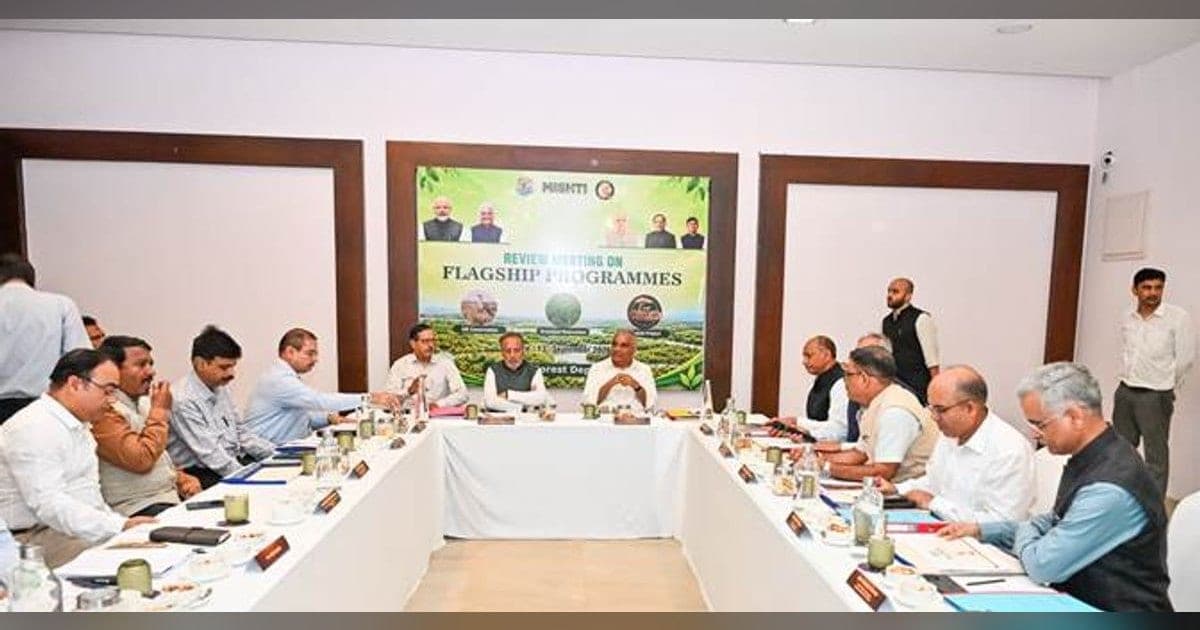
On 13 September 2026 Union Environment Minister Bhupender Yadav released the Gujarat Action Plan for GIB Conservation at Bhuj and reviewed grassland restoration and Project Cheetah.
Union Environment Minister Bhupender Yadav chaired a review of flagship programmes at Bhuj in Kachchh, Gujarat, on 13 September 2026. The meeting covered the Great Indian Bustard, grassland restoration and Project Cheetah. Gujarat's Forest and Environment Minister Shri Arjun Modhwadia attended. Officials of the Wildlife Institute of India and the National Tiger Conservation Authority were present.
The Gujarat Action Plan for GIB
The Minister released the Gujarat Action Plan for GIB Conservation. The Wildlife Institute of India prepared it with the Gujarat Forest Department. The Great Indian Bustard is listed as Critically Endangered. The plan aims to build a minimum viable population of over 30 birds. It also seeks to secure between 200 and 500 sq km of safe, connected habitat. The immediate focus is the Lala-Rawa landscape of about 200 sq km.
Work already done at Naliya
About 11 sq km of grassland at Naliya has been cleared of the invasive Prosopis juliflora and restored. An enclosure of 15 sq km has been secured with 30 km of predator-proof fencing. Nest predators are being managed. In a jump-start step, infertile eggs laid by wild females were replaced with viable eggs from the conservation breeding programme. The chick from the second such attempt survived beyond its first three months in the wild. A GIB Soft Release Centre has been built near Naliya for captive-bred birds brought from Rajasthan.
Project Cheetah figures
| Founder cheetahs | 29 |
| Present population | 52 individuals |
| Cubs born in India | 49 |
| Cub survival rate at Kuno | About 68 per cent |
| Protected habitat | 3,428 sq km, through Kuno National Park and Gandhi Sagar |
| Future release sites | Banni Grasslands in Gujarat, Nauradehi Wildlife Sanctuary in Madhya Pradesh |
Grasslands
Grasslands cover nearly 24 per cent of India's land area. They remain among the most degraded and least protected ecosystems in the country. A five-year national assessment has been proposed with the Wildlife Institute of India, ICFRE and the Forest Survey of India, supported by National CAMPA. It will map and assess Open Natural Ecosystems, including the Banni Grassland of Gujarat.
Important Facts
| Meeting | Review of flagship programmes, Bhuj, Kachchh, Gujarat |
|---|---|
| Chaired by | Union Environment Minister Bhupender Yadav |
| Document released | Gujarat Action Plan for GIB Conservation |
| Prepared by | Wildlife Institute of India with the Gujarat Forest Department |
| Habitat target | 200 to 500 sq km, with immediate focus on Lala-Rawa |
| Work at Naliya | 11 sq km grassland restored, 15 sq km enclosure, 30 km predator-proof fencing |
| Project Cheetah | From 29 founders to 52 individuals, 49 cubs born in India |
| Cheetah habitat | 3,428 sq km, Kuno National Park and Gandhi Sagar |
| Grassland share of India's land | Nearly 24 per cent |
Exam Point of View
Remember that the Great Indian Bustard is Critically Endangered, that the Gujarat action plan was prepared by the Wildlife Institute of India, the Lala-Rawa landscape figure, and the Project Cheetah numbers of 29 founders, 52 individuals and 3,428 sq km of habitat.
Practice Questions
How large is the protected habitat for cheetahs under Project Cheetah, according to the review at Bhuj?
- A.2,428 sq km
- B.3,428 sq km
- C.4,328 sq km
- D.1,428 sq km
Show answer
Correct answer: B. 3,428 sq km
Explanation
The correct answer is 3,428 sq km. The Union Environment Minister said that protected habitat for cheetahs has expanded to this area through the integrated management of Kuno National Park and Gandhi Sagar. He also said that India has built a growing population from twenty-nine founder cheetahs, that the population has now reached fifty-two individuals, and that forty-nine cubs were born in India. The cub survival rate at Kuno is around sixty-eight per cent, which shows that a population can establish itself where ecological conditions are right. The Banni Grasslands in Gujarat and the Nauradehi Wildlife Sanctuary in Madhya Pradesh have been identified as future release sites. Options A, C and D give areas that do not match the release, and each is close enough to the correct figure to mislead a candidate who has only skimmed the news.
Which institution prepared the Gujarat Action Plan for Great Indian Bustard Conservation?
- A.The Zoological Survey of India
- B.The National Tiger Conservation Authority
- C.The Wildlife Institute of India, with the Gujarat Forest Department
- D.The Forest Survey of India
Show answer
Correct answer: C. The Wildlife Institute of India, with the Gujarat Forest Department
Explanation
The correct answer is the Wildlife Institute of India, with the Gujarat Forest Department. The Union Minister released the plan at Bhuj and described it as a science-based roadmap. It aims to establish a minimum viable population of more than thirty birds and to secure between two hundred and five hundred square kilometres of safe and connected habitat. The immediate focus is the Lala-Rawa landscape of about two hundred square kilometres, where the work includes habitat restoration, grazing management, removal of invasive species, predator management and reduction of threats from infrastructure. Option B is wrong because officials of that authority attended the meeting but did not prepare the plan. Options A and D name bodies that are not credited with the document, although the Forest Survey of India is a partner in the proposed grassland assessment.
Nearly what share of India's land area is covered by grasslands, as stated at the review meeting?
- A.Nearly 14 per cent
- B.Nearly 18 per cent
- C.Nearly 24 per cent
- D.Nearly 32 per cent
Show answer
Correct answer: C. Nearly 24 per cent
Explanation
The correct answer is nearly 24 per cent. The Union Environment Minister underlined the ecological importance of grasslands and said that although they cover close to this share of the country's land area, they remain among the most degraded and least conserved ecosystems in India. He informed the meeting that a five-year national assessment has been proposed in collaboration with the Wildlife Institute of India, the Indian Council of Forestry Research and Education and the Forest Survey of India, with support from National CAMPA. The assessment would give a scientific basis for a national framework on grassland management, covering mapping, ecological assessment, restoration and better management of Open Natural Ecosystems, including the Banni Grassland of Gujarat. Options A, B and D give shares that the release does not support.
Frequently Asked Questions
Who prepared the Gujarat Action Plan for GIB Conservation?
The Wildlife Institute of India, in collaboration with the Gujarat Forest Department. Union Minister Bhupender Yadav released it at Bhuj in Kachchh on 13 September 2026.
How many cheetahs are there under Project Cheetah now?
52 individuals, grown from 29 founder cheetahs, including 49 cubs born in India. The cub survival rate at Kuno is about 68 per cent.
Which sites have been identified for future cheetah releases?
The Banni Grasslands in Gujarat and the Nauradehi Wildlife Sanctuary in Madhya Pradesh. Protected cheetah habitat now covers 3,428 sq km through Kuno National Park and Gandhi Sagar.
Sources
Current Affairs 13 September 2026
- Indian Junior Hockey Teams Win Both Asia Cup TitlesSports
- Dryland Congress 2026 Adopts Delhi Declaration on DrylandsSummits & Conferences
- BRICS Backs Expert Working Group on Traditional MedicineInternational
- Railway Freight Loading Grows 5.4 Per Cent in August 2026Economy
- India Is World's Largest Vaccine Producer by Volume: MinisterScience & Technology
- India to Host World Circular Economy Forum 2026 at GandhinagarEnvironment
- INS Sudarshini Sails from Livorno in Italy under Lokayan 2026Defence
Related Current Affairs
- Environment
Geothermal Energy: India's First Two Wells at Puga Valley, Ladakh
23 September 2026 · 2 min read
- Environment
India to Host World Circular Economy Forum 2026 at Gandhinagar
23 September 2026 · 2 min read
- Environment
Jal Sanchay Jan Bhagidari Crosses 1.58 Crore Recharge Structures
23 September 2026 · 2 min read
- Environment
IBCA and ADB Sign MoU at Tiger Landscapes Workshop in Delhi
23 September 2026 · 2 min read
- Environment
Swachh Sagar Surakshit Sagar 5.0 Launched for Ocean Cleanup
23 September 2026 · 2 min read



Related GK
- Fundamental Rights (Articles 12–35): Notes, Writs and PYQs
23 September 2026 · Indian Polity
- Preamble of the Indian Constitution: Notes, Keywords and PYQs
22 September 2026 · Indian Polity
- Making of the Indian Constitution: Notes, Key Dates and PYQs
21 September 2026 · Indian Polity
Take the Quiz
- Current Affairs Quiz
State Exams Current Affairs Quiz: 13 September 2026
18 questions18 minutesStart Quiz