
ASI Hands Over Three Repatriated Bronzes to Tamil Nadu Police
The Archaeological Survey of India handed three bronze idols brought back from the United States and the Netherlands to the Idol Wing CID of the Tamil Nadu Police.
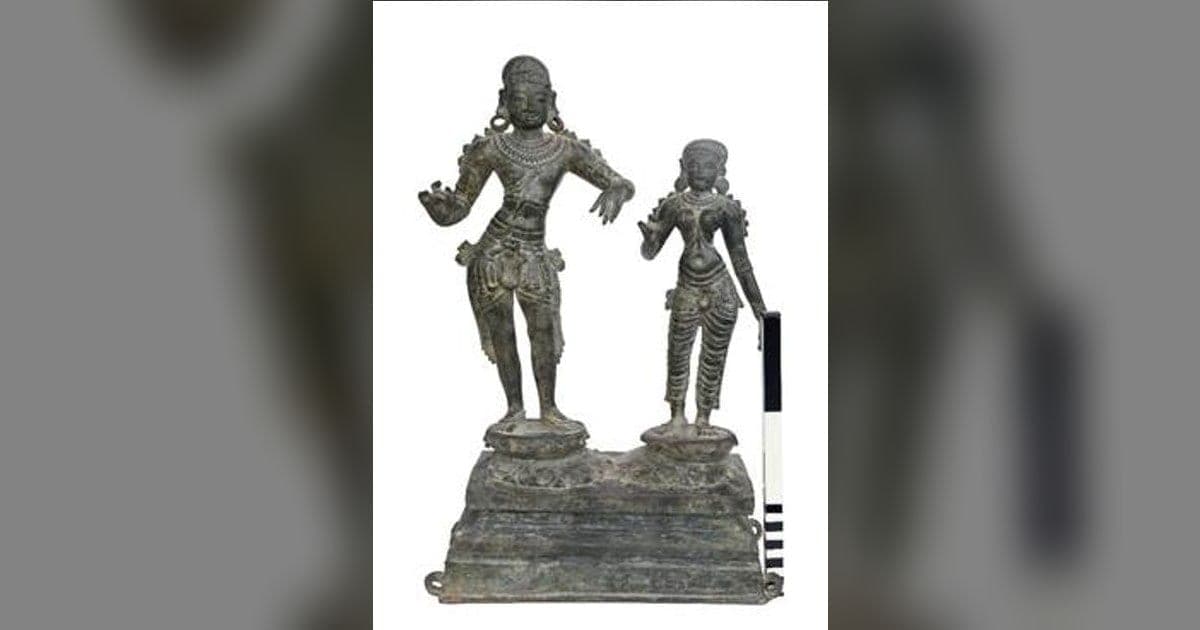
Why in News
On 26 November 2026 the Archaeological Survey of India formally handed over three bronze idols repatriated from the United States and the Netherlands to the Idol Wing CID of the Tamil Nadu Police at Dharohar Bhawan in New Delhi.
The Archaeological Survey of India handed over three repatriated antiquities to the Idol Wing CID of the Tamil Nadu Police on 26 November 2026. The handover took place at Dharohar Bhawan in New Delhi, and all three objects are bronze idols that had left the country years ago.
Where they came back from
Two of the bronzes were returned by the Smithsonian Museum in the United States. The third came back from The Hague in the Netherlands. The formal transfer to the police officials was carried out by Yadubir Singh Rawat, Director-General of the Archaeological Survey of India, with other officers of the organisation present.
The three bronzes
- Saint Sundarar with Paravai Nachiyar: a bronze of the Vijayanagara period, assigned to the sixteenth century. It was photographed in 1956 at the Shiva temple of Sri Narisvara at Viracholapuram in Kallakurichi taluk, Tamil Nadu, and was returned by the Smithsonian Museum.
- Saint Kannappa Nayanar: a Chola-period bronze from the Arulmigu Agneeswarasamy temple at Thirupugalur in Nagapattinam district. The Shaivite saint is shown standing in the tribhanga posture with his right hand raised towards his eye. This one came back from The Hague.
- Somaskanda, showing Shiva with Uma: a Chola-period bronze of the twelfth century. It was photographed in 1959 at the Siva temple of Sri Visvanatha at Alattur in Mannargudi taluk, Thanjavur district, and was returned by the Smithsonian Museum.
Why the old photographs matter
In each case the dated temple photograph is the evidence that ties the idol to a named shrine. Such records allow investigators and the Survey to establish where an object stood before it disappeared, and they are the basis on which a claim for return is pressed with a foreign museum or collector.
The larger effort
The Survey described the transfer as a step in the recovery and restitution of the country's cultural heritage, and said it continues to identify, recover and bring back lost objects in coordination with agencies at home and abroad. For an aspirant, the names to carry away are the Survey, the Idol Wing CID of the Tamil Nadu Police, Dharohar Bhawan as the venue, and the two source countries.
Important Facts
| Handed over by | Archaeological Survey of India |
|---|---|
| Received by | Idol Wing CID, Tamil Nadu Police |
| Venue | Dharohar Bhawan, New Delhi |
| Number of antiquities | Three bronze idols |
| Source countries | United States (Smithsonian Museum) and the Netherlands (The Hague) |
| Director-General, ASI | Yadubir Singh Rawat |
| Periods represented | Vijayanagara period and Chola period |
| Temple photographs on record | 1956 at Viracholapuram and 1959 at Alattur |
Exam Point of View
Remember the number of antiquities (three), the two source countries (the United States and the Netherlands), the returning institutions (the Smithsonian Museum and The Hague), the receiving body (Idol Wing CID, Tamil Nadu Police), the venue (Dharohar Bhawan, New Delhi), the Director-General of the Archaeological Survey of India and the dynasties involved, namely Vijayanagara and Chola.
Practice Questions
How many repatriated antiquities did the Archaeological Survey of India hand over to the Idol Wing CID of the Tamil Nadu Police?
- A.Two
- B.Three
- C.Four
- D.Six
Show answer
The Survey handed over three bronze idols at Dharohar Bhawan in New Delhi, and the split by source is the detail that makes the number easy to hold: two came from the Smithsonian Museum in the United States and one from The Hague in the Netherlands.
Read the full explanation →From which two countries were the three bronze idols repatriated?
- A.United Kingdom and Australia
- B.United States and the Netherlands
- C.Germany and Canada
- D.France and Singapore
Show answer
Two of the bronzes, Saint Sundarar with Paravai Nachiyar and the Somaskanda image of Shiva with Uma, were returned by the Smithsonian Museum in the United States.
Read the full explanation →The Somaskanda bronze handed over by the ASI belongs to which period?
- A.Vijayanagara period
- B.Pallava period
- C.Chola period
- D.Hoysala period
Show answer
The Somaskanda bronze, which shows Shiva together with Uma, is of the twelfth century and was photographed in 1959 at the Siva temple of Sri Visvanatha at Alattur in Mannargudi taluk of Thanjavur district.
Read the full explanation →Frequently Asked Questions
How many antiquities did the ASI hand over to the Tamil Nadu Police?
Three bronze idols. Two had been returned by the Smithsonian Museum in the United States and one from The Hague in the Netherlands, and all three were given to the Idol Wing CID of the Tamil Nadu Police at Dharohar Bhawan in New Delhi.
Which periods do the three bronzes belong to?
Saint Sundarar with Paravai Nachiyar is of the Vijayanagara period and is assigned to the sixteenth century. Saint Kannappa Nayanar and Somaskanda are both Chola-period bronzes, the Somaskanda being of the twelfth century.
Who carried out the handover for the ASI?
Yadubir Singh Rawat, Director-General of the Archaeological Survey of India, with other representatives of the organisation. The Survey said it continues to work with agencies in India and abroad to identify, recover and repatriate lost heritage.
Sources
- https://www.pib.gov.in/PressReleasePage.aspx?PRID=2342181 (opens in a new tab) — Press Information Bureau
Current Affairs 26 November 2026
- Nine Cheetah Cubs Born at Kuno, India's Tally Reaches 62Environment
- Chariot-1 Foundation Models Launched Under IndiaAI MissionScience & Technology
- MoSPI Launches State Dashboard on eSankhyiki PortalReports & Indices
- NLMC Board Takes Up ₹1,300 Crore Monetisation ProposalsEconomy
- Constitution Day Observed on 26 November With Preamble ReadingImportant Days
- 57th IFFI Campus at Panaji Showcases Creative InstitutionsNational
- PM-ABHIM Has Approved 19,983 Health Infrastructure UnitsGovernment Schemes
- CSIR-IIIM Jammu Wins Pioneering Institution Award at DIDAC 2026Awards & Honours
Related Current Affairs
Related GK
- Famous Personalities of Rajasthan: Exam Notes
28 October 2026 · Rajasthan
- Districts and Divisions of Rajasthan: Exam Notes
28 October 2026 · Rajasthan
- Tourism and World Heritage Sites of Rajasthan Notes
27 October 2026 · Rajasthan
Take the Quiz
- Current Affairs Quiz
SSC CHSL Current Affairs Quiz: 26 November 2026
15 questions15 minutesStart Quiz