
Tunnel-14 Breakthrough on Rishikesh-Karnaprayag Rail Project
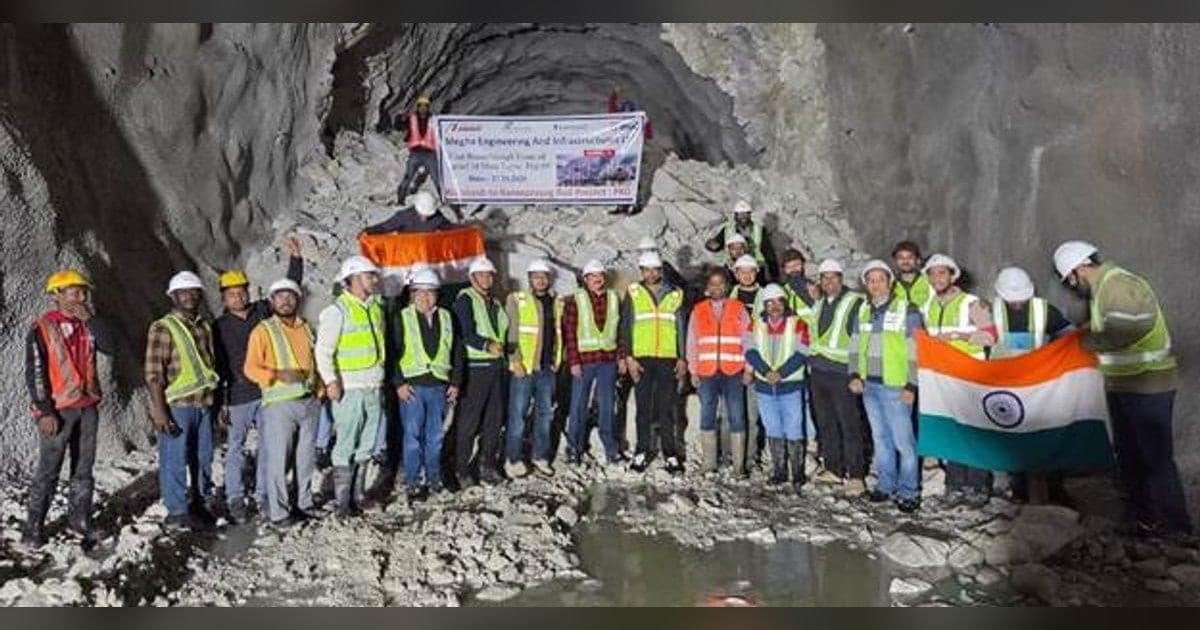
Indian Railways achieved the main tunnel breakthrough of the 6.59 km Tunnel-14 of the Rishikesh-Karnaprayag rail project in Rudraprayag district on 27 November 2026.
Why in News
On 27 November 2026 Indian Railways achieved the main tunnel breakthrough of the 6.59 km Tunnel-14 of the Rishikesh to Karnaprayag rail project in Rudraprayag district of Uttarakhand, joining the drives from Sumerpur and Marora.
Indian Railways holed through the main bore of Tunnel-14 on the Rishikesh to Karnaprayag rail line on 27 November 2026. The tunnel runs 6.59 km and lies in the Rudraprayag district of Uttarakhand. The breakthrough joined the two faces that had been driven from opposite ends, one of 4.7 km from Portal-1 at Sumerpur and one of 1.79 km from Portal-2 at Marora.
Work at Portal-1
A 110-metre length of the triple-track tunnel at this end had to be driven through loose soil lying under inhabited ground, with only 20 to 30 metres of soil and rock as cover above the crown. Engineers used pre-excavation treatment and multi-drifting, a method in which several small headings are opened and supported before they are joined into the full tunnel section, so that the ground would stay put while the bore advanced.
Work at Portal-2
The slope at the Marora end was held in place with micropiles sunk 30 to 35 metres deep, rock bolts 15 to 20 metres long and consolidation grouting. These steps allowed the main tunnel drive to begin in March 2024, once ground settlement at Marora had been dealt with and questions of land and house acquisition settled. About 100 metres at this portal was taken out by mechanical excavation. Controlled blasting near both portals was restricted to daylight hours so that the settlements nearby stayed safe.
Ventilation inside the bore
Special ventilation plant was installed along the 4.7 km drive from Portal-1 to keep fresh air flowing and to hold the temperature inside the tunnel in check.
What the project will do
The Rishikesh to Karnaprayag line is a major railway work in Uttarakhand. Railways expects it to carry trains into the hill districts, ease journeys for pilgrims and tourists, and help the region grow by making important places in the state easier to reach.
Important Facts
| Milestone | Main tunnel breakthrough of Tunnel-14 |
|---|---|
| Project | Rishikesh to Karnaprayag rail project |
| Tunnel length | 6.59 km |
| Location | Rudraprayag district, Uttarakhand |
| Date | 27 November 2026 |
| Portal-1 | Sumerpur, drive of 4.7 km |
| Portal-2 | Marora, drive of 1.79 km |
| Difficult stretch | 110 metres of triple-track tunnel through loose soil with 20 to 30 metres of cover |
| Slope protection at Portal-2 | Micropiles 30 to 35 metres deep, rock bolts 15 to 20 metres long, consolidation grouting |
| Main drive began | March 2024 |
| Methods used | Pre-excavation treatment, multi-drifting, mechanical excavation, controlled daytime blasting |
Exam Point of View
Remember the tunnel number (14), its length (6.59 km), the project (Rishikesh to Karnaprayag), the district (Rudraprayag) and the state (Uttarakhand). Also note the two portals, Sumerpur and Marora, the 4.7 km and 1.79 km drives, the 110-metre triple-track stretch under inhabited ground, the micropile and rock bolt depths, and that the main drive started in March 2024.
Practice Questions
The Tunnel-14 breakthrough of November 2026 belongs to which rail project?
- A.Udhampur-Srinagar-Baramulla rail link
- B.Rishikesh-Karnaprayag rail project
- C.Bhanupli-Bilaspur-Beri rail line
- D.Sivok-Rangpo rail project
Show answer
Indian Railways achieved the main tunnel breakthrough of Tunnel-14 on this line on 27 November 2026, and the tunnel lies in the Rudraprayag district of Uttarakhand.
Read the full explanation →What is the length of Tunnel-14 of the Rishikesh to Karnaprayag rail project?
- A.4.7 km
- B.1.79 km
- C.6.59 km
- D.9.12 km
Show answer
The correct answer is 6.59 km, the full length of Tunnel-14.
Read the full explanation →In which district of Uttarakhand was the main breakthrough of Tunnel-14 achieved?
- A.Tehri Garhwal
- B.Chamoli
- C.Pauri Garhwal
- D.Rudraprayag
Show answer
The main tunnel breakthrough of Tunnel-14 was achieved in that district of Uttarakhand, and the two portals of the tunnel are at Sumerpur and Marora.
Read the full explanation →Which technique was used at Portal-1 to drive the tunnel through loose soil under inhabited ground?
- A.Tunnel boring machine with slurry shield
- B.Pre-excavation treatment with multi-drifting
- C.Cut and cover construction
- D.Immersed tube method
Show answer
At Portal-1 a 110-metre stretch of the triple-track tunnel ran through loose soil below inhabited ground, with only 20 to 30 metres of soil and rock above it, so these specialised techniques were adopted to keep the excavation safe.
Read the full explanation →Frequently Asked Questions
How long is Tunnel-14 of the Rishikesh to Karnaprayag rail project?
It is 6.59 km long. Indian Railways achieved its main tunnel breakthrough on 27 November 2026 in Rudraprayag district of Uttarakhand, joining a 4.7 km drive from Portal-1 at Sumerpur with a 1.79 km drive from Portal-2 at Marora.
In which district was the Tunnel-14 breakthrough achieved?
In Rudraprayag district of Uttarakhand. The tunnel is part of the Rishikesh to Karnaprayag rail project, which is meant to improve rail connectivity to the hill regions of the state.
What methods were used to drive the tunnel safely?
At Portal-1, pre-excavation treatment and multi-drifting were used where the tunnel passed through loose soil under inhabited ground. At Portal-2, micropiles 30 to 35 metres deep, rock bolts 15 to 20 metres long and consolidation grouting secured the slope, and blasting was controlled and limited to daytime.
What benefits are expected from the Rishikesh to Karnaprayag line?
Railways expects better rail connectivity for the hill regions of Uttarakhand, easier travel for pilgrims and tourists, and support for regional development by making important destinations in the state more accessible.
Sources
- https://www.pib.gov.in/PressReleasePage.aspx?PRID=2342624 (opens in a new tab) — Press Information Bureau
Current Affairs 27 November 2026
- Vindhyagiri Delivered to Navy, Project 17A Series CompletedDefence
- India to Host ITU Plenipotentiary Conference PP-30 in 2030International
- Power Ministers Conference Opens in New Delhi, 563 GW CapacityEconomy
- NBA Releases Rs 13.76 Crore in ABS Funds to 28 States, 4 UTsEnvironment
- Karnataka Brain Health Initiative Proposed as National ModelState News
Related Current Affairs


Related GK
- Famous Personalities of Rajasthan: Exam Notes
28 October 2026 · Rajasthan
- Districts and Divisions of Rajasthan: Exam Notes
28 October 2026 · Rajasthan
- Tourism and World Heritage Sites of Rajasthan Notes
27 October 2026 · Rajasthan
Take the Quiz
- Current Affairs Quiz
Railway Current Affairs Quiz: 27 November 2026
24 questions24 minutesStart Quiz