
TRAI: India's Tele-density at 95.52 Per Cent in September 2026
India's overall tele-density stood at 95.52 per cent at the end of September 2026, TRAI data shows, with urban density at 155.85 and rural far behind at 61.30.
Why in News
On 27 October 2026 the Telecom Regulatory Authority of India released its telecom subscription data for September 2026, putting overall tele-density at 95.52 per cent, urban tele-density at 155.85 per cent and rural tele-density at 61.30 per cent.
The Telecom Regulatory Authority of India (TRAI) has released its telecom subscription data for the month of September 2026. The regulator publishes these figures every month, covering telephone and broadband users, the growth of mobile and landline connections, the split between towns and villages, tele-density, active mobile users and porting requests.
Tele-density, the headline measure
Tele-density means the number of telephone connections for every hundred people. Counting machine-to-machine cellular connections, India's overall tele-density reached 95.52 per cent. Leave those machine-to-machine connections out and the figure works out to 85.41 per cent. Wireless connections alone account for a density of 92.12 per cent, while wireline contributes just 3.40 per cent.
The town and village gap
The averages hide a wide gap. Urban tele-density stands at 155.85 per cent, which crosses a hundred because many city users hold more than one connection. Rural tele-density is 61.30 per cent. Within the wireline segment the imbalance is sharper still: urban density is 8.38 per cent against a rural 0.58 per cent.
| Measure | Figure |
| Overall tele-density (with M2M) | 95.52 per cent |
| Overall tele-density (without M2M) | 85.41 per cent |
| Urban tele-density | 155.85 per cent |
| Rural tele-density | 61.30 per cent |
Who holds the connections
Towns and cities hold 59.05 per cent of all telephone subscribers and villages 40.95 per cent. Within wireless alone the split is 57.94 per cent urban and 42.06 per cent rural, while wireline is heavily urban at 89.09 per cent against 10.91 per cent.
Growth, porting and active users
- The total subscriber base grew 0.53 per cent during the month; wireline grew faster in percentage terms at 0.60 per cent.
- Urban subscribers rose 0.69 per cent and rural subscribers 0.31 per cent, so the gap widened a little further.
- Requests for Mobile Number Portability came to 16.77 million in the month.
- Active wireless users, measured on the day of peak Visitor Location Register count, numbered 1,212.80 million.
TRAI works out tele-density using population projections from the Report of the Technical Group on Population Projections for India and States 2011 to 2036, published in September 2020. The subscriber numbers themselves come from returns that telecom service providers file with the regulator.
Important Facts
| Released by | Telecom Regulatory Authority of India (TRAI) |
|---|---|
| Data month | September 2026 |
| Overall tele-density | 95.52 per cent with M2M connections |
| Tele-density without M2M | 85.41 per cent |
| Urban tele-density | 155.85 per cent |
| Rural tele-density | 61.30 per cent |
| Share of subscribers | Urban 59.05 per cent, rural 40.95 per cent |
| Monthly growth rate | 0.53 per cent |
| MNP requests in the month | 16.77 million |
| Active wireless users at peak VLR | 1,212.80 million |
Exam Point of View
Remember the regulator (TRAI), the month (September 2026), overall tele-density (95.52 per cent with M2M and 85.41 per cent without), urban and rural tele-density (155.85 and 61.30 per cent), the urban-rural share of subscribers (59.05 and 40.95 per cent), porting requests (16.77 million) and active wireless users at peak VLR (1,212.80 million).
Practice Questions
According to TRAI's September 2026 data, what was India's overall tele-density counting machine-to-machine cellular connections?
- A.85.41 per cent
- B.92.12 per cent
- C.95.52 per cent
- D.99.05 per cent
Show answer
The correct answer is 95.52 per cent, the overall tele-density of the country when machine-to-machine cellular connections are included in the count.
Read the full explanation →What was the gap between urban and rural tele-density in India at the end of September 2026?
- A.Urban 155.85 per cent and rural 61.30 per cent
- B.Urban 147.47 per cent and rural 60.72 per cent
- C.Urban 89.09 per cent and rural 10.91 per cent
- D.Urban 59.05 per cent and rural 40.95 per cent
Show answer
The correct answer is urban 155.85 per cent and rural 61.30 per cent, the total tele-density figures counting both wireless and wireline connections.
Read the full explanation →How many Mobile Number Portability requests were submitted in September 2026?
- A.6.77 million
- B.16.77 million
- C.26.77 million
- D.61.30 million
Show answer
Mobile Number Portability lets a subscriber shift to another operator while keeping the same number, and that many requests were filed with service providers during the month.
Read the full explanation →Frequently Asked Questions
What was India's tele-density in September 2026?
Overall tele-density, counting machine-to-machine cellular connections, was 95.52 per cent. Without those connections it works out to 85.41 per cent. Urban tele-density was 155.85 per cent and rural 61.30 per cent.
How is tele-density calculated?
It is the number of telephone connections for every hundred people. TRAI uses population projections from the Report of the Technical Group on Population Projections for India and States 2011 to 2036, published in September 2020.
How many Mobile Number Portability requests were filed in September 2026?
16.77 million subscribers asked to port their numbers during the month. Active wireless users on the day of peak Visitor Location Register count stood at 1,212.80 million.
Sources
- सितंबर 2026 के अंत तक दूरसंचार सदस्यता संबंधी मुख्य आंकड़े (opens in a new tab) — Press Information Bureau
Current Affairs 27 October 2026
- India-Netherlands Business Forum Co-Chaired by Piyush GoyalInternational
- Atal Vayo Abhyuday Yojana: Rs 77.98 Crore for 755 ProjectsGovernment Schemes
- DPIIT Reforms: 2,50,046 Startups and USD 843 Billion FDIEconomy
- CCUS: Rs 20,000 Crore Scheme for Net Zero IndustryScience & Technology
- Vigilance Awareness Week 2026: Probity for Prosperity ThemeImportant Days
- Bihar Gramin Bank Pacts Give Staff Rs 77.69 Crore GainsBanking & Finance
- Jal Shakti Review: Ken-Betwa and Farakka Work AssessedNational
- Viksit Bharat Buildathon 2025 Enters Guinness World RecordsAwards & Honours
Related Current Affairs
- Reports & Indices
MoSPI Flash Report: 1,853 Projects Worth Rs 37.56 Lakh Crore
26 October 2026 · 2 min read
- Reports & Indices
PAIMANA Dashboard Update: Highway Awards Up 62.9 Per Cent
16 October 2026 · 2 min read
- Reports & Indices
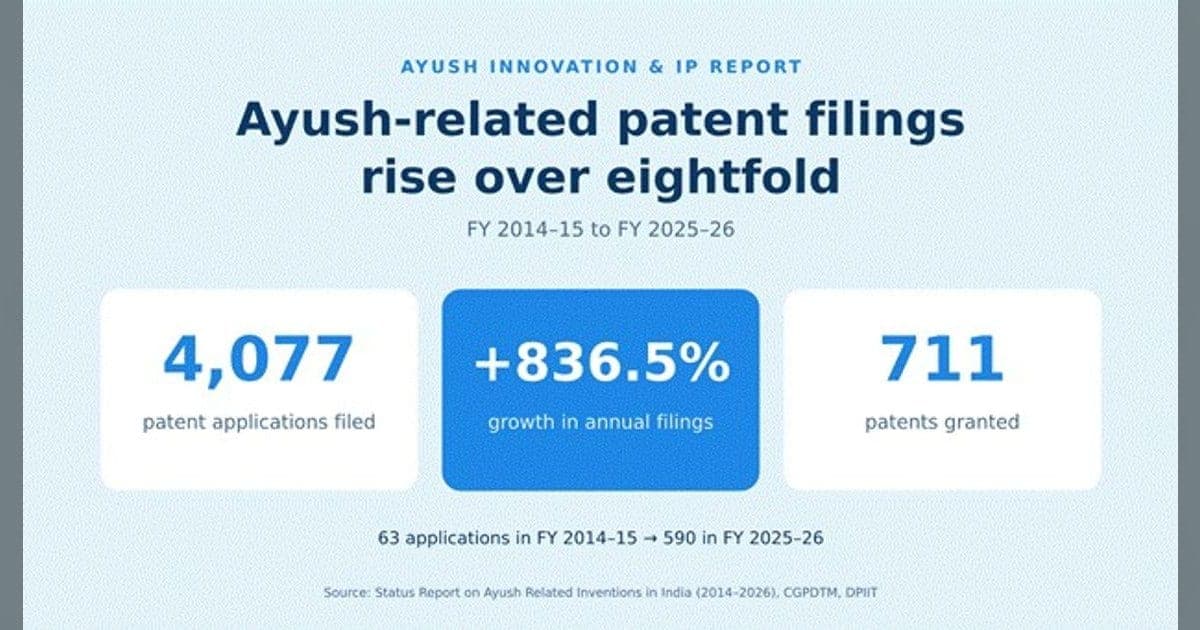
Ayush Patent Report Records 4,077 Filings Since 2014-15
16 October 2026 · 2 min read
Related GK
- Tourism and World Heritage Sites of Rajasthan Notes
27 October 2026 · Rajasthan
- Districts, Divisions and Firsts of Madhya Pradesh Notes
27 October 2026 · Madhya Pradesh
- Unification of Italy and Germany: Nationalism in Europe
27 October 2026 · Indian History
Take the Quiz
- Current Affairs Quiz
State Exams Current Affairs Quiz: 27 October 2026
25 questions25 minutesStart Quiz