
CSIR Transfers Bio-Bitumen and UHPC Road Technologies to Industry
CSIR handed indigenous technologies including Bio-Bitumen from rice straw and UHPC pavement to industry at a transfer event chaired by DG N. Kalaiselvi in New Delhi.
Why in News
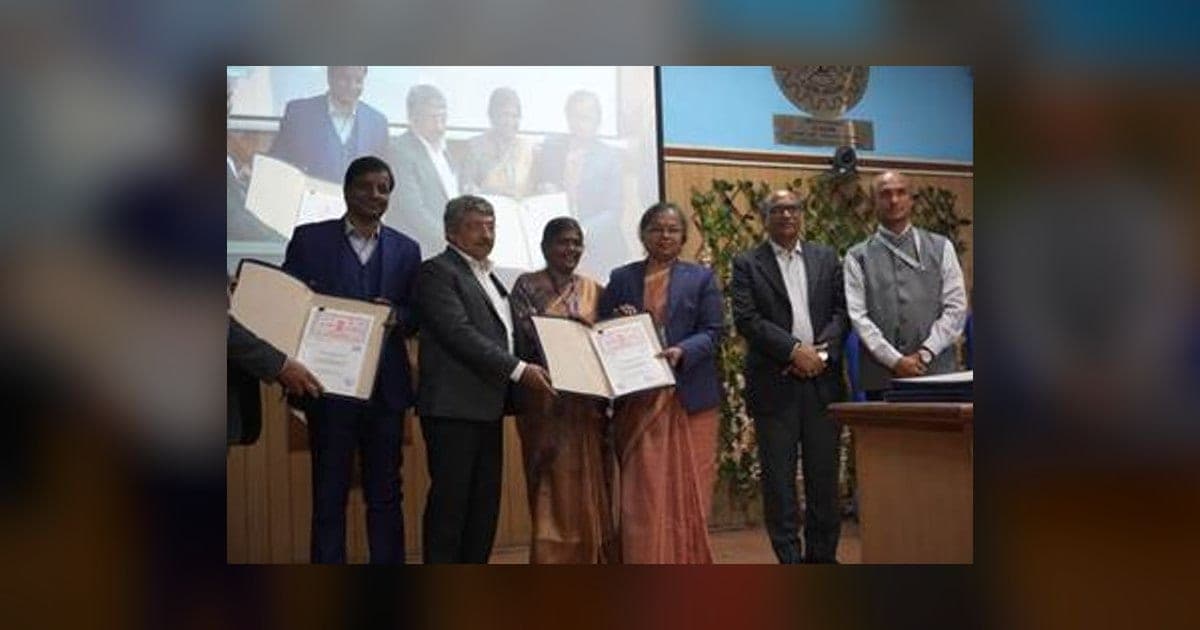
On 19 November 2026 CSIR transferred indigenous technologies, including Bio-Bitumen made from rice straw and Ultra-High-Performance Concrete pavement, to industry partners at an event in New Delhi chaired by Director General Dr N. Kalaiselvi.
The Council of Scientific and Industrial Research (CSIR) held a technology transfer and MoU signing event at its headquarters in New Delhi on 19 November 2026, moving a set of home-grown technologies from its laboratories to industry partners. Dr N. Kalaiselvi, Director General of CSIR and Secretary of the Department of Scientific and Industrial Research (DSIR), chaired the event, which is part of CSIR’s monthly technology transfer exercise.
Which laboratories took part
Four institutes contributed technologies: CSIR-Structural Engineering Research Centre (SERC), Chennai; CSIR-Central Road Research Institute (CRRI), New Delhi; CSIR-Advanced Materials and Processes Research Institute (AMPRI), Bhopal; and CSIR-Indian Institute of Petroleum (IIP), Dehradun. Dr N. Anandavalli, Director of CSIR-SERC, opened the proceedings, and Dr Ch. Ravi Sekhar, Director of CSIR-CRRI, presented the road sector transfers.
Technologies from CSIR-SERC
- Emergency Retrieval System (ERS) for power lines: a light, modular structure for quickly restoring transmission lines after a failure, transferred to IFAB Global.
- Recycled aggregate bricks, hollow blocks and paver blocks: products made entirely from recycled aggregates and industrial waste, using 100 per cent recycled material, transferred to the National Automotive Test Tracks (NATRAX).
- Ultra-High-Performance Concrete (UHPC) pavement: a high-strength, durable pavement able to take heavy axle loads with less maintenance, also given to NATRAX for pilot-scale field work.
Road technologies from CSIR-CRRI
The MicroReAct-RAP cold micro-surfacing solution, which uses up to 40 per cent reclaimed asphalt pavement, went to three firms: Innovative Roadztech of Delhi, AVK BlackGold Infra of Surat and Hindustan Colas (HINCOL) of Mumbai. Bio-Bitumen, developed jointly by CSIR-CRRI and CSIR-IIP, turns farm residue such as rice straw, known as parali, into a biomass material that can partly replace petroleum-based bitumen. It was transferred to RAACS Solutions of Bihar, which works under the BioBhoomi name, and to SAR Parivahan of Kolkata.
Two new research tie-ups
CSIR-CRRI also signed two Memoranda of Understanding. The first is with the Global Automotive Research Centre (GARC) in Tamil Nadu, which works under the National Automotive Board of the Ministry of Heavy Industries, for joint research, shared testing facilities and academic exchanges. The second is with Parakhi Skill Systems of Patna for research on driver risk assessment and cognitive and psychomotor evaluation. Dr Kalaiselvi said scientific work must be judged by whether it becomes products and processes that industry and society actually use.
Important Facts
| Event | CSIR technology transfer and MoU signing, CSIR Headquarters, New Delhi |
|---|---|
| Chaired by | Dr N. Kalaiselvi, Director General of CSIR and Secretary, DSIR |
| Laboratories involved | CSIR-SERC Chennai, CSIR-CRRI New Delhi, CSIR-AMPRI Bhopal, CSIR-IIP Dehradun |
| Bio-Bitumen | Made from farm residue such as rice straw (parali) by CSIR-CRRI with CSIR-IIP; partly replaces petroleum bitumen |
| Bio-Bitumen recipients | RAACS Solutions, Bihar (BioBhoomi) and SAR Parivahan, Kolkata |
| MicroReAct-RAP | Cold micro-surfacing with up to 40 per cent reclaimed asphalt pavement; given to Innovative Roadztech (Delhi), AVK BlackGold Infra (Surat), Hindustan Colas (Mumbai) |
| Emergency Retrieval System | Modular system for rapid restoration of power transmission lines, from CSIR-SERC to IFAB Global |
| Technologies to NATRAX | Recycled-aggregate bricks, hollow blocks and paver blocks using 100 per cent recycled material, and UHPC pavement technology |
| New MoUs | Global Automotive Research Centre, Tamil Nadu (National Automotive Board, Ministry of Heavy Industries) and Parakhi Skill Systems, Patna |
Exam Point of View
Learn which laboratory made which technology: CSIR-SERC Chennai for the Emergency Retrieval System, recycled-aggregate blocks and UHPC pavement; CSIR-CRRI with CSIR-IIP for Bio-Bitumen from parali and MicroReAct-RAP with up to 40 per cent reclaimed asphalt. Also remember Dr N. Kalaiselvi as DG of CSIR and Secretary of DSIR, NATRAX as the recipient of two SERC technologies, and the GARC tie-up under the Ministry of Heavy Industries.
Practice Questions
Bio-Bitumen, transferred by CSIR to industry, is produced mainly from which raw material?
- A.Fly ash from thermal power plants
- B.Agricultural residue such as rice straw
- C.Shredded plastic waste
- D.Blast furnace slag
Show answer
Bio-Bitumen was developed through collaborative research by CSIR-CRRI, New Delhi, and CSIR-IIP, Dehradun, and converts farm residue, including the rice straw known as parali, into a biomass-derived material that can partly replace conventional petroleum-based bitumen in road construction.
Read the full explanation →Which CSIR laboratory developed the Emergency Retrieval System for power transmission lines?
- A.CSIR-Central Road Research Institute, New Delhi
- B.CSIR-Indian Institute of Petroleum, Dehradun
- C.CSIR-Structural Engineering Research Centre, Chennai
- D.CSIR-Advanced Materials and Processes Research Institute, Bhopal
Show answer
The laboratory, usually written CSIR-SERC, developed the Emergency Retrieval System, an indigenous, lightweight and modular structural system for restoring electricity transmission lines quickly after failures or disruptions, and the technology was transferred to IFAB Global.
Read the full explanation →Who chaired the CSIR technology transfer and MoU signing event held at CSIR Headquarters, New Delhi?
- A.Dr N. Anandavalli, Director, CSIR-SERC
- B.Dr N. Kalaiselvi, Director General, CSIR
- C.Dr Ch. Ravi Sekhar, Director, CSIR-CRRI
- D.Dr Thallada Bhaskar, Director, CSIR-AMPRI
Show answer
She chaired the event, which forms part of CSIR’s monthly technology transfer initiative, and said that technology development must be matched by mechanisms for industrial adoption, commercialisation and scale-up.
Read the full explanation →The MicroReAct-RAP technology transferred by CSIR-CRRI can incorporate reclaimed asphalt pavement up to what share?
- A.10 per cent
- B.25 per cent
- C.40 per cent
- D.75 per cent
Show answer
MicroReAct-RAP is a sustainable cold micro-surfacing solution from CSIR-CRRI that can use up to that share of reclaimed asphalt pavement, cutting the demand for virgin aggregates and bitumen emulsion and keeping road materials in circulation.
Read the full explanation →Frequently Asked Questions
What is Bio-Bitumen and who developed it?
Bio-Bitumen is a biomass-derived material that can partly replace petroleum-based bitumen in roads. It was developed through joint research by CSIR-CRRI, New Delhi, and CSIR-IIP, Dehradun, and uses agricultural residue such as rice straw, known as parali, as feedstock.
Which laboratory developed the Emergency Retrieval System for power lines?
CSIR-SERC, the Structural Engineering Research Centre at Chennai. The system is a light, modular structure meant for the rapid restoration of electricity transmission lines after a failure, and it was transferred to the firm IFAB Global.
How much reclaimed asphalt can the MicroReAct-RAP technology use?
Up to 40 per cent reclaimed asphalt pavement. The cold micro-surfacing solution from CSIR-CRRI cuts the need for virgin aggregates and bitumen emulsion, and it was transferred to Innovative Roadztech, AVK BlackGold Infra and Hindustan Colas.
Who chaired the CSIR technology transfer event?
Dr N. Kalaiselvi, Director General of CSIR and Secretary of the Department of Scientific and Industrial Research. She said CSIR must keep moving technologies to industry so that laboratory research turns into economic, industrial and social benefit.
Sources
- https://www.pib.gov.in/PressReleasePage.aspx?PRID=2338251 (opens in a new tab) — Press Information Bureau
Current Affairs 19 November 2026
- Antimicrobials to Be Treated as New Drugs Under NDCT RulesNational
- Separate Wholesale Licence Proposed for Bulk Drugs in IndiaNational
- SVANidhi Samman Awards 2026 to Honour Street Vendor WorkGovernment Schemes
- CMOT Brings 100 Young Film Talents to 57th IFFI in GoaNational
- CSIR-TKDL and IKS Division Sign MoU on Traditional KnowledgeNational
- BHASHINI Shows Voice-First Language AI at Dakshin Day 2026Science & Technology
- IAF Signs MoU With Central Sanskrit University for Yoga CoursesDefence
- PM Modi Opens FICCI Centenary Convention at Bharat MandapamEconomy
Related Current Affairs
- Science & Technology
BSIP Study Finds Climate Clues in Himalayan Marmot Droppings
19 November 2026 · 2 min read
- Science & Technology
BHASHINI Shows Voice-First Language AI at Dakshin Day 2026
19 November 2026 · 2 min read
- Science & Technology
IISF 2026 Curtain Raiser Launched; Pune to Host 12th Edition
18 November 2026 · 2 min read
- Science & Technology
ICMR Crosses 100 Technology Transfer Deals at DHR Summit
18 November 2026 · 2 min read
- Science & Technology
ICAR-NIHSAD Develops India's First Indigenous H5N1 Vaccine
18 November 2026 · 2 min read
- Science & Technology
DST Releases Tribal Technology Compendium on Gaurav Divas
17 November 2026 · 2 min read
Related GK
- Famous Personalities of Rajasthan: Exam Notes
28 October 2026 · Rajasthan
- Districts and Divisions of Rajasthan: Exam Notes
28 October 2026 · Rajasthan
- Tourism and World Heritage Sites of Rajasthan Notes
27 October 2026 · Rajasthan
Take the Quiz
- Current Affairs Quiz
RRB JE Current Affairs Quiz: 19 November 2026
11 questions11 minutesStart Quiz