
CSIR-NEERI Holds Clean Air Workshop for Indo-Gangetic Plains
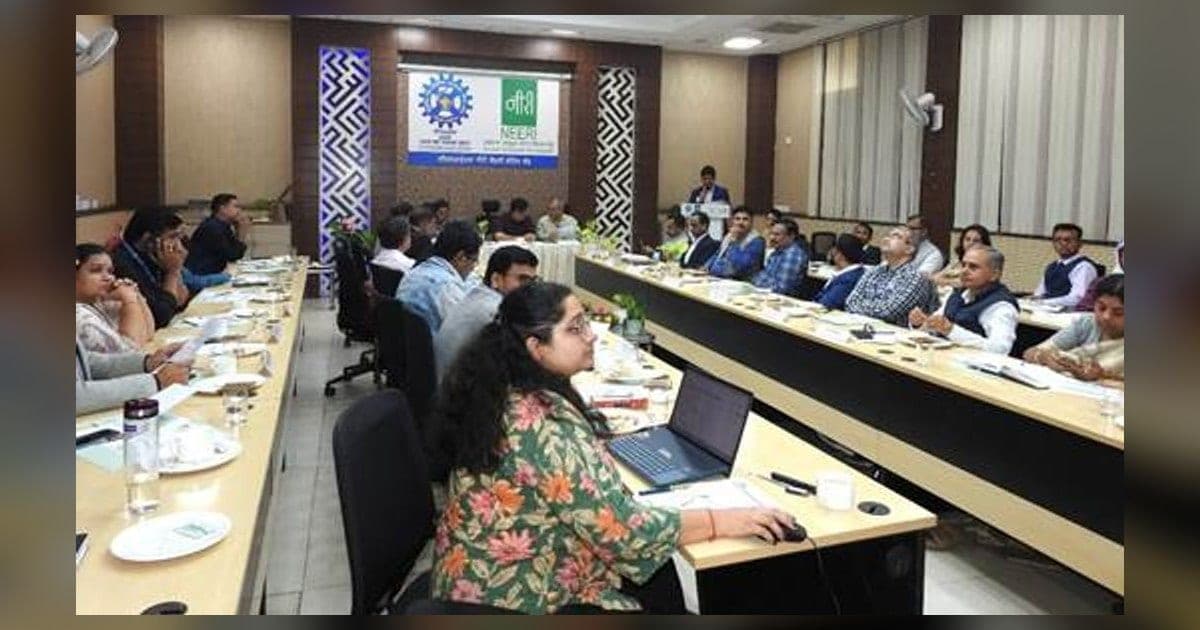
CSIR-NEERI held a brainstorming workshop on clean air and climate resilience for the Indo-Gangetic Plains at its Delhi Regional Centre in Naraina, New Delhi.
Why in News
On 21 November 2026 the Ministry of Science and Technology said CSIR-NEERI had brought experts from several ministries and CSIR institutes together at a workshop on clean air and climate resilience for the Indo-Gangetic Plains.
The CSIR-National Environmental Engineering Research Institute (CSIR-NEERI) held a brainstorming workshop on 'Clean Air and Climate Resilience for the Indo-Gangetic Plains (IGP-CACR)' at its Delhi Regional Centre in Naraina, New Delhi. The meeting, reported on 21 November 2026, brought scientists, policymakers and technical experts together to pin down practical, science-based answers to air pollution in Delhi-NCR and the wider Indo-Gangetic Plains.
What was discussed
- Airshed management and the sources of pollution
- Health impacts and climate vulnerability
- Pollution-control technologies
- Decision-support systems built on artificial intelligence
- Institutional partnerships, with a focus on measures that can work at scale
Who took part
The workshop was held under the leadership of Dr. S. Venkata Mohan, Director of CSIR-NEERI. Dr. G. V. Raghunath Reddy of the Department of Science and Technology (DST), Dr. N. Subrahmanyam of the Ministry of Environment, Forest and Climate Change (MoEF&CC) and Dr. Balendra Singh of the Department of Biotechnology (DBT) attended. CSIR Headquarters was represented by Dr. Shailaja Donempudi and Dr. Anirban Pal. Dr. S. K. Goyal, Chair of the Delhi Regional Centre, set out the main air pollution challenges of Delhi-NCR and the plains and pressed for coordinated airshed management, stronger monitoring networks and an integrated PAN-CSIR mission.
The suggestions made
The MoEF&CC representative asked for a technical committee for the Indo-Gangetic Plains to fix priority areas and to work out a scientific basis for planning India's Continuous Ambient Air Quality Monitoring (CAAQM) network. The DBT representative pointed to research openings in precision nutrition and the human microbiome and their links with pollution-related illness. The DST representative suggested that CSIR draw up a structured list of possible interventions with suitable places and scales for demonstration projects. CSIR Headquarters stressed wider field deployment of technologies that have reached Technology Readiness Level (TRL) 6 and above, and the need for source-specific technologies with clear implementation plans and measurable outcomes.
What comes next
Scientists from CSIR-NEERI's four regional centres at Delhi, Mumbai, Kolkata and Hyderabad took part, along with other CSIR laboratories. Dr. S. Venkata Mohan said the institute will turn the recommendations into a policy-level brief that identifies priority interventions, technology readiness, possible demonstration projects and openings for collaboration, to support coordinated action on air quality and climate resilience across Delhi-NCR and the Indo-Gangetic Plains.
Important Facts
| Organiser | CSIR-National Environmental Engineering Research Institute (CSIR-NEERI) |
|---|---|
| Workshop | Brainstorming workshop on Clean Air and Climate Resilience for the Indo-Gangetic Plains (IGP-CACR) |
| Venue | CSIR-NEERI Delhi Regional Centre, Naraina, New Delhi |
| Led by | Dr. S. Venkata Mohan, Director, CSIR-NEERI |
| Ministries represented | MoEF&CC, Department of Science and Technology and Department of Biotechnology |
| Chair, Delhi Regional Centre | Dr. S. K. Goyal |
| Network discussed | Continuous Ambient Air Quality Monitoring (CAAQM) network |
| Technology benchmark | Technologies at Technology Readiness Level 6 and above |
| Regional centres | Delhi, Mumbai, Kolkata and Hyderabad |
| Outcome | A policy-level brief on priority interventions and demonstration projects |
Exam Point of View
Remember the full form of NEERI, that it is a CSIR laboratory under the Ministry of Science and Technology, the workshop's title and short form IGP-CACR, its venue at the Delhi Regional Centre in Naraina, the Director's name, the CAAQM network, Technology Readiness Level 6 and the four regional centres of CSIR-NEERI.
Practice Questions
CSIR-NEERI, which organised the clean air workshop, stands for which institute?
- A.National Environmental Engineering Research Institute
- B.National Energy Efficiency Research Institute
- C.National Ecology and Earth Research Institute
- D.National Emission Evaluation and Regulation Institute
Show answer
It organised the brainstorming workshop on Clean Air and Climate Resilience for the Indo-Gangetic Plains at its Delhi Regional Centre in Naraina, New Delhi.
Read the full explanation →The workshop organised by CSIR-NEERI focused on clean air and climate resilience for which region?
- A.The Western Ghats
- B.The Indo-Gangetic Plains
- C.The Thar Desert
- D.The Brahmaputra Valley
Show answer
The workshop was titled Clean Air and Climate Resilience for the Indo-Gangetic Plains, shortened to IGP-CACR, and it looked for practical, science-based answers to air pollution in Delhi-NCR and the wider plains.
Read the full explanation →Which monitoring network did the MoEF&CC representative want planned on a scientific basis?
- A.Continuous Ambient Air Quality Monitoring network
- B.National Water Quality Monitoring network
- C.Seismic Early Warning network
- D.Coastal Erosion Monitoring network
Show answer
The representative of the Ministry of Environment, Forest and Climate Change asked for a technical committee for the Indo-Gangetic Plains to identify priority areas for action and to develop a scientific approach for planning this network.
Read the full explanation →Who is the Director of CSIR-NEERI, under whose leadership the workshop was held?
- A.Dr. S. K. Goyal
- B.Dr. S. Venkata Mohan
- C.Dr. Anirban Pal
- D.Dr. N. Subrahmanyam
Show answer
The correct answer is Dr. S. Venkata Mohan, Director of CSIR-NEERI, under whose leadership the brainstorming workshop was conducted and who said the institute would consolidate the recommendations into a policy-level brief.
Read the full explanation →Frequently Asked Questions
What is the full form of CSIR-NEERI?
NEERI stands for the National Environmental Engineering Research Institute, a laboratory of the Council of Scientific and Industrial Research under the Ministry of Science and Technology. It has regional centres at Delhi, Mumbai, Kolkata and Hyderabad, and its headquarters institute is led by Director Dr. S. Venkata Mohan.
What was the theme of the CSIR-NEERI workshop held in New Delhi?
The brainstorming workshop was on 'Clean Air and Climate Resilience for the Indo-Gangetic Plains', short form IGP-CACR. It was held at the institute's Delhi Regional Centre in Naraina and looked at airshed management, pollution sources, health impacts, climate vulnerability, control technologies and decision-support systems based on artificial intelligence.
What will CSIR-NEERI do with the workshop's recommendations?
Director Dr. S. Venkata Mohan said the institute will bring the scientific and institutional recommendations together into a policy-level brief. The brief will identify priority interventions, technology readiness, possible demonstration projects and opportunities for collaboration to support coordinated action across Delhi-NCR and the Indo-Gangetic Plains.
Sources
- https://pib.gov.in/PressReleasePage.aspx?PRID=2339543 (opens in a new tab) — Press Information Bureau
Current Affairs 21 November 2026
- India Crosses 1 Crore HPV Vaccine Doses in Nine MonthsGovernment Schemes
- GeM Signs MoU With TICCI to Boost Tribal EntrepreneursEconomy
- PM Modi Joins IIT Kharagpur Platinum Jubilee CelebrationsNational
- Vice President Addresses 23rd Symbiosis Convocation in PuneNational
- BHASHINI Shows Multilingual AI for Health at GDHS 2026Science & Technology
- Labour Ministers Chintan Shivir Begins in GandhinagarNational
- MSME Ministry Marks Women Entrepreneurship Day 2026Important Days
- Exports to Africa Grow 44 Per Cent, Fastest Among RegionsEconomy
Related Current Affairs
- Environment
Zero Tolerance Ordered on Air Pollution Violations in Delhi-NCR
19 November 2026 · 2 min read
- Environment
India Seeks an Open, Equitable Second Global Stocktake at COP31
18 November 2026 · 2 min read

Related GK
- Famous Personalities of Rajasthan: Exam Notes
28 October 2026 · Rajasthan
- Districts and Divisions of Rajasthan: Exam Notes
28 October 2026 · Rajasthan
- Tourism and World Heritage Sites of Rajasthan Notes
27 October 2026 · Rajasthan
Take the Quiz
- Current Affairs Quiz
State Exams Current Affairs Quiz: 21 November 2026
25 questions25 minutesStart Quiz