
ICMR SAMPADA Survey Puts Anaemia at 42% Among Young Children
ICMR released SAMPADA 2023-2025 findings: anaemia stood at 42 per cent in children aged 12-59 months and 56 per cent in women of reproductive age.
Why in News
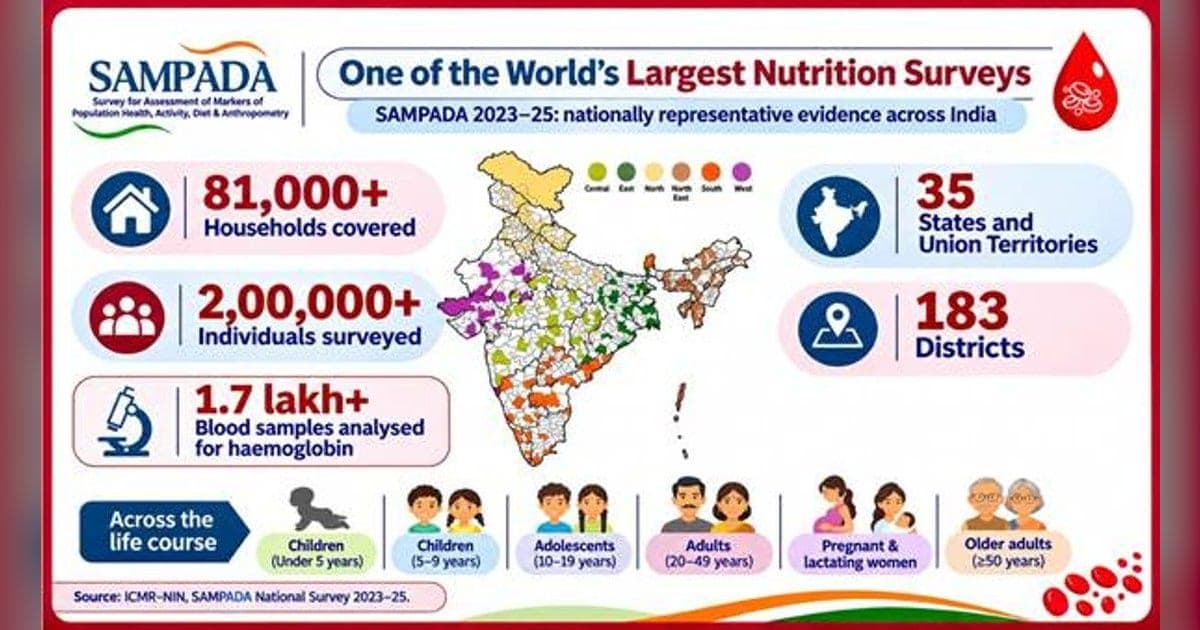
On 23 November 2026 ICMR, under the Department of Health Research, released the key findings of the SAMPADA 2023-2025 survey, one of the largest nutrition surveys ever undertaken, which reports lower anaemia prevalence than earlier national surveys.
India now has a fresh and far more exact picture of how widespread anaemia is. The Indian Council of Medical Research (ICMR), under the Department of Health Research in the Ministry of Health and Family Welfare, published the key findings of the SAMPADA survey on 23 November 2026. The acronym stands for Survey for Assessment of Markers of Population Health, Activity, Diet and Anthropometry, and the fieldwork ran from 2023 to 2025.
How big the survey was
ICMR calls it one of the largest nutrition surveys attempted anywhere. It reached more than 2 lakh people drawn from over 81,000 households spread across 183 districts in 35 states and union territories. More than 1.7 lakh blood samples were tested for haemoglobin across age groups, both sexes and different physiological states. What sets the exercise apart is the method: venous blood drawn and read on automated analysers, the gold standard, which gives results that can be reproduced. In a smaller sub-sample the team also measured iron status, folate and vitamin B12 along with two markers of inflammation, C-reactive protein and alpha-1-acid glycoprotein.
What the numbers say
| Group | Anaemia prevalence |
| Children aged 12-59 months | 42 per cent |
| Adolescent girls, 10-19 years | 46 per cent |
| Adolescent boys, 10-19 years, and men aged 20-59 | 22-23 per cent |
| Women of reproductive age | 56 per cent |
Across the board the burden looks lighter than in earlier national surveys, and the gap is widest for the youngest children. For the first time the country also has representative estimates for older adults, a group earlier evidence had largely passed over.
The grading matters
- Most anaemia found was mild. About half of anaemic women, including pregnant and lactating women, as well as adolescent girls and children, fell in the mild band.
- Severe anaemia turned up in under 2 per cent of people in most age groups.
- Among adolescent boys, adult and older men, prevalence was far lower, and three-fourths of those affected had only mild anaemia.
What causes it
Iron deficiency explains roughly half the anaemia seen in women, adolescent girls and children, so infections, haemoglobin disorders and inflammation tied to chronic disease have to be tackled alongside. Deficiency of vitamin B12 and folate was about as common in people without anaemia as in those with it, which suggests these two contribute little to the Indian burden. Iron deficiency clusters in under-five children, adolescent girls and women of reproductive age, and is heavy among moderate and severe cases, who need testing and follow-up until they recover, as envisaged under Anaemia Mukt Bharat 2.0. Dr Rajiv Bahl, Secretary of the Department of Health Research and Director General of ICMR, called the lower prevalence encouraging, while Dr Bharati Kulkarni, Director of ICMR-NIN, said the findings support life-course and group-specific action.
Important Facts
| Survey | SAMPADA - Survey for Assessment of Markers of Population Health, Activity, Diet and Anthropometry |
|---|---|
| Released by | ICMR, Department of Health Research, Ministry of Health and Family Welfare |
| Period | 2023 to 2025; findings released on 23 November 2026 |
| Coverage | More than 2 lakh individuals from over 81,000 households in 183 districts of 35 states and union territories |
| Blood samples | More than 1.7 lakh, tested for haemoglobin |
| Method | Venous blood sampling with automated analysers, the gold standard |
| Children 12-59 months | 42 per cent anaemia prevalence |
| Adolescent girls 10-19 years | 46 per cent anaemia prevalence |
| Adolescent boys and men 20-59 years | 22-23 per cent anaemia prevalence |
| Women of reproductive age | 56 per cent anaemia prevalence |
| Severe anaemia | Under 2 per cent of people in most age groups |
| Programme link | Anaemia Mukt Bharat 2.0; ICMR chief Dr Rajiv Bahl and ICMR-NIN Director Dr Bharati Kulkarni commented on the findings |
Exam Point of View
Learn the full form of SAMPADA, the Survey for Assessment of Markers of Population Health, Activity, Diet and Anthropometry; the agency, ICMR under the Department of Health Research; the period 2023-2025; the coverage of 2 lakh people, 81,000 households, 183 districts and 35 states and union territories; and the four prevalence figures of 42, 46, 22-23 and 56 per cent along with the Anaemia Mukt Bharat 2.0 link.
Practice Questions
What does SAMPADA, the survey whose findings ICMR released in November 2026, stand for?
- A.Survey for Assessment of Maternal Prevalence, Anaemia, Diet and Awareness
- B.Survey for Assessment of Markers of Population Health, Activity, Diet and Anthropometry
- C.Study of Anaemia, Micronutrients, Pregnancy and Dietary Assessment
- D.Sample Assessment of Micronutrient Patterns and Dietary Adequacy
Show answer
This is the full form ICMR uses, and the survey ran from 2023 to 2025 under the Department of Health Research in the Ministry of Health and Family Welfare.
Read the full explanation →According to SAMPADA, what was the prevalence of anaemia among children aged 12-59 months?
- A.22 per cent
- B.42 per cent
- C.46 per cent
- D.56 per cent
Show answer
SAMPADA reported that share for children aged 12 to 59 months, and ICMR noted that the difference from earlier national surveys is particularly large in this group.
Read the full explanation →How many households did the SAMPADA survey cover?
- A.Over 41,000 households
- B.Over 81,000 households
- C.Over 1.2 lakh households
- D.Over 2 lakh households
Show answer
From those households SAMPADA reached more than 2 lakh individuals, spread over 183 districts in 35 states and union territories, and tested more than 1.7 lakh blood samples for haemoglobin.
Read the full explanation →Which statement about the causes of anaemia reported by SAMPADA is correct?
- A.Vitamin B12 deficiency explains most of the anaemia burden
- B.Iron deficiency accounts for about half the anaemia in women, adolescent girls and children
- C.Folate deficiency was found only in anaemic individuals
- D.Anaemia in India has a single cause and needs a single strategy
Show answer
That is why ICMR stresses that the other half must be traced to infections, haemoglobinopathies and inflammation related to chronic disease, and why people with moderate and severe anaemia should be tested and tracked until they recover, as Anaemia Mukt Bharat 2.0 envisages.
Read the full explanation →Frequently Asked Questions
What is the SAMPADA survey?
SAMPADA stands for Survey for Assessment of Markers of Population Health, Activity, Diet and Anthropometry. Conducted by ICMR under the Department of Health Research between 2023 and 2025, it is one of the largest nutrition surveys attempted anywhere and measured anaemia and micronutrient deficiencies across the life course.
What anaemia prevalence did SAMPADA report?
Anaemia was found in 42 per cent of children aged 12-59 months, 46 per cent of adolescent girls aged 10-19 years, 22-23 per cent of adolescent boys and men aged 20-59 years, and 56 per cent of women of reproductive age. Severe anaemia affected under 2 per cent of people in most age groups.
How large was the SAMPADA sample?
More than 2 lakh individuals from over 81,000 households in 183 districts across 35 states and union territories. More than 1.7 lakh blood samples were analysed for haemoglobin using venous sampling and automated analysers, the gold standard method.
Is iron deficiency the only cause of anaemia in India?
No. SAMPADA found that iron deficiency accounts for about half the anaemia burden in women, adolescent girls and children, so infections, haemoglobinopathies and inflammation linked to chronic disease must be addressed too. Vitamin B12 and folate deficiency were equally common in anaemic and non-anaemic people.
Sources
- https://www.pib.gov.in/PressReleasePage.aspx?PRID=2340476 (opens in a new tab) — Press Information Bureau
Current Affairs 23 November 2026
- Nayi Chetna 5.0 Gender Campaign to Begin on 25 NovemberGovernment Schemes
- Ayush Pavilion Draws Crowds at 45th IITF 2026 in New DelhiNational
- India-Nepal Talks: Saryu-Kamla Express and Vision DocumentInternational
- 92nd NBWL Standing Committee Meeting Themed on Marine LifeEnvironment
- National HPV Vaccination Campaign Crosses One Crore DosesNational
- 1st SCO Civilization Dialogue Forum Holds Gyan Bharatam SessionSummits & Conferences
- MY Bharat Yuva Samvad on Constitution Day in 600+ DistrictsGovernment Schemes
- Floriculture Exports Rise to USD 258.26 Million in FY 2025-26Economy
Related Current Affairs
- Reports & Indices
World Bank Report: 49.60 Crore Indians Exit Poverty Line
22 November 2026 · 2 min read
- Reports & Indices
PC&PNDT Board Holds 32nd Meeting; Sex Ratio at Birth 918
19 November 2026 · 2 min read
- Reports & Indices
PLFS October 2026: Unemployment Rate Eases to 4.9 Per Cent
16 November 2026 · 2 min read
- Reports & Indices
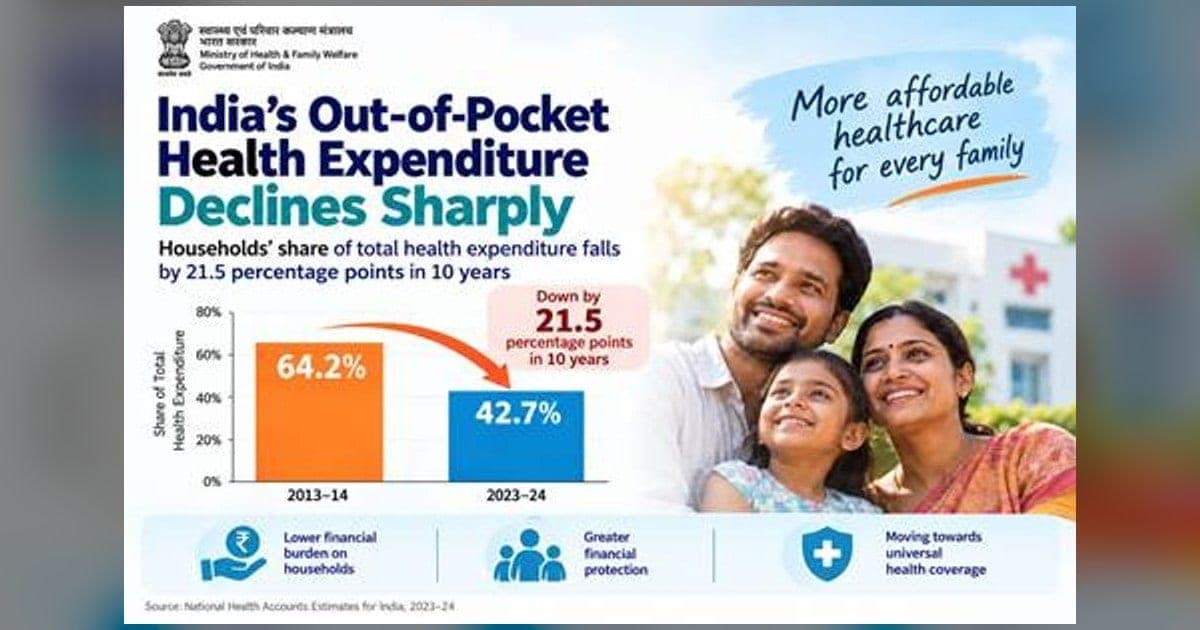
Out-of-Pocket Health Spending Falls to 42.7% in 2023-24
15 November 2026 · 2 min read
Related GK
- Famous Personalities of Rajasthan: Exam Notes
28 October 2026 · Rajasthan
- Districts and Divisions of Rajasthan: Exam Notes
28 October 2026 · Rajasthan
- Tourism and World Heritage Sites of Rajasthan Notes
27 October 2026 · Rajasthan
Take the Quiz
- Current Affairs Quiz
Teaching Current Affairs Quiz: 23 November 2026
19 questions19 minutesStart Quiz