
Nutrient-Based Subsidy for Rabi 2026-27 Set at Rs 62,370.02 Crore
The Centre approved Nutrient-Based Subsidy rates for P and K fertilisers for Rabi 2026-27 with a tentative outlay of Rs 62,370.02 crore, up over 64 per cent.
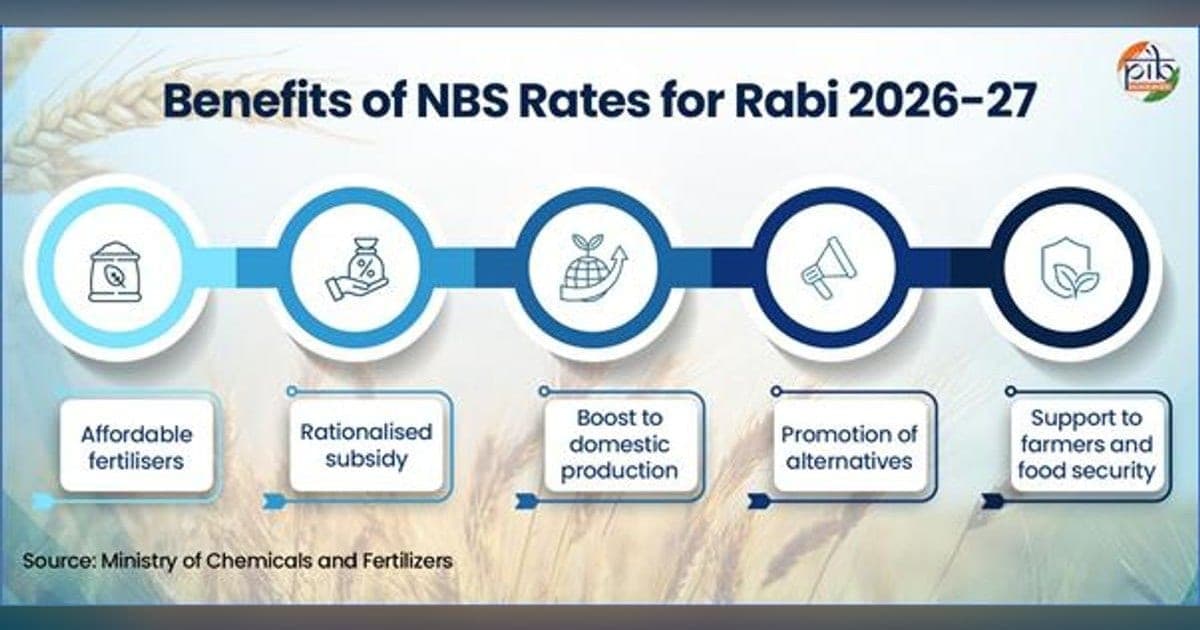
Why in News
On 12 November 2026 the Government set out the Nutrient-Based Subsidy rates for phosphatic and potassic fertilisers for Rabi 2026-27, approved on 11 November 2026, with a tentative outlay of about Rs 62,370.02 crore for the season from 1 October 2026 to 31 March 2027.
The Government has cleared the Nutrient-Based Subsidy (NBS) rates for phosphatic and potassic fertilisers for Rabi 2026-27. The decision was taken on 11 November 2026 and the rates hold from 1 October 2026 to 31 March 2027, the season in which wheat, gram and mustard go into the ground.
How much money is set aside
The tentative outlay works out to about Rs 62,370.02 crore. That is more than 64 per cent above the Rs 37,952.29 crore kept for Rabi 2025-26, the increase being read against the movement of international fertiliser and input prices.
The rates per kilogram
| Nutrient | Rate per kg |
| Nitrogen (N) | 94 rupees 21 paise |
| Phosphorus (P) | 66 rupees 11 paise |
| Potassium (K) | 12 rupees 38 paise |
| Sulphur (S) | 10 rupees 42 paise |
What the scheme does
Running since 1 April 2010, the scheme ties the subsidy on a fertiliser to the nutrients it carries rather than to the product, and rates are fixed twice a year, once for Kharif and once for Rabi, over 28 grades of P and K fertilisers. Since this part of the trade is decontrolled, makers and importers set the maximum retail price under government watch, and the farmer gets the benefit of the subsidy at the counter.
Special provisions continued
- Di-Ammonium Phosphate stays available at a fixed Rs 1,350 per bag beyond the regular subsidy, a provision extended to imported and domestic Triple Superphosphate and to imported Monoammonium Phosphate.
- Freight subsidy on Single Superphosphate continues, so that it works as an affordable substitute for DAP.
- Subsidy on imported and domestically made Ammonium Sulphate continues.
- Under the sulphur package, domestic makers of sulphur and sulphuric acid get a fifth of the actual procurement cost, with floor prices of USD 800 and USD 266.67 a tonne respectively.
Where the scheme stands
Between 2022-23 and 2025-26 the Government paid out over Rs 2.79 lakh crore as subsidy on indigenous and imported P and K fertilisers. Stocks of major fertilisers rose from 173.46 lakh tonnes on 10 November 2025 to 235.21 lakh tonnes a year later, a gain of roughly 35.6 per cent, urea making up the largest share of that stock.
Important Facts
| Scheme | Nutrient-Based Subsidy (NBS) Scheme, in force since 1 April 2010 |
|---|---|
| Season | Rabi 2026-27, from 1 October 2026 to 31 March 2027 |
| Approved on | 11 November 2026 |
| Tentative outlay | About Rs 62,370.02 crore |
| Previous Rabi outlay | Rs 37,952.29 crore for Rabi 2025-26 |
| Nutrient rates per kg | Nitrogen 94 rupees 21 paise, phosphorus 66 rupees 11 paise, potassium 12 rupees 38 paise, sulphur 10 rupees 42 paise |
| Grades covered | 28 grades of phosphatic and potassic fertilisers |
| DAP price | Fixed at Rs 1,350 per bag |
| Sulphur package | 20 per cent of procurement cost, floor price USD 800 per tonne |
| Fertiliser stock | 235.21 lakh tonnes on 10 November 2026 against 173.46 lakh tonnes a year earlier |
Exam Point of View
Remember the season (Rabi 2026-27), the outlay (about Rs 62,370.02 crore against Rs 37,952.29 crore a year earlier), the per kg rates for N, P, K and S, the start of the NBS scheme (1 April 2010), the number of grades covered (28), the fixed DAP price of Rs 1,350 per bag and the stock figures of 173.46 and 235.21 lakh tonnes.
Practice Questions
What is the tentative outlay for the Nutrient-Based Subsidy on P and K fertilisers for Rabi 2026-27?
- A.Rs 37,952.29 crore
- B.Rs 45,120.50 crore
- C.Rs 62,370.02 crore
- D.Rs 79,640.75 crore
Show answer
This is the tentative outlay approved for the Nutrient-Based Subsidy on phosphatic and potassic fertilisers for the Rabi season of 2026-27, which runs from the first of October to the end of March.
Read the full explanation →Under the Nutrient-Based Subsidy rates for Rabi 2026-27, what is the subsidy on nitrogen per kilogram?
- A.Rs 66.11
- B.Rs 94.21
- C.Rs 12.38
- D.Rs 10.42
Show answer
The correct answer is Rs 94.21 per kg, the rate fixed for nitrogen for this Rabi season.
Read the full explanation →Di-Ammonium Phosphate continues to be made available to farmers at which fixed price under the special provisions for Rabi 2026-27?
- A.Rs 1,100 per bag
- B.Rs 1,350 per bag
- C.Rs 1,500 per bag
- D.Rs 2,000 per bag
Show answer
Beyond the regular nutrient-linked subsidy, the Government has continued a special provision that keeps Di-Ammonium Phosphate at this fixed price for the farmer, and the same support has been extended to Triple Superphosphate, whether imported or made at home, and to imported Monoammonium Phosphate.
Read the full explanation →Frequently Asked Questions
What is the outlay for the Nutrient-Based Subsidy for Rabi 2026-27?
About Rs 62,370.02 crore, which is more than 64 per cent higher than the Rs 37,952.29 crore set aside for Rabi 2025-26. The rates apply from 1 October 2026 to 31 March 2027.
What are the NBS rates per kilogram for Rabi 2026-27?
Nitrogen 94 rupees 21 paise, phosphorus 66 rupees 11 paise, potassium 12 rupees 38 paise and sulphur 10 rupees 42 paise. The scheme sets rates twice a year and covers 28 grades of phosphatic and potassic fertilisers.
At what price does Di-Ammonium Phosphate continue to be available?
At a fixed Rs 1,350 per bag, under a special provision beyond the regular subsidy. The provision has also been extended to imported and domestic Triple Superphosphate and imported Monoammonium Phosphate.
Sources
- https://www.pib.gov.in/PressReleasePage.aspx?PRID=2335577 (opens in a new tab) — Press Information Bureau
Current Affairs 12 November 2026
- One Nation One Ration Card Reaches All 36 States and UTsGovernment Schemes
- National Naturopathy Day 2026 Set for 18 November in KarnatakaImportant Days
- Buddha's Sacred Relics Draw 50,000 Devotees in ArunachalNational
- Rajnath Singh Opens Air Force Commanders' Conference 2026 in DelhiDefence
- TDB Gives Rs 64.05 Crore for Astrome AI-ELINT Satellite ProjectScience & Technology
- INSA Endorses S20 Joint Statement Ahead of G20 Summit in MiamiSummits & Conferences
- 57th IFFI Goa 2026: WaveX Startup Pavilion Entries Close 13 NovemberNational
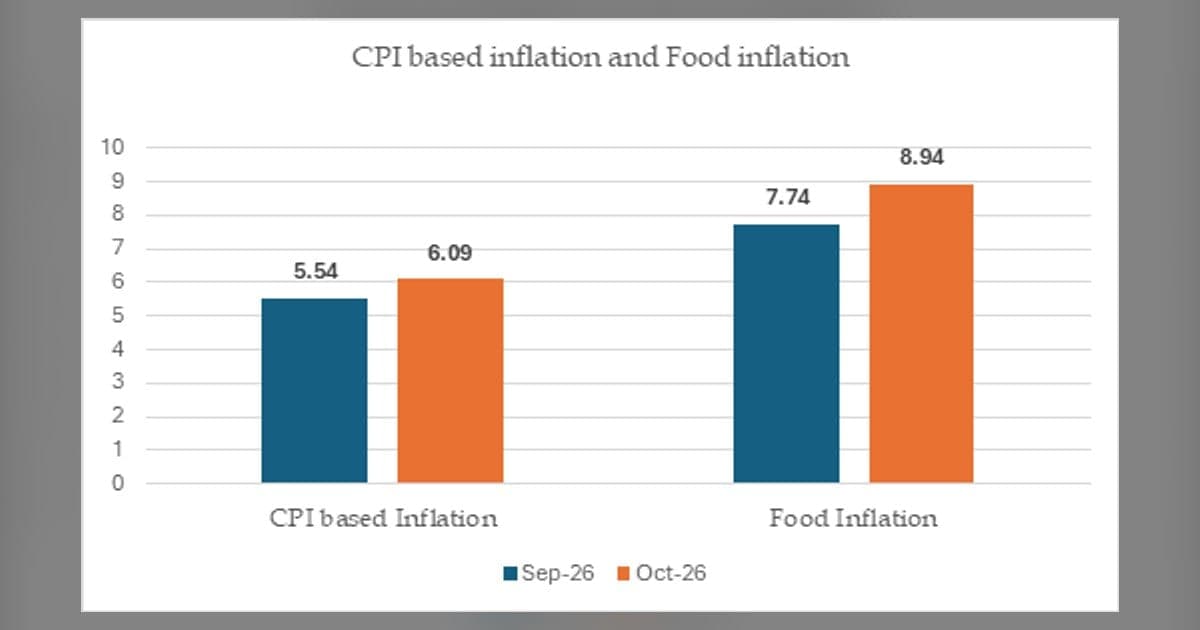
- Retail Inflation Rises to 6.09% in October 2026, Food at 8.94%Economy
Related Current Affairs

Related GK
- Famous Personalities of Rajasthan: Exam Notes
28 October 2026 · Rajasthan
- Districts and Divisions of Rajasthan: Exam Notes
28 October 2026 · Rajasthan
- Tourism and World Heritage Sites of Rajasthan Notes
27 October 2026 · Rajasthan
Take the Quiz
- Current Affairs Quiz
Banking Current Affairs Quiz: 12 November 2026
25 questions25 minutesStart Quiz