
Peyjal Samvad 13th Edition Reviews Jal Jeevan Mission 2.0
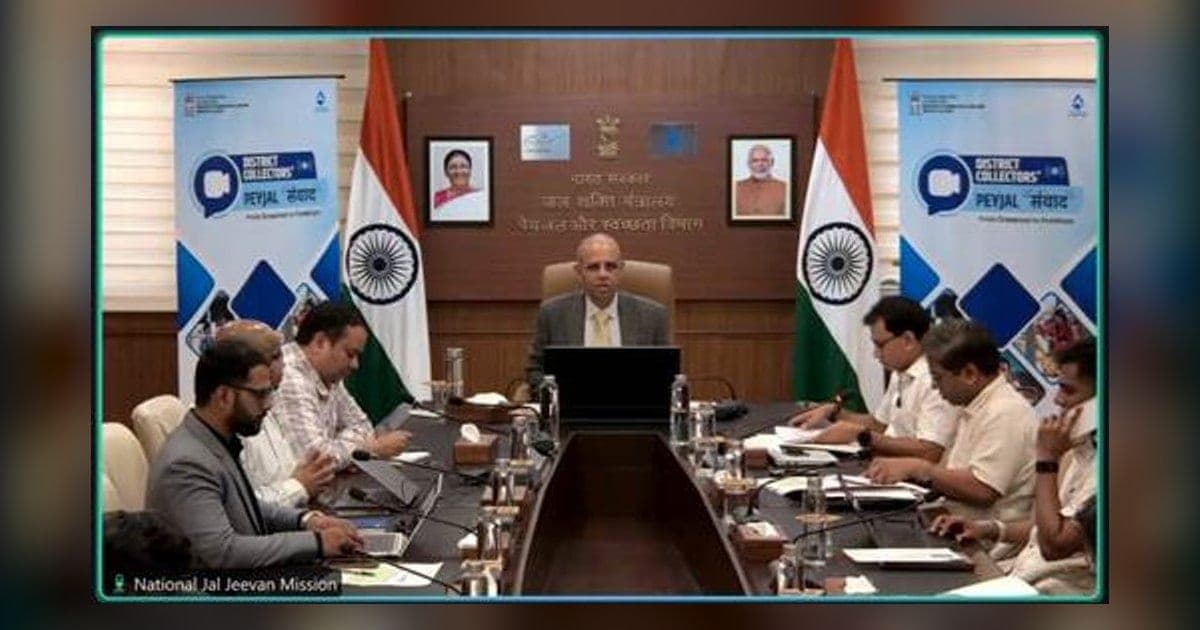
Five districts shared rural drinking water practices at the 13th District Collectors' Peyjal Samvad chaired by DDWS Secretary Ashok K.K. Meena.
Why in News
On 15 October 2026 the Department of Drinking Water and Sanitation, Ministry of Jal Shakti, held the 13th District Collectors' Peyjal Samvad by video conferencing, where five districts from Uttar Pradesh, Tripura, Tamil Nadu, Odisha and Jharkhand presented their rural drinking water practices under Jal Jeevan Mission 2.0.
The Department of Drinking Water and Sanitation (DDWS), which works under the Ministry of Jal Shakti, held the thirteenth edition of the District Collectors' Peyjal Samvad on 15 October 2026. The dialogue was held over video conferencing and brought District Collectors, District Magistrates and the Mission Directors of States and Union Territories on one platform to speed up work under Jal Jeevan Mission (JJM) 2.0 and to pass on field practices that have worked.
Who led the dialogue
- Ashok K.K. Meena, Secretary, DDWS, was in the chair and called the Samvad a peer-learning platform for district administrations.
- Kamal Kishore Soan, Additional Secretary and Mission Director of the National Jal Jeevan Mission (NJJM), spoke on grassroots institutions.
- Y.K. Singh, Director (NJJM), presented the Jal Arpan module, through which finished village schemes are formally handed over to Gram Panchayats.
What districts were told to do
- Hold District Water and Sanitation Mission (DWSM) meetings every month and put the minutes on the DWSM Portal in time.
- Read the functionality assessment reports and district improvement plans thrown up by Jal Seva Aankalan, and act on them.
- Look at solarisation of village water supply schemes, because power cuts and water quality problems keep interrupting supply.
- Use the Decision Support System (DSS), which puts groundwater, rainfall, hydrological and mission data in one place, to mark out water-stressed pockets.
- Tap convergence with VB-G RAM G for recharge of groundwater and protection of sources, and train Gram Panchayats, Village Water and Sanitation Committees, Panchayat Secretaries and Sujalam Shakti Groups.
The five districts that presented
| Kanpur Nagar, Uttar Pradesh | Awareness drives through schools and sports clubs, women volunteers testing water with field test kits, SCADA monitoring, the Jal Saarthi app and GIS mapping of assets |
| West Tripura, Tripura | Better user-charge collection, Self-Help Groups and Jal Sakhis in social audit work, catchment protection and rooftop rainwater harvesting |
| Thanjavur, Tamil Nadu | Village-level water budgeting, revival of water bodies, IoT-based real-time monitoring and low-cost disinfection units |
| Bargarh, Odisha | A three-stage framework of execution, commissioning and maintenance, and round-the-clock piped supply to IIM Sambalpur |
| Palamu, Jharkhand | A district control room, MGNREGA convergence for recharge work, Jal Sahiyas with Anganwadi and health workers on quality checks, and the Jalkar Bhugtan Abhiyan |
Why the Samvad matters
JJM 2.0 has shifted the test from laying pipes to keeping taps running, so the Samvad pressed district heads on operation and maintenance, on user charges that pay for it, and on community ownership of the assets built. Mr Soan also asked districts to take senior school students to multi-village schemes, treatment plants, laboratories and SCADA-enabled control rooms, so that the next generation understands how drinking water reaches a village under the Har Ghar Jal programme.
Important Facts
| Event | 13th District Collectors' Peyjal Samvad |
|---|---|
| Organised by | Department of Drinking Water and Sanitation (DDWS), Ministry of Jal Shakti |
| Chaired by | Ashok K.K. Meena, Secretary, DDWS |
| Also present | Kamal Kishore Soan, Additional Secretary and Mission Director, National Jal Jeevan Mission |
| Mode | Video conferencing |
| Mission | Jal Jeevan Mission (JJM) 2.0 / Har Ghar Jal |
| Districts that presented | Kanpur Nagar, West Tripura, Thanjavur, Bargarh and Palamu |
| Platforms named | Decision Support System, Jal Arpan module, DWSM Portal, Jal Saarthi app, Jal Seva Aankalan |
Exam Point of View
Fix the edition (13th), the organiser (DDWS under the Ministry of Jal Shakti), who chaired it (Secretary Ashok K.K. Meena), the mission (Jal Jeevan Mission 2.0 and Har Ghar Jal), the five presenting districts with their States, and the tools named: the Decision Support System, Jal Seva Aankalan, the Jal Arpan module, the DWSM Portal and the Jal Saarthi app.
Practice Questions
The District Collectors' Peyjal Samvad is organised by the Department of Drinking Water and Sanitation, which works under which Union ministry?
- A.Ministry of Rural Development
- B.Ministry of Jal Shakti
- C.Ministry of Housing and Urban Affairs
- D.Ministry of Panchayati Raj
Show answer
The Department of Drinking Water and Sanitation, written short as DDWS, is a department of that ministry, and it ran the thirteenth edition of the District Collectors' Peyjal Samvad over video conferencing, with Secretary Ashok K.K.
Read the full explanation →At the 13th Peyjal Samvad, which district reported round-the-clock piped water supply to IIM Sambalpur?
- A.Palamu, Jharkhand
- B.Thanjavur, Tamil Nadu
- C.Bargarh, Odisha
- D.West Tripura, Tripura
Show answer
Its District Magistrate and Collector, Aditya Goyal, described a three-stage approach of execution, commissioning and then operation and maintenance, and said large multi-village schemes had carried round-the-clock piped water to IIM Sambalpur.
Read the full explanation →Which district told the Peyjal Samvad about village-level water budgeting to assess present and future water demand?
- A.Thanjavur, Tamil Nadu
- B.Kanpur Nagar, Uttar Pradesh
- C.Bargarh, Odisha
- D.Palamu, Jharkhand
Show answer
Gram Panchayats, Village Water and Sanitation Committees and local stakeholders were part of the exercise, and the Secretary praised the work and asked the district to study whether continuous rural water supply is feasible in suitable areas.
Read the full explanation →Under Jal Jeevan Mission 2.0, the Decision Support System (DSS) brings together which kinds of data?
- A.Census, land records and crop insurance data
- B.Groundwater, rainfall, hydrological and mission data
- C.Electricity billing and tax collection data
- D.School enrolment and health survey data
Show answer
The Secretary of the Department of Drinking Water and Sanitation urged districts to make real use of the Decision Support System, which stitches these datasets together so that planning rests on evidence rather than guesswork: water-stressed areas can be identified, source sustainability can be planned and the most urgent works…
Read the full explanation →Frequently Asked Questions
Which department organises the District Collectors' Peyjal Samvad?
The Department of Drinking Water and Sanitation, which is part of the Ministry of Jal Shakti. Its 13th edition was held by video conferencing on 15 October 2026 and was chaired by Secretary Ashok K.K. Meena.
Which districts presented best practices at the 13th Peyjal Samvad?
Kanpur Nagar in Uttar Pradesh, West Tripura in Tripura, Thanjavur in Tamil Nadu, Bargarh in Odisha and Palamu in Jharkhand. Each presentation was made by the District Collector or District Magistrate.
What does the Decision Support System do under Jal Jeevan Mission 2.0?
It brings groundwater, rainfall, hydrological and Jal Jeevan Mission data together, so districts can plan on evidence, find water-stressed areas, work on source sustainability and decide which work comes first.
What is the Jal Arpan module used for?
It records the formal commissioning and handover of a village drinking water scheme to the Gram Panchayat, with Har Ghar Jal certification on the Gram Panchayat dashboard. Districts keep the certificates in their local languages.
Sources
- https://www.pib.gov.in/PressReleasePage.aspx?PRID=2323811 (opens in a new tab) — Press Information Bureau
Current Affairs 15 October 2026
- DDU-GKY 2.0 Captive Employer CXO Meet Held in JaipurGovernment Schemes
- BHASHINI Division and Manipur Sign MoU on Multilingual AIScience & Technology
- Tribal Languages Working Group Meets for the First TimeNational
- Bhupender Yadav Chairs 27th G.B. Pant Society MeetingEnvironment
- Special Campaign 6 Review Covers 84 MinistriesNational
- Women's Labour Force Participation Rate Rises to 40 Per CentEconomy
- Rajnath Singh Flags 5D Security Threat at Defence ConclaveDefence
- Vice-President Inaugurates KAUMARACON-2026 at AIIA DelhiSummits & Conferences
Related Current Affairs
- Government Schemes
NMMSS Scholarship Workshop in Bhopal Sets 31 October Deadline
15 October 2026 · 2 min read
- Government Schemes
President Murmu Graces National SARAS Mela at Vijayawada
15 October 2026 · 2 min read
- Government Schemes
RDI Scheme Widened to Cover Advanced Chemicals Technologies
14 October 2026 · 2 min read
- Government Schemes
BHARAT TULIP Opens Digital Markets for Traditional Artisans
14 October 2026 · 2 min read
- Government Schemes
Cabinet Clears Rs 53,428 Crore for Renamed NSAP Pension Scheme
14 October 2026 · 2 min read
Related GK
- Population and Tribes of MP: Bhil, Gond and Baiga
16 October 2026 · Madhya Pradesh
- Industries of Madhya Pradesh: Pithampur, Cement and Mills
16 October 2026 · Madhya Pradesh
- Industries and Minerals of Haryana: Towns and Products
16 October 2026 · Haryana
Take the Quiz
- Current Affairs Quiz
Banking Current Affairs Quiz: 15 October 2026
25 questions25 minutesStart Quiz