
COVID-19 Response: 22.89 Crore Precaution Doses Administered
A PIB backgrounder on India's COVID-19 response records 22.89 crore precaution doses and 97 per cent first-dose coverage among those aged 12 and above.
Why in News
On 16 November 2026 the Press Information Bureau issued a backgrounder on India's COVID-19 response, setting out the five phases of the effort and the vaccination position as on 31 December 2025.
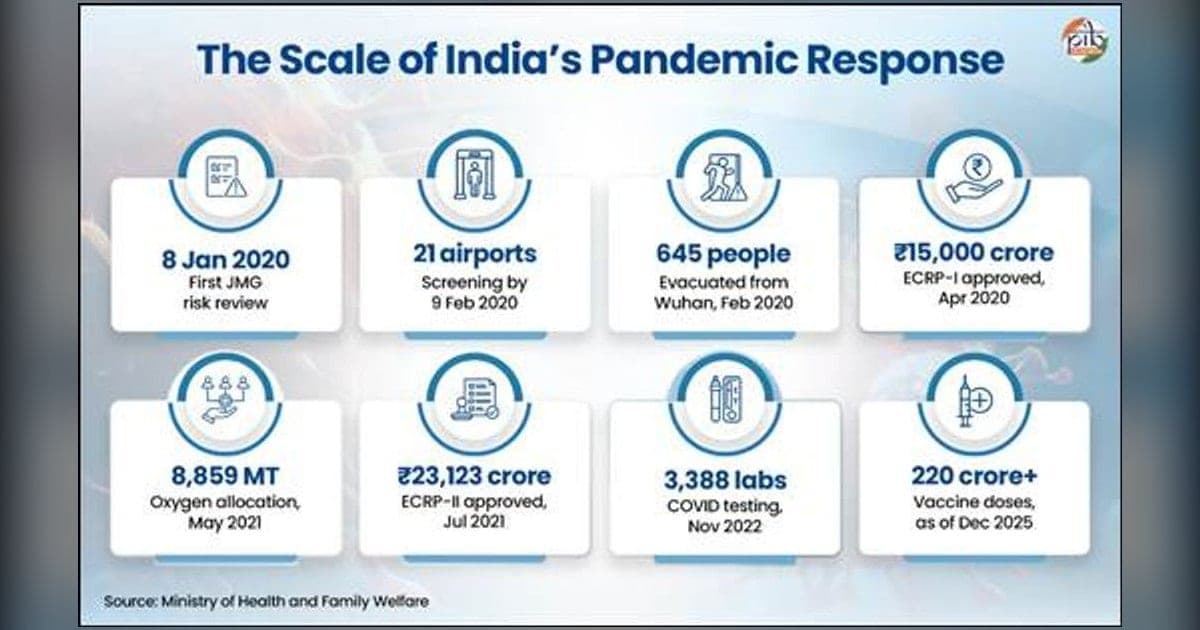
A backgrounder from the Press Information Bureau traces how India handled the COVID-19 pandemic from January 2020 to May 2023, dividing the effort into five phases of preparation, containment, reopening, vaccination and adaptation. As on 31 December 2025, 97 per cent of the population aged 12 years and above had taken at least one dose of a COVID-19 vaccine and 90 per cent were fully vaccinated, while 22.89 crore precaution doses had been given.
Before the first case
The World Health Organization was informed on 31 December 2019 about pneumonia of unknown cause in Wuhan. The Joint Monitoring Group, a standing technical forum chaired by the Director General of Health Services, reviewed the risk on 8 January 2020. Screening of international passengers began on 17 January and covered 21 airports within a week. India's first case was reported at Thrissur in Kerala on 30 January 2020. A national operations centre run by the National Centre for Disease Control was activated on 8 February, and 645 people were brought back from Wuhan and quarantined.
Powers, groups and zones
Powers under the Disaster Management Act, 2005 were delegated to the Union Health Secretary on 11 March 2020, and states were advised to use that law and the Epidemic Diseases Act, 1897 where needed. Eleven Empowered Groups were formed on 29 March 2020, cut to six in September 2020 and reconstituted as ten on 29 May 2021, the last round creating separate groups for oxygen, vaccination and testing. Districts were zoned red, orange and green, numbering 130, 284 and 319 respectively as on 5 May 2020.
Evidence and technology
The first national serosurvey, in May and June 2020, estimated that about 0.73 per cent of the population had been infected, which showed how many remained vulnerable and shaped a staged reopening. By the fourth round of the survey, 67.6 per cent carried antibodies. Genome sequencing began early and INSACOG, the Indian SARS-CoV-2 Consortium on Genomics, was set up in December 2020. Testing opened to private laboratories on 21 March 2020; by 24 March, 118 laboratories could process 12,000 samples a day.
Oxygen, vaccines and the package
Under second-wave pressure an Empowered Group met on 15 April 2021 on the oxygen situation in twelve states and allotted fixed quantities; communicated allocations rose from 4,880 tonnes on 20 April to 6,593 tonnes on 30 April. Vaccination began with health workers on 16 January 2021 and opened to all adults from 1 May 2021. On 8 July 2021 the Cabinet cleared the second phase of the emergency response package with an outlay of Rs 23,123 crore, which delivered 663 new laboratories, 697 liquid oxygen tanks, 63 field hospitals and 200 telemedicine hubs.
Reaching every home
India crossed one billion doses on 21 October 2021 and the house-to-house campaign Har Ghar Dastak was launched on 3 November 2021. Vaccination was extended to adolescents aged 15 to 18 from 3 January 2022 and to the 12 to 14 group in March 2022. In May 2022 India's accredited social health activists, the ASHAs, received the World Health Organization Director-General's Global Health Leaders Award. The public health emergency of international concern declared on 30 January 2020 was withdrawn by WHO on 5 May 2023.
Important Facts
| First case in India | Thrissur, Kerala, on 30 January 2020 |
|---|---|
| Laws invoked | Disaster Management Act, 2005 and Epidemic Diseases Act, 1897 |
| Empowered Groups | Eleven on 29 March 2020, six in September 2020, ten on 29 May 2021 |
| First national serosurvey | May-June 2020, about 0.73 per cent of the population infected |
| Genomic network | INSACOG, set up in December 2020 |
| ECRP-II outlay | Rs 23,123 crore, approved 8 July 2021 |
| Vaccination for all adults | From 1 May 2021; drive had begun with health workers on 16 January 2021 |
| Har Ghar Dastak | House-to-house vaccination campaign launched on 3 November 2021 |
| Coverage as on 31 December 2025 | 97 per cent with one dose and 90 per cent fully vaccinated among those aged 12 and above; 22.89 crore precaution doses |
| Emergency withdrawn | WHO ended the emergency status on 5 May 2023 |
Exam Point of View
Remember the first case (Thrissur, Kerala, 30 January 2020), the two laws used, the Empowered Groups (eleven, then six, then ten), the first serosurvey figure of 0.73 per cent, ECRP-II at Rs 23,123 crore, Har Ghar Dastak from 3 November 2021, the WHO withdrawal on 5 May 2023 and the 22.89 crore precaution doses.
Practice Questions
Where was India's first COVID-19 case reported?
- A.Thrissur, Kerala
- B.Pune, Maharashtra
- C.Jaipur, Rajasthan
- D.Agra, Uttar Pradesh
Show answer
The correct answer is Thrissur in Kerala, where the country's first case was reported on 30 January 2020.
Read the full explanation →What was the outlay of the second phase of the India COVID-19 Emergency Response and Health System Preparedness Package?
- A.Rs 15,000 crore
- B.Rs 20,000 crore
- C.Rs 23,123 crore
- D.Rs 35,000 crore
Show answer
The Cabinet approved the second phase of the package on 8 July 2021, aimed at district and sub-district capacity and implemented through the National Health Mission.
Read the full explanation →What share of the population did India's first national serosurvey estimate had been infected?
- A.About 0.73 per cent
- B.About 6.6 per cent
- C.About 21.4 per cent
- D.About 67.6 per cent
Show answer
The first national serosurvey, carried out in May and June 2020, produced that estimate, and because it showed that a very large part of the population was still susceptible, reopening was taken in stages with workplace guidelines issued in May and rules for offices, places of worship, hotels, restaurants and…
Read the full explanation →When did the World Health Organization withdraw the COVID-19 public health emergency of international concern?
- A.30 January 2020
- B.21 October 2021
- C.3 November 2021
- D.5 May 2023
Show answer
The correct answer is 5 May 2023, the day the World Health Organization withdrew the emergency it had declared on 30 January 2020.
Read the full explanation →Frequently Asked Questions
Where and when was India's first COVID-19 case reported?
At Thrissur in Kerala on 30 January 2020. Screening of international passengers had already started on 17 January 2020 and reached 21 airports within a week, and the Joint Monitoring Group had reviewed the risk on 8 January 2020.
What was the outlay of the second phase of the emergency response package?
Rs 23,123 crore, approved by the Cabinet on 8 July 2021 and implemented through the National Health Mission. Reported outputs include 663 new laboratories, 697 liquid oxygen tanks, 63 field hospitals and 200 telemedicine hubs.
What is the vaccination position as on 31 December 2025?
Among people aged 12 years and above, 97 per cent have received at least one dose and 90 per cent are fully vaccinated. A total of 22.89 crore precaution doses have been administered in the country.
When did WHO withdraw the COVID-19 emergency status?
On 5 May 2023. The public health emergency of international concern had been declared on 30 January 2020, and India's response ran through five phases from January 2020 until that withdrawal.
Sources
- https://www.pib.gov.in/PressReleasePage.aspx?PRID=2336744 (opens in a new tab) — Press Information Bureau
Current Affairs 16 November 2026
- India-Egypt 7th Joint Trade Committee Meets at Ministerial LevelInternational
- Modi Departs for 23rd ASEAN-India Summit in ManilaSummits & Conferences
- WPI Inflation Climbs to 12.29 Per Cent in October 2026Economy
- 31st CII Partnership Summit 2026 Held in VisakhapatnamSummits & Conferences
- Vice-President Opens 17th Odisha Assembly Orientation ProgrammeState News
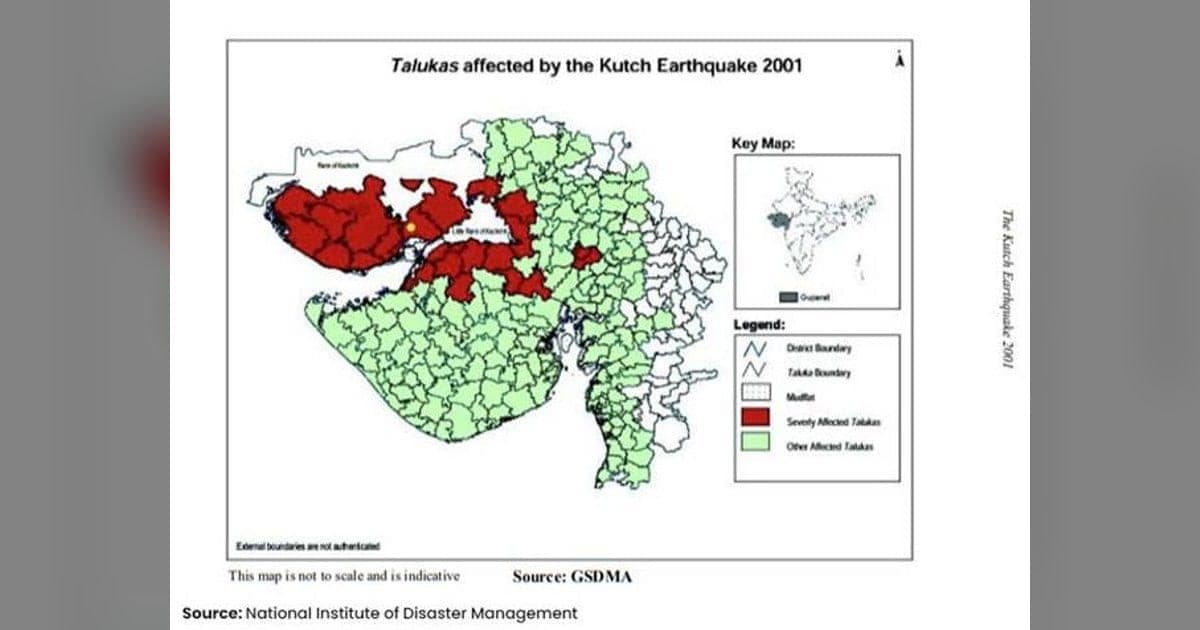
- Kutch Earthquake 2001: Rebuilding, GSDMA and Key FiguresNational
Related Current Affairs

Related GK
- Famous Personalities of Rajasthan: Exam Notes
28 October 2026 · Rajasthan
- Districts and Divisions of Rajasthan: Exam Notes
28 October 2026 · Rajasthan
- Tourism and World Heritage Sites of Rajasthan Notes
27 October 2026 · Rajasthan
Take the Quiz
- Current Affairs Quiz
State Exams Current Affairs Quiz: 16 November 2026
25 questions25 minutesStart Quiz