
Genome Sequencing Covers 10,000 Indians From 84 Populations
Union Minister Dr Jitendra Singh said genome sequencing of 10,000 Indians from 84 populations is strengthening India's preventive and precision healthcare.
Why in News
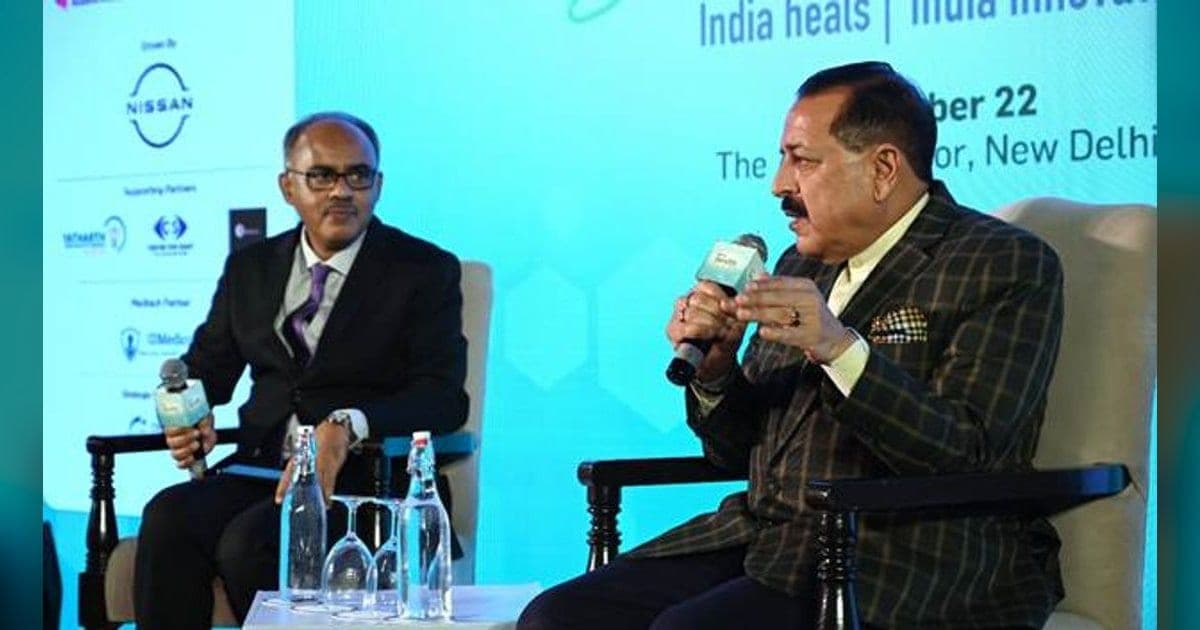
On 22 November 2026 Union Minister Dr Jitendra Singh delivered the Chief Guest Address at THE WEEK Health Summit 2026 in New Delhi and said India's healthcare research is moving towards prevention, molecular and genetic study and precision medicine, citing genome sequencing of 10,000 Indians across 84 populations and HPV vaccination of more than 50 lakh adolescent girls.
Union Minister Dr Jitendra Singh said on 22 November 2026 that India's healthcare research is turning away from treatment alone and towards prevention, early detection and work at the molecular and genetic level. He was the Chief Guest at THE WEEK Health Summit 2026 in New Delhi, where he spoke on the Union Government's healthcare initiatives and then took questions from doctors, researchers and industry representatives.
Why prevention now matters
The Minister pointed to metabolic and lifestyle diseases reaching younger Indians. Diabetes, obesity, hypertension and heart disease, he said, no longer belong to old age alone, which makes screening and prevention urgent. Diets have changed, physical activity has fallen, and the risk is now spread across both towns and villages. Prevention, he argued, cannot rest on doctors alone; society has to take part, and awareness has to grow. He tied the whole effort to the goal of Viksit Bharat 2047.
Genomics and precision medicine
India has sequenced the genomes of 10,000 individuals drawn from 84 different population groups, a reflection of how varied the country's gene pool is. More than 400 genetic traits are spread across these groups, which gives researchers an unusual opening to study who is prone to which disease and to design treatments aimed at particular groups. Precision medicine follows from this: the same illness may need different handling in two patients, depending on their genes, habits and surroundings. Work is also under way on biomarkers in women who develop gestational diabetes, to flag those likely to get Type 2 diabetes later in life.
Vaccines, rare diseases and indigenous research
Dr Singh recalled the indigenous DNA vaccine built during the COVID-19 pandemic and said more than 50 lakh adolescent girls have received the HPV vaccine, part of the push against cervical cancer. The Government and the ICMR are widening the list of rare genetic diseases covered, so that diagnosis and medicines become easier to reach and cheaper. He cited gene therapy research on haemophilia carried out by Christian Medical College, Vellore, published in the New England Journal of Medicine. Dialysis units in district hospitals have widened access for kidney patients, and research is moving towards catching kidney disease before symptoms show.
Who attended
Among those present were Dr Nikhil Tandon, Director of AIIMS New Delhi; Sharad Aggarwal, Director at FSSAI; and Dr Andrei Kozik, Deputy Head for India at the International Committee of the Red Cross, besides senior doctors and medical researchers. The Minister also warned young people against health misinformation, unverified nutrition advice and taking medicines for cosmetic purposes without supervision, and asked them to rely on qualified doctors and authenticated science. He said wider collaboration between government bodies, research institutions and private partners, along with philanthropy, is needed to turn discoveries into usable treatment.
Important Facts
| Event | THE WEEK Health Summit 2026, New Delhi |
|---|---|
| Speaker | Union Minister Dr Jitendra Singh (Chief Guest Address) |
| Date | 22 November 2026 |
| Genome sequencing | 10,000 individuals from 84 population groups |
| Genetic traits | More than 400 across India's populations |
| HPV vaccination | More than 50 lakh adolescent girls vaccinated |
| Gene therapy research | Haemophilia, by Christian Medical College, Vellore |
| Published in | New England Journal of Medicine |
| Rare diseases | Government and ICMR expanding coverage |
| Vision | Viksit Bharat 2047 |
| Also present | Dr Nikhil Tandon (AIIMS New Delhi), Sharad Aggarwal (FSSAI), Dr Andrei Kozik (ICRC) |
Exam Point of View
Remember the speaker (Dr Jitendra Singh), the event (THE WEEK Health Summit 2026, New Delhi), the genomics figures (10,000 individuals, 84 populations, more than 400 genetic traits), the HPV figure (more than 50 lakh adolescent girls), the haemophilia gene therapy centre (Christian Medical College, Vellore, published in the New England Journal of Medicine), the body expanding rare disease coverage (ICMR) and the vision year (Viksit Bharat 2047).
Practice Questions
Genome sequencing of how many Indian individuals has been completed, as stated by Dr Jitendra Singh?
- A.1,000
- B.10,000
- C.50,000
- D.5,00,000
Show answer
Speaking in New Delhi on 22 November 2026, Union Minister Dr Jitendra Singh said India has completed genome sequencing of 10,000 individuals, and that those individuals were drawn from 84 different population groups.
Read the full explanation →How many adolescent girls in India have been vaccinated against HPV, according to the Minister?
- A.More than 5 lakh
- B.More than 15 lakh
- C.More than 50 lakh
- D.More than 5 crore
Show answer
Dr Jitendra Singh said India's HPV vaccination initiative has already covered more than 50 lakh adolescent girls, and described this as a contribution to the effort to prevent cervical cancer.
Read the full explanation →Which institution's gene therapy research on haemophilia did Dr Jitendra Singh cite?
- A.AIIMS New Delhi
- B.Christian Medical College, Vellore
- C.PGIMER Chandigarh
- D.Tata Memorial Hospital, Mumbai
Show answer
The Minister referred to gene therapy research on haemophilia undertaken at that institution and published in the New England Journal of Medicine, offering it as proof that Indian researchers are developing advanced medical solutions with possible uses beyond the country.
Read the full explanation →At which event did Dr Jitendra Singh deliver the Chief Guest Address on 22 November 2026?
- A.India Health Conclave, Mumbai
- B.National Genomics Congress, Hyderabad
- C.THE WEEK Health Summit 2026, New Delhi
- D.Global Preventive Medicine Forum, Bengaluru
Show answer
The Minister delivered the Chief Guest Address there on the healthcare initiatives of the Union Government, and then took part in an interaction with healthcare professionals, researchers and industry representatives.
Read the full explanation →Frequently Asked Questions
How many Indians have had their genomes sequenced?
Genome sequencing has been carried out for 10,000 individuals belonging to 84 different population groups, Dr Jitendra Singh said on 22 November 2026. More than 400 genetic traits are found across these groups, which helps research into disease susceptibility and targeted treatment.
How many girls have received the HPV vaccine in India?
More than 50 lakh adolescent girls have been vaccinated against the Human Papillomavirus, the Minister said, describing it as part of the country's effort to prevent cervical cancer. He also recalled the indigenous DNA vaccine developed during the COVID-19 pandemic.
Which institution carried out gene therapy research on haemophilia?
Christian Medical College, Vellore. The work was published in the New England Journal of Medicine, and Dr Jitendra Singh cited it as evidence that Indian researchers are producing advanced medical solutions with uses beyond the country.
Sources
- https://www.pib.gov.in/PressReleasePage.aspx?PRID=2339914 (opens in a new tab) — Press Information Bureau
Current Affairs 22 November 2026
- Fit India Sundays on Cycle 99th Edition Held at 26,000 SitesGovernment Schemes
- NFDC Signs MoU With Sony Pictures Networks India at IFFINational
- Russian Film New Home Has World Premiere at 57th IFFI, GoaInternational
- Rajya Sabha MP Ramrao Wadkute Passes Away; PM Pays TributeObituaries
- Karla Sofia Gascon Holds Masterclass at 57th IFFI in GoaNational
Related Current Affairs
- Science & Technology
BRIC Targets $300 Billion Bioeconomy by 2030, $1 Trillion 2047
21 November 2026 · 2 min read
- Science & Technology
BHASHINI Shows Multilingual AI for Health at GDHS 2026
21 November 2026 · 2 min read
- Science & Technology
India's First Indigenous H5N1 Bird Flu Vaccine Released at Bhopal
20 November 2026 · 2 min read
- Science & Technology
RRI Study Tunes Kinetic Magnetism Using Lattice Geometry
20 November 2026 · 2 min read
- Science & Technology
BSIP Study Finds Climate Clues in Himalayan Marmot Droppings
19 November 2026 · 2 min read
- Science & Technology
BHASHINI Shows Voice-First Language AI at Dakshin Day 2026
19 November 2026 · 2 min read
Related GK
- Famous Personalities of Rajasthan: Exam Notes
28 October 2026 · Rajasthan
- Districts and Divisions of Rajasthan: Exam Notes
28 October 2026 · Rajasthan
- Tourism and World Heritage Sites of Rajasthan Notes
27 October 2026 · Rajasthan
Take the Quiz
- Current Affairs Quiz
State Exams Current Affairs Quiz: 22 November 2026
19 questions19 minutesStart Quiz