
CAQM Invokes GRAP Stage-I in Delhi-NCR as AQI Reaches 245
The CAQM invoked all 25 action points of Stage-I of the GRAP across the NCR with immediate effect after Delhi's average AQI climbed to 245, in the poor band.
Why in News
On 21 October 2026 the Commission for Air Quality Management invoked all 25 action points of Stage-I of the Graded Response Action Plan across the National Capital Region with immediate effect, after Delhi's daily average AQI rose to 245 in the poor category.
The Commission for Air Quality Management (CAQM) brought Stage-I of the Graded Response Action Plan (GRAP) into force across the whole of the National Capital Region with immediate effect on 21 October 2026, after the air over Delhi slipped into the poor band.
The readings that triggered it
According to the daily bulletin of the Central Pollution Control Board, Delhi's daily average Air Quality Index stood at 244 at 2 PM and climbed further to 245 by 4 PM. Both readings fall in the poor category, which covers an AQI from 201 to 300. The CAQM Sub-Committee on GRAP met the same day, took stock of the readings and of the weather and air quality forecasts prepared by the India Meteorological Department and the Indian Institute of Tropical Meteorology, and decided to put the first stage of the plan into effect.
What Stage-I requires
All 25 action points listed under Stage-I now apply in the entire NCR. Among the main ones:
- Dust control at construction and demolition sites, with covered storage and covered transport of material and waste; projects on a plot of 500 square metres or more must be registered on the state web portal to be allowed to work
- Regular lifting of municipal, construction, industrial and hazardous waste, periodic mechanised road sweeping and water sprinkling, and heavier use of anti-smog guns on road works
- A strict ban on the open burning of biomass and municipal solid waste, and vigil against fires at landfill sites
- Enforcement of pollution-under-control norms, the impounding of visibly polluting vehicles, the ban on overaged diesel and petrol vehicles, and the diversion of trucks not bound for Delhi through the Eastern and Western Peripheral Expressways
- Regulated use of diesel generator sets, and a ban on coal and firewood in tandoors at hotels, restaurants and open eateries
- More buses, metro and regional rapid transit services, with differential fares to spread travel away from peak hours
What citizens are asked to do
The Citizens Charter for Stage-I asks residents to check the AQI on the SAMEER app and the stage of the GRAP in force on the Commission's website, keep vehicle engines tuned and PUC certificates current, avoid idling at red lights, prefer public transport or car pooling, segregate waste, avoid firecrackers, and report polluting activity through the 311 app, the Green Delhi app or SAMEER.
Why it matters
The GRAP is a graded plan: as the air worsens, successive stages add sharper curbs, and Stage-I is the first and mildest of them, meant to stop the air from sliding further. The Sub-Committee said it would keep watching the readings and review the position from time to time.
Important Facts
| Decision | Stage-I of the GRAP invoked across the entire NCR with immediate effect |
|---|---|
| Taken by | CAQM Sub-Committee on GRAP |
| Date | 21 October 2026 |
| Delhi AQI | 244 at 2 PM, rising to 245 at 4 PM |
| Category | Poor, an AQI of 201 to 300 |
| Action points | All 25 under Stage-I |
| Readings from | Central Pollution Control Board daily AQI bulletin |
| Forecasts from | India Meteorological Department and Indian Institute of Tropical Meteorology |
| Construction rule | Projects on plots of 500 square metres or more must be registered on the state web portal |
| Citizen apps | SAMEER, Green Delhi and the 311 app for reporting polluting activity |
Exam Point of View
Remember that Stage-I of the GRAP applies to the poor category, that is an AQI of 201 to 300, that it carries 25 action points, that it was invoked for the whole NCR on 21 October 2026 when Delhi's AQI touched 245, that the decision rests with the CAQM Sub-Committee on GRAP, and that the readings come from the CPCB while forecasts come from the IMD and the IITM.
Practice Questions
Stage-I of the Graded Response Action Plan is invoked when Delhi's air quality falls in which category?
- A.Moderate, an AQI of 101 to 200
- B.Poor, an AQI of 201 to 300
- C.Very Poor, an AQI of 301 to 400
- D.Severe, an AQI above 400
Show answer
Stage-I of the Graded Response Action Plan is the stage meant for poor air, and it was invoked across the National Capital Region after Delhi's daily average index was recorded at 244 at 2 PM and then at 245 by 4 PM, both of which sit inside that band.
Read the full explanation →How many action points were brought into force when CAQM invoked Stage-I of the GRAP in the NCR on 21 October 2026?
- A.11
- B.16
- C.25
- D.32
Show answer
The Sub-Committee on GRAP decided to invoke all the action points listed under Stage-I of the plan then in force, and that list runs to twenty-five items, applying across the whole National Capital Region with immediate effect.
Read the full explanation →Which body takes the decision to invoke a stage of the Graded Response Action Plan in Delhi-NCR?
- A.The Central Pollution Control Board
- B.The CAQM Sub-Committee on GRAP
- C.The India Meteorological Department
- D.The Delhi Pollution Control Committee
Show answer
The Sub-Committee met on 21 October 2026, reviewed the air quality of Delhi and the region along with the forecasts placed before it, and decided to bring Stage-I of the plan into force with immediate effect.
Read the full explanation →Frequently Asked Questions
Why was Stage-I of the GRAP invoked in Delhi-NCR on 21 October 2026?
Because Delhi's daily average AQI reached 244 at 2 PM and 245 at 4 PM, placing the city's air in the poor category, which covers an AQI of 201 to 300.
How many action points does Stage-I of the GRAP contain?
25 action points, all of which were brought into force across the entire National Capital Region with immediate effect.
Who decides when a stage of the GRAP is invoked?
The CAQM Sub-Committee on GRAP, which reviews the Central Pollution Control Board's AQI readings along with weather and air quality forecasts from the IMD and the IITM.
What does Stage-I of the GRAP ask of ordinary residents?
To check the AQI on the SAMEER app, keep PUC certificates current, avoid idling vehicles at red lights, prefer public transport or pooling, segregate waste, avoid firecrackers and report polluting activity through the 311, Green Delhi or SAMEER apps.
Sources
- https://www.pib.gov.in/PressReleasePage.aspx?PRID=2326133 (opens in a new tab) — Press Information Bureau
Current Affairs 21 October 2026
- SARAS Mela 2026: First National Edition Outside Delhi-NCRGovernment Schemes
- Police Commemoration Day 2026: Amit Shah Honours Fallen PoliceImportant Days
- SKOCH Gold Award 2026 for Coal Ministry SUVIKALP Mine ToolAwards & Honours
- Swachhata Campaign 6.0: ICAR Holds Nearly 4,000 Clean DrivesGovernment Schemes
- President Murmu Presents Lalit Kala Akademi Awards in New DelhiAwards & Honours
- Army Commanders Conference Begins; Land Warfare Doctrine ReleaseDefence
- Defence Ministry Inks Rs 770 Crore Deal for LLLR-I RadarsDefence
- Vummidi Ethiraj, Craftsman of the Historic Sengol, Passes AwayObituaries
Related Current Affairs
- Environment
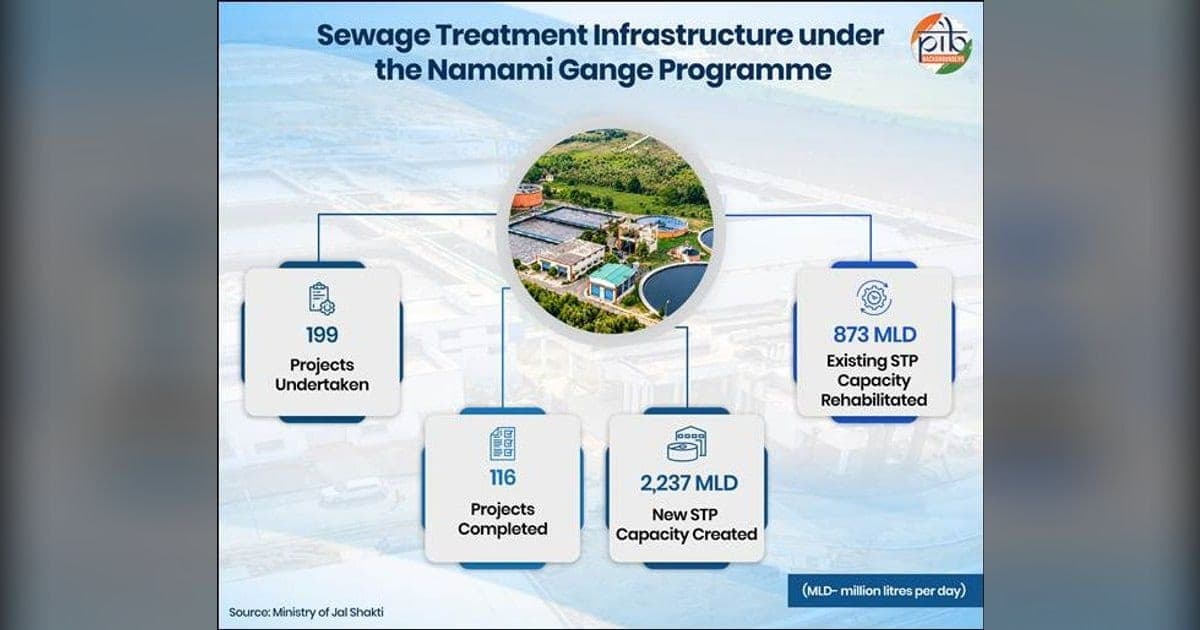
Namami Gange: 199 Sewerage Projects Worth Rs 31,327 Crore Taken Up
21 October 2026 · 2 min read
Related GK
- MP Language, Dialects and Literature: Exam Notes
22 October 2026 · Madhya Pradesh
- Religious and Tourist Places of Haryana: Exam Notes
22 October 2026 · Haryana
- Bihar Languages and Literature: Maithili, Bhojpuri, Magahi
22 October 2026 · Bihar
Take the Quiz
- Current Affairs Quiz
Railway Current Affairs Quiz: 21 October 2026
25 questions25 minutesStart Quiz