
Coast Guard Seizes Rs 3,000 Crore Narcotics off Lakshadweep
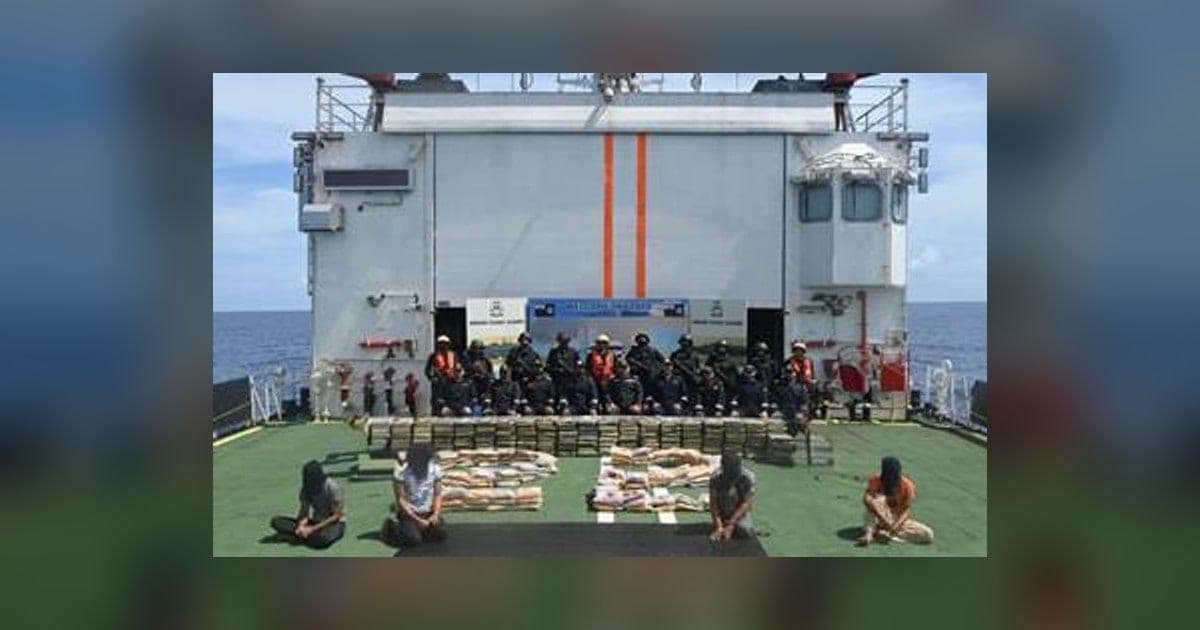
The Indian Coast Guard and Gujarat ATS seized about 526 kg of narcotics worth over Rs 3,000 crore from an Iranian dhow in the Arabian Sea on 25 September 2026.
Why in News
On 30 September 2026 the Ministry of Defence announced that the Indian Coast Guard and the Gujarat Anti-Terrorism Squad had seized about 526 kg of narcotics worth more than Rs 3,000 crore from an Iranian dhow in the Arabian Sea west of Lakshadweep on 25 September 2026, arresting five Pakistani nationals.
The Indian Coast Guard (ICG), working with the Anti-Terrorism Squad (ATS) of Gujarat, has broken up a large sea-borne drug smuggling attempt in the Arabian Sea, to the west of Lakshadweep. The operation took place on 25 September 2026 and the consignment is valued at more than Rs 3,000 crore.
What was seized
About 526 kg of high-grade narcotic substances were taken, heroin and methamphetamine among them. Five Pakistani nationals who were running the boat were arrested. The vessel itself was an Iranian dhow, stopped and boarded on the high seas.
How the interception was done
The operation began from intelligence rather than from a chance sighting. Coast Guard ships and aircraft put the suspected boat under combined sea and air watch and tracked it without a break, and only then was a coordinated hot pursuit launched. The chase ended in the interception and boarding of the dhow well away from the coast. The boat, its crew and the seized drugs were then escorted under armed guard to Mumbai for joint questioning and investigation, to be followed by legal proceedings involving several agencies.
Why this route is watched
The stretch of the Arabian Sea between the Makran coast and India’s western seaboard has long been used to move heroin and synthetic drugs by dhow, which is why the Coast Guard keeps surveillance aircraft and ships on that arc and why so many seizures involve boats of this type. A haul of this size is read as a blow to an organised cross-border network rather than to one carrier.
The larger aim
The Coast Guard placed the operation within the national goal of a Nasha Mukt Bharat, a drug-free India, and repeated its position of zero tolerance towards illegal activity in India’s maritime zones. For an aspirant the case is a useful example of joint working between a central armed force at sea and a state police unit on land, since the arrest and the prosecution both run through Gujarat’s Anti-Terrorism Squad while the interception at sea was the Coast Guard’s.
Worth noting about the force
The Indian Coast Guard functions under the Ministry of Defence and is charged, among other duties, with preventing smuggling at sea, so drug interdiction of this kind is squarely part of its mandate rather than an incidental task.
Important Facts
| Operation | Maritime narcotics interdiction by the Indian Coast Guard |
|---|---|
| Agencies | Indian Coast Guard with the Anti-Terrorism Squad, Gujarat |
| Date of operation | 25 September 2026 |
| Location | Arabian Sea, west of Lakshadweep |
| Quantity seized | About 526 kg of high-grade narcotics |
| Drugs involved | Heroin and methamphetamine |
| Value | More than Rs 3,000 crore |
| Vessel | An Iranian dhow, boarded on the high seas |
| Arrests | Five Pakistani nationals |
| Taken to | Mumbai, under armed escort |
| Mission linked | Nasha Mukt Bharat |
Exam Point of View
Remember the two agencies (Indian Coast Guard and Gujarat ATS), the place (Arabian Sea, west of Lakshadweep), the date of the operation (25 September 2026), the quantity (about 526 kg), the value (over Rs 3,000 crore), the drugs (heroin and methamphetamine), the boat (an Iranian dhow), the five Pakistani nationals arrested and the port they were taken to (Mumbai).
Practice Questions
Which two agencies jointly carried out the narcotics interdiction in the Arabian Sea in late September 2026?
- A.Indian Navy and the Narcotics Control Bureau
- B.Indian Coast Guard and the Anti-Terrorism Squad, Gujarat
- C.Directorate of Revenue Intelligence and the Kerala Police
- D.Border Security Force and the Maharashtra Police
Show answer
Correct answer: B. Indian Coast Guard and the Anti-Terrorism Squad, Gujarat
Explanation
The correct answer is the Indian Coast Guard acting in coordination with the Anti-Terrorism Squad of Gujarat. The Coast Guard put its ships and aircraft on the suspected boat, tracked it and boarded it on the high seas, while the state unit carried the case into arrest and investigation. Option A names the Navy and the Narcotics Control Bureau, both plausible in a drug case at sea, but neither is the force that made this interception. Option C names the Directorate of Revenue Intelligence, which handles customs and smuggling intelligence, paired with the wrong state police; the dhow and its crew were taken to Mumbai but the partner unit was from Gujarat. Option D names the Border Security Force, which guards land borders and has no role on the high seas. The pairing of a maritime force with a state anti-terrorism squad is the point of the case.
How much narcotic substance was seized in the operation, and of what value?
- A.About 256 kg, worth over Rs 3,000 crore
- B.About 526 kg, worth over Rs 3,000 crore
- C.About 526 kg, worth over Rs 300 crore
- D.About 1,526 kg, worth over Rs 5,000 crore
Show answer
Correct answer: B. About 526 kg, worth over Rs 3,000 crore
Explanation
The correct answer is about 526 kg of high-grade narcotics, valued at more than Rs 3,000 crore. The consignment included heroin and methamphetamine, which is why the value per kilogram is so high. Option A keeps the correct value but scrambles the digits of the weight, a common trap where 526 becomes 256; the two numbers use the same digits in a different order. Option C keeps the correct weight but cuts the value by a factor of ten, turning thousands of crore into hundreds. Option D inflates both figures. The safe way to hold this is to remember the pair together, the weight in kilograms and the value in crore, because a question usually alters only one of the two and leaves the other correct to make the wrong option look familiar.
What kind of vessel was intercepted, and who was operating it?
- A.A Sri Lankan trawler operated by three Indian nationals
- B.An Iranian dhow operated by five Pakistani nationals
- C.A Pakistani dhow operated by five Iranian nationals
- D.A container ship operated by a foreign crew of twelve
Show answer
Correct answer: B. An Iranian dhow operated by five Pakistani nationals
Explanation
The correct answer is an Iranian dhow operated by five Pakistani nationals. The boat was tracked on intelligence, intercepted and boarded on the high seas, and then escorted under armed security to Mumbai along with its crew and the seized drugs. Option C is the sharpest trap, because it simply swaps the two nationalities: the vessel was Iranian and the men on board were Pakistani, not the other way round. Option A changes both the type of boat and the nationality of the crew; a trawler is a fishing vessel and no Indian nationals were reported among those arrested. Option D describes a container ship with a crew of twelve, which does not match a dhow, the small wooden-hulled craft traditionally used in the Arabian Sea and the type most often found on this smuggling route.
Frequently Asked Questions
How much was the narcotics haul seized off Lakshadweep worth?
More than Rs 3,000 crore. About 526 kg of high-grade narcotics, including heroin and methamphetamine, were seized in the Arabian Sea on 25 September 2026.
Which agencies carried out the operation, and who was arrested?
The Indian Coast Guard acted in coordination with the Anti-Terrorism Squad of Gujarat. Five Pakistani nationals operating an Iranian dhow were apprehended and taken to Mumbai under armed escort.
Which mission did the Coast Guard link the seizure to?
Nasha Mukt Bharat, the goal of a drug-free India. The force also restated its zero tolerance towards illicit activity in India’s maritime zones.
Sources
- ICG Interdicts Transnational Syndicate with Rs 3,000 Cr Narcotics Seizure (opens in a new tab) — Press Information Bureau
Current Affairs 30 September 2026
- CAFE Norms 2027-32 Notified, Fuel Use to Fall 16.7 Per CentEnvironment
- UPSC Completes 100 Years of Merit-Based RecruitmentNational
- Second Naval Commanders Conference 2026 Opens in New DelhiDefence
- MHI Industry Accelerator Impact Report Released at NavigyaanScience & Technology
- SBM 2.0: Rs 11,785 Crore Approved for Sewage Treatment PlantsEnvironment
- TRAI Releases Mobile Network Drive Test Findings for SonitpurScience & Technology
- Special Campaign 6 to Run from 2 to 31 October 2026National
- PSS Buying of Rs 5,547.99 Crore Cleared for Kharif 2026-27Government Schemes
Related Current Affairs
Related GK
- Punjab GK: Formation, Rivers, History and Exam Facts
30 September 2026 · Indian States & UTs
- Indian Defence Forces and Missiles: Static GK and PYQs
30 September 2026 · Static GK
- Biotechnology in Agriculture and Health: Notes and PYQs
30 September 2026 · Science & Technology
Take the Quiz
- Current Affairs Quiz
State Exams Current Affairs Quiz: 30 September 2026
25 questions25 minutesStart Quiz