
India Showcases BharatNet at ITU PP-26 Conference in Doha
Minister of State Chandra Sekhar Pemmasani presented India's digital connectivity and cybersecurity approach at the ITU Plenipotentiary Conference in Doha.
Why in News
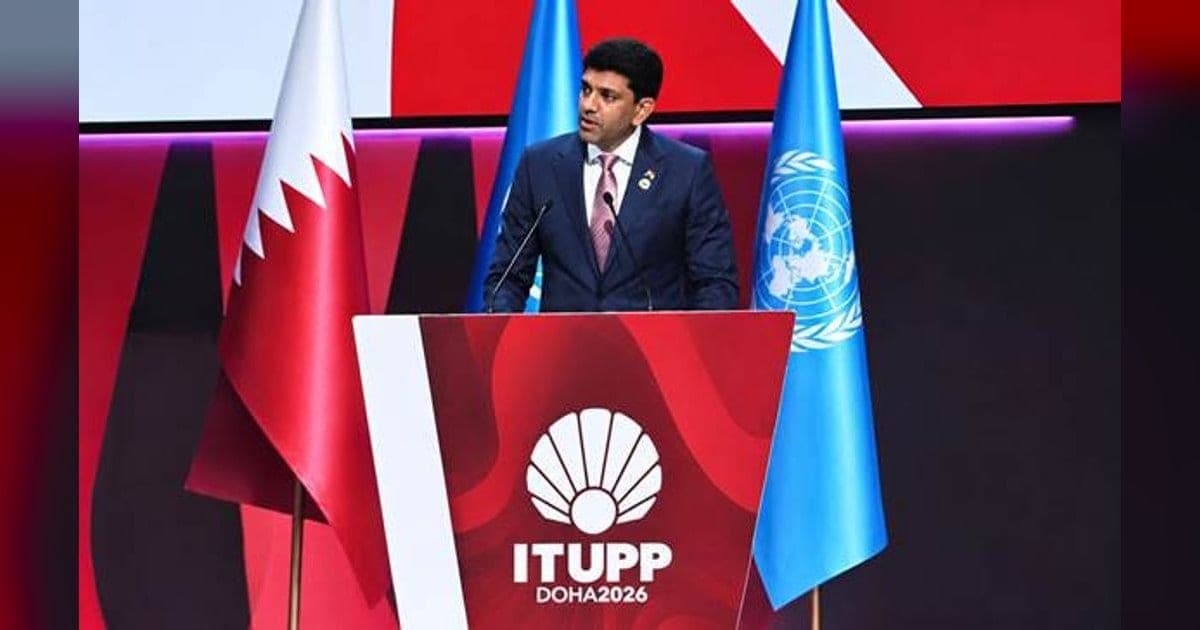
On 11 November 2026 the Ministry of Communications released the address of Union Minister of State Dr Chandra Sekhar Pemmasani at the ITU Plenipotentiary Conference PP-26 in Doha, where he presented India's approach to connectivity, emerging technologies and cybersecurity.
Union Minister of State for Communications and Rural Development Dr Chandra Sekhar Pemmasani set out India's position on digital connectivity, emerging technologies and cybersecurity at the International Telecommunication Union Plenipotentiary Conference, known as PP-26, being held in Doha. The Ministry of Communications issued his remarks on 11 November 2026. The Plenipotentiary Conference is the ITU's highest decision-making body, which makes it the forum where member states settle policy direction for global telecommunications.
What the minister told the conference
Speaking at the High-Level Discussion on Emerging Technologies, Dr Pemmasani noted that 2.2 billion people worldwide are still offline. Against that, he pointed to India's investment of about 15 billion dollars in BharatNet to carry broadband into rural areas. He also described Samriddh Gram Centres, a winner of the WSIS Prize, where villagers can get healthcare, farm advice, banking services and government certificates in one place.
The technology agenda he listed
- Affordable artificial intelligence computing for Indian innovators.
- AI models built in Indian languages.
- Quantum research hubs.
- 100 use-case labs for 5G, meant to build skills for the years ahead.
- A modern regulatory framework and the Bharat 6G Vision, which prepares for telecom networks, AI and satellites converging.
His central argument on governance was that developing countries should have a larger hand in framing global technology standards and spectrum policy, so that they shape these technologies instead of only adopting them.
Bilateral meetings and cyber fraud
On the sidelines of PP-26 the minister met delegations from Malaysia, Iran and Uzbekistan. Those talks covered cross-border cyber fraud, the security of digital infrastructure and cooperation in quantum technology. Sharing India's own experience of tackling digital fraud, he said that alerts sent to banks had helped prevent suspected financial losses of more than 5,000 crore rupees. He summed up the case for working together in a line that the ministry used as its headline: cyber threats do not respect borders, and cooperation should not either, because learning from each other's best practices makes every country stronger. For exam purposes the points to hold on to are the conference and its venue, the minister's portfolio, the BharatNet investment figure, the WSIS Prize for Samriddh Gram Centres and the count of 5G labs.
Important Facts
| Conference | ITU Plenipotentiary Conference (PP-26) |
|---|---|
| Venue | Doha |
| Indian representative | Dr Chandra Sekhar Pemmasani, Union MoS for Communications and Rural Development |
| Session | High-Level Discussion on Emerging Technologies |
| People still offline | 2.2 billion worldwide |
| BharatNet investment | About 15 billion dollars |
| WSIS Prize winner | Samriddh Gram Centres |
| 5G labs | 100 use-case labs |
| Fraud prevented | Over 5,000 crore rupees of suspected losses, through alerts to banks |
| Delegations met | Malaysia, Iran and Uzbekistan |
Exam Point of View
Remember the conference (ITU Plenipotentiary Conference, PP-26), the city (Doha), the minister and his portfolio (Dr Chandra Sekhar Pemmasani, MoS for Communications and Rural Development), the figures he used (2.2 billion people offline, about 15 billion dollars in BharatNet, 100 5G use-case labs, over 5,000 crore rupees of suspected losses prevented), the WSIS Prize for Samriddh Gram Centres, the Bharat 6G Vision, and the three delegations he met: Malaysia, Iran and Uzbekistan.
Practice Questions
In which city is the ITU Plenipotentiary Conference PP-26 being held?
- A.Geneva
- B.Doha
- C.Dubai
- D.New Delhi
Show answer
The International Telecommunication Union Plenipotentiary Conference, referred to as PP-26, is being held in Doha, and India was represented there by Union Minister of State for Communications and Rural Development Dr Chandra Sekhar Pemmasani.
Read the full explanation →Which Indian initiative, described at PP-26 as a WSIS Prize winner, gives villagers healthcare, farm advice, banking and government certificates?
- A.BharatNet
- B.Bharat 6G Vision
- C.Samriddh Gram Centres
- D.Adi Vaani
Show answer
The minister described these centres, which have won the WSIS Prize, as places where villagers can access healthcare, agricultural advice, banking and government certificates.
Read the full explanation →How many 5G use-case labs did India cite at the ITU PP-26 conference?
- A.50
- B.75
- C.100
- D.150
Show answer
In his address the minister listed 100 use-case labs for 5G among India's efforts, describing them as building talent for the future alongside affordable AI computing, AI models in Indian languages and quantum research hubs.
Read the full explanation →On the sidelines of ITU PP-26, the Indian minister met delegations from which three countries?
- A.Malaysia, Iran and Uzbekistan
- B.Qatar, Oman and Egypt
- C.Malaysia, Indonesia and Kazakhstan
- D.Iran, Iraq and Turkmenistan
Show answer
On the margins of the conference Dr Chandra Sekhar Pemmasani held meetings with delegations from these three countries, and the discussions covered cross-border cyber fraud, the security of digital infrastructure and cooperation in quantum technology.
Read the full explanation →Frequently Asked Questions
Where is the ITU Plenipotentiary Conference PP-26 being held?
In Doha. India was represented there by Union Minister of State for Communications and Rural Development Dr Chandra Sekhar Pemmasani, who spoke at the High-Level Discussion on Emerging Technologies and showcased BharatNet.
How much has India invested in BharatNet, according to the minister?
About 15 billion dollars, to extend broadband connectivity to rural areas. He made the point against the backdrop of 2.2 billion people worldwide still being offline, and also described Samriddh Gram Centres, a WSIS Prize winner, which deliver healthcare, agricultural advice, banking and government certificates in villages.
Which delegations did the minister meet on the sidelines of PP-26?
He met delegations from Malaysia, Iran and Uzbekistan. The discussions covered cross-border cyber fraud, the security of digital infrastructure and cooperation in quantum technology. He also said alerts sent to banks had helped prevent suspected financial losses of more than 5,000 crore rupees.
Sources
- https://pib.gov.in/PressReleasePage.aspx?PRID=2335168 (opens in a new tab) — Press Information Bureau
Current Affairs 11 November 2026
- NCAHP Drafts Provisional Registration Rules for 2026National
- CSIR and SINTEF Hold India-Norway Waste to Resource DialogueScience & Technology
- Nasha Mukt Bharat Abhiyaan Reaches 35.84 Crore in Six YearsGovernment Schemes
- INS Betwa Refit Contract Worth Rs 498.58 Crore Goes to CSLDefence
- Stand-Up India Extended to 2031 With Rs 4,111 Crore CorpusGovernment Schemes
- Cabinet Clears Rs 5,000 Crore CGFMU Corpus for Mudra LoansBanking & Finance
- Cabinet Approves NBS Rates for Rabi 2026-27 on P&K FertilizersEconomy
- Cabinet Clears 8.449 Km Aqua Line Metro Extension in NoidaNational
Related Current Affairs
- Science & Technology
Villages Without 4G Fall to 11,372 Under Saturation Project
11 November 2026 · 2 min read
- Science & Technology
CSIR and SINTEF Hold India-Norway Waste to Resource Dialogue
11 November 2026 · 2 min read
- Science & Technology
BRIC Third Foundation Day: India-UK Biomanufacturing LoI
10 November 2026 · 2 min read
- Science & Technology
TRAI Caps IP Port Charges in Third Amendment Regulations 2026
9 November 2026 · 2 min read
- Science & Technology
I-STEM and Startup India Portals Linked Through API Integration
6 November 2026 · 2 min read
Related GK
- Famous Personalities of Rajasthan: Exam Notes
28 October 2026 · Rajasthan
- Districts and Divisions of Rajasthan: Exam Notes
28 October 2026 · Rajasthan
- Tourism and World Heritage Sites of Rajasthan Notes
27 October 2026 · Rajasthan
Take the Quiz
- Current Affairs Quiz
State Exams Current Affairs Quiz: 11 November 2026
25 questions25 minutesStart Quiz