
Medicinal Plants Project Launched in 16 Tribal Hotspots
The Ministry of Tribal Affairs and CSIR-NBRI launched a three-year medicinal plants conservation and livelihood project covering 16 tribal hotspots in 13 States and UTs.
Why in News
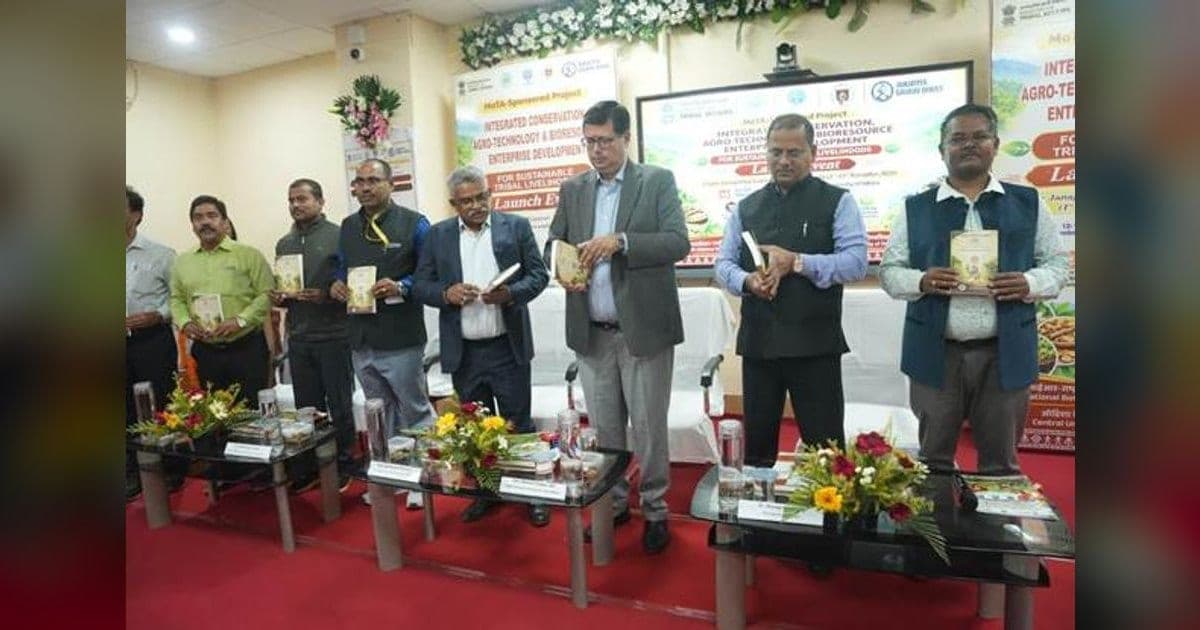
On 12 November 2026 the Ministry of Tribal Affairs and CSIR-NBRI launched a three-year project at the Central University of Odisha, Koraput, to conserve medicinal plants and build bioresource enterprises in 16 tribal hotspots across 13 States and Union Territories.
The Ministry of Tribal Affairs, working with the CSIR-National Botanical Research Institute of Lucknow, has launched a national project on medicinal plants at the Central University of Odisha in Koraput. The three-year initiative is formally titled Integrated Conservation, Agro-Technology and Bioresource Enterprise Development for Sustainable Tribal Livelihoods in Tribal Hotspots of India, and its twin aims are to protect the medicinal plant wealth of tribal regions and to turn traditional knowledge of those plants into steady earnings for tribal families.
Where the project will run
Sixteen tribal hotspots have been chosen across 13 States and Union Territories. They include Alluri Seetharama Raju in Andhra Pradesh, Kokrajhar in Assam, Narayanpur in Chhattisgarh, Navsari in Gujarat, East Singhbhum in Jharkhand, Kodagu in Karnataka, Wayanad in Kerala, Kargil in Ladakh, Anuppur in Madhya Pradesh, Gadchiroli and Nashik in Maharashtra, Kandhamal, Balangir and Koraput in Odisha, Sonbhadra in Uttar Pradesh and Dharchula in Uttarakhand.
What the project will do
- Document roughly 200 to 300 species of medicinal plants found in these areas.
- Scientifically propagate 30 to 40 rare, endangered and threatened species.
- Set up 16 community nurseries and 16 seed banks, one for each hotspot.
- Distribute between 40,000 and 50,000 quality planting materials for cultivation.
Fieldwork already done
The institute began in Sonbhadra district of Uttar Pradesh during October 2026. Its team met 146 tribal knowledge holders in 12 villages, recorded their healing practices, and gathered 97 field numbers that stand for about 200 medicinal and economically useful plant samples. Twenty-five live orchid samples were also taken for conservation and multiplication at the institute’s botanical garden.
How it will be delivered
The project will work through Krishi Vigyan Kendras, Van Dhan Vikas Kendras, State tribal welfare and forest departments and local communities, with tribal farmers, traditional healers, women and rural youth placed at the centre of training and enterprise building. A technical session called From Tribal Knowledge to Enterprise was held at the launch, and a field visit to the Koraput hotspot follows on 13 November 2026.
Important Facts
| Ministry | Ministry of Tribal Affairs |
|---|---|
| Scientific partner | CSIR-National Botanical Research Institute, Lucknow |
| Launched at | Central University of Odisha, Koraput, on 12 November 2026 |
| Duration | Three years |
| Coverage | 16 tribal hotspots in 13 States and Union Territories |
| Species to document | About 200 to 300 medicinal plant species |
| Rare species to propagate | 30 to 40 rare, endangered and threatened species |
| Institutions planned | 16 community nurseries and 16 seed banks |
| Planting material | 40,000 to 50,000 quality planting materials |
| Sonbhadra fieldwork | 146 knowledge holders in 12 villages, 25 live orchid samples |
Exam Point of View
Remember the ministry (Tribal Affairs), the scientific partner (CSIR-National Botanical Research Institute, Lucknow), the venue (Central University of Odisha, Koraput), the duration (three years), the coverage (16 hotspots, 13 States and UTs), the targets of 200 to 300 species documented, 30 to 40 rare and threatened species propagated, 16 nurseries, 16 seed banks and 40,000 to 50,000 planting materials.
Practice Questions
The new medicinal plants project of the Ministry of Tribal Affairs covers how many tribal hotspots and in how many States and Union Territories?
- A.12 hotspots in 10 States and UTs
- B.16 hotspots in 13 States and UTs
- C.20 hotspots in 16 States and UTs
- D.13 hotspots in 16 States and UTs
Show answer
The project picks sixteen tribal pockets spread over thirteen States and Union Territories, running from Kargil in Ladakh and Dharchula in Uttarakhand in the north to Wayanad in Kerala and Kodagu in Karnataka in the south, with three of the sites, Kandhamal, Balangir and Koraput, lying in Odisha itself.
Read the full explanation →Which research institute is the Ministry of Tribal Affairs working with on this project?
- A.CSIR-National Botanical Research Institute, Lucknow
- B.ICAR-Indian Institute of Horticultural Research
- C.Botanical Survey of India, Kolkata
- D.CSIR-Central Institute of Medicinal and Aromatic Plants
Show answer
The ministry launched the project in collaboration with that institute, and its Chief Scientist is the principal investigator of the work.
Read the full explanation →How many quality planting materials will the project distribute?
- A.4,000 to 5,000
- B.14,000 to 15,000
- C.40,000 to 50,000
- D.4 lakh to 5 lakh
Show answer
Distribution of that quantity of quality planting material is one of the main interventions planned, meant to support conservation, propagation and sustainable cultivation of medicinal plants by tribal communities.
Read the full explanation →Frequently Asked Questions
Which ministry and institute launched the medicinal plants project?
The Ministry of Tribal Affairs launched it with the CSIR-National Botanical Research Institute, Lucknow, at the Central University of Odisha in Koraput on 12 November 2026.
How wide is the project’s coverage?
It covers 16 selected tribal hotspots across 13 States and Union Territories, including Alluri Seetharama Raju, Kokrajhar, Narayanpur, Navsari, East Singhbhum, Kodagu, Wayanad, Kargil, Anuppur, Gadchiroli, Nashik, Kandhamal, Balangir, Koraput, Sonbhadra and Dharchula.
What were the findings of the early fieldwork?
In Sonbhadra district of Uttar Pradesh during October 2026, the team met 146 tribal knowledge holders across 12 villages, collected 97 field numbers representing about 200 plant samples, and took 25 live orchid samples for conservation.
Sources
- https://www.pib.gov.in/PressReleasePage.aspx?PRID=2335554 (opens in a new tab) — Press Information Bureau
Current Affairs 12 November 2026
- One Nation One Ration Card Reaches All 36 States and UTsGovernment Schemes
- National Naturopathy Day 2026 Set for 18 November in KarnatakaImportant Days
- Buddha's Sacred Relics Draw 50,000 Devotees in ArunachalNational
- Rajnath Singh Opens Air Force Commanders' Conference 2026 in DelhiDefence
- TDB Gives Rs 64.05 Crore for Astrome AI-ELINT Satellite ProjectScience & Technology
- INSA Endorses S20 Joint Statement Ahead of G20 Summit in MiamiSummits & Conferences
- 57th IFFI Goa 2026: WaveX Startup Pavilion Entries Close 13 NovemberNational
- Retail Inflation Rises to 6.09% in October 2026, Food at 8.94%Economy
Related Current Affairs
- Environment
India Seeks Fair, Ambitious Outcome at UNFCCC COP31 in Antalya
10 November 2026 · 2 min read



Related GK
- Famous Personalities of Rajasthan: Exam Notes
28 October 2026 · Rajasthan
- Districts and Divisions of Rajasthan: Exam Notes
28 October 2026 · Rajasthan
- Tourism and World Heritage Sites of Rajasthan Notes
27 October 2026 · Rajasthan
Take the Quiz
- Current Affairs Quiz
Teaching Current Affairs Quiz: 12 November 2026
19 questions19 minutesStart Quiz