
14th District Collectors' Peyjal Samvad Held on Jal Jeevan Mission
The Department of Drinking Water and Sanitation held the 14th District Collectors' Peyjal Samvad on 19 November 2026, with four districts presenting JJM 2.0 practices.
Why in News
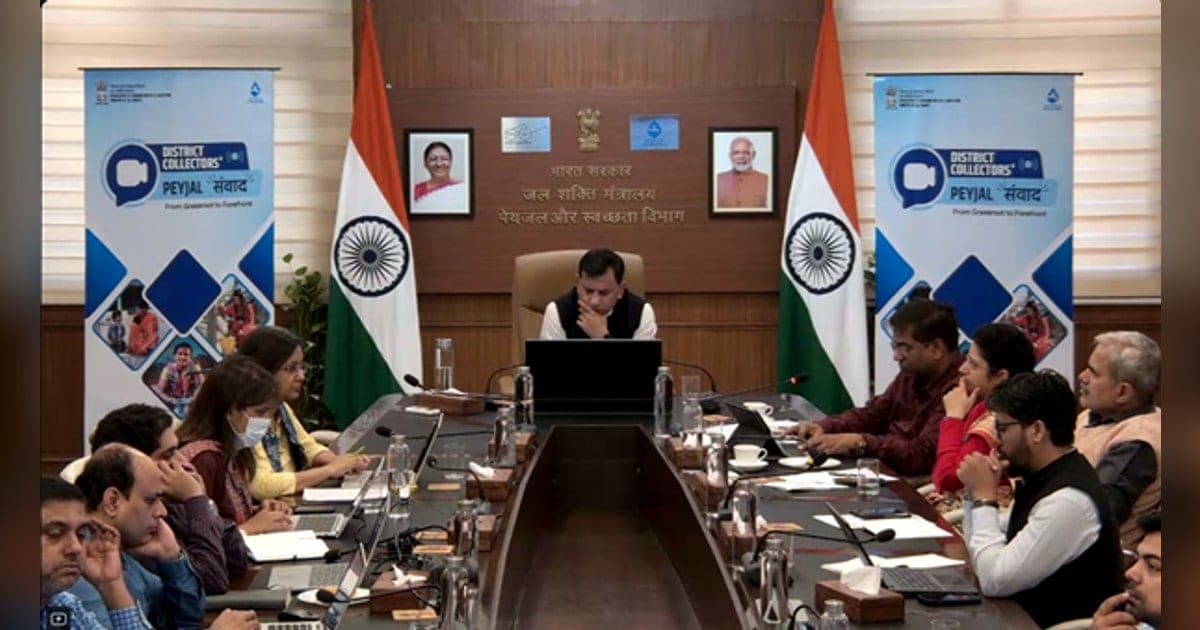
On 19 November 2026 the Department of Drinking Water and Sanitation organised the 14th District Collectors' Peyjal Samvad, where four districts presented best practices under Jal Jeevan Mission 2.0.
The Department of Drinking Water and Sanitation (DDWS) under the Ministry of Jal Shakti held the fourteenth edition of the District Collectors' Peyjal Samvad on 19 November 2026 through video conferencing. District Collectors, District Magistrates, Mission Directors of States and Union Territories and senior officials joined the discussion on speeding up Jal Jeevan Mission (JJM) 2.0 and on trading good practices between districts.
Who chaired and what was urged
Shri Kamal Kishore Soan, Additional Secretary and Mission Director of the National Jal Jeevan Mission, chaired the session. He said the practices presented at these sessions are compiled and sent to the Prime Minister's Office, the Cabinet Secretariat, NITI Aayog and other ministries so that other districts can copy what works. He asked collectors to hold District Water and Sanitation Committee meetings every month, to use the Decision Support System for planning based on evidence, and to close the gaps found during the Jal Seva Aankalan through district improvement plans. He also asked States to tap the opportunities opening under the 16th Finance Commission and to build skills through ITIs, RSETIs and State Rural Livelihood Missions.
Skilling under JJM 2.0
Ms Pooja Bhatt, Director of the National Jal Jeevan Mission, presented on skilling. The proposed framework rests on Jal Jeevan Mitras, multi-skill technicians, diploma operators and supervisory staff, backed by technical units at the district level. She also spoke about the Sujalam Shakti initiative, which seeks a larger role for women in water quality surveillance, community mobilisation and the protection of water assets.
Four districts, four lessons
- Kangra, Himachal Pradesh (Deputy Commissioner Sh. Hemraj Bairwa): 100% coverage achieved in hilly terrain, with revival of older schemes, added storage and source sustainability measures.
- Valsad, Gujarat (District Collector Sh. Nitin V. Sangwan): 100% creation of Sujalam Bharat and Sujal Gaon IDs, with performance-linked incentives for panchayats, self-help groups and operators that lifted user charge collection.
- Jorhat, Assam (Deputy Commissioner Sh. Jay Shivani): pioneering 24x7 rural water supply in the State, with Water User Committees, Jal Mitras and Jal Doots behind the effort.
- Unakoti, Tripura (District Magistrate Ms Megha Jain): a surface water scheme for habitations of the Reang community, a Particularly Vulnerable Tribal Group, where groundwater was not viable.
Why it matters
The chair pressed all States to carry out water quality testing after the monsoon and asked Himachal Pradesh to study the inter-departmental model used in Uttarakhand for hill sources. The running theme of the session was that infrastructure built under the mission will last only if tariffs are collected, operators are trained and communities own the assets, which is the direction JJM 2.0 takes towards Har Ghar Jal.
Important Facts
| Event | 14th District Collectors' Peyjal Samvad |
|---|---|
| Organiser | Department of Drinking Water and Sanitation, Ministry of Jal Shakti |
| Date and mode | 19 November 2026, through video conferencing |
| Chaired by | Shri Kamal Kishore Soan, AS and Mission Director, NJJM |
| Mission discussed | Jal Jeevan Mission (JJM) 2.0 |
| Districts that presented | Kangra (Himachal Pradesh), Valsad (Gujarat), Jorhat (Assam), Unakoti (Tripura) |
| Women-focused initiative | Sujalam Shakti |
| Skilling cadre proposed | Jal Jeevan Mitras, multi-skill technicians and diploma operators |
Exam Point of View
Remember the edition (14th), the organiser (DDWS, Ministry of Jal Shakti), the chair (Shri Kamal Kishore Soan of NJJM), the four districts and their States, the Sujalam Shakti initiative for women, and that good practices go to the PMO, Cabinet Secretariat and NITI Aayog.
Practice Questions
Which department organised the 14th District Collectors' Peyjal Samvad held on 19 November 2026?
- A.Department of Rural Development
- B.Department of Drinking Water and Sanitation
- C.Department of Water Resources, River Development and Ganga Rejuvenation
- D.Department of Land Resources
Show answer
It convened the session by video conferencing so that collectors and mission directors from across the country could take part together.
Read the full explanation →Which district was praised at the Samvad for pioneering 24x7 rural water supply in its State?
- A.Kangra, Himachal Pradesh
- B.Valsad, Gujarat
- C.Jorhat, Assam
- D.Unakoti, Tripura
Show answer
The correct answer is Jorhat in Assam, which described how it prepared communities and strengthened local institutions before moving to continuous supply, relying on Water User Committees, Jal Mitras and Jal Doots.
Read the full explanation →The Sujalam Shakti initiative discussed at the Peyjal Samvad is aimed at which group?
- A.Women, for a larger role in water quality surveillance and community work
- B.School children, for water conservation clubs
- C.Retired engineers, for scheme supervision
- D.Urban local bodies, for tariff reform
Show answer
The initiative was described as a way to bring women more squarely into water quality surveillance, community mobilisation and the protection of assets created under the mission, and it was presented alongside a wider skilling framework built on Jal Jeevan Mitras, multi-skill technicians and diploma operators.
Read the full explanation →Frequently Asked Questions
Which edition of the District Collectors' Peyjal Samvad was held on 19 November 2026?
The 14th edition, organised by the Department of Drinking Water and Sanitation under the Ministry of Jal Shakti through video conferencing, with discussion centred on Jal Jeevan Mission 2.0.
Which four districts presented their best practices?
Kangra in Himachal Pradesh, Valsad in Gujarat, Jorhat in Assam and Unakoti in Tripura. Jorhat was recognised for pioneering 24x7 rural water supply in Assam and Unakoti for a surface water scheme serving Reang habitations.
What is the Sujalam Shakti initiative?
It is an initiative presented at the Samvad that seeks to give women a larger role in water quality surveillance, community mobilisation and the protection of water assets created under the mission.
Sources
- https://www.pib.gov.in/PressReleasePage.aspx?PRID=2338449 (opens in a new tab) — Press Information Bureau
Current Affairs 19 November 2026
- Antimicrobials to Be Treated as New Drugs Under NDCT RulesNational
- Separate Wholesale Licence Proposed for Bulk Drugs in IndiaNational
- SVANidhi Samman Awards 2026 to Honour Street Vendor WorkGovernment Schemes
- CSIR Transfers Bio-Bitumen and UHPC Road Technologies to IndustryScience & Technology
- CMOT Brings 100 Young Film Talents to 57th IFFI in GoaNational
- CSIR-TKDL and IKS Division Sign MoU on Traditional KnowledgeNational
- BHASHINI Shows Voice-First Language AI at Dakshin Day 2026Science & Technology
- IAF Signs MoU With Central Sanskrit University for Yoga CoursesDefence
Related Current Affairs
- Reports & Indices
NITI Aayog Releases Impact Assessment Report on PLI Schemes
12 November 2026 · 2 min read
Related GK
- Sustainable Development and the SDGs: All 17 Goals
9 October 2026 · Environment & Ecology
- Planning in India and NITI Aayog: Plans, Models and Bodies
25 September 2026 · Indian Economy
Take the Quiz
- Current Affairs Quiz
State Exams Current Affairs Quiz: 19 November 2026
25 questions25 minutesStart Quiz